Support our educational content for free when you purchase through links on our site. Learn more
🌊 Master Aquarium Water Quality: 10 Secrets for Crystal Clear Tanks (2026)


We’ve all been there: you spend hours setting up the perfect tank, only to wake up one morning to find your fish gasping at the surface and the water turning a murky, ominous green. It’s a heartbreak every aquarist knows too well. But here’s the shocking truth we learned the hard way at Aquarium Music™: clear water is not always safe water. In fact, some of the deadliest tanks we’ve ever encountered looked like pristine glass bowls, hiding lethal levels of invisible toxins.
This comprehensive guide cuts through the confusion of chemistry and biology to give you the ultimate roadmap for aquarium water quality management. We’re not just talking about changing water; we’re diving deep into the nitrogen cycle, decoding the secrets of pH stability, and revealing the 10 proven strategies that separate thriving ecosystems from fish graveyards. Whether you’re battling stubborn algae blooms or trying to perfect the parameters for your sensitive Discus, the answers lie in understanding the invisible symphony playing beneath the surface.
Key Takeaways
- Stability Trumps Perfection: A stable pH of 6.5 is infinitely safer than a “perfect” 7.0 that swings wildly; fish thrive on consistency, not ideal numbers.
- The Invisible Killer: Never trust your eyes alone; amonia and nitrite are often undetectable by sight but lethal to aquatic life, making liquid test kits essential.
- The 10-20% Rule: Consistent weekly water changes of 10–20% are the single most effective method to manage nitrates and replenish trace elements.
- Filtration is Threefold: True water quality requires a balance of mechanical (debris), biological (bacteria), and chemical (dissolved toxins) filtration working in harmony.
- Patience is a Virtue: Rushing the nitrogen cycle is the #1 cause of new tank syndrome; allow 4–6 weeks for beneficial bacteria to establish before adding livestock.
Table of Contents
- ⚡️ Quick Tips and Facts
- 📜 The Evolution of Aquarium Water Quality: From Ancient Ponds to Modern Filtration
- 🧪 The Big Three: Mastering Amonia, Nitrite, and Nitrate Cycles
- 🌡️ Physical Parameters: Temperature, pH, Hardness, and Conductivity Explained
- 🔬 7 Essential Water Testing Methods Every Aquarist Must Know
- 🧹 10 Proven Strategies for Mechanical, Chemical, and Biological Filtration
- 💧 The Art of the Water Change: Frequency, Volume, and Dechlorination Techniques
- 🌿 Planted Aquariums & Aquascaping Lovers: Balancing Nutrients and CO2 for Pristine Water
- 🐠 Species-Specific Water Quality: Tailoring Conditions for Freshwater, Saltwater, and Brackish Tanks
- 🚨 Troubleshooting Common Water Quality Crises: Algae Bloms, Cloudiness, and Toxic Spikes
- 🛠️ Top-Rated Water Test Kits and Filtration Gear We Actually Trust
- 💡 Quick Tips and Facts: The Golden Rules of Crystal Clear Water
- 🏁 Conclusion: Your Journey to a Self-Sustaining Ecosystem
- 🔗 Recommended Links
- ❓ FAQ: Your Burning Questions About Aquarium Water Quality Answered
- 📚 Reference Links
⚡️ Quick Tips and Facts
Before we dive into the deep end of the nitrogen cycle and filtration mechanics, let’s hit the pause button on the “clear water equals healthy water” myth. It’s the oldest trick in the book, and unfortunately, it’s the one that kills the most fish.
Clear water can be deadly. Just because you can see the bottom of your tank doesn’t mean your fish aren’t swimming in a toxic soup of ammonia. 🚫💧
Here are the non-negotiable golden rules we’ve learned after years of keeping tanks alive (and a few that didn’t make it):
- Test, Don’t Guess: You cannot determine water quality by looking at it. A tank can look pristine while ammonia levels are lethal. Always use a liquid test kit.
- Stability is King: A stable pH of 6.5 is infinitely better than a “perfect” pH of 7.0 that swings wildly between 6.0 and 8.0. Fish hate rollercoasters. 🎢
- The 10-20% Rule: Weekly water changes of 10–20% are the single most effective way to manage nitrates and replenish trace elements.
- Overfeeding is the Enemy: 90% of water quality issues stem from owners loving their fish too much and feeding them too much. If the fish aren’t eating it in 2 minutes, you’ve overfed.
- Patience Pays Off: A new tank needs 4–6 weeks to cycle. Rushing this process is the #1 cause of “New Tank Syndrome.”
💡 Pro Tip: If you’re just starting out, check out our guide on 🌊 15 Secrets to Mastering Your Tropical Fish Tank (2026) to avoid the rookie mistakes that turn a beautiful hobby into a graveyard.
📜 The Evolution of Aquarium Water Quality: From Ancient Ponds to Modern Filtration
How did we get from keeping fish in clay pots to managing complex ecosystems in glass cubes? The history of aquarium water quality management is a tale of trial, error, and scientific breakthrough.
In the ancient world, from the Romans to the Chinese, fish were kept in open ponds or small containers. The water quality was managed by nature: evaporation, surface agitation, and the occasional water change. It was a low-tech, high-risk game. If the fish died, you blamed the “evil eye” or bad luck.
Fast forward to the 19th century, and the invention of the glass aquarium changed everything. But with glass came stagnation. Without a way to filter the water, tanks quickly turned into green, smelly swamps. The breakthrough came with the discovery of the Nitrogen Cycle in the 1930s. Scientists finally understood that fish waste (amonia) wasn’t just “dirty water”; it was a chemical process that could be harnessed by beneficial bacteria.
Today, we have biological filtration, protein skimmers, and reverse osmosis (RO) systems. We’ve moved from guessing to precision engineering. Yet, the core principle remains the same: mimic nature. Whether you are running a 5-gallon nano tank or a 50-gallon reef, the goal is to create a self-sustaining loop where waste is converted into harmless nutrients.
🧪 The Big Three: Mastering Amonia, Nitrite, and Nitrate Cycles
Let’s talk about the Nitrogen Cycle. This is the heartbeat of your aquarium. If you don’t understand this, you don’t understand water quality. It’s a biological relay race where three toxic substances are passed from one bacteria to the next until they are safe.
The Toxic Trio Explained
- Amonia (NH3/NH4+): The villain. Produced by fish waste, decaying food, and plant matter. Even at low levels (0.25 ppm), it burns fish gills and causes stress.
- Nitrite (NO2-): The middleman. Beneficial bacteria (Nitrosomonas) convert ammonia into nitrite. It’s still toxic, blocking the fish’s ability to carry oxygen (Brown Blood Disease).
- Nitrate (NO3-): The “safe” end product. Nitrospira bacteria convert nitrite into nitrate. While less toxic, high levels (above 40-50 ppm) stunt growth, cause algae blooms, and stress fish.
The Cycle in Action
| Stage | Substance | Toxicity Level | Bacteria Responsible | Action Required |
|---|---|---|---|---|
| Input | Amonia | High | None (Waste Source) | Reduce feeding, remove debris. |
| Conversion 1 | Nitrite | High | Nitrosomonas | Ensure oxygenation, add bacteria starter. |
| Conversion 2 | Nitrate | Low/Moderate | Nitrospira | Perform water changes, add plants. |
Why does this matter? When you set up a new tank, these bacteria don’t exist yet. You must “cycle” the tank by introducing ammonia (via fish food or pure ammonia) to feed the bacteria until they multiply enough to handle your fish’s waste.
⚠️ Warning: Never add fish to a tank that hasn’t completed the cycle. It’s a death sentence. For a deep dive into setting up your tank, visit our Aquarium Setup category.
🌡️ Physical Parameters: Temperature, pH, Hardness, and Conductivity Explained
While the nitrogen cycle handles the chemistry, physical parameters determine the comfort zone of your aquatic life. Think of these as thermostat, the acidity meter, and the mineral gauge of your underwater world.
Temperature: The Metabolic Engine
Temperature dictates how fast your fish’s metabolism works and, crucialy, how fast your beneficial bacteria function.
- Tropical Fish: Generally thrive between 74°F and 81°F (23°C – 27°C).
- Coldwater Fish: Like Goldfish, prefer 65°F – 72°F (18°C – 2°C).
- The Danger: A fluctuation of more than 2°F in a short period can shock fish and kill bacteria. Always use a reliable heater with a separate thermometer to verify accuracy.
pH: The Acidity Scale
pH measures how acidic or alkaline your water is on a scale of 0 to 14.
- Neutral: 7.0
- Acidic: Below 7.0 (Tropical rainforest fish like this)
- Alkaline: Above 7.0 (African Cichlids and Livebearers prefer this)
- The Golden Rule: Stability > Perfect Number. A stable pH of 6.2 is better than a swinging pH of 7.0.
Hardness: GH and KH
This is where many beginners get confused.
- GH (General Hardness): Measures dissolved calcium and magnesium. Essential for fish bone development and shrimp molting.
- KH (Carbonate Hardness): Also known as “buffering capacity.” It prevents pH crashes. Low KH means your pH can plummet overnight, killing your tank.
Conductivity (TDS)
Total Dissolved Solids (TDS) measures the total amount of dissolved particles. High TDS often indicates old water that needs changing, even if ammonia and nitrate levels are low.
🔬 7 Essential Water Testing Methods Every Aquarist Must Know
You can’t manage what you don’t measure. Relying on test strips is like trying to diagnose a car engine by looking at the dashboard lights; you might get a general idea, but you’ll miss the details. Here are the 7 essential methods we use at Aquarium Music™.
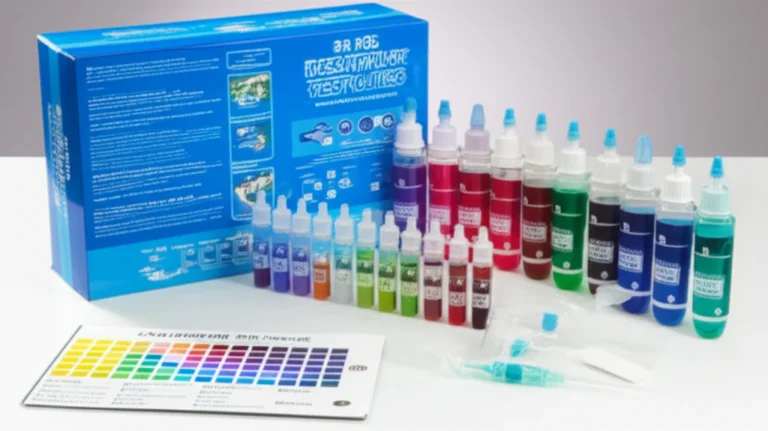
1. Liquid Reagent Test Kits (The Gold Standard)
These use drops of chemical reagents that change color based on concentration. They are accurate, affordable, and cover all parameters.
- Top Pick: API Freshwater Master Test Kit
- Why: It covers Amonia, Nitrite, Nitrate, and pH with high precision.
2. Digital pH Meters
For those who need real-time data. These probes measure voltage to determine pH.
- Top Pick: HM Digital PH-20
- Why: Great for planted tanks where pH stability is critical.
3. Refractometers (Salinity)
Essential for saltwater and brackish tanks. They measure the refractive index of light to determine salinity.
- Top Pick: Milwaukee MW102 Refractometer
4. Test Strips (The Quick Check)
Good for a “sanity check” but notoriously inaccurate for low-level ammonia or nitrite.
- Top Pick: API 7-in-1 Test Strips
- Verdict: Use only for quick monitoring, not for cycling or troubleshooting.
5. Photometers
High-end devices that use light absorption to give digital readouts. Expensive but incredibly accurate.
- Top Pick: Hanna Instruments Checker HC
6. Biological Indicators
Your fish and plants are the ultimate sensors.
- Clamped fins, gasping at the surface, or lethargy = Amonia/Nitrite spike.
- Rapid breathing = Low oxygen or high temperature.
- Algae blooms = Nutrient imbalance (Nitrate/Phosphate).
7. TDS Meters
A simple pen that measures Total Dissolved Solids.
- Top Pick: Apera Instruments TDS Meter
- Why: Helps track water evaporation vs. waste buildup.
🧹 10 Proven Strategies for Mechanical, Chemical, and Biological Filtration
Filtration is the engine room of your aquarium. It’s not just about keeping the water clear; it’s about processing waste. A proper system combines three types of filtration.
1. Mechanical Filtration: The Vacuum Cleaner
Traps physical debris (food, poop, plant matter) before it decomposes.
- Media: Filter floss, sponge, ceramic rings.
- Tip: Rinse mechanical media in old tank water, never tap water, to preserve beneficial bacteria.
2. Biological Filtration: The Bacteria Hotel
Provides surface area for beneficial bacteria to colonize and process toxins.
- Media: Bio-balls, ceramic rings, sintered glass.
- Key Insight: The more surface area, the better. Don’t over-clean this media!
3. Chemical Filtration: The Purifier
Removes dissolved organics, odors, and discoloration.
- Media: Activated carbon, Purigen, Resin.
- Use Case: Great for removing medication residues or tannins from driftwood.
4. The “Canister” Strategy
Canister filters (like the Fluval FX6) offer massive surface area for biological filtration and powerful flow. Ideal for large tanks.
5. The “Hang-On-Back” (HOB) Simplicity
Perfect for smaller tanks. They provide a mix of mechanical and biological filtration easily.
- Top Pick: AquaClear Power Filter
6. Sponge Filters: The Nano King
Air-driven or power-driven, these are unbeatable for breeding tanks and fry safety.
- Top Pick: AquaMax Sponge Filter
7. Undergravel Filters: The Old School
Once popular, now mostly replaced. They use the substrate as a filter bed. Good for planted tanks if managed correctly, but can trap debris.
8. Protein Skimmers: The Saltwater Savior
Specific to marine tanks, these remove organic waste before it breaks down into ammonia.
- Top Pick: Ref Octopus Skimmers
9. UV Sterilizers: The Algae Killer
Uses UV light to kill free-floating algae and pathogens. Essential for green water issues.
- Top Pick: Tetra UV Sterilizer
10. The “Live Plant” Filter
Plants absorb nitrates and phosphates directly. In a heavily planted tank, plants can be the primary biological filter.
- Top Pick: Seachem Flourish Excel (Liquid carbon to boost plant uptake).
💧 The Art of the Water Change: Frequency, Volume, and Dechlorination Techniques
If filtration is the engine, water changes are the oil change. No filter can remove 10% of nitrates or replenish trace elements forever.
How Often? How Much?
- Standard Rule: 10–20% weekly.
- High Bioload (Cichlids/Goldfish): 30–50% weekly.
- Low Bioload (Shrimp/Planted): 10% bi-weekly (if nitrates are low).
The Step-by-Step Process
- Prep: Treat new water with a dechlorinator (e.g., Seachem Prime). This neutralizes chlorine, chloramine, and heavy metals instantly.
- Temperature Match: Ensure new water is within 1-2°F of tank water.
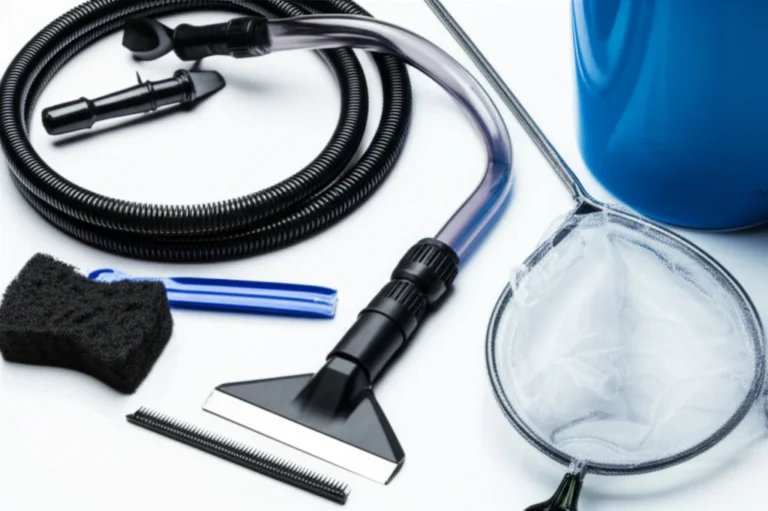
- Siphon: Use a gravel vacuum to remove debris from the substrate. This is where 50% of the waste hides!
- Refill: Slowly add the treated water to avoid disturbing the substrate or stressing fish.
Common Mistakes to Avoid
- ❌ Cleaning all filter media at once: You will wipe out your colony of beneficial bacteria.
- ❌ Using hot tap water: It can contain high levels of contaminants and kill fish.
- ❌ Ignoring the “Old Water” smell: If your tank smells like sulfur or rot, you need a larger water change immediately.
🌿 Planted Aquariums & Aquascaping Lovers: Balancing Nutrients and CO2 for Pristine Water
For aquascapers, water quality isn’t just about keeping fish alive; it’s about creating a living masterpiece. In a planted aquarium, the dynamic shifts. Plants are not just decorations; they are active participants in water quality management.
The Nutrient Balance
Plants need Nitrogen (N), Phosphorus (P), and Potassium (K), plus trace elements.
- The Challenge: Fish produce waste (Nitrates/Phosphates), which feeds plants. But too much leads to algae.
- The Solution: Balanced Fertilization. Use liquid fertilizers like Seachem Flourish Comprehensive to ensure plants outcompete algae for nutrients.
CO2 Injection: The Game Changer
Adding Carbon Dioxide (CO2) allows plants to grow faster, absorbing nitrates and phosphates more efficiently.
- Without CO2: Plants grow slowly, leaving nutrients for algae.
- With CO2: Plants grow rapidly, creating a “bioload sink.”
- Caution: CO2 lowers pH. You must monitor pH and KH closely to prevent a crash.
Top Plants for Water Quality
- Java Fern: Hardy, absorbs nitrates, low light.
- Anubias: Slow grower, great for low-tech tanks.
- Hornwort: Fast grower, excellent for absorbing excess nutrients.
- Monte Carlo: Carpeting plant that creates a dense root system to stabilize substrate.
🌱 Want to learn more about creating a stunning underwater garden? Check out our Aquascaping and Aquatic Plants category for detailed guides on hardscape and plant selection.
🐠 Species-Specific Water Quality: Tailoring Conditions for Freshwater, Saltwater, and Brackish Tanks
One size does not fit all. A water parameter perfect for a Beta might be lethal for a Discus.
Freshwater Tanks
- Community Tanks: Aim for pH 6.5–7.5, GH 4–8 dGH.
- African Cichlids: Need high pH (7.8–8.6) and high KH/GH. Use crushed coral or specialized buffers.
- Discus: Require soft, acidic water (pH 6.0–6.5, GH < 4 dGH). Often need RO water and remineralization.
Saltwater (Ref) Tanks
- Salinity: Must be stable at 1.025–1.026 specific gravity.
- Calcium/Magnesium/Alkalinity: Critical for coral growth. Regular testing and dosing are mandatory.
- Trace Elements: Iodine, Strontium, and Iron must be replenished.
Brackish Tanks
- The Mix: A blend of freshwater and marine salt.
- Specific Gravity: Usually 1.05–1.015.
- Challenge: Maintaining stable salinity as water evaporates (salt stays, water leaves). Always top off with fresh water, not saltwater.
🚨 Troubleshooting Common Water Quality Crises: Algae Bloms, Cloudiness, and Toxic Spikes
Even the best aquarists face crises. Here’s how to diagnose and fix the most common nightmares.
1. The Green Water (Free-floating Algae)
- Cause: Excess nutrients + too much light + lack of competition.
- Fix: Blackout the tank for 3 days, reduce feeding, add a UV sterilizer, and perform large water changes.
2. The White Cloud (Bacterial Bloom)
- Cause: New tank syndrome organic overload. Bacteria multiplying rapidly.
- Fix: Do not panic. It’s usually harmless. Increase aeration, reduce feeding, and wait it out. If toxic, use ADA Green Bacter Plus to boost beneficial bacteria.
3. The Brown Slime (Diatoms)
- Cause: High silicates, new tank, or low light.
- Fix: Scrape it off, increase light duration, and add a cleanup crew (Nerite snails, Amano shrimp).
4. Amonia/Nitrite Spikes
- Cause: Overfeeding, dead fish, or filter crash.
- Fix: Immediate large water change (50%). Add a bacterial starter like Seachem Stability. Remove any uneaten food.
5. Cloudy Water (Particulate)
- Cause: Disturbed substrate or poor mechanical filtration.
- Fix: Use a flocculant like ADA Clear Water to clump particles for the filter to catch.
🛠️ Top-Rated Water Test Kits and Filtration Gear We Actually Trust
We’ve tested hundreds of products. Here are the ones that consistently deliver results.
Water Test Kits Comparison
| Product | Type | Accuracy | Ease of Use | Best For |
|---|---|---|---|---|
| API Freshwater Master | Liquid | ⭐ | ⭐ | All freshwater tanks |
| Salifert Profi Test | Liquid | ⭐ | ⭐ | Reef/Saltwater (High precision) |
| Hanna Checker | Digital | ⭐ | ⭐ | Specific parameter monitoring |
| API 7-in-1 Strips | Strips | ⭐ | ⭐ | Quick checks only |
Filtration Gear We Recommend
- For Large Freshwater: Fluval FX6 Canister Filter – Massive capacity, easy to clean.
- For Planted Tanks: Eheim Classic Canister – Reliable, gentle flow.
- For Nano Tanks: AquaMax Sponge Filter – Safe for fry.
- For Saltwater: Ref Octopus Classic 150 – Efficient protein skimming.
👉 CHECK PRICE on:
- Fluval FX6: Amazon | Petco | Fluval Official
- Seachem Prime: Amazon | Chewy | Seachem Official
- API Master Test Kit: Amazon | PetSmart | API Official
💡 Quick Tips and Facts: The Golden Rules of Crystal Clear Water
Let’s recap the most critical takeaways before we wrap up.
- ✅ The “Smell Test”: If your tank smells like a pond, something is wrong. Fresh water should smell neutral or slightly earthy.
- ✅ The “Feding Rule”: Feed only what fish can eat in 2 minutes. Twice a day is usually enough.
- ✅ The “Buffer Rule”: If your KH is low (below 3 dKH), your pH is unstable. Add crushed coral or buffer to stabilize it.
- ✅ The “Patience Rule”: If you see a problem, don’t panic and dump chemicals. Test first, then act.
- ✅ The “Evaporation Rule”: Always top off with fresh water, never saltwater or RO water with additives, as evaporation leaves salts behind.
Did you know? Driftwood releases tannins that turn water brown. This is not bad! It mimics blackwater environments and is beneficial for many species. Don’t try to “fix” it with carbon unless you really want clear water.
🏁 Conclusion: Your Journey to a Self-Sustaining Ecosystem

We started this journey by debunking the myth that clear water equals healthy water. Now, you know that true water quality is a complex symphony of chemistry, biology, and physics. It’s about balancing the nitrogen cycle, maintaining stable physical parameters, and choosing the right filtration and testing tools.
Remember, an aquarium is not a static display; it’s a living, breathing ecosystem. The fish, plants, bacteria, and water all work together. When you master aquarium water quality management, you aren’t just keeping fish alive; you’re creating a thriving, self-sustaining world under glass.
The final question: Are you ready to move from “keeping fish” to “mastering the ecosystem”? The tools and knowledge are in your hands. Start testing, start observing, and let your tank sing its own aquatic song. 🎶🐠
🔗 Recommended Links
Essential Books for Aquarists:
- The Ultimate Guide to Aquarium Water Quality – A comprehensive guide to chemistry and biology.
- Nature Aquarium World – Takashi Amano’s classic on balancing water and plants.
Top Brands to Explore:
- Seachem: Seachem Official Website – Leaders in water conditioners and buffers.
- Fluval: Fluval Official Website – Advanced filtration solutions.
- API: API Official Website – Trusted test kits and treatments.
- ADA (Aqua Design Amano): ADA Official Website – Premium aquascaping and water care products.
👉 Shop by Category:
- Test Kits: Amazon Search | Chewy
- Filtration: Petco Search | Bulk Reef Supply
- Water Conditioners: PetSmart Search | Marine Depot
❓ FAQ: Your Burning Questions About Aquarium Water Quality Answered

How does pH balance affect the health of aquatic life in an aquarium?
pH affects the toxicity of ammonia and the physiological processes of fish. A sudden shift in pH can cause osmotic shock, leading to stress, disease, or death. Different species have evolved to thrive in specific pH ranges; for example, African Cichlids need alkaline water, while Discus need acidic water. Stability is more important than the exact number.
Read more about “🌊 15 Best Reef Aquarium Lights for 2026: The Ultimate Guide”
What are the signs of poor water quality in an aquarium?
Signs include:
- Fish behavior: Gasping at the surface, clamped fins, lethargy, or rapid breathing.
- Water appearance: Cloudiness, green tint, or brown tannins (if not desired).
- Algae: Sudden blooms of green, brown, or black algae.
- Smell: A foul, rotten, or sulfur-like odor.
Read more about “🐟 15 Deadly Saltwater Fish Diseases: The Ultimate Cure Guide (2026)”
How can I prevent algae growth through water quality control?
Algae is a symptom of imbalance. To prevent it:
- Control nutrients: Keep nitrates and phosphates low via regular water changes.
- Limit light: Don’t exceed 8-10 hours of light per day.
- Balance CO2: In planted tanks, ensure adequate CO2 so plants outcompete algae.
- Clean regularly: Remove detritus and dead leaves.
Read more about “12 Proven Aquarium Algae Control Hacks You Need in 2026 🌿”
What role do beneficial bacteria play in aquarium water quality management?
Beneficial bacteria are the engine of the nitrogen cycle. They convert toxic ammonia into nitrite, and then into less toxic nitrate. Without them, your tank would quickly become a toxic death trap. They live on filter media, substrate, and decorations.
Read more about “Saltwater Fish Disease Treatment: 10 Expert Tips to Save Your Reef in 2026 🐠”
How often should I change the water in my aquarium for optimal health?
For most freshwater tanks, a 10-20% weekly water change is ideal. High bioload tanks (like goldfish or cichlids) may need 30-50% weekly. Saltwater tanks often require smaller, more frequent changes (5-10% weekly) to maintain stability.
Read more about “🐟 Ultimate Fish Care & Health Guide (2026): 10 Secrets to a Thriving Tank”
What are the best methods for controlling ammonia in aquarium water?
- Immediate action: Perform a large water change (50%+).
- Long-term: Ensure your filter is cycled and has enough surface area.
- Prevention: Reduce feeding, remove uneaten food, and avoid overstocking.
- Assistance: Use bacterial starters like Seachem Stability or API Stress Coat.
Read more about “Why Regular Water Changes Are Vital for Your Fish Tank 🐠 (2026)”
How do I test and maintain aquarium water quality?
Use a liquid test kit (like API Master Test Kit) to measure Amonia, Nitrite, Nitrate, and pH weekly. Maintain quality by performing regular water changes, cleaning filters with tank water, and avoiding overfeeding.
Read more about “🐠 7 Proven Benefits of a Fish Tank: Stress Relief & Air Quality (2026)”
How often should I test my aquarium water parameters?
- New Tank: Test daily until the cycle is complete.
- Established Tank: Test Amonia, Nitrite, and Nitrate weekly.
- Troubleshooting: Test immediately if fish show signs of stress.
Read more about “🐠 7 Proven Steps to Introduce New Fish Without Stress or Disease (2026)”
What is the best way to lower ammonia levels in a fish tank?
The fastest way is a large water change (50% or more) with dechlorinated water. Follow this by adding a bacterial starter to boost the colony’s ability to process ammonia. Reduce feeding immediately.
Read more about “🌊 15 Secrets to Mastering Your Tropical Fish Tank (2026)”
Why is my aquarium water cloudy and how do I fix it?
- White Cloud: Bacterial bloom. Usually harmless. Wait it out, improve filtration, and reduce feeding.
- Green Water: Algae bloom. Use a UV sterilizer or blackout the tank.
- Brown Cloud: Particulate matter. Use a flocculant or clean the filter.
Read more about “🌊 12 Secrets to Master Home Aquarium Design (2026)”
How does water temperature affect aquarium water quality?
Higher temperatures increase the metabolic rate of fish and bacteria, leading to faster waste production and lower dissolved oxygen levels. Fluctuations can stress fish and crash the biological filter. Always maintain a stable temperature.
Read more about “🐠 15 Essential Fish Tank Equipment & Supplies You Can’t Skip (2026)”
What are the signs of poor water quality in a saltwater aquarium?
In addition to the freshwater signs, saltwater tanks may show:
- Coral bleaching or recession.
- High nitrate/phosphate leading to hair algae.
- Corals not opening.
- Invertebrate molting issues (due to low calcium/magnesium).
Read more about “🚨 Fix Cloudy Water & Sick Fish: The Ultimate 2026 Troubleshooting Guide”
Can I use tap water directly in my aquarium without treatment?
No. Tap water contains chlorine and chloramine, which are lethal to fish and beneficial bacteria. Always use a water conditioner (dechlorinator) to neutralize these chemicals before adding tap water to your tank.
How do beneficial bacteria help maintain aquarium water stability?
They create a biological buffer. By continuously converting waste products, they prevent toxic spikes. A mature, stable bacterial colony ensures that even if you overfeed slightly, the system can handle the extra load without crashing.
Read more about “🌊 Master Water Parameter Control: The 2026 Guide to Stable Tanks”
📚 Reference Links
- Aquarium Water Quality Management in Nature Aquariums: Aqua Forest Aquarium
- The Nitrogen Cycle Explained: University of Florida IFAS Extension
- Water Quality Parameters: National Ocean Service (NOAA)
- API Water Testing Guide: API Official
- Seachem Water Chemistry: Seachem Technical Support
- Fluval Filtration Science: Fluval Technical Articles
- Ref Chemistry: Ref2Ref Forums
- Aquarium Co-Op Water Quality: Aquarium Co-Op Blog