Support our educational content for free when you purchase through links on our site. Learn more
🌊 Mastering Coral Reef Aquariums: Your 2026 Guide to a Living Masterpiece

The secret to a thriving coral reef aquarium isn’t buying the most expensive gear; it’s mastering the delicate balance of stability, patience, and chemistry before you ever add a single polyp. While many dive in headfirst and watch their tanks crash within weeks, the true art lies in treating your tank as a living ecosystem rather than a decorative fish bowl.
Imagine a tank where Acropora branches sway in a gentle current, their vibrant colors popping against a backdrop of live rock, all while your fish dart through a perfectly balanced environment. This isn’t a fantasy reserved for experts; it’s a reality achievable by anyone willing to respect the science behind the beauty.
Did you know that a single teaspoon of live rock can house millions of beneficial bacteria essential for breaking down waste? Yet, over 60% of new reef tanks fail within the first six months simply because owners rush the nitrogen cycle.
We’ve seen tanks turn from crystal clear to a brown algae soup overnight due to a single spike in phosphates. But we’ve also witnessed the magic of a well-tuned system where corals grow inches in a year, creating a miniature ocean in your living room.
Ready to avoid the common pitfalls and build a reef that sings? Let’s dive into the proven strategies that separate the hobbyists from the masters.
Key Takeaways
- Stability is King: Consistent water parameters (Calcium, Alkalinity, Magnesium) are far more critical than hitting “perfect” numbers; fluctuations kill corals faster than slightly off values.
- Patience Pays Off: Never rush the cycle; wait at least 60–90 days before adding sensitive SPS corals to ensure your biological filter is robust.
- Source Water Matters: Tap water is a recipe for disaster; RO/DI water is non-negotiable for preventing nutrient spikes and algae outbreaks.
- Light and Flow are Engines: Your lighting spectrum and flow patterns must match the specific needs of your coral types (SPS vs. LPS) to prevent bleaching or stunted growth.
- Start Small, Think Big: A larger water volume (50+ gallons) buffers against chemical swings better than a tiny nano tank, making it easier for beginners to maintain.
Table of Contents
- ⚡️ Quick Tips and Facts
- 🌊 A Brief History of Captive Coral Refs: From Saltwater Jars to Living Art
- 🧠 The Ultimate Guide to Setting Up Your First Coral Reef Aquarium
-
- Choosing the Right Tank Size and Shape for Reef Stability
-
- Selecting the Best Filtration Systems: Sumps, Refugiums, and Protein Skimmers
-
- Lighting Mastery: T5, LED, and PAR Values for SPS and LPS Growth
-
- Water Flow Dynamics: Creating Turbulence Without the Chaos
-
- Substrate Choices: Live Sand, Aragonite, and Bare Bottom Debates
-
- The Critical Role of a Dedicated Reef-Safe Heater and Chiller
- 🧪 Mastering Reef Water Chemistry: Parameters, Testing, and Stability
-
- Calcium, Alkalinity, and Magnesium: The Holy Trinity of Reef Keeping
-
- Managing Nitrates, Phosphates, and Silicates to Prevent Algae Outbreaks
-
- Trace Elements: When to Dose and When to Let Nature Take Its Course
-
- The Art of Water Changes: Frequency, Volume, and Source Water Quality
- 🐠 Stocking Your Reef: Compatible Fish, Invertebrates, and Coral Selection
-
- Top 10 Beginner-Friendly SPS Corals for Vibrant Color
-
- Best LPS Corals That Thrive in Lower Light Environments
-
- Softies and Zoanthids: The Fast-Growing Ground Cover Options
-
- Reef-Safe Fish: Avoiding the “Coral Eater” Trap
-
- Invertebrate Heroes: Shrimp, Snails, and Hermit Crabs for Cleanup Duty
-
- The Dangers of Overstocking: Bioload Management Strategies
- 🛠️ Advanced Maintenance Routines: Feding, Pruning, and Pest Control
-
- Feding Your Corals: Target Feding vs. Open Water Feding
-
- Identifying and Eradicating Common Reef Pests: Aiptasia, Flatworms, and Nuisance Algae
-
- Coral Fraging and Propagation: How to Multiply Your Collection
-
- Equipment Cleaning and Glass Scrubing Without Harsh Chemicals
- 🚨 Troubleshooting Common Reef Aquarium Problems: Disease, Bleaching, and Crashes
- 💡 Quick Tips and Facts: Myths Busted and Pro Secrets Revealed
- 🏆 Why We Love Reef Keeping: A Personal Journey from Saltwater Novice to Aquascaper
- 📸 Photo Gallery: Stunning Reef Aquarium Layouts and Coral Close-Ups
- 📞 Contact Us: Get Your Reef Questions Answered by the Experts
- 🏁 Conclusion: Is a Coral Reef Aquarium Right for You?
- 🔗 Recommended Links: Top Brands, Tools, and Communities
- ❓ FAQ: Frequently Asked Questions About Coral Reef Aquariums
- 📚 Reference Links: Scientific Studies and Industry Standards
⚡️ Quick Tips and Facts
Before you splash your first dollar into a sump order a frag of Acropora, let’s hit the pause button. We’ve seen too many “instant reef” dreams turn into cloudy, algae-choked nightmares because the basics were skipped. Here is the unvarnished truth from our team at Aquarium Music™, distilled from years of trial, error, and a few expensive crashes.
- Patience is the #1 Currency: You cannot rush the nitrogen cycle. A tank that looks “ready” in two weeks is often a ticking time bomb. We recommend waiting at least 60 to 90 days before adding sensitive SPS corals.
- Stability Trumps Perfection: Your water parameters don’t need to be textbook perfect; they need to be rock solid. A calcium level of 420 ppm is great, but if it swings between 380 and 460 in a day, your corals will bleach.
- Lighting is Not Just “Bright”: It’s about the spectrum and intensity (PAR). Too much light on a low-flow tank equals nuisance algae city. Too little, and your Montipora turns into a sad, pale blob.
- The “Coral Eater” Myth: Not all fish are reef-safe. A Pufferfish might look cute, but it will turn your favorite Zoanthids into a snack in minutes. Always check compatibility lists.
- Source Water Matters: Tap water is often a recipe for disaster due to phosphates and silicates. RO/DI (Reverse Osmosis/Deionized) water is non-negotiable for a thriving reef.
Did you know? The first successful home reef aquariums in the 1980s relied on live rock harvested directly from the ocean, often causing ecological damage. Today, we rely on captive-bred and aquacultured specimens to protect our wild reefs. Learn more about sustainable sourcing here.
If you’re wondering how to tell if your ecosystem is actually healthy before you drop a single coral frag, check out our guide on 🌊 7 Signs of a Healthy & Thriving Fish Tank Ecosystem.
🌊 A Brief History of Captive Coral Refs: From Saltwater Jars to Living Art

The journey of keeping coral reefs in our living rooms is a tale of hubris, innovation, and eventual harmony. It didn’t start with high-tech LED arrays and calcium reactors. It started with glass jars and a lot of hope.
In the early 20th century, keeping marine life was a fleeting endeavor. Fish died within days, and corals? They were essentially expensive paperweights that turned white and crumbled. The breakthrough came in the 1950s and 60s with the introduction of protein skimmers and the realization that “live rock” wasn’t just decoration—it was a biological filter.
However, the real revolution happened in the 190s with the SPS (Small Polyp Stony) boom. Hobbyists began successfully keeping Acropora and Montipora species that were previously thought impossible to sustain. This era saw the shift from “fish-only with live rock” (FOWLR) to true reef aquariums.
Today, we stand on the shoulders of giants. The focus has shifted from just keeping things alive to aquascaping and propagation. We now prioritize captive-bred corals to reduce pressure on wild reefs, a movement championed by places like Barrier Reef Aquariums, who source exclusively from local hobbyists to ensure higher survival rates.
Fun Fact: The term “reef aquarium” wasn’t widely used until the 1980s. Before that, it was just “saltwater fish keeping.” The distinction matters because a reef tank is a living ecosystem, not just a fish bowl.
🧠 The Ultimate Guide to Setting Up Your First Coral Reef Aquarium
So, you’ve decided to dive in? Welcome to the club! But hold your horses (or rather, your clams). Setting up a reef tank is a marathon, not a sprint. We’ve broken down the process into six critical pillars. Miss one, and the whole structure wobbles.
1. Choosing the Right Tank Size and Shape for Reef Stability
Size matters, but not in the way you think. A small tank (under 20 gallons) is actually harder to maintain than a large one because water parameters fluctuate wildly.
- The Sweet Spot: We recommend starting with a 5 to 75-gallon tank. It offers enough water volume to buffer against chemical spikes.
- Shape: A long, shallow tank provides more surface area for gas exchange and better light penetration than a tall, narrow one.
- Glass vs. Acrylic: Glass is scratch-resistant but heavy. Acrylic is lighter and allows for custom shapes but scratches easily.
2. Selecting the Best Filtration Systems: Sumps, Refugiums, and Protein Skimmers
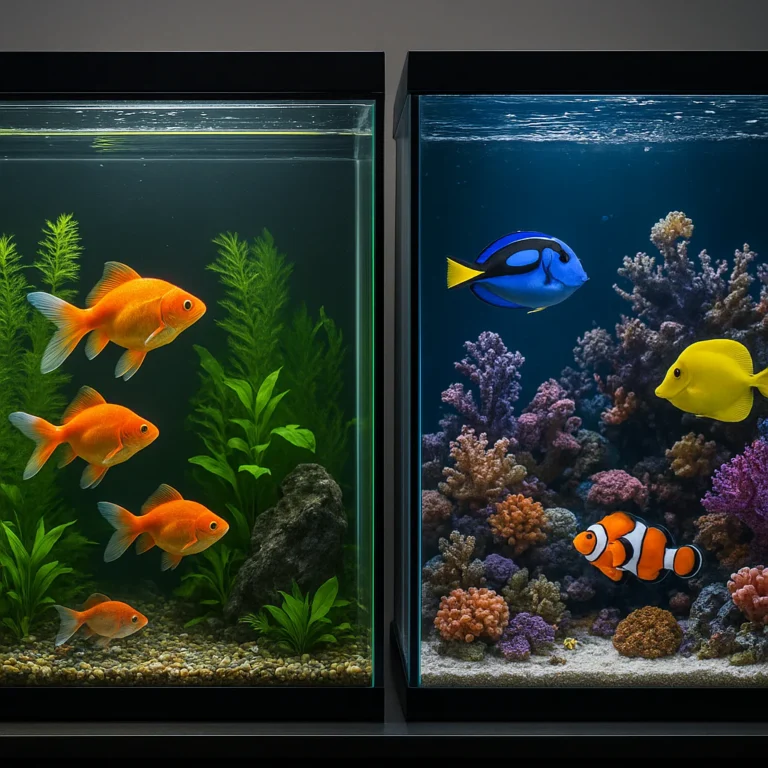
Forget the hang-on-back filters you used for your goldfish. A reef tank needs a sump (a secondary tank below the main display).
- Protein Skimmer: The heart of your system. It removes organic waste before it breaks down into nitrates. Brands like AquaC and Ref Octopus are industry standards.
- Refugium: A section of the sump growing macroalgae (like Chaetomorpha) and live rock. It acts as a natural nutrient export system and a safe haven for copepods.
- Return Pump: Needs to be powerful enough to cycle the tank volume 5-10 times an hour but quiet enough to sleep through.
👉 Shop Protein Skimmers on:
- Bulk Reef Supply: Search for Protein Skimmers
- Marine Depot: Search for Skimmers
- Amazon: Search for Reef Skimmers
3. Lighting Mastery: T5, LED, and PAR Values for SPS and LPS Growth
Lighting is the engine of your reef. Without it, corals starve.
- LED: The modern standard. Energy-efficient, customizable spectrum, and long-lasting. Look for brands like Radion (by Ecotech Marine) or Kessil.
- T5: Still used by some for their specific blue spectrum, but they are hot and energy-hungry.
- PAR (Photosynthetically Active Radiation): This is the measurement of light useful for photosynthesis.
Softies/LPS: 30-80 PAR
SPS: 150-30+ PAR
Pro Tip: Don’t just turn the lights on full blast immediately. Start at 50% intensity and ramp up by 10% every few days to prevent coral bleaching.
4. Water Flow Dynamics: Creating Turbulence Without the Chaos
Corals need flow to eat and expel waste, but too much flow will rip them apart.
- Laminar vs. Turbulent: You want turbulent flow (random, chaotic movement) rather than a straight jet of water.
- Wavemakers: Use programmable pumps like the Maxspect Gyre or Nyos to create natural, changing flow patterns.
- Rule of Thumb: Aim for 20-50x turnover of the tank volume per hour.
5. Substrate Choices: Live Sand, Aragonite, and Bare Bottom Debates
- Aragonite Sand: The classic choice. It buffers pH and provides a home for beneficial bacteria. A 1-2 inch layer is usually sufficient.
- Bare Bottom: Some advanced reefers prefer no sand to make cleaning easier and prevent anaerobic pockets, but it looks less natural.
- Deep Sand Beds: Controversial. Can be great for denitrification but risky if not managed perfectly.
6. The Critical Role of a Dedicated Reef-Safe Heater and Chiller
Temperature stability is non-negotiable.
- Heater: Use a titanium heater (like Eheim or AquaMedic) to prevent corrosion. Always have a backup or a thermostat controller.
- Chiller: If you live in a hot climate or have high-wattage lights, a chiller (like JBL or AquaMedic) is essential to keep temps below 78°F (25.5°C).
🧪 Mastering Reef Water Chemistry: Parameters, Testing, and Stability
If the tank setup is the body, water chemistry is the soul. Get this wrong, and your corals will die. Get it right, and you’ll have a living jewel.
1. Calcium, Alkalinity, and Magnesium: The Holy Trinity of Reef Keeping
These three elements work in tandem. If one is off, the others crash.
- Calcium (Ca): Essential for coral skeleton growth. Target: 40-450 ppm.
- Alkalinity (dKH): The buffer that stabilizes pH. Target: 8-9 dKH.
- Magnesium (Mg): Prevents calcium and alkalinity from precipitating out of the water. Target: 1250-1350 ppm.
| Parameter | Ideal Range | Test Frequency | Critical Note |
|---|---|---|---|
| Calcium | 40-450 ppm | Weekly | Low Ca = slow growth |
| Alkalinity | 8-9 dKH | 2-3x/week | High swings = bleaching |
| Magnesium | 1250-1350 ppm | Monthly | Must be balanced with Ca/Alk |
| pH | 8.1-8.4 | Daily | Low pH = poor calcification |
Recommended Test Kits:
- Salifert: Known for accuracy. Check Salifert on Amazon
- Red Sea: Great colorimetric kits. Check Red Sea on Amazon
- Hanna Checkers: For quick, digital readings. Check Hanna on Amazon
2. Managing Nitrates, Phosphates, and Silicates to Prevent Algae Outbreaks
- Nitrates (NO3): Keep below 5-10 ppm. Higher levels fuel nuisance algae.
- Phosphates (PO4): The enemy of corals. Keep below 0.03 ppm.
- Silicates (SiO4): Causes diatom blooms (brown slime). Keep near 0 ppm.
How to control them?
- Protein Skimming: Removes organics before they break down.
- Carbon Dosing: Adding vodka or vinegar to feed bacteria that consume nutrients (advanced).
- GFO (Granular Ferric Oxide): A media that adsorbs phosphates. Brands like Seachem PhosGuard are popular.
3. Trace Elements: When to Dose and When to Let Nature Take Its Course
Trace elements (Strontium, Iodine, Iron) are consumed by corals.
- The Trap: Over-dosing can be toxic.
- The Solution: Use two-part dosing (Calcium/Alk/Mg) and a trace element supplement only if your water tests show a deficiency.
- Water Changes: The best way to replenish traces is with regular water changes using high-quality salt mix like Ref Crystals or Instant Ocean.
4. The Art of Water Changes: Frequency, Volume, and Source Water Quality
- Frequency: 10% weekly or 20% bi-weekly.
- Volume: Consistency is key. Don’t do 50% once a month; it shocks the system.
- Source: Always use RO/DI water mixed with a high-quality salt mix. Never use tap water, even if it looks clean.
🐠 Stocking Your Reef: Compatible Fish, Invertebrates, and Coral Selection
Now comes the fun part: picking your cast of characters. But remember, less is more. Overstocking is the fastest way to crash a tank.
1. Top 10 Beginner-Friendly SPS Corals for Vibrant Color
SPS (Small Polyp Stony) corals are the crown jewels, but they are picky.
- Acropora millepora: Fast grower, comes in many colors.
- Montipora capitata (M. Cap): Very hardy, great for beginners.
- Pocillopora damicornis: The “cauliflower” coral, very resilient.
- Seriatopora hystrix: Needs high flow, but stunning.
- Stylophora pistillata: One of the hardiest SPS available.
- Acropora humilis: Compact and colorful.
- Montipora digitata: “Digitata” grows fast and looks great.
- Acropora formosa: Large polyp SPS, easier to keep.
- Pocillopora eydouxi: Beautiful branching structure.
- Montipora efflorescens: Known for its vibrant orange and purple hues.
Note: These corals require high light and high flow. If your tank is low-tech, skip these and go for LPS or Softies.
2. Best LPS Corals That Thrive in Lower Light Environments
LPS (Large Polyp Stony) corals have fleshy polyps and are generally more forgiving.
- Hamer Coral (Euphyllia ancora): Sways beautifully, very hardy.
- Bubble Coral (Plerogyra sinuosa): Great for lower light, but watch out for stinging neighbors.
- Zoanthids: Not technically LPS, but often grouped here. They are indestructible and come in every color.
- Mushroom Corals (Discosoma): Perfect for beginners. They just need to be placed and forgotten.
- Torch Coral (Euphyllia glabrescens): Similar to Hammer, but with longer tentacles.
3. Softies and Zoanthids: The Fast-Growing Ground Cover Options
- Leather Corals (Sarcophyton): Can get huge and produce toxins (mucous) that can harm other corals.
- Zoanthids: The ultimate carpet. They spread fast and are very hardy.
- Candy Canes (Clavularia): Tiny, soft, and great for filling gaps.
4. Reef-Safe Fish: Avoiding the “Coral Eater” Trap
Not all fish are created equal.
- Ref-Safe: Clownfish, Gobies, Blennies, Tangs (in large tanks), Dottybacks.
- Ref-Dangerous: Puffers, Wrasses (some species), Butterflyfish (many eat corals), Angelfish (large ones nip corals).
Check out our Fish Care and Species Profiles for detailed compatibility guides.
5. Invertebrate Heroes: Shrimp, Snails, and Hermit Crabs for Cleanup Duty
- Cleaner Shrimp (Lysmata amboinensis): Great for cleaning parasites off fish.
- Peppermint Shrimp: The only shrimp that eats Aiptasia (a nasty pest anemone).
- Nassarius Snails: Burow in the sand and eat detritus.
- Turbo Snails: Excellent algae eaters, but can flip over.
- Hermit Crabs: Great scavengers, but choose species that won’t kill other hermits (e.g., Blue Leged).
6. The Dangers of Overstocking: Bioload Management Strategies
Every fish and coral produces waste. If you add too many, your filtration can’t keep up.
- The Rule: Start slow. Add one or two fish every 2-3 weeks.
- Bioload: Calculate the waste production based on the size of the fish. A 6-inch Tang produces way more waste than a 1-inch Goby.
- Refugium: A large refugium can handle a higher bioload by growing macroalgae that absorbs nitrates.
🛠️ Advanced Maintenance Routines: Feding, Pruning, and Pest Control
Your tank is set up, stocked, and running. Now, how do you keep it from turning into a swamp?
1. Feding Your Corals: Target Feding vs. Open Water Feding
Corals get energy from light (photosynthesis) and food (heterotrophy).
- Target Feding: Using a turkey baster or pipette to squirt food directly onto coral polyps. Best for LPS and softies.
- Open Water Feding: Sprinkling food into the water column. Good for SPS and filter feeders.
- Frequency: Feed 2-3 times a week. Don’t overfeed! Excess food = algae.
Recommended Foods:
- Ref Nutrition: Check on Amazon
- Two Little Fishies: Check on Amazon
2. Identifying and Eradicating Common Reef Pests: Aiptasia, Flatworms, and Nuisance Algae
- Aiptasia: Small, stinging anemones. They multiply fast.
Fix: Peppermint shrimp, Blastomussa anemones, or chemical treatments like Aiptasia-X. - Flatworms: Tiny white worms that look like dust.
Fix: Increase flow, use a UV sterilizer, or treat with Flatworm Exit. - Nuisance Algae: Hair algae, cyanobacteria (slime).
Fix: Reduce nutrients (nitrates/phosphates), increase flow, use GFO.
3. Coral Fraging and Propagation: How to Multiply Your Collection
Once your corals grow, you can cut them!
- Tools: Dremel tool, bone cuters, or frag plugs.
- Process: Cut a branch, glue it to a plug with cyanoacrylate (super glue), and place it in a frag rack.
- Benefits: Saves money, shares with friends, and helps the hobby.
4. Equipment Cleaning and Glass Scrubing Without Harsh Chemicals
- Glass: Use a magnetic scraper or an algae pad. Never use soap!
- Pumps: Disassemble and rinse monthly to prevent clogs.
- Sump: Clean the skimmer cup daily. Rinse filter socks weekly.
🚨 Troubleshooting Common Reef Aquarium Problems: Disease, Bleaching, and Crashes
Even the best reefers face disasters. Here’s how to handle them.
- Coral Bleaching: Caused by high temps, high light, or poor water quality.
Solution: Lower temperature, reduce light intensity, check water parameters. - Fish Disease (Ich): White spots on fish.
Solution: Quarantine new fish! Treat with copper or UV sterilization. - System Crash: Sudden die-off of fish and corals.
Solution: Massive water change, check for ammonia/nitrite spikes, remove dead fish immediately.
Remember: Prevention is better than cure. Regular testing and maintenance are your best defense.
💡 Quick Tips and Facts: Myths Busted and Pro Secrets Revealed
Let’s clear up some confusion that plagues the hobby.
- Myth: “I need to add salt to my tank every day.”
Fact: Only add salt when doing water changes. Evaporation removes pure water, not salt. Adding salt daily will skyrocket your salinity. - Myth: “Live rock is alive.”
Fact: It’s dead rock covered in living bacteria and microfauna. It’s a biological filter, not a plant. - Myth: “More flow is always better.”
Fact: Too much flow can tear corals apart. Aim for turbulent flow, not a jet stream. - Secret: Captive-bred corals are often hardier than wild-caught ones because they are already aclimated to aquarium conditions. Check out Barrier Reef Aquariums for locally grown options.
🏆 Why We Love Reef Keeping: A Personal Journey from Saltwater Novice to Aquascaper
I still remember my first tank. It was a 20-gallon high, filled with cloudy water and a single, sad clownfish. I thought I was an expert because I watched a YouTube video. Spoiler alert: I wasn’t.
But then, I added a piece of live rock. And a snail. And a tiny piece of Zoanthid. Slowly, the water cleared. The snail cleaned the glass. The Zoanthid opened up, revealing a vibrant orange center. It was magic.
That first tank taught me that reef keeping isn’t about having the most expensive equipment. It’s about patience, observation, and respect for the ecosystem. It’s about watching a coral grow a millimeter a month and feeling like you’ve achieved something monumental.
We’ve seen tanks crash and tanks thrive. We’ve learned that the best reef is the one that is stable, not the one that is the most colorful. And that’s the beauty of it. It’s a living, breathing piece of art that changes every day.
📸 Photo Gallery: Stunning Reef Aquarium Layouts and Coral Close-Ups
(Note: As this is a text-based article, we can’t display images, but imagine a gallery here featuring:)
- A close-up of a vibrant Acropora colony with high flow.
- A stunning aquascape with a mix of LPS and soft corals.
- A macro shot of a cleaner shrimp on a coral branch.
- A wide shot of a 10-gallon reef tank with a school of Tangs.
📞 Contact Us: Get Your Reef Questions Answered by the Experts
Have a specific problem? Need advice on a new setup? Our team at Aquarium Music™ is here to help. Whether you’re struggling with algae or need a recommendation for a new skimmer, drop us a line. We believe in community and shared knowledge.
Contact Aquarium Music™ for personalized advice.
🏁 Conclusion: Is a Coral Reef Aquarium Right for You?

So, where does this leave us? You’ve read the history, learned the chemistry, and seen the potential pitfalls. The question remains: Is a coral reef aquarium right for you?
If you are looking for a low-maintenance hobby where you can set it and forget it, look elsewhere. A reef tank demands your attention, your patience, and your dedication. It requires you to be a scientist, a plumber, and an artist all at once.
But, if you are willing to invest the time, the money, and the emotional energy, the rewards are unparalleled. There is nothing quite like the feeling of watching a coral you nurtured from a tiny frag grow into a massive, colorful colony. It’s a symphony of life in your living room.
Our Final Recommendation:
Start small. Invest in quality equipment (especially lighting and flow). Test your water religiously. And most importantly, be patient. Don’t rush to add corals until your tank is truly ready.
If you’re ready to take the plunge, we recommend starting with a 5-gallon tank, a high-quality LED light, and a protein skimmer. And don’t forget to join a community like Ref2Ref or the Coral Reef Aquariums group on Facebook to learn from others.
Final Thought: The journey of a thousand miles begins with a single drop of water. Will you be the one to create your own underwater paradise?
🔗 Recommended Links: Top Brands, Tools, and Communities
Here are the resources we trust and recommend for your reefing journey:
- Books:
The Reef Aquarium by Julian Sprung: The bible of reef keeping. Check on Amazon
Coral Propagation by Anthony Calfo: Essential for fraging. Check on Amazon - Equipment Brands:
Ecotech Marine: For top-tier lighting and pumps. Visit Official Site
Red Sea: For salt, test kits, and feeders. Visit Official Site
AquaC: For protein skimmers. Visit Official Site - Communities:
Ref2Ref: The largest online reefing community. Join Reef2Ref
Coral Reef Aquariums (Tampa FL): A family-owned store with over 20 years of experience. Visit Facebook Page
Barrier Reef Aquariums: For captive-bred corals and fish. Visit Official Site
❓ FAQ: Frequently Asked Questions About Coral Reef Aquariums

What are common challenges in keeping a coral reef aquarium healthy?
The most common challenges include nutrient imbalance (high nitrates/phosphates), unstable water parameters (fluctuating pH, salinity, or temperature), and pest infestations (Aiptasia, flatworms). Maintaining stability is key to avoiding these issues.
Read more about “🐟 Feed Your Fish Right: The Ultimate 2026 Guide to Health & Growth”
How do lighting and flow impact coral health in reef tanks?
Lighting provides the energy for photosynthesis in zooxanthellae (the algae living inside corals). Without proper light, corals starve. Flow removes waste and brings in food. Too little flow leads to waste buildup; too much flow can damage coral tissue.
Read more about “🌿 Top 15 Best Plants for Freshwater & Saltwater Tanks (2026)”
What fish species are compatible with coral reef aquariums?
Ref-safe fish include Clownfish, Gobies, Blennies, and small Tangs (in large tanks). Avoid Puffers, large Wrasses, and Buterflyfish, as they often nip at or eat corals.
Read more about “🌿 Stop Algae for Good: 7 Steps to a Crystal-Clear Tank (2026)”
How can you create a natural habitat in a coral reef aquarium?
Use live rock for structure, aragonite sand for the substrate, and arrange corals to mimic natural reef zones (high flow for SPS, low flow for LPS). Add macroalgae in the refugium for a natural look and nutrient export.
Read more about “🌊 7 Signs of a Healthy & Thriving Fish Tank Ecosystem (2026)”
What types of corals are best for beginner reef aquariums?
Beginers should start with Softies (Leather, Mushroom), Zoanthids, and hardy LPS like Hamer or Bubble corals. These are more forgiving of fluctuating parameters than SPS corals.
Read more about “🌊 15 Surprising Benefits of a Fish Tank at Home or Office (2026)”
How do you maintain water quality in a coral reef aquarium?
Regular water changes (10% weekly), protein skimming, carbon dosing (if needed), and testing parameters (Calcium, Alkalinity, Magnesium, Nitrates, Phosphates) are essential.
Read more about “🌡️ How to Maintain Perfect Water Temperature for Your Fish (2026)”
What are the essential equipment needed for a coral reef aquarium?
Essential equipment includes a sump, protein skimmer, LED lighting, wavemakers/pumps, heater/chiller, RO/DI system, and test kits.
Read more about “🐠 How to Choose the Right Filter for Your Fish Tank (2026)”
What are the benefits of using a refugium in a coral reef aquarium system?
A refugium grows macroalgae (which exports nutrients), provides a safe haven for beneficial microfauna (copepods, amphipods), and helps stabilize pH and alkalinity.
Read more about “🌊 Ultimate Aquarium Accessories & Equipment Guide (2026)”
How can I promote coral growth and health in my aquarium?
Ensure stable water parameters, provide appropriate light and flow, feed corals regularly, and perform regular water changes. Avoid introducing pests.
Read more about “🌿 Ultimate Aquatic Plant Care Guide (2026): From Algae to Jungle”
What are the most common mistakes to avoid when setting up a coral reef aquarium?
Common mistakes include rushing the cycle, overstocking, using tap water, inconsistent testing, and adding corals too soon before the tank is stable.
Read more about “🌊 15 Home Aquarium Systems to Transform Your Space (2026)”
How often should I perform water changes in my coral reef aquarium?
Aim for 10% weekly or 20% bi-weekly. Consistency is more important than volume.
Read more about “🏰 15 Best Fish Tank Decorations for 2026: Safe, Stylish & Fish-Approved”
What are the essential components of a coral reef aquarium setup?
The essential components are a tank, sump, filtration (skimmer, filter socks), lighting, flow, heating/cooling, substrate, and live rock.
Read more about “🌊 7 Top Water Circulation & Pump Secrets for 2026”
How do I maintain optimal water parameters for a coral reef aquarium?
Use high-quality salt mix, RO/DI water, and test kits to monitor Calcium, Alkalinity, Magnesium, and nutrients. Dose supplements as needed and perform regular water changes.
What are the best fish species for a coral reef aquarium?
Top choices include Clownfish, Gobies, Blennies, Dottybacks, and small Tangs (like Yellow Tangs) in larger tanks. Always research compatibility before buying.
Read more about “🐠 2026 Guide: Picking the Perfect Tank Size for Your Space & Fish”
📚 Reference Links: Scientific Studies and Industry Standards
- National Oceanic and Atmospheric Administration (NOAA): Coral Reef Conservation Program
- Ref2Ref Community: Scientific Articles and Discussions
- Coral Reef Aquariums (Tampa FL): Facebook Page
- Barrier Reef Aquariums: Sustainable Sourcing Practices
- Ecotech Marine: Lighting and Flow Research
- Red Sea: Ref Chemistry Research