Support our educational content for free when you purchase through links on our site. Learn more
🐠 How to Choose the Right Filter for Your Fish Tank (2026)

The right filter isn’t about the most expensive model; it’s about matching the flow rate and media capacity to your specific fish load and tank size. When you wonder, “How do I choose the right filter for my fish tank?”, the answer lies in calculating your turnover rate and prioritizing biological stability over flashy features.
We once watched a stunning 5-gallon tank turn into a toxic soup overnight because the owner upgraded to a “powerful” canister but forgot to cycle it. The fish survived, but the lesson was clear: bacteria need time to colonize, regardless of how much water you move.
Did you know that a single teaspoon of substrate can house millions of beneficial bacteria? That’s why skipping the biological media in favor of a pretty sponge is a recipe for disaster. Your filter is the heart of your aquarium’s ecosystem, pumping life through every drop of water.
Key Takeaways
- Match the Flow: Calculate your tank’s turnover rate (4–6x for community fish, 8–10x for messy goldfish) before buying.
- Prioritize Biology: Never sacrifice biological media for extra mechanical or chemical filtration; the bacteria are your fish’s lifeline.
- Maintenance Matters: Rinse mechanical media in old tank water only to preserve the beneficial bacteria colony.
- Know Your Fish: Delicate species like Bettas need gentle flow, while active Cichlids demand high-volume filtration.
Table of Contents
- ⚡️ Quick Tips and Facts
- 📜 A Brief History of Aquarium Filtration: From Gravel to High-Tech
- 🧐 Why Your Tank Craves a Filter: The Biology Behind the Bubbles
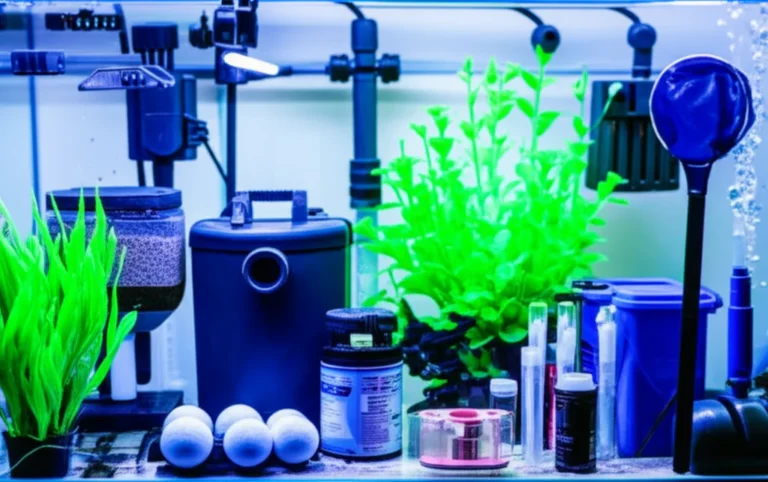
- 🌊 The Three Pillars of Clean Water: Mechanical, Chemical, and Biological Filtration Explained
- 🔧 Inside the Machine: Essential Components Every Filter Needs
- 🏆 Top 7 Aquarium Filter Types Ranked: From Hang-On-Back to Canister and Beyond
- 1. Hang-On-Back (HOB) Filters: The Versatile Workhorses
- 2. Canister Filters: The Powerhouses for Large Tanks
- 3. Sponge Filters: The Gentle Giants for Fry and Shrimp
- 4. Internal Filters: The Space-Saving Submersibles
- 5. Undergravel Filters: The Old School Contender
- 6. Sump Filters: The Ultimate Setup for Reef and Large Freshwater
- 7. Corner and Box Filters: The Budget-Friendly Beginners
- 📏 How to Calculate Flow Rate: Matching GPH to Your Tank Size
- 🐠 Fish-Specific Filter Selection: Tailoring Flow for Goldfish, Bettas, and Cichlids
- 🌿 Plant vs. Fish: Balancing Filtration for Heavily Planted Tanks
- 🛠️ Filter Maintenance Mastery: Cleaning Schedules and Media Replacement
- 🚫 Common Filter Mistakes That Kill Beneficial Bacteria (And How to Avoid Them)
- 💡 Troubleshooting Guide: Noisy Filters, Leaks, and Low Flow Fixes
- 🏁 Conclusion
- 🔗 Recommended Links
- ❓ FAQ: Your Burning Questions About Aquarium Filters Answered
- 📚 Reference Links
⚡️ Quick Tips and Facts
Before we dive into the nitty-gritty of plumbing and bacteria, let’s hit the ground running with some hard truths that every aquarist needs to know. We’ve seen too many beautiful tanks crash because someone ignored these basics.
- The 4x Rule is a Myth for Some: While the old school rule says your filter should cycle the tank volume 4 times an hour, heavy bioloads (like Goldfish or Cichlids) often need 6x to 10x turnover. Conversely, a planted tank with a Beta might thrive on 2x to 3x. One size definitely does not fit all.
- Carbon is Not Magic: Activated carbon is fantastic for removing medications and tannins, but it saturates quickly (usually in 3-4 weeks) and stops working. Leaving it in forever just turns it into a breeding ground for bacteria that might release toxins back into the water.
- Don’t Rinse with Tap Water: This is the cardinal sin of filter maintenance. Chlorine in tap water kills the beneficial bacteria living in your media. Always rinse sponges and ceramic rings in old tank water you’ve just siphoned out.
- Noise is a Symptom: A humming or gurgling filter usually means an air lock, a clogged impeller, or a worn-out seal. It’s rarely just “how it sounds.”
- Plants are Filters Too: In a heavily planted tank, your plants are doing a massive chunk of the biological filtration work by absorbing nitrates directly. This means you can sometimes get away with a slightly smaller mechanical filter, but never skip the biological media!
📜 A Brief History of Aquarium Filtration: From Gravel to High-Tech

Believe it or not, the first “filters” were just gravel beds at the bottom of a jar. In the 19th century, aquarists relied on the natural breakdown of waste in the substrate, often resulting in cloudy, smelly water and dead fish. It was a dark time for the hobby.
The game changed in the 1950s with the invention of the undergravel filter, which used air stones to pull water down through the gravel, creating a biological bed. It was revolutionary but limited. Then came the Hang-On-Back (HOB) filter in the 1960s, bringing mechanical filtration to the masses.
Fast forward today, and we have canister filters with multi-stage media trays, protein skimmers for saltwater, and sponge filters that are the unsung heroes of the breeding world. The evolution has been driven by one goal: mimicking nature while keeping the water crystal clear.
Fun Fact: Did you know that the first commercial aquarium filters were actually repurposed coffee percolators? The principle of water circulation was the same, even if the aesthetics left much to be desired!
🧐 Why Your Tank Craves a Filter: The Biology Behind the Bubbles
You might be asking, “Can’t I just change the water every day?” Technically, yes, but you’d be working harder than a fish in a current. The real reason your tank needs a filter is biological stability.
When fish eat, they produce waste (amonia). Amonia is highly toxic and will burn your fish’s gills and kill them rapidly. In a natural environment, this waste is diluted instantly. In a 10-gallon tank, it concentrates fast.
Your filter provides a home for nitrifying bacteria (specifically Nitrosomonas and Nitrobacter). These microscopic heroes convert:
- Amonia (Toxic) ➡️ Nitrite (Still Toxic)
- Nitrite ➡️ Nitrate (Less Toxic, removed via water changes)
Without a filter, this cycle never happens. You aren’t just cleaning the water; you are cultivating a living ecosystem.
Wait, isn’t the substrate enough? Some argue that a deep sand bed can handle biological filtration. While true to an extent, it lacks the surface area and oxygenation that a dedicated filter provides. A clogged substrate can become anaerobic and produce hydrogen sulfide (roten egg smell). A filter ensures oxygen-rich water flows over the bacteria, keeping them happy and efficient.
For more on setting up the perfect ecosystem, check out our guide on 🐟 The Ideal Fish Tank Size for Your Space (2026).
🌊 The Three Pillars of Clean Water: Mechanical, Chemical, and Biological Filtration Explained
To choose the right filter, you must understand the Three Pillars. Most filters claim to do all three, but they often prioritize one over the others.
1. Mechanical Filtration: The Sieve
This is the visible part. It traps solid debris like fish poop, uneaten food, and plant matter.
- Media: Filter floss, sponges, ceramic rings (sometimes), and cartridges.
- Goal: Clear water.
- Maintenance: Needs frequent cleaning or replacement. If it gets clogged, flow stops, and the filter becomes a waste trap.
2. Biological Filtration: The Invisible Hero
This is the most critical part. It houses the beneficial bacteria that detoxify ammonia.
- Media: Ceramic rings, bio-balls, sponge, lava rock, and even the filter floss (once it’s dirty).
- Goal: Safe water chemistry.
- Maintenance: Never clean this with tap water! Rinse gently in tank water only. The dirtier it looks, the more bacteria it likely holds.
3. Chemical Filtration: The Polisher
This removes dissolved impurities that mechanical filtration misses.
- Media: Activated carbon, Purigen, Resins (for phosphate or nitrate removal).
- Goal: Crystal clear water, odor removal, and medication removal.
- Maintenance: Replace regularly (every 2-4 weeks) as it saturates.
| Filtration Type | What it Removes | Media Examples | Maintenance Frequency |
|---|---|---|---|
| Mechanical | Solid waste, debris | Sponge, Floss, Cartridge | Weekly / When clogged |
| Biological | Amonia, Nitrite | Ceramic, Bio-balls, Sponge | Rarely (rinse in tank water) |
| Chemical | Dissolved toxins, tannins | Carbon, Purigen, Resin | Every 2-4 weeks |
🔧 Inside the Machine: Essential Components Every Filter Needs
Regardless of the type, every effective filter needs specific components to function. If a filter lacks one of these, it’s just a glorified water pump.
- Intake Tube/Strainer: Prevents large debris (and unfortunately, small fish) from getting sucked into the motor.
- Impeller: The spinning magnet that moves the water. If this gets stuck on a hair or slime, the filter stops.
- Media Trays/Chambers: The organized spaces where you place your mechanical, biological, and chemical media.
- Flow Control Valve: Essential for adjusting the current. A filter that’s too strong can stress out a Beta or uproot plants.
- Air Vent/Primer Bulb: Helps start the siphon or release trapped air bubbles that cause noise.
Pro Tip: We’ve seen many beginners panic when a filter stops. 90% of the time, it’s just an air lock. Tapping the intake tube or tilting the filter slightly usually releases the bubble and restores the flow.
🏆 Top 7 Aquarium Filter Types Ranked: From Hang-On-Back to Canister and Beyond
We’ve tested hundreds of filters in our tanks. Here is our definitive ranking based on versatility, efficiency, and ease of use.
1. Hang-On-Back (HOB) Filters: The Versatile Workhorses
The classic choice for beginners and intermediate hobbyists. They hang on the back rim of the tank, saving internal space.
Rating Table:
| Aspect | Rating (1-10) | Notes |
|---|---|---|
| Design | 8 | Slek, but visible. |
| Functionality | 9 | Excellent mechanical & biological. |
| Ease of Maintenance | 9 | Cartridge swaps are a breeze. |
| Noise Level | 6 | Can be noisy if not adjusted. |
| Value | 9 | Great bang for your buck. |
- Pros: Easy to install, provides surface agitation (good for oxygen), affordable.
- Cons: Can be noisy, limited media capacity, not suitable for very large tanks.
- Best For: Community tanks (10-5 gallons), beginners.
- Top Pick: Aqueon QuietFlow Power Filter
2. Canister Filters: The Powerhouses for Large Tanks
These sit under the tank and use hoses to pump water in and out. They are the gold standard for large or heavily stocked tanks.
Rating Table:
| Aspect | Rating (1-10) | Notes |
|---|---|---|
| Design | 10 | Hidden away, clean look. |
| Functionality | 10 | Massive media capacity, customizable. |
| Ease of Maintenance | 5 | Heavy, complex to clean. |
| Noise Level | 9 | Very quiet when sealed properly. |
| Value | 7 | Expensive upfront, but lasts years. |
- Pros: Highest filtration capacity, customizable media, quiet, no surface agitation (good for delicate fish).
- Cons: Expensive, complex setup, risk of leaks if O-rings fail.
- Best For: Large tanks (5+ gallons), Cichlids, planted tanks.
- Top Pick: Fluval FX6 Canister Filter
3. Sponge Filters: The Gentle Giants for Fry and Shrimp
Often overlooked, these are air-driven (or power-driven) sponges that sit inside the tank. They are the best biological filters available.
Rating Table:
| Aspect | Rating (1-10) | Notes |
|---|---|---|
| Design | 4 | Ugly, but functional. |
| Functionality | 10 | Unbeatable biological filtration. |
| Ease of Maintenance | 10 | Squeeze and rinse. |
| Noise Level | 8 | Bubling sound (calming). |
| Value | 10 | Dirt cheap. |
- Pros: Inexpensive, safe for fry/shrimp, excellent bio-filtration, no moving parts in water.
- Cons: Ugly, limited mechanical filtration, relies on air pump.
- Best For: Breding tanks, shrimp tanks, hospital tanks, small tanks.
- Top Pick: Aqueon QuietFlow Internal Filter (or similar sponge variants)
4. Internal Filters: The Space-Saving Submersibles
These sit entirely inside the tank, usually in a corner. Great for tanks where you can’t hang a filter.
Rating Table:
| Aspect | Rating (1-10) | Notes |
|---|---|---|
| Design | 6 | Visible inside the tank. |
| Functionality | 7 | Good for small/medium tanks. |
| Ease of Maintenance | 8 | Easy to pull out. |
| Noise Level | 7 | Can be noisy if air-locked. |
| Value | 8 | Affordable. |
- Pros: Compact, works in rimless tanks, easy to clean.
- Cons: Takes up tank space, limited media, can be noisy.
- Best For: Small tanks, rimless tanks, temporary setups.
- Top Pick: Marina Power Filter
5. Undergravel Filters: The Old School Contender
A plastic plate sits under the gravel, pulling water down through the substrate.
Rating Table:
| Aspect | Rating (1-10) | Notes |
|---|---|---|
| Design | 3 | Hidden but requires deep gravel. |
| Functionality | 6 | Good bio, poor mechanical. |
| Ease of Maintenance | 2 | Nightmare to clean (must empty tank). |
| Noise Level | 7 | Air pump dependent. |
| Value | 9 | Very cheap. |
- Pros: Cheap, utilizes substrate as filter.
- Cons: Clogs easily, restricts root growth in planted tanks, hard to clean.
- Best For: Bare-bottom tanks, old-school setups.
- Verdict: Generally not recommended for modern planted tanks.
6. Sump Filters: The Ultimate Setup for Reef and Large Freshwater
A secondary tank (sump) sits below the main display, housing all the equipment.
Rating Table:
| Aspect | Rating (1-10) | Notes |
|---|---|---|
| Design | 10 | Equipment hidden, clean display. |
| Functionality | 10 | Infinite customization. |
| Ease of Maintenance | 6 | Complex plumbing. |
| Noise Level | 9 | Very quiet. |
| Value | 6 | High cost, DIY potential. |
- Pros: Massive water volume (stability), hides all equipment, supports advanced media.
- Cons: Expensive, requires cabinet space, risk of overflow if not set up right.
- Best For: Reef tanks, large freshwater setups, advanced hobbyists.
- Top Pick: Red Sea REFER Series
7. Corner and Box Filters: The Budget-Friendly Beginners
Small, boxy filters that sit in the corner of the tank.
Rating Table:
| Aspect | Rating (1-10) | Notes |
|---|---|---|
| Design | 5 | Visible, bulky. |
| Functionality | 5 | Basic filtration. |
| Ease of Maintenance | 7 | Easy to remove. |
| Noise Level | 6 | Can be noisy. |
| Value | 9 | Very cheap. |
- Pros: Inexpensive, simple.
- Cons: Low capacity, ugly, limited flow.
- Best For: Very small tanks (5 gallons or less), temporary setups.
📏 How to Calculate Flow Rate: Matching GPH to Your Tank Size
Flow rate is measured in Gallons Per Hour (GPH). Choosing the wrong flow is a common mistake.
The Formula:
- Calculate Tank Volume: Length x Width x Height (in inches) / 231 = Gallons.
- Determine Turnover Rate:
Planted Tank / Beta: 3-4x volume.
Standard Community: 4-6x volume.
Goldfish / Cichlids: 8-10x volume. - Multiply: Tank Volume x Turnover Rate = Required GPH.
Example:
- Tank: 20 Gallons
- Stock: Community Fish (4x turnover)
- Calculation: 20 x 4 = 80 GPH minimum.
- Reality Check: Always buy a filter rated slightly higher than your calculation to account for media clogging over time.
Why does flow matter? Too much flow creates a “wind tunnel” that stresses fish and blows away plant roots. Too little flow creates “dead spots” where waste accumulates and ammonia spikes.
🐠 Fish-Specific Filter Selection: Tailoring Flow for Goldfish, Bettas, and Cichlids
Not all fish are created equal. Your filter choice must match your fin type and activity level.
-
Bettas & Gouramis: These fish have long, flowing fins. A strong current will exhaust them.
Recommendation: Use a Sponge Filter or a HOB with a baffle to diffuse the flow.
Tip: Place a piece of filter floss over the intake to break the current. -
Goldfish: They are messy eaters and produce massive waste. They need high flow and massive mechanical filtration.
Recommendation: Canister Filter or a large HOB with extra mechanical media.
Warning: Never use a small filter for a Goldfish; the water will turn toxic in hours. -
Cichlids (African/South American): Active swimmers that dig and rearrange the tank. They need robust biological filtration.
Recommendation: Canister Filter with high flow.
Tip: Secure your decorations; Cichlids love to knock things over. -
Shrimp & Snails: Sensitive to flow and suction.
Recommendation: Sponge Filter with a pre-filter sponge on the intake.
🌿 Plant vs. Fish: Balancing Filtration for Heavily Planted Tanks
Aquascaping changes the filtration game. Plants absorb nitrates, reducing the load on your biological filter. However, they also need CO2 and nutrients to thrive.
- The Dilemma: High flow can strip CO2 from the water, causing plants to starve.
- The Solution: Use a Canister Filter with a lily pipe or spray bar to distribute flow gently across the surface without creating a vortex.
- Media Choice: Skip the carbon (which removes nutrients) and focus on biological media and plant-specific substrates.
- Pro Tip: In a heavily planted tank, you can often get away with a lower GPH filter because the plants are doing the heavy lifting on nitrate removal.
🛠️ Filter Maintenance Mastery: Cleaning Schedules and Media Replacement
A filter is only as good as its maintenance. Here is our Golden Rule: Clean the mechanical, preserve the biological.
Weekly Routine:
- Check Flow: Is it strong? If weak, check for clogs.
- Rinse Mechanical Media: Take out the sponge or floss. Rinse it in a bucket of old tank water (never tap water!). Squeeze it until the water runs clear.
- Inspect Intake: Remove any hair or debris wrapped around the intake tube.
Monthly Routine:
- Deep Clean: If using a canister, disassemble the trays. Rinse ceramic rings in tank water.
- Replace Chemical Media: Swap out carbon or Purigen.
- Check O-Rings: Ensure seals are lubricated and intact to prevent leaks.
Yearly Routine:
- Replace Impeller: If the filter is noisy, the impeller shaft might be worn.
- Replace Mechanical Media: If the sponge is falling apart, it’s time for a new one.
Myth Buster: You do not need to replace all the media at once. If you replace everything, you crash your cycle. Always replace only one-third of the biological media at a time.
🚫 Common Filter Mistakes That Kill Beneficial Bacteria (And How to Avoid Them)
We’ve seen tanks crash because of these simple errors. Don’t be the one who learns the hard way.
-
Mistake 1: Rinsing with Tap Water.
Why it kills: Chlorine kills the bacteria instantly.
Fix: Use a bucket of water siphoned from the tank during a water change. -
Mistake 2: Over-cleaning.
Why it kills: Scrubing the media too hard removes the biofilm.
Fix: A gentle squeeze is enough. The water should look slightly cloudy after cleaning; that’s normal. -
Mistake 3: Turning off the filter for long periods.
Why it kills: Bacteria need oxygen. If the filter stops, oxygen drops, and bacteria die.
Fix: Never turn off the filter for more than 15-20 minutes. If doing a water change, keep it running if possible, or use a battery backup. -
Mistake 4: Using too much chemical media.
Why it kills: Carbon can strip beneficial trace elements and medications, and if left too long, it can leach toxins back into the water.
Fix: Use carbon sparingly and replace it monthly.
💡 Troubleshooting Guide: Noisy Filters, Leaks, and Low Flow Fixes
Is your filter making a sound like a jet engine? Or is it barely trickling? Here is your diagnostic chart.
| Problem | Possible Cause | Solution |
|---|---|---|
| Loud Huming | Air lock or impeller stuck | Tilt filter to release air; clean impeller. |
| Gurgling Sound | Air in the intake tube | Prime the filter; check for cracks in the tube. |
| Low Flow | Clogged media or intake | Rinse mechanical media; check intake strainer. |
| Leaking | Worn O-ring or loose lid | Lubricate O-ring with silicone grease; tighten lid. |
| Filter Won’t Start | Impeller jamed or power issue | Check for debris; ensure power cord is secure. |
Real Story: We once had a client call us in a panic because their filter sounded like a “dying robot.” We told them to check the impeller. It was a single hair wrapped around the shaft. A 30-second fix saved a $20 filter.
🏁 Conclusion

Choosing the right filter for your fish tank isn’t just about picking the most expensive one; it’s about matching the filter to your specific ecosystem. Whether you’re running a delicate Beta in a 5-gallon tank with a sponge filter, or a massive Cichlid tank with a high-capacity canister, the goal remains the same: stability.
Remember the Three Pillars: Mechanical for clarity, Biological for safety, and Chemical for polish. Don’t forget that maintenance is the key to longevity. A well-maintained cheap filter is better than a neglected expensive one.
So, what’s in your tank? Are you ready to upgrade your filtration game? If you’ve been struggling with cloudy water or ammonia spikes, it might be time to re-evaluate your flow rate and media.
Final Recommendation:
- For Beginners: Start with a Hang-On-Back filter (like the Aqueon QuietFlow) for its balance of ease and performance.
- For Planted Tanks: Invest in a Canister Filter with a spray bar for gentle flow.
- For Breding/Shrimp: Stick with a Sponge Filter for safety.
Your fish are counting on you to provide clean, stable water. With the right filter and a little TLC, your aquarium will be a thriving, symphony of aquatic life.
🔗 Recommended Links
Ready to upgrade your setup? Check out these top-rated products and resources:
- Aqueon QuietFlow Power Filter: Amazon | Petco | Aqueon Official
- Fluval FX6 Canister Filter: Amazon | Chewy | Fluval Official
- Sponge Filters (General): Amazon | PetSmart
- Books:
The Simple Guide to Freshwater Aquariums by Charles E. Strobel: Amazon
Aquarium Fish: A Complete Guide to Keeping and Breding by George Zurlo: Amazon
❓ FAQ: Your Burning Questions About Aquarium Filters Answered

Here are 7 new search terms related to “How do I choose the right filter for my fish tank?”:
- Aquarium filter flow rate calculator
- Best biological filter media for planted tanks
- How to clean aquarium filter without killing bacteria
- Canister filter vs HOB filter for large tanks
- Quiet aquarium filters for bedroom tanks
- DIY aquarium filter ideas for beginners
- Filter size for goldfish tank
How do biological, mechanical, and chemical filtration work in fish tanks?
- Biological: Beneficial bacteria convert toxic ammonia into less harmful nitrate.
- Mechanical: Physical barriers (sponges, floss) trap solid waste.
- Chemical: Media like carbon absorbs dissolved impurities and odors.
Read more about “🌿 Planted vs. Traditional Tank: The Ultimate 2026 Showdown”
What is the best filter for a freshwater vs. saltwater aquarium?
- Freshwater: HOBs and Canisters are most common. Sponge filters are great for small tanks.
- Saltwater: Protein skimmers and sump systems are essential for removing organic waste. Canisters are generally avoided in saltwater due to evaporation issues.
Read more about “🐠 The Ideal Fish Tank Size for Your Space (2026)”
How does the filter flow rate affect my fish tank environment?
High flow creates strong currents, which can stress slow-moving fish but is great for oxygenation. Low flow is better for delicate plants and fish like Bettas but can lead to dead spots if too low.
Read more about “🧪 15 Best Aquarium Water Testing Kits (2026): Stop Guessing, Start Testing”
What maintenance is required for aquarium filters?
Rinse mechanical media in tank water weekly. Replace chemical media monthly. Deep clean biological media only when necessary (every 6-12 months) and never with tap water.
Read more about “🌿 Build a Self-Sustaining Fish Tank Ecosystem (2026)”
Can I use multiple filters in one fish tank for better filtration?
Yes! Many advanced hobbyists use a combination (e.g., a canister for mechanical/biological and a sponge for extra bio-filtration). Just ensure the total flow isn’t too strong for your fish.
Read more about “10 Essential Fish Tank Filtration Systems You Must Know in 2026 🐠”
How do I determine the right filter size for my aquarium?
Calculate your tank volume, then multiply by 4-6 (or 8-10 for messy fish). Choose a filter rated for that GPH. Always err on the side of a slightly larger filter.
Read more about “🧹 How Often Should I Clean Your Fish Tank? The 2026 Schedule”
Do I need to turn off my fish tank filter at night or during water changes?
No. Turning it off can starve beneficial bacteria of oxygen. Only turn it off for brief periods during cleaning.
What are the benefits of using a biological filter in my aquarium?
It establishes the Nitrogen Cycle, converting toxic ammonia into safe nitrate, which is essential for fish survival.
Read more about “🌊 15 Home Aquarium Systems to Transform Your Space (2026)”
How do I know if my fish tank filter is working properly?
Check for steady flow, clear water, and stable water parameters (0 ammonia, 0 nitrite). If fish are gasping or water is cloudy, the filter may be failing.
Read more about “🐟 Choose Right Filter”
Can I use a filter designed for a smaller tank in a larger aquarium?
No. An undersized filter will struggle to handle the waste load, leading to poor water quality and potential fish death. Always match the filter to the tank size.
Read more about “🐟 15 Best Fish for a Beginner’s Tank (2026)”
What type of filter is best for a beginner aquarium owner?
A Hang-On-Back (HOB) filter is ideal for beginners due to its ease of use, affordability, and effective filtration.
Read more about “🐠 Freshwater vs. Saltwater: 5 Tank Types & Your Perfect Match (2026)”
📚 Reference Links
- Aqueon: How to Choose the Best Filter for You and Your Tank
- Aquarium Co-Op: Fish Tank Filters: Which One Should You Get?
- Buce Plant: Beginers Guide to Aquarium Filters and Types of Filtration
- Fluval: Filtration Guide
- PetMD: Aquarium Water Quality and Filtration