Support our educational content for free when you purchase through links on our site. Learn more
🌊 Ultimate Aquarium Accessories & Equipment Guide (2026)


Ever stared at a murky tank and wondered why your fish look more like ghosts than gold? You aren’t alone. At Aquarium Music™, we’ve seen everything from “DIY disasters” involving duct tape and hope to pristine, crystal-clear ecosystems that look like they belong in an underwater museum. The secret isn’t magic; it’s the right aquarium accessories and equipment. Whether you are battling stubborn algae, trying to grow a carpet of dwarf hairgrass, or simply trying to keep your beta happy, the gear you choose makes all the difference.
In this comprehensive guide, we’re diving deep into the machinery that keeps your aquatic symphony in tune. We’ll dissect the pros and cons of canister filters versus sumps, reveal why a $5 terracotta pot can sometimes outperform a $50 ceramic cave, and show you how smart controllers are revolutionizing the hobby. We’ll even share the one mistake 90% of beginners make with their lighting that leads to an algae explosion. Ready to transform your tank from a glass box into a thriving world? Let’s get started.
Key Takeaways
- Filtration is the heartbeat: Choosing the right canister filter or sump system based on your tank’s bioload is critical for long-term stability.
- Flow creates life: Eliminate dead spots with gyre pumps and spray bars to ensure every corner of your tank is oxygenated and clean.
- Lighting drives growth: Modern LED fixtures with customizable spectrums are essential for both planted tanks and reef displays, replacing outdated T5s.
- Safety first: Never skimp on backup heaters, ratchet hose clamps, and quarantine tanks to prevent catastrophic failures.
- Maintenance matters: Regular testing with master test kits and cleaning of mechanical media are non-negotiable for clear water.
👉 Shop Essential Categories:
- Filtration Systems: Amazon | Chewy
- Lighting & Controllers: Marine Depot | Bulk Reef Supply
- Test Kits & Water Care: Amazon | Petco
Table of Contents
- ⚡️ Quick Tips and Facts
- 📜 The Evolution of Aquatic Engineering: A Brief History of Aquarium Accessories
- 🔍 The Ultimate Guide to Aquarium Filtration Systems and Media
- 1. Canister Filters: The Heavy Lifters of the Hobby
- 2. Hang-On-Back (HOB) Filters: Simplicity Mets Efficiency
- 3. Sump Systems and Refugiums: The Secret Weapon of Pro Aquarists
- 4. Sponge and Internal Filters: Perfect for Nano Tanks and Breding
- 💡 Lighting Solutions for Planted Tanks and Reef Displays
- 1. LED Fixtures: Balancing PAR, Spectrum, and Aesthetics
- 2. T5 and Metal Halide: The Old Guard vs. The New Wave
- 3. Controllers and Timers: Automating Your Light Show
- 🌊 Water Flow and Circulation: Pumps, Powerheads, and Wave Makers
- 1. Return Pumps: Moving Water with Precision
- 2. Wave Makers and Gyre Pumps: Eliminating Dead Spots
- 3. Spray Bars and Eductors: Distributing Flow Evenly
- 🧪 Water Quality Management: Test Kits, Dosing, and Stabilizers
- 1. Essential Test Kits for Freshwater and Saltwater
- 2. Dosing Pumps and Auto-Dosing Systems
- 3. CO2 Injection Systems for Planted Aquariums
- 4. UV Sterilizers and Ozone Generators: Clearing the Cloud
- 🛠️ Essential Hardware, Plumbing, and Maintenance Tools
- 1. Hose Clamps, Tubing, and Connectors
- 2. Siphons, Gravel Vacums, and Water Change Tools
- 3. Heaters, Chillers, and Temperature Control
- 4. Skimmers and Protein Removers for Saltwater Tanks
- 🎨 Aesthetics and Decor: Hardscape, Substrates, and Backgrounds
- 1. Substrates: From Sand to Soil and Everything In Between
- 2. Hardscape: Rocks, Driftwood, and Aquascaping Techniques
- 3. Backgrounds and Tank Covers: Finishing the Look
- 🐠 Species-Specific Accessories: Breding, Quarantine, and Special Needs
- 1. Breding Boxes and Spawning Mops
- 2. Quarantine Tank Essentials
- 3. Specialized Equipment for Cichlids, Discus, and Shrimp
- 🚀 Troubleshooting Common Equipment Failures
- 💡 Quick Tips and Facts
- 🏆 Conclusion
- 🔗 Recommended Links
- ❓ FAQ
- 📚 Reference Links
⚡️ Quick Tips and Facts
Before we dive into the deep end of the equipment pool, let’s hit pause on the chaos and drop some golden nugets of wisdom that we’ve learned the hard way (often involving a flooded living room or a very confused beta fish).
- The “Rule of Thumb” for Flow: A common myth is that “more flow is always better.” ❌ Wrong! While a gentle current is great for most fish, a Gyre Pump blasting 5,0 GPH in a 10-gallon nano tank is basically a water slide for your shrimp. Always match the flow rate to your livestock’s natural habitat.
- The Silent Killer: Did you know that silicone is the glue of the aquarium world? ✅ If you are DIY-ing, ensure you use 10% silicone with no mold inhibitors. Those “anti-mold” additives can be toxic to your fish.
- The “Just Add Water” Trap: We love a good shortcut, but never skip the cycling process. Adding bacteria directly to a tank with fish without a nitrogen cycle is a recipe for disaster.
- Power Outage Prep: If you live in an area with frequent storms, a battery backup for your air pump is non-negotiable. Fish can survive weeks without food, but only hours without oxygen.
- The “Cheap” Trap: Buying the cheapest heater on the shelf? ❌ A heater that sticks in the “on” position can turn your tank into a hot tub for your fish. Invest in a dual-safety heater with a thermal fuse.
Curious about how a $5 terracotta pot from a hardware store can outperform a $50 ceramic cave? We’ll reveal the secret to budget-friendly hardscape later in the “Aesthetics and Decor” section!
📜 The Evolution of Aquatic Engineering: A Brief History of Aquarium Accessories

The journey from a simple glass bowl to a smart, automated aquatic ecosystem is a story of human ingenuity meeting nature’s complexity. In the early days, aquarists relied on gravity-fed siphons and manual water changes that required a strong back and a lot of patience. The invention of the undergravel filter in the mid-20th century was a revolution, but it often led to “dirty water” if not maintained religiously.
Fast forward today, and we have CANISTER FILTERS that can process thousands of gallons an hour, LED lighting that mimics the sunrise and sunset, and controllers that adjust pH and temperature automatically. The shift from “keeping fish alive” to “creating a thriving ecosystem” has driven the demand for specialized accessories like protein skimmers, CO2 regulators, and refugiums.
As we explore the modern toolkit, remember that every piece of equipment has a history of solving a specific problem. The Maxspect Gyre wasn’t just made to move water; it was engineered to eliminate dead spots where detritus accumulates, a problem that plagued early aquarists with simple powerheads.
🔍 The Ultimate Guide to Aquarium Filtration Systems and Media
Filtration is the heartbeat of your aquarium. Without it, the nitrogen cycle collapses, and your tank becomes a toxic soup. But with so many options, how do you choose? Let’s break down the giants of the filtration world.
1. Canister Filters: The Heavy Lifters of the Hobby
Canister filters are the workhorses of the freshwater and saltwater hobby. They sit outside the tank, offering massive biological, chemical, and mechanical filtration capacity.
Top Contender Analysis: Fluval FX6 Canister Filter
| Feature | Rating (1-10) | Notes |
|---|---|---|
| Design & Build Quality | 9 | Heavy-duty, clear canister for easy viewing. |
| Filtration Capacity | 10 | Handles up to 50 gallons; massive media trays. |
| Ease of Maintenance | 7 | Self-priming is great, but the hose connections can be tricky. |
| Noise Level | 8 | Whisper-quiet when properly primed. |
| Value for Money | 8 | Expensive upfront, but lasts a decade. |
- Pros: Unmatched biological capacity, excellent for planted tanks and large cichlids.
- Cons: Bulky, requires regular cleaning of impellers, and the hose clamps can be a pain.
- Expert Tip: Always use siphon hoses with a quick-release valve to make maintenance a breeze.
👉 Shop Fluval on:
- Amazon: Fluval FX6 Canister Filter
- Chewy: Fluval FX6
- Fluval Official: Fluval FX6 Product Page
2. Hang-On-Back (HOB) Filters: Simplicity Mets Efficiency
For smaller tanks or beginners, HOB filters are the gateway drug to the hobby. They hang on the back rim, utilizing the tank’s water level to drive the siphon.
- The Verdict: Great for tanks under 40 gallons. They are easy to service but can be noisy if the water level drops too low.
- Pro Insight: The AquaClear Power Filter series is legendary for its variable flow rate and massive media capacity relative to its size.
3. Sump Systems and Refugiums: The Secret Weapon of Pro Aquarists
If you are running a reef tank or a high-tech planted aquarium, a sump is non-negotiable. A sump is a secondary tank located in the stand, hidden from view, that houses equipment and increases total water volume.
- Why it matters: It stabilizes water parameters and hides the ugly protein skimmer and return pump.
- The Refugium: A section of the sump dedicated to growing macroalgae (like Chaetomorpha) and live rock, which naturally exports nitrates and phosphates.
4. Sponge and Internal Filters: Perfect for Nano Tanks and Breding
Don’t underestimate the humble sponge filter. Powered by an air pump, it provides gentle filtration perfect for breder tanks, shrimp tanks, or tanks with fry (baby fish) that might get sucked into a powerhead.
- Brand Spotlight: The AquaUv and Hygger brands offer excellent internal filters with adjustable flow, ideal for nano tanks where space is premium.
💡 Lighting Solutions for Planted Tanks and Reef Displays
Lighting is the sun of your underwater world. It drives photosynthesis in plants and corals, but getting the spectrum and intensity right is an art form.
1. LED Fixtures: Balancing PAR, Spectrum, and Aesthetics
LEDs have completely overtaken T5 and Metal Halide due to their energy efficiency and customizable spectrum.
- Key Metric: PAR (Photosynthetically Active Radiation). You need enough PAR for your plants/corals, but not so much that it causes algae explosions.
- Top Pick: The Twinstar and AI Hydra series are favorites for their ability to simulate natural daylight cycles.
Comparison: LED vs. T5 vs. Metal Halide
| Feature | LED | T5 Fluorescent | Metal Halide |
|---|---|---|---|
| Energy Efficiency | ✅ High | ⚠️ Medium | ❌ Low |
| Heat Output | ✅ Low | ⚠️ Medium | ❌ High |
| Spectrum Control | ✅ Excellent | ⚠️ Limited | ⚠️ Limited |
| Lifespan | ✅ 50,0+ hrs | ⚠️ 12,0 hrs | ❌ 6,0 hrs |
| Cost | ⚠️ High (initial) | ✅ Low | ⚠️ Medium |
2. T5 and Metal Halide: The Old Guard vs. The New Wave
While LEDs are king, T5 HO (High Output) fixtures still have a place for deep tanks where light penetration is critical. They provide a broad, even spread of light that some aquarists prefer for certain coral types. Metal Halides are largely obsolete for new setups due to heat and energy costs, but they still produce a stunning “sparkle” effect on the water surface.
3. Controllers and Timers: Automating Your Light Show
Why manually turn lights on and off when you can have a smart controller? Devices like the Neptune Systems Apex or GHL ProfiLux allow you to program sunrise/sunset ramps, moonlight phases, and even storm simulations.
- Pro Tip: Always use a photoperiod that mimics your local climate. A 12-hour day is standard, but a 6-hour ramp up and down prevents algae stress.
🌊 Water Flow and Circulation: Pumps, Powerheads, and Wave Makers
Stagnant water is the enemy. Dead spots lead to detritus buildup and anaerobic bacteria. You need flow that mimics the ocean or a river.
1. Return Pumps: Moving Water with Precision
The return pump pushes water from the sump back to the display tank. It must be sized correctly to handle the head pressure (height) of your tank.
- Recommendation: Look for DC (Direct Current) pumps like the Ecotech Marine Vectra or Maxspect series. They are quieter, more efficient, and allow for variable speed control.
2. Wave Makers and Gyre Pumps: Eliminating Dead Spots
Gone are the days of simple powerheads. Gyre pumps create a bidirectional flow, pushing water across the tank in a wave-like motion.
- Star Product: The Maxspect Gyre XF350 Cloud Edition.
Flow Rate: 5,280 GPH (Gallons Per Hour).
Why we love it: It creates a “cleaning” effect, keeping debris suspended so the skimmer can catch it.
Setup: Can be run as a single unit or a double unit package for larger tanks.
👉 Shop Maxspect on:
- Amazon: Maxspect Gyre XF350
- Marine Depot: Maxspect Gyre Series
- Maxspect Official: Gyre XF Series
3. Spray Bars and Eductors: Distributing Flow Evenly
If you have a planted tank, a spray bar is essential. It runs along the back of the tank, distributing flow evenly without blasting your plants.
- DIY vs. Buy: You can buy a Dymax IQ Spray Bar or make your own using PVC pipe and a drill.
- Eductors: These use the Venturi effect to inject air into the water, increasing oxygenation while moving water. Perfect for tanks with high bioloads.
🧪 Water Quality Management: Test Kits, Dosing, and Stabilizers
You can’t manage what you don’t measure. Water chemistry is the invisible foundation of a healthy tank.
1. Essential Test Kits for Freshwater and Saltwater
- Freshwater: Test for Amonia, Nitrite, Nitrate, and pH. The API Freshwater Master Test Kit is the gold standard.
- Saltwater: You need to test Salinity, Alkalinity (dKH), Calcium, Magnesium, and Phosphates. The Salifert or Hanna Checker kits are highly accurate.
2. Dosing Pumps and Auto-Dosing Systems
For reef tanks, manual dosing is a chore. Dosing pumps like the Ref Factory Dosing Pump or Kalkwasser reactors automate the addition of calcium, alkalinity, and magnesium.
- Safety First: Always use waste pumps or overflow protection to prevent over-dosing, which can kill your corals instantly.
3. CO2 Injection Systems for Planted Aquariums
To grow lush, carpeting plants, you need CO2.
- The Setup: A CO2 cylinder, regulator, solenoid valve, and a diffuser or reactor.
- Nano Solution: The Denerle CO2 Nano Fliper is a game-changer for small tanks, offering a simple, pressurized system without the complexity of a full cylinder setup.
👉 Shop CO2 Systems on:
- Amazon: CO2 Kit for Planted Tanks
- Bulk Reef Supply: CO2 Equipment
- Denerle Official: CO2 Nano Fliper
4. UV Sterilizers and Ozone Generators: Clearing the Cloud
- UV Sterilizers: These kill free-floating algae and pathogens, turning “green water” clear in days. Essential for ponds and large aquariums.
- Ozone: Used in advanced reef systems to oxidize organics, but requires careful monitoring to avoid harming livestock.
🛠️ Essential Hardware, Plumbing, and Maintenance Tools
The unsung heroes of the hobby. Without these, your fancy equipment is useless.
1. Hose Clamps, Tubing, and Connectors
Never skimp on hose clamps. A burst hose can flood your house in minutes.
- Recommendation: Two Little Fishies Ratchet Hose Clamps. They are stainless steel and won’t rust.
- Tubing: Use silicone tubing for flexibility and durability. Avoid cheap vinyl that cracks over time.
- Fittings: Biotek Marine offers high-quality Polypropylene Straight Insert Male Adapters (1/4″ MPT to 1/4″ Barb) for custom plumbing.
2. Siphons, Gravel Vacums, and Water Change Tools
- The Classic: A simple Python No Spill Clean and Fill system makes water changes a breeze.
- The Pro Move: Use a gravel vacuum with a bowl to catch debris, preventing it from clogging your sink.
3. Heaters, Chillers, and Temperature Control
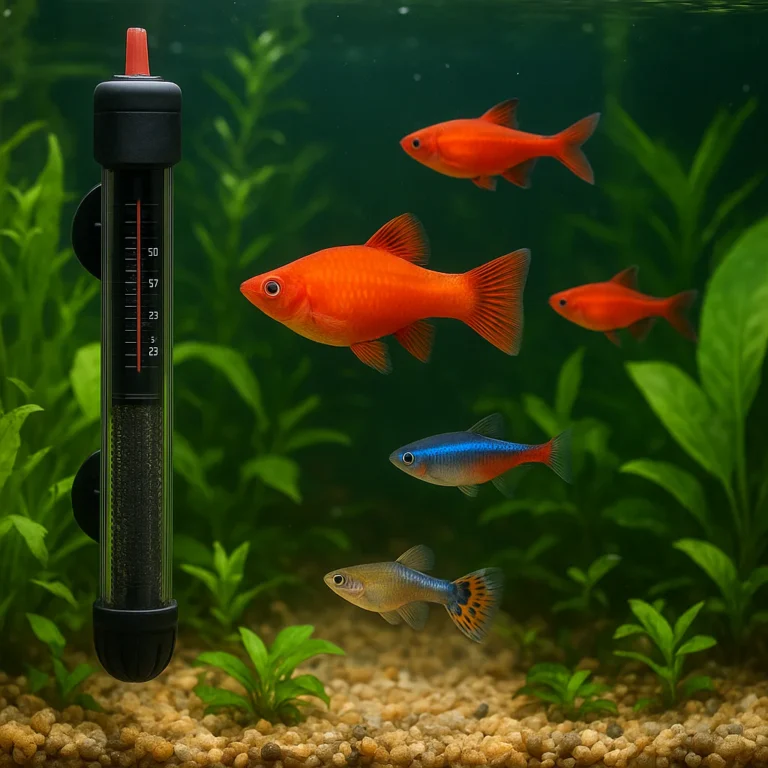
- Heaters: Always have a backup heater. The Eheim Jager is legendary for its accuracy and durability.
- Chillers: For tropical fish in hot climates, a chiller is essential to keep temps below 80°F.
4. Skimmers and Protein Removers for Saltwater Tanks
The protein skimmer is the heart of a reef tank, removing organic waste before it breaks down into nitrates.
- Top Pick: The AutoAqua Smart Skimmer series offers excellent value and performance.
- Safety: Always use a skimmer security device to prevent overflow if the water level drops.
🎨 Aesthetics and Decor: Hardscape, Substrates, and Backgrounds

Your tank is a canvas. Let’s make it a masterpiece.
1. Substrates: From Sand to Soil and Everything In Between
- Freshwater Planted: Use aquasoil (like ADA Aqua Soil) for nutrient-rich planting.
- Saltwater: Aragonite sand buffers pH and looks natural.
- Budget Hack: As mentioned in our “Quick Tips,” pool filter sand from a hardware store is a safe, cheap substrate for freshwater tanks. Just rinse it thoroughly!
2. Hardscape: Rocks, Driftwood, and Aquascaping Techniques
- Rocks: Seiryu stone, Dragon stone, and lava rock are popular. Avoid limestone in soft water tanks as it raises pH.
- Driftwood: Spider wood and Manzanita add structure. Soak them first to remove tannins (or embrace the tea-colored water!).
- Glue: Use Gorilla Glue Gel (the aquarium-safe kind) to attach moss to rocks.
3. Backgrounds and Tank Covers
- Backgrounds: A 3D background adds depth. The Amazon Rainforest 3D Background is a fan favorite.
- Covers: Vortech MP IntelliCovers protect your pumps and prevent fish from jumping out.
Wait, did you know you can use terracotta pots from a garden store as hiding spots? We’ll explain why they are better than expensive ceramic caves in the “Species-Specific” section!
🐠 Species-Specific Accessories: Breding, Quarantine, and Special Needs
One size does not fit all. Different fish have different needs.
1. Breding Boxes and Spawning Mops
- Breding Boxes: Essential for livebearers like guppies to separate fry from hungry parents.
- Spawning Mops: Made of yarn, these mimic plants for egg-laying fish like angelfish.
2. Quarantine Tank Essentials
Never skip the quarantine tank!
- Setup: A bare-bottom tank with a sponge filter and a heater.
- Purpose: Isolate new fish for 2-4 weeks to ensure they are disease-free before adding them to the main display.
3. Specialized Equipment for Cichlids, Discus, and Shrimp
- Cichlids: Need ceramic caves and heavy-duty filtration due to their messy eating habits.
- Discus: Require large water changes and soft, acidic water. A UV sterilizer is highly recommended.
- Shrimp: Need sponge filters to prevent them from being sucked in and CO2 for plant growth.
🚀 Troubleshooting Common Equipment Failures
Even the best gear fails. Here’s how to fix it fast.
- Pump Huming but Not Moving Water: Check for airlocks or a clogged impeller. Clean the impeller chamber.
- Heater Not Heating: Check the thermostat setting. If it’s set correctly, the heater element may be broken. Replace it immediately.
- Algae Explosion: Usually a sign of excess light or nutrient imbalance. Check your test kits and reduce photoperiod.
- Leaking Hoses: Tighten the hose clamps or replace the tubing. Use Teflon tape (like Biotek Marine Threaded Seal Tape) on threaded connections.
🏆 Conclusion

We’ve journeyed from the humble beginnings of the aquarium hobby to the high-tech, automated ecosystems of today. Whether you are a beginner setting up your first 10-gallon tank or a seasoned pro managing a massive reef, the right aquarium accessories and equipment are the difference between a struggling tank and a thriving underwater paradise.
Key Takeaways:
- Filtration is King: Invest in a high-quality canister filter or sump system tailored to your tank size.
- Flow Matters: Use gyre pumps and spray bars to eliminate dead spots.
- Lighting is Life: Choose LEDs with customizable spectrums for your specific plants or corals.
- Maintenance is Non-Negotiable: Regular testing and cleaning are essential.
- Don’t Skimp on Safety: Use backup heaters, ratchet clamps, and quarantine tanks.
Remember, the goal isn’t just to keep fish alive; it’s to create a symphony of aquatic life where every element works in harmony. As we hinted earlier, that $5 terracotta pot? It’s not just a pot; it’s a breding haven for your cichlids, proving that sometimes the best equipment is the one you can find at the local hardware store.
Ready to transform your tank? Start by auditing your current setup. Do you have a dead spot? Is your lighting outdated? The answers are out there, and your fish are waiting.
🔗 Recommended Links
Essential Equipment & Brands:
- 👉 Shop Aquarium Accessories – Planted Tank Extras: Glass Aqua Collection
- Fluval FX6 Canister Filter: Amazon | Chewy
- Maxspect Gyre XF350: Amazon | Marine Depot
- API Freshwater Master Test Kit: Amazon
- Two Little Fishies Ratchet Hose Clamps: Amazon
- Denerle CO2 Nano Fliper: Denerle Official
Books for Further Reading:
❓ FAQ

What are the essential aquarium accessories for beginners?
For beginners, the absolute essentials are a reliable filter (HOB or sponge), a heater with a thermostat, a thermometer, a test kit (API Master Kit), and a gravel vacuum. Don’t forget water conditioner to remove chlorine and chloramines.
Read more about “🌊 50+ Best Saltwater Aquarium Fish Species for 2026: From Nano to Giant”
How do I choose the right aquarium equipment for a saltwater tank?
Saltwater tanks require more specialized gear. You need a protein skimmer, a sump, high-output lighting (LED or T5), and a refugium. Flow is critical, so invest in wave makers or gyre pumps. Always test for alkalinity, calcium, and magnesium.
Read more about “🌊 7 Marine Aquarium Recycling Systems Secrets for 2026”
What are the best budget-friendly aquarium accessories?
You can save big by using pool filter sand as substrate, teracotta pots for caves, and DIY spray bars made from PVC. For filtration, sponge filters are incredibly cheap and effective for small tanks.
Read more about “🐠 25 Ultimate Aquatic Gift Ideas & Accessories (2026)”
How often should I replace aquarium equipment filters?
Mechanical media (sponges) should be rinsed in tank water every 2-4 weeks. Chemical media (carbon) should be replaced monthly. Biological media (ceramic rings) should rarely be replaced; just rinse them gently to preserve the beneficial bacteria.
Read more about “🐠 Ultimate Fish Tank Equipment Guide: 7 Essential Upgrades (2026)”
What advanced aquarium accessories improve water quality?
UV sterilizers eliminate green water and pathogens. Protein skimmers remove organic waste before it breaks down. Dosing pumps maintain stable parameters in reef tanks. Refugiums with macroalgae naturally export nitrates.
Read more about “🌊 Ultimate Guide to Aquarium Filtration Systems (2026)”
Are smart aquarium controllers worth the investment?
For most hobbyists, yes. Controllers like the Neptune Apex or GHL allow you to automate lighting, dosing, and temperature monitoring. They provide peace of mind and prevent catastrophic failures, especially when you are away from home.
Read more about “What’s the Real Cost of Setting Up & Maintaining a Fish Tank? (2026) 🐠”
How do I set up a self-cleaning aquarium system?
A true “self-cleaning” tank doesn’t exist, but you can minimize maintenance with a large sump, refugium, and high flow. Adding clean-up crews (snails, shrimp) and using live rock helps break down waste. However, regular water changes are still necessary.
Read more about “10 Essential Fish Tank Filtration Systems You Must Know in 2026 🐠”
📚 Reference Links
- Neptune Systems: Apex Controller Documentation
- Maxspect: Gyre XF Series Technical Specs
- Fluval: FX6 Canister Filter Manual
- Seachem: Water Quality Parameters
- Glass Aqua: Aquarium Accessories Collection
- Modern Aquarium: Aquarium Equipment Overview
- Aquarium Specialty: Parts & Plumbing Accessories