Support our educational content for free when you purchase through links on our site. Learn more
🐟 Feed Your Fish Right: The Ultimate 2026 Guide to Health & Growth

Most adult fish thrive on one or two small meals a day, while babies need 3 to 5 tiny feedings, and the secret to optimal growth lies in mixing high-quality flakes, pellets, and frozen foods. If you’ve ever stared at your tank wondering, “How often should I feed my fish, and what are the best types of food to provide for optimal health and growth?“, you are asking the right question to transform your aquarium from a cloudy mess into a vibrant ecosystem.
We once watched a well-meaning owner turn a crystal-clear 5-gallon tank into a green soup in just three days because he thought “more food equals happier fish.” The result? A frantic ammonia spike and a very unhappy school of Tetras. It turns out, fish are not bottomless pits; they are delicate creatures with specific metabolic needs that change with temperature and species.
Understanding the delicate balance between feeding frequency and nutritional variety is the difference between a dying tank and a thriving underwater symphony. Whether you are raising tiny fry or caring for a grumpy Oscar, the right routine unlocks their true potential.
Key Takeaways
- Frequency Matters: Stick to the 2-to-3 minute rule for adults (1-2 times daily) and feed fry 3-5 times daily to support rapid growth.
- Variety is Vital: Combine high-protein staples with frozen treats and vegetable matter to mimic natural diets and boost immunity.
- Less is More: Overfeeding is the leading cause of water quality crashes; it is always safer to slightly underfeed than to risk ammonia spikes.
- Know Your Species: Tailor your approach based on whether your fish are carnivores, herbivores, or bottom dwellers.
Table of Contents
- ⚡️ Quick Tips and Facts
- 🕰️ A Brief History of Fish Feding: From Wild Streams to Your Tank
- 🤔 How Often Should I Feed My Fish? The Golden Rules of Frequency
- 🐠 Feding Schedules by Species: Tailoring Routines for Optimal Growth
- 🐟 Tropical Community Fish: The Daily Grind
- 🦈 Carnivores and Predators: Less is More
- 🌿 Herbivores and Grazers: The Constant Snack Attack
- 🐢 Bottom Dwellers and Nocturnal Feeders: Night Shifts
- 🍽️ What Are the Best Types of Food? Decoding the Nutrition Label
- 🥩 High-Protein Flakes and Pelets: The Staple Diet
- 🥬 Frozen and Live Foods: The Nutrient Powerhouses
- 🌱 Vegetables and Algae Wafers: Essential Fiber and Greens
- 🧪 Specialized Formulas: Color Enhancers and Growth Boosters
- 📏 Portion Control: How Much is Too Much?
- 🚫 Common Feding Mistakes That Kill Tanks (And How to Avoid Them)
- 🛠️ Tools of the Trade: Feeders, Dippers, and Smart Tech
- 🧪 Water Quality and Feding: The Invisible Connection
- 🌡️ Seasonal Adjustments: Changing Feding Habits with Temperature
- 👶 Fry and Juvenile Care: Feding for Rapid Growth
- 🏆 Top Recommended Brands and Products We Trust
- 💡 Quick Tips and Facts Recap
- Conclusion
- Recommended Links
- FAQ
- Reference Links
## ⚡️ Quick Tips and Facts
Hey there, fellow aquarists! Ever
stared at your finned friends, wondering if they’re hungry, or if you’re about to turn your pristine aquatic paradise into a cloudy, smelly mess? You’re not alone! It’s one of the most common questions we
get here at Aquarium Music™, and honestly, it’s a delightful dance between science and observation. Getting feeding right is crucial for vibrant colors, robust health, and a truly harmonious tank. In fact, a healthy aquarium environment, partly maintained
by proper feeding, can significantly improve your mental and emotional well-being. Want to know how? Check out our article on 7 Ways a Fish Tank Heals Your Mind & Soul (2026).
Let’s get straight
to the good stuff with some quick hits:
- Frequency is Key, But It Varies: Most adult fish thrive on being fed once or twice a day. But hold your horses!
Tiny fry and super active species might need more frequent, smaller meals. - The 2-3 Minute Rule is Your Best Friend: Only offer what your fish can gobble up in **
2 to 3 minutes**. Seriously, set a timer! If it’s gone in less, a tiny bit more might be okay, but if it’s still floating around after 5 minutes
, you’ve overdone it. - Variety is the Spice of Life (and Fish Diets!): Just like us, fish need a balanced diet. Don’t stick to just one type of
food! Mix flakes, pellets, frozen, and even some fresh veggies. - Know Your Fish’s Mouth and Habits: A large predator won’t bother with tiny flakes, and a delicate Neon
Tetra can’t swallow a big pellet. Also, remember your bottom dwellers and nocturnal feeders – they need their own special delivery service! - Underfeeding is Better
Than Overfeeding (Especially for New Tanks): Uneaten food is the enemy of crystal-clear water and stable parameters. When in doubt, feed a little less. Your filter will thank you!
Watch for the Signs:** Plump bellies? Cloudy water? Fuzzy stuff on decor? These are red flags for overfeeding. Skinny fish or faded colors? You might be underfeeding. Your fish are constantly communicating – are you listening?
## 🕰️ A Brief
History of Fish Feeding: From Wild Streams to Your Tank
It’s easy to forget that our beloved aquarium inhabitants, even the most domesticated guppy, have ancestors who foraged for every meal. For eons, fish in the wild were
opportunistic eaters, constantly grazing on algae, snatching insects, or ambushing smaller prey. Their digestive systems evolved for a steady, albeit often sparse, intake of diverse nutrients.
When humans first started keeping fish, it was often in ponds or simple
containers, and feeding was a rudimentary affair – whatever scraps were available, or perhaps some insects. The concept of a “balanced fish diet” as we know it is relatively modern. It wasn’t until the late 19th and early 2
0th centuries, with the rise of dedicated aquarists and scientific understanding of fish physiology, that specialized fish foods began to emerge. Early commercial foods were often dried insects or basic grain mixtures. Remember those old-school fish flakes from your
grandparents’ tank? They were revolutionary in their day!
Today, we’ve come a long way from tossing breadcrumbs into a bowl. The industry has blossomed, offering a bewildering array of scientifically formulated foods designed for every species, every
life stage, and every dietary need. We’re talking about flakes, pellets, wafers, frozen cubes, live cultures, and even specialized gels! This evolution reflects our growing understanding of aquatic nutrition and our desire to provide the absolute best for
our underwater companions. But with so many options, how do you choose? And more importantly, how often do you serve up dinner? Let’s dive in!
## 🤔 How Often Should I Feed My Fish? The Golden Rules of Frequency
This is the million-dollar question, isn’t it? And like most things in the
aquarium hobby, the answer isn’t a simple “X times a day.” It’s more of a nuanced “it depends!” But don’t fret, we’re here to demystify it for you.
At Aquarium Music™, we
generally recommend feeding most adult aquarium fish once or twice a day. Think of it like their morning coffee and an afternoon snack. This schedule mimics a more natural foraging pattern and allows their digestive systems to process
food efficiently. Some seasoned hobbyists even advocate for fasting fish 1–2 days per week to give their digestive systems a complete clear-out, which can be beneficial for overall gut health. We
‘ve seen great success with this approach, especially for robust species.
Metabolic Factors: The Inner Workings of Your Fish
Why the variability? It all boils down to metabolism!
- Size and Activity Level: Imagine
a tiny, zippy Zebra Danio constantly darting around versus a large, placid Oscar. Who do you think burns more calories? Exactly! Small, active fish and especially newly hatched fry have higher metabolic rates and need more frequent
, smaller feedings. Larger, more sedentary fish can comfortably go longer between meals. - Water Temperature: This is a big one! Water temperature directly regulates fish
metabolism. Warmer water means a faster metabolism, which in turn means your fish will digest food quicker and need to eat more frequently and in larger quantities. Conversely
, in cooler water, their metabolism slows down, and they’ll require less food. This is why you might adjust feeding during seasonal changes or if you keep a coldwater tank. - Fish Age: This is a critical
factor often overlooked. As the first YouTube video we’ve embedded above highlights, juvenile or baby fish require more frequent feedings, typically 3-5 times a day, to support their rapid growth. Think of them
as growing teenagers – always hungry!
The “How Much” Conundrum: The 2-3 Minute Rule and Beyond
Now that we’ve covered frequency, let’s tackle quantity. This is where the infamous ”
2-to-3 Minute Rule” comes into play, and it’s truly a golden standard for a reason.
Here’s the drill:
- Drop a small amount of
food into the tank. - Watch your fish. Seriously, observe them!
- If they consume all the food within 2 to 3 minutes, you’ve likely given them an appropriate amount.
- If it’s gone in less than 2 minutes, you might slightly increase the quantity next time.
- If food is still floating or sinking after 3
minutes, you’ve fed too much. Immediately remove any uneaten food after 5 minutes to prevent water quality issues.
Another helpful guideline, though harder to measure precisely for the average hobbyist,
is to feed 0.5-2% of the fish’s body weight, with 1% being a good starting point. For example, a 100-gram fish would be fed 1 gram
of food. While you’re probably not weighing your fish (unless you’re a mad scientist aquarist like some of us!), this gives you a conceptual understanding of how little food fish actually need.
Why
is this rule so important? Because it’s always best to underfeed, especially in new aquariums, as uneaten food can cloud your water and cause dangerous rises in ammonia and nitrite levels.
We’ve all been there, staring at a cloudy tank, wondering what went wrong. More often than not, it starts with an eager hand and too much food.
## 🐠 Feeding Schedules by Species: Tailoring Routines for Optimal Growth
Just as a lion doesn’t graze and a cow doesn’t hunt, different fish species have distinct
dietary needs and natural feeding behaviors. Understanding these nuances is paramount to creating a thriving aquatic ecosystem. Let’s break down some common categories.
🐟 Tropical Community Fish: The Daily Grind
Most of your typical tropical community fish –
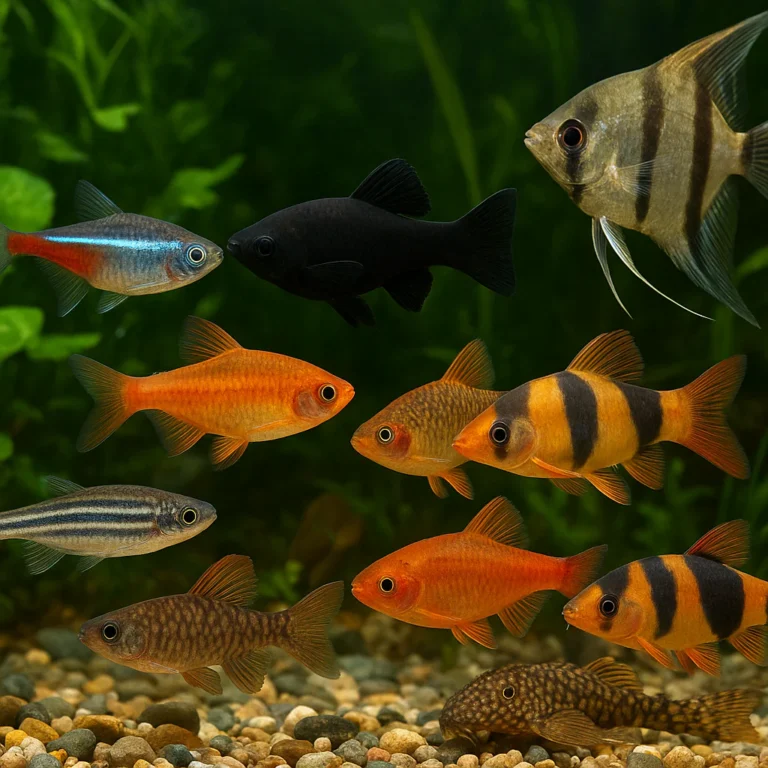
think Tetras, Guppies, Platies, Rasboras, and even many smaller Barbs – are omnivores. They’re built for consistent, smaller meals throughout the day, mimicking their natural foraging habits.
- Our Recommendation
: Once or twice a day is ideal for these guys. A morning meal and an evening meal work perfectly. - Timing Tip: For diurnal fish (active during the day), feed them after
your aquarium lights have been on for at least 10-15 minutes. This gives them time to wake up and become active. Ensure lights remain on for at least 30 minutes after
evening feeding. - Food Type: High-quality flakes like TetraMin Tropical Flakes or small pellets such as Hikari Micro Pellets are excellent staples. Supplement with frozen brine
shrimp or daphnia a few times a week.
🦈 Carnivores and Predators: Less is More
Fish like Oscars, many Cichlids, Bettas (though often smaller), and certain larger Gouramis are primarily
carnivores. In the wild, they don’t catch a meal every single day. Their digestive systems are designed to handle larger, less frequent meals.
- Our Recommendation: Once a day, or even every other day,
can be perfectly fine for many carnivores. We’ve personally found that a slightly less frequent schedule can lead to better coloration and reduced waste. - Food Type: Larger, high-protein pellets like
Omega One Cichlid Pellets or Hikari Cichlid Gold are great. Frozen foods such as bloodworms, mysis shrimp, and krill are also fantastic additions. For Bettas, Fluval Bug
Bites Betta Formula is a fantastic choice, mimicking their insectivorous diet. - Anecdote: Our head aquascaper, Alex, once had an Oscar that he fed daily. It grew fast, but the tank
always seemed a bit cloudy. Switching to feeding every other day, with larger, higher-quality pellets and occasional frozen treats, not only cleared up the water but also brought out incredible reds and oranges in the Oscar!
🌿 Herbivores and Graz
ers: The Constant Snack Attack
This category includes many Plecostomus species, Otocinclus, Mollies, and certain African Cichlids. These fish spend their days grazing on algae and plant matter. Their digestive tracts are longer
and designed for a continuous intake of fibrous material.
- Our Recommendation: These fish need to be fed more frequently, in smaller quantities, as they forage throughout the day. You can
still do once or twice a day with specialized foods, but ensuring they have access to grazing material is key. - Food Type: Algae wafers (like Hikari Algae Wafers or Tetra Veggie Wafers) are a must. Fresh blanched vegetables such as zucchini, cucumber, or spinach are also fantastic. You can use a veggie clip to keep them submerged.
- Pro Tip: Consider adding some live plants to
your aquascape. Not only do they look stunning, but they also provide natural grazing opportunities for your herbivores! Explore our Aquascaping and Aquatic Plants section for inspiration.
🐢 Bottom Dwellers and Nocturnal Feeders: Night Shifts
Corydoras catfish, many Loaches, certain Plecostomus, and Knifefish are often bottom dwellers or nocturnal
. They won’t compete well for food with surface feeders during the day.
- Our Recommendation: Feed these species shortly after the aquarium lights are turned off. This ensures
they get their fair share without being outcompeted. - Food Type: Sinking tablets, wafers, and pellets are essential. Brands like Hikari Sinking Wafers or
API Bottom Feeder Pellets are specifically designed for this. You can also target-feed shy fish by directing food to their “safe zone” using a turkey baster. - Internal Link
: For more in-depth care guides on specific species, including their feeding habits, check out our Fish Care and Species Profiles category
.
## 🍽️ What Are the Best Types of Food? Decoding the Nutrition Label
Choosing the right
food for your fish is like being a personal chef for a very discerning clientele. You wouldn’t feed a vegetarian a steak, right? The same goes for your fish! Matching food to your fish’s natural diet is crucial for their health,
growth, and vibrant colors.
🥩 High-Protein Flakes and Pellets: The Staple Diet
These are the bread and butter (or rather, the flakes and pellets!) of most aquarium diets
. They’re convenient, widely available, and formulated to provide a balanced nutritional base.
Rating Table: General Flake & Pellet Foods
| Aspect | Design (Packaging/Ease of Use) | Functionality (Float/Sink Rate) | Nutritional Value | Palatability | Overall Rating |
|---|---|---|---|---|---|
| Flakes | 8 | ||||
| 7 | 7 | 8 | 7.5 | ||
| Pellets | 8 | 8 | 8 | 8 | 8.0 |
- Flakes: Ideal for surface and mid-water feeders. Brands like TetraMin Tropical Flakes (available on Amazon | Petco) and Omega One Freshwater Flakes (available on Amazon | Chewy) are industry
standards. They’re easy to portion and generally well-accepted. - Pros: Easy to feed, good for community tanks, widely available.
- Cons: Can break down quickly and pollute water if over
fed, less dense nutrition than pellets. - Pellets: Offer more concentrated nutrition and come in various sizes and sink rates, making them versatile for mid-water and bottom feeders. Hikari Micro Pellets (available on Amazon | PetSmart) are fantastic for smaller fish, while Fluval Bug Bites Granules (available on Amazon | Petco) are a newer, highly recommended option derived
from insect larvae, mimicking a natural diet. - Pros: Denser nutrition, less waste, various sizes/sink rates.
- Cons: Some fish may initially ignore them if used to flakes, can
be harder to break down for very small mouths.
🥬 Frozen and Live Foods: The Nutrient Powerhouses
These are the gourmet meals, packed with natural goodness that can significantly enhance your fish’s health, color, and breeding
readiness.
- Frozen Foods: Brine shrimp, bloodworms, daphnia, mysis shrimp, and krill are common frozen options. They offer excellent protein and essential fatty acids. Brands like **San Francisco Bay Brand
** (available on Amazon | Chewy) are reliable. - Pros: Highly palatable, excellent nutrition, stimulates natural hunting instincts, less risk of parasites
than live foods. - Cons: Requires freezer space, needs thawing before feeding, can be messy.
- Feeding Tip: Use a turkey baster or a large syringe to dispense small amounts
of thawed frozen food, ensuring it reaches top, mid, and bottom feeders. This is especially great for target feeding shy species or ensuring everyone gets a bite. - Live Foods: Think live brine shrimp, d
aphnia, blackworms, or even small feeder fish (for larger predators). Live foods are the ultimate enrichment, triggering natural hunting behaviors. - Pros: Unbeatable palatability, highly nutritious, excellent enrichment.
Cons: Can introduce parasites or diseases if not sourced from a reputable supplier, requires careful handling and storage, not always readily available.
- Our Take: While fantastic, we at Aquarium Music™ generally recommend frozen over live for
the average hobbyist due to the reduced risk of introducing unwanted pathogens. If you do go live, ensure your source is pristine!
🌱 Vegetables and Algae Wafers: Essential Fiber and Greens
Don’t forget the greens! Many fish
, even omnivores and some carnivores, benefit from plant matter.
- Algae Wafers: Crucial for herbivores and bottom feeders like Plecos and Corydoras. They sink quickly and provide sustained grazing. Hikari
Algae Wafers (available on Amazon | Petco) are a top choice. - Pros: Sinks
quickly, provides essential fiber, great for bottom dwellers. - Cons: Can be ignored by non-herbivores, can break down if left too long.
- Fresh Vegetables: Blanched zucchini, cucumber
slices, spinach, or even shelled peas are excellent occasional treats. Use a veggie clip (like the Mag-Clip Magnetic Algae Clip on Amazon) to keep them submerged. - Pros: Natural, fresh nutrients, great enrichment.
- Cons: Needs
to be removed after a few hours to prevent spoilage, some fish may not take to them.
🧪 Specialized Formulas: Color Enhancers and Growth Boosters
These foods are designed to target specific needs, often containing higher levels of certain nutrients
or pigments.
- Color Enhancers: Often contain ingredients like spirulina, astaxanthin, or carotene to bring out vibrant reds, oranges, and yellows. Brands like Hikari Cichlid Gold (available on Amazon | PetSmart) are well-known.
- Growth Boosters:
Higher in protein and fats, formulated for rapid development, especially in juvenile fish or breeding projects. - Our Advice: While these can be beneficial, they should generally be used as supplements to a balanced diet, not as the sole food source
.
Remember: Variety is key! Even carnivores benefit from some plant matter, and vice versa. If you have a mixed-species tank, alternate between meat protein and plant-based foods to ensure everyone gets what
they need.
## 📏 Portion Control: How Much is Too Much?
We’ve all been there: a
little sprinkle here, another little sprinkle there. It’s so easy to get carried away, especially when those adorable fish eyes are staring up at you! But when it comes to fish feeding, less is almost always more. Overfeeding is,
hands down, one of the most common mistakes new and even experienced aquarists make.
Let’s reiterate the golden rule: Feed only what your fish can consume in 2 to 3 minutes. We can’t stress this enough! If you see food lingering after this short window, you’ve given too much. And the critical next step? Remove any uneaten food after 5 minutes using a siphon hose
or a fine net. This isn’t just about tidiness; it’s about preventing a cascade of water quality problems.
The Perils of Overfeeding: A Cloudy Tale
What happens if you consistently
overfeed? It’s not pretty, and it can quickly turn your beautiful aquarium into a biological disaster zone.
Signs of Overfeeding:
- ❌ Uneaten food remains after 5 minutes with no fish interest
. This is your primary warning sign! - ❌ Cloudy or hazy water with a foul odor, sometimes accompanied by foam or froth on the surface. This is often
a bacterial bloom feasting on the excess nutrients. - ❌ Fuzzy or cottony white fungus on decorations, plants, or even fish. Another sign of bacterial or fungal overgrowth.
❌ Filter media clogging within days of cleaning. Your filter is working overtime to deal with the waste.
- ❌ Excessive algae growth due to the accumulation of nitrates and phosphates. Algae loves a nutrient-rich environment!
- ❌ Elevated ammonia, nitrite, chronically high nitrates, or low pH. These are toxic to fish and indicate a stressed
or crashed nitrogen cycle.
The Fix: If you spot these signs, don’t panic!
- Siphon out any uneaten food immediately.
- Perform a significant water change (25-50%) to dilute toxins.
- Vacuum your substrate thoroughly to remove trapped detritus.
- Most importantly, reduce the amount of food per feeding by at least 50
%. You might even consider a day or two of fasting for adult fish to let the system recover.
Underfeeding: The Silent Struggle
While overfeeding gets a lot of attention, underfeeding can
also be detrimental, though often less immediately catastrophic.
Signs of Underfeeding:
- ✅ Fish appear skinny or have sunken bellies. This is particularly noticeable behind the gills or along the lateral
line. - ✅ Paler coloration. Malnourished fish often lose their vibrant hues.
- ✅ Lethargy or reduced activity levels.
- ✅ **Fish slowly dying off
**. Chronic underfeeding weakens their immune system and can lead to starvation. - ✅ Aggression towards tank mates (in some species) as they compete for scarce resources.
Our Perspective: We
‘ve seen both extremes. It’s a delicate balance. Our goal is to see fish with a slightly rounded belly, not distended, but certainly not concave. Observing your fish daily is the best way to gauge
if your portions are just right. They’ll tell you if you’re listening!
🚫 Common Feeding Mistakes That Kill Tanks (And How to Avoid Them)
Alright, let’s be real. We’ve all made mistakes in this hobby. It’s part of the learning curve! But some feeding bl
unders are so common, and so detrimental, that we feel it’s our duty to shine a spotlight on them. Consider this your “Aquarium Music™ Guide to Not Messing Up Dinner.”
- The “More
is Better” Mentality: This is the granddaddy of all feeding mistakes. As we’ve hammered home, overfeeding is the quickest way to foul your water, stress your fish, and invite a host of problems from algae blooms to ammonia
spikes.
- The Fix: Stick to the 2-3 minute rule. When in doubt, feed less. Your fish aren’t going to starve if they miss a crumb
or two.
- Lack of Dietary Variety: Imagine eating the same bland meal, day in and day out, for your entire life. Sounds miserable, right? Your fish feel the same way! Relying solely on one
type of flake food, even a high-quality one, deprives them of essential nutrients found in other food sources.
- The Fix: Mix it up! Incorporate flakes, pellets, frozen foods, and blanched vegetables into
their diet. Even carnivores benefit from some plant matter, and herbivores need their protein too.
- Ignoring Species-Specific Needs: Feeding an herbivorous Pleco the same high-protein pellets as your
carnivorous Cichlid is a recipe for disaster. Different fish have different digestive systems and nutritional requirements.
- The Fix: Research your fish! Understand if they are herbivores, carnivores,
or omnivores. Provide sinking wafers for bottom feeders and ensure nocturnal species get their food after lights out. Our Fish Care and Species Profiles section is a great place to start your research.
- Feeding at the Wrong Time (or in the Dark!): While some fish are perfectly happy with a morning
and evening meal, your nocturnal buddies will miss out if you’re only feeding during daylight hours.
- The Fix: Observe your fish’s natural activity patterns. For nocturnal species
, drop sinking foods in after the lights go out.
- Not Removing Uneaten Food: We’ve said it before, and we’ll say it again: uneaten food is
poison in your tank. It decomposes, releases ammonia, and fuels unsightly algae growth.
- The Fix: Always be ready with a net or a small siphon to remove any food that hasn’t been eaten
within 3-5 minutes. It’s a small effort that makes a huge difference.
- The Stealth Feeder Syndrome: This is a classic! You feed the fish, your partner feeds the fish,
your kids feed the fish… and suddenly, your tank is a cloudy mess. As the YouTube video points out, “Make sure others aren’t feeding too!”.
- The Fix: Establish a
clear feeding schedule and designate one person (or at least coordinate!) for feeding duties. A simple note on the tank or a pre-portioned daily food container can work wonders.
Personal Story: I once had a beautiful planted tank that
suddenly developed a persistent green hair algae problem. I was baffled! My water parameters were fine, lights were on a timer, but the algae just wouldn’t quit. After weeks of frustration, I discovered my well-meaning roommate was ”
topping up” the fish food whenever he passed the tank, thinking they looked hungry. Once we established a strict feeding protocol, the algae slowly receded. It was a humbling, but valuable, lesson in communication and portion control!
By
avoiding these common pitfalls, you’ll be well on your way to a healthier, happier aquarium and fish that truly thrive.
## 🛠️ Tools of the Trade: Feeders, Dippers, and Smart Tech
While your own two hands are often the best tools for feeding, sometimes life gets in the way. Vacations, busy schedules, or even
just the need for precise, consistent feeding call for a little extra help. That’s where some clever gadgets come in!
Automatic Fish Feeders: Your Vacation (and Sanity) Saver
Automatic feeders are a godsend for
busy aquarists. They ensure your fish get fed regularly, even when you’re not around. For baby fish and fry, an automatic feeder can be programmed to dispense tiny meals multiple times a day, which is crucial for their rapid growth
.
Rating Table: Eheim Everyday Automatic Fish Feeder
| Aspect | Design (Aesthetics/Build) | Functionality (Programming/Dispensing) | Reliability | Ease of Use | Overall Rating |
| :———— | :———————— | :————————————- | :———– | :———- | :————- |
| Eheim Everyday | 9 | 9 | 10 | 8 | **
9.0** |
-
Eheim Everyday Automatic Fish Feeder: This is a perennial favorite among our team. It’s incredibly reliable, easy to program, and has excellent moisture protection for the food. We’ve used
these for years on our display tanks and during staff vacations without a hitch. -
Pros: Highly reliable, easy programming, active ventilation keeps food dry, versatile mounting options.
-
Cons: Can be a
bit bulky for very small tanks, requires AA batteries. -
👉 CHECK PRICE on: Amazon | Petco | Eheim Official Website
-
Tetra My AquariumCare Automatic Feeder: Another solid option, often
a bit more budget-friendly. It’s simple to set up and works well for flake or small pellet foods. -
Pros: Affordable, straightforward operation, good for basic needs.
-
Cons:
Less advanced programming than some higher-end models, smaller food capacity.
👉 Shop Automatic Fish Feeders on:
- Eheim: Amazon | Petco | Eheim Official Website
- Tetra: Amazon | PetSmart
Turkey Basters and Large Syringes: Precision Feeding for Shy Eaters
These aren’t just for Thanksgiving dinner anymore! A clean, dedicated turkey baster or a large syringe (without the needle, obviously!) is an invaluable tool for target feeding.
- How to Use: Thaw your frozen foods, then suck them up into the baster. You can then gently squirt the food directly into the “safe zone” of
shy or slow-eating fish, or ensure bottom dwellers get their share without it being snatched by faster surface feeders. It’s also fantastic for dispensing live baby brine shrimp to fry. - Pros:
Allows for precise delivery, reduces waste, ensures all fish get fed. - Cons: Requires manual effort, needs to be cleaned thoroughly after each use.
- 👉 Shop Turkey Basters on: Amazon | Walmart
Feeding Rings and Veg
gie Clips: Keeping Things Tidy
- Feeding Rings: These simple floating rings keep flake food contained in one area, preventing it from scattering across the surface and getting sucked into the filter intake. This is especially useful for tanks with strong
surface agitation. - Pros: Keeps food contained, reduces waste, makes observation easier.
- Cons: Not necessary for all tanks, can be unsightly for some aquascapes.
- Veggie Clips
: Perfect for holding blanched vegetables or algae sheets for your herbivorous fish. They typically attach to the side of the tank with a suction cup or magnet. - Pros: Keeps veggies submerged, prevents them from floating away
, allows fish to graze naturally. - Cons: Can be knocked off by larger fish, needs to be cleaned regularly.
- 👉 Shop Veggie Clips on: Amazon | Bulk Reef Supply
Investing in a
few of these tools can make your feeding routine more efficient, less messy, and ultimately, contribute to a healthier environment for your aquatic residents.
##
🧪 Water Quality and Feeding: The Invisible Connection
You might think feeding is just about putting food in the tank, but it’s intricately linked to the very lifeblood of your aquarium: water quality. In fact, improper feeding is one of the
leading causes of poor water parameters, which in turn leads to stressed, sickly fish. It’s a delicate dance between providing sustenance and maintaining a pristine environment.
Every bit of food you put into your tank, whether eaten or not, has
an impact.
- Uneaten Food: This is the primary culprit. Any food that isn’t consumed quickly begins to decompose. This decomposition process releases ammonia (NH₃) into the water. Ammonia is highly toxic
to fish, even in small concentrations, burning their gills and internal organs. - Fish Waste: Even perfectly digested food results in fish waste. This waste also breaks down, contributing to the ammonia load.
- The Nitrogen Cycle
: This is where your filter comes into play. Beneficial bacteria in your filter media (and substrate) convert toxic ammonia into less toxic nitrite (NO₂⁻), and then nitrite into relatively harmless nitrate (NO₃⁻). This process is called the nitrogen cycle. - Overfeeding’s Impact: If you overfeed, you overwhelm your beneficial bacteria. They
can’t process the sudden surge of ammonia and nitrite quickly enough, leading to spikes that can be lethal to your fish. This is why it’s always best to underfeed, especially in new aqu
ariums, as uneaten food can cloud your water and cause dangerous rises in ammonia and nitrite levels. - Nutrient Accumulation: Even nitrates, while less toxic than ammonia or nitrite, can build up to
unhealthy levels if not managed. High nitrates fuel excessive algae growth and can stress fish over time. Phosphates, often found in fish foods, also contribute to algae issues.
Maintaining the Balance
So, how do we
keep this invisible connection healthy?
- Portion Control is Paramount: As discussed, the 2-3 minute rule is your best defense against water quality crashes.
- Efficient Filtration: A robust filtration system is non
-negotiable. Ensure your filter is appropriately sized for your tank and stocked with good quality mechanical (sponges, floss) and biological (ceramic rings, bio-balls) media. Regular filter maintenance (rinsing media in old tank water) is
also key. Check out our Aquarium Equipment section for filter recommendations. - Regular Water Changes: Even with perfect feeding and filtration, nitrates will
accumulate. Weekly or bi-weekly partial water changes are essential to dilute these accumulated nutrients and replenish essential minerals. - Substrate Vacuuming: Uneaten food and fish waste often settle in the substrate. Regular gravel vacuuming removes these
organic pollutants before they can break down and foul the water. - Test Your Water: Regularly testing your water for ammonia, nitrite, and nitrate is like getting a report card for your aquarium’s health. A good liquid
test kit (like the API Freshwater Master Test Kit on Amazon
| Petco) is an indispensable tool for any aquarist.
Remember
, every time you feed your fish, you’re not just providing a meal; you’re influencing the entire delicate balance of your aquatic ecosystem. A mindful approach to feeding is one of the most powerful tools you have for maintaining pristine water quality and,
consequently, healthy, happy fish.
## 🌡️ Seasonal Adjustments: Changing Feeding Habits with Temperature
Just like we might crave
hearty stews in winter and light salads in summer, your fish’s dietary needs can shift with the seasons – or more accurately, with the water temperature. This is a crucial, yet often overlooked, aspect of optimal fish care.
As
mentioned earlier, water temperature directly regulates fish metabolism. Think of it like a thermostat for their internal engines.
- Warmer Water = Faster Metabolism: In warmer temperatures, fish are
generally more active, their digestive processes speed up, and they burn through calories quicker. This means they’ll need to be fed more frequently and potentially in slightly larger quantities. If you keep
a tropical tank, your heater maintains a consistent warm temperature, so your feeding schedule might be more stable year-round. However, even tropical tanks can experience slight temperature fluctuations that might warrant minor adjustments. - Cooler Water = Slower
Metabolism: Conversely, in cooler water, fish become less active, and their metabolism slows down significantly. They require less energy, and their digestive systems take longer to process food. Overfeeding in cooler water is particularly dangerous as the une
aten food will sit and decompose even slower, leading to rapid water quality degradation. - Our Experience: We’ve seen this firsthand with coldwater species like Goldfish. In the dead of winter (if kept in an unheated pond or a cooler indoor tank), their activity drops dramatically. Feeding them the same amount as in summer would quickly lead to issues.
Practical Adjustments
-
Observe Activity Levels: This is your best indicator. Are your fish
zipping around, or are they more lethargic? More activity usually means more food is needed. -
Adjust Quantity, Not Just Frequency: In warmer periods, you might slightly increase the portion size within the 2-
3 minute rule. In cooler periods, significantly reduce the quantity. -
Consider Food Type: In cooler water, opt for easily digestible foods. Avoid overly rich or fatty foods that might sit in their digestive tract for too long.
-
For Outdoor Ponds: If you have an outdoor pond, feeding should be drastically reduced or even stopped entirely once water temperatures drop below a certain point (e.g., 50°F or 10°C), as many pond fish will enter a state of torpor.
-
For Unheated Indoor Tanks: If you keep coldwater fish in an unheated indoor tank, be mindful of ambient room temperature changes throughout the year.
Anecdote: Our resident coldwater specialist, Sarah, keeps a stunning Goldfish tank. She meticulously tracks her tank’s temperature and adjusts her feeding. In summer, her Goldfish get a varied diet twice a day, including
blanched peas. In winter, when her room is cooler, she reduces feeding to once a day, sometimes every other day, and focuses on easily digestible sinking pellets. This careful attention keeps her Goldfish robust and healthy year-round, avoiding
the common issues of swim bladder problems and cloudy water often seen in overfed coldwater fish.
By tuning into your fish’s metabolic rhythm, guided by water temperature, you can provide a truly responsive and optimal feeding regimen.
## 👶 Fry and Juvenile Care: Feeding for Rapid Growth
Ah, the pitter-patter of tiny fins! Raising fish
fry and juveniles is one of the most rewarding aspects of the hobby, but it comes with its own unique feeding challenges. These little guys are growing at an incredible rate, and their nutritional demands are vastly different from their adult counterparts. Think of them as tiny
, hungry machines!
The first YouTube video in this article makes a crucial point: juvenile or baby fish require more frequent feedings, 3-5 times a day, to support their growth. This isn
‘t just a suggestion; it’s a necessity for healthy development. Their tiny stomachs can only hold a small amount of food at a time, but their rapid metabolism and constant growth mean they need a steady supply of nutrients.
The
“Little and Often” Mantra
- Frequency is King: Forget the once-a-day rule for adults. For fry, you’re looking at 3 to 5 small feedings spread throughout the day. This ensures a
constant supply of energy and building blocks for their rapidly developing bodies. - Micro Portions: We’re talking tiny amounts. Just a pinch of powdered food or a few drops of liquid fry food per feeding. The goal
is for all of it to be consumed within a minute or two. Any uneaten food will quickly foul the small volume of water fry are often kept in. - Consistency: Try to maintain a consistent schedule. Fry thrive on routine
.
Specialized Foods for Tiny Mouths
You can’t just crush up adult flakes and expect fry to thrive. Their mouths are microscopic, and they need highly digestible, nutrient-dense food.
- Liquid Fry Food: For
the absolute smallest fry (like those from egg-laying species), liquid fry food is often the first step. Brands like Hikari First Bites (available on Amazon | Petco) are excellent. They contain finely ground particles that are easy for newly hatched fry to ingest. - Infusoria: For the truly microscopic fry, infusoria (microscopic organisms) can be cultured
at home. This is a more advanced technique but provides a natural food source. - Baby Brine Shrimp (Live or Frozen): Once fry are a few days to a week old, freshly hatched live baby brine shrimp are a
game-changer. They are incredibly nutritious, stimulate hunting instincts, and their jerky movement attracts fry. You can hatch them at home with a simple brine shrimp hatchery. If live isn’t feasible, frozen baby brine shrimp (thawed and strained) are a good second option.
- Our Tip: Hatching your own brine shrimp is a fun and rewarding mini-project! There are many affordable kits available online.
- Microworms/
Vinegar Eels: These are other live food cultures that are relatively easy to maintain and provide excellent nutrition for small fry. - Finely Crushed Flakes/Small Pellets: As juveniles grow, you can gradually introduce finely crushed
high-quality flakes (like TetraMin Baby Flakes on Amazon | PetSmart) or
very small pellets. Grind them down with a mortar and pestle or between your fingers until they are tiny dust-like particles.
The Importance of Water Quality in Fry Tanks
With such frequent feeding, maintaining pristine water quality in a
fry tank is even more critical than in an adult tank.
-
Small Water Changes: Perform small, daily water changes (10-20%) using a small airline tubing to gently siphon out waste and uneaten food.
-
Gentle Filtration: Sponge filters are often preferred for fry tanks as they provide excellent biological filtration without the risk of sucking up tiny fry.
-
No Overstocking: Resist the urge to keep too many fry in
a small space. This will only exacerbate water quality issues.
Raising fry is a commitment, but watching those tiny specks grow into vibrant, healthy fish is an unparalleled joy. By providing frequent, appropriate nutrition and maintaining impeccable water quality, you
‘ll set them up for a lifetime of optimal health and growth.
## 🏆 Top Recommended Brands and Products We Trust
At Aquarium
Music™, we’ve cycled through countless brands and products over the years. Some have become staples, others have been relegated to the “never again” pile. When it comes to feeding your fish, quality absolutely matters. Here are the brands and specific
products that our team consistently relies on for optimal fish health and vibrant aquariums.
Flakes & Pellets: The Daily Drivers
These are the backbone of most fish diets, providing essential daily nutrition.
Comparison Table: Top Fl
ake & Pellet Brands
| Brand | Primary Benefit | Key Ingredients | Ideal For | Our Rating (1-10) |
|---|
| TetraMin | All-around community staple | Fish meal, yeast, shrimp meal | General community fish | 8 |
| Hikari | Species-specific, color | Fish meal, kr
ill, spirulina | Cichlids, Bettas, bottom feeders | 9 |
| Omega One | High-quality whole ingredients | Whole salmon, herring, shrimp | General community, marine | 9
|
| Fluval Bug Bites | Insect-based, natural | Black soldier fly larvae | Most tropical fish | 9.5 |
-
TetraMin Tropical Flakes: The classic for
a reason. A great all-around staple for most community tanks. -
Pros: Highly palatable, widely available, good basic nutrition.
-
Cons: Can be dusty, some argue for higher protein content.
-
👉 Shop TetraMin on: Amazon | Petco | PetSmart | Tetra Official Website
-
Hikari Micro Pellets / Cichlid Gold / Algae Wafers: Hikari consistently delivers high-quality, often species-specific, foods. Their Micro
Pellets are fantastic for smaller fish, Cichlid Gold brings out incredible colors, and their Algae Wafers are essential for bottom-dwelling herbivores. -
Pros: Excellent nutrition, species-specific formulas, great
for color enhancement. -
Cons: Can be pricier, some pellets may be too large for very small fish.
-
👉 Shop Hikari on: Amazon | Chewy | Petco | Hikari Official Website
-
Omega One Freshwater Flakes / Marine Pellets: We love Omega One for
their commitment to using whole, high-quality ingredients like fresh seafood. Less filler, more goodness! -
Pros: Superior ingredients, excellent palatability, great for overall health.
-
Cons: Can be slightly
more expensive. -
👉 Shop Omega One on: Amazon | Chewy | Omega One Official Website
-
Fluval Bug Bites Granules / Flakes: A
newer entry that’s quickly become a team favorite. The primary ingredient is black soldier fly larvae, which is a highly sustainable and natural food source for many fish. -
Pros: Highly palatable, excellent protein source, mimics
natural diet, sustainable. -
Cons: May not be available in all sizes for very large fish.
-
👉 Shop Fluval Bug Bites on: Amazon | Petco | Fluval Official Website
Frozen Foods: The Nutrient Boosters
For that extra punch of nutrition and to
stimulate natural behaviors, frozen foods are indispensable.
- San Francisco Bay Brand Frozen Brine Shrimp / Bloodworms / Mysis Shrimp: Consistently high quality and widely available. Their individual cube packaging makes portioning a breeze.
Pros: Excellent variety, high nutrient content, stimulates hunting.
- Cons: Requires freezer space, needs thawing.
- 👉 Shop San Francisco Bay Brand on: Amazon | Chewy | Bulk Reef Supply
Specialized & Supplement Foods
- Repashy Gel Foods: For those who want to go above and beyond, Repashy offers powdered gel foods that you mix with water and mold. They’re incredibly nutritious and allow for customization
. Great for picky eaters or species with unique dietary needs. - Pros: Highly nutritious, customizable, excellent for herbivores and bottom feeders.
- Cons: Requires preparation, can be messy.
👉 Shop Repashy on: Amazon | Bulk Reef Supply | Repashy Official Website
Remember, even with the best brands, variety is your secret weapon.
Don’t just pick one and stick with it forever. Rotate through a few different high-quality options to ensure your fish are getting a broad spectrum of nutrients. Your fish will thank you with vibrant colors, active behavior, and a long
, healthy life!
## 💡 Quick Tips and Facts Recap
Alright, let’s bring it all back home! We’ve covered a lot of
ground, from the history of fish cuisine to the latest smart feeders. But if you’re skimming (we get it, life’s busy!), here are the absolute non-negotiables for feeding your fish like a pro:
- Frequency
: Most adult fish? Once or twice a day. Baby fish and fry? 3-5 tiny meals a day. - Quantity: The **
“2-to-3 Minute Rule”** is your mantra! Only feed what they can devour in that short window. Anything left after 5 minutes? Siphon it out! - Variety: Don’t be a one-trick pony! Mix high-quality flakes, pellets, frozen foods, and even blanched veggies. Your fish need a balanced
diet just like you do. - Know Your Fish: Are they surface feeders, mid-water cruisers, or bottom-dwelling grazers? Are they carnivores, herbivores, or omnivores? Tailor the
food type and delivery method to their specific needs. - Water Temperature Matters: Warmer water means faster metabolism, so adjust feeding accordingly. Cooler water requires less food.
Watch for the Signs:** Plump bellies and clear water? ✅ You’re doing great! Skinny fish, cloudy water, or excess algae? ❌ Time to adjust your feeding strategy.
- Tools Can Help: Automatic feeders are fantastic for consistency and vacations, while turkey basters are great for target feeding shy fish.
Remember, providing your fish with the right diet and feeding schedule
will ensure growth, disease resistance, vibrant colors, and long, healthy lives. It’s a small effort with monumental rewards. Happy feeding!