Support our educational content for free when you purchase through links on our site. Learn more
🌊 Master Your Aquascape: Rocks, Plants & Decor (2026)


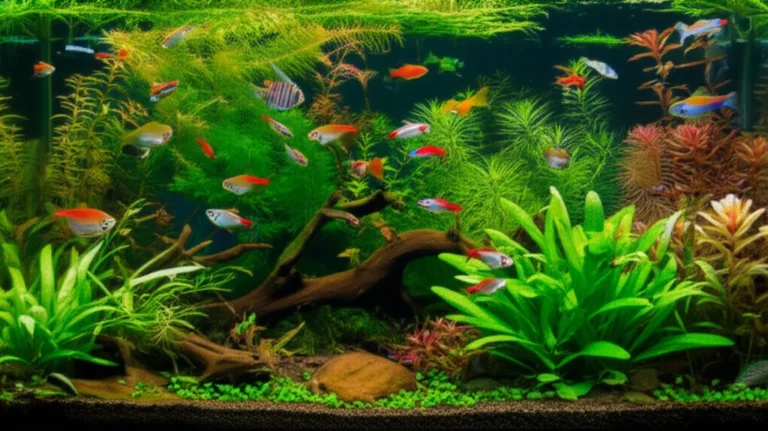
You can create a unique, visually stunning aquascape by treating your tank as a living canvas where hardscape dictates the structure and plants provide the color, all while strictly adhering to the rule of thirds and balancing water chemistry. The secret to answering how can I create a unique and visually appealing aquascape in my fish tank, with rocks, plants, and decorations lies not in copying a style perfectly, but in understanding the “why” behind the placement of every stone and stem.
Most beginners rush to fill the tank, resulting in a cluttered mess that looks nothing like the serene underwater forests they imagined. We once watched a hobbyist spend weeks arranging a perfect Iwagumi, only to realize he had buried the rocks so shallowly they floated away during the first water change.
True artistry comes from patience and the “dry start” method, where you build the landscape before adding a single drop of water. This allows you to tweak the composition until the visual flow feels natural, rather than forced.
Key Takeaways
- Plan Before You Build: Use the dry start method to arrange rocks and wood without water, ensuring your composition follows the rule of thirds before planting.
- Match Chemistry to Style: Always verify that your chosen rocks and substrate won’t alter water parameters (pH, GH, KH) in ways that harm your intended fish species.
- Layer for Depth: Create a 3D effect by sloping the substrate higher in the back and using a mix of foreground, midground, and background plants.
- Balance is Critical: Maintain a healthy ratio of hardscape to plants and ensure adequate CO2 and lighting to prevent algae from ruining your masterpiece.
Table of Contents
- ⚡️ Quick Tips and Facts
- 🌿 From Stone to Stream: A Brief History of Aquascaping Styles
- 🎨 Choosing Your Vision: Nature, Iwagumi, Dutch, and Biotope Styles
- 🪨 The Backbone of Your Layout: Selecting and Placing Aquascape Rocks
- 🌱 Living Art: Plant Selection, Placement, and Growth Habits
- 🏺 Beyond the Green: Integrating Driftwood, Substrates, and Hardscape Decorations
- 📐 Mastering Composition: The Rule of Thirds, Golden Ratio, and Visual Flow
- 🛠️ Step-by-Step Guide: Building Your Unique Aquascape from Scratch
- 💧 Water Chemistry and Maintenance for a Thriving Aquascape
- 🐟 Stocking Your Scapes: Compatible Fish and Invertebrate Choices
- 🚫 Common Mistakes That Ruin Even the Best Designs
- 🔍 Troubleshooting: Algae, Melting Plants, and Hardscape Issues
- 📸 Capturing the Moment: Photography Tips for Your Aquascape
- 🏆 Conclusion
- 🔗 Recommended Links
- ❓ FAQ
- 📚 Reference Links
⚡️ Quick Tips and Facts
Before we grab our twezers and start digging into the substrate, let’s hit the pause button on the “perfect” aquascape myth. You might think creating a masterpiece requires a degree in botany and a wallet the size of a small car, but the truth is far more accessible.
Here are the non-negotiables for a stunning, unique aquascape that won’t turn into an algae soup:
- The “Dry Start” Method is Your Best Friend: Many pros (including us at Aquarium Music™) build the hardscape and plant the tank before adding water. This allows you to tweak the rock placement for hours without the chaos of floating debris.
- Less is More: A common rookie mistake is overcrowding. If you can’t see the “negative space” (the open water areas), your eye has nowhere to rest. Negative space is just as important as the plants.
- Lighting Matters More Than You Think: It’s not just about brightness; it’s about the spectrum. Too much light without enough CO2 or nutrients equals a green nightmare.
- The “Side Effects” of Hardscape: As mentioned in our featured video guide, some rocks leach calcium (raising pH), and some woods release tannins (lowering pH). Know your materials before you buy.
💡 Did you know? Keeping a planted tank isn’t just a hobby; it’s a mental health booster. We explore the science behind why watching a thriving ecosystem can reduce stress in our article, 🌊 7 Ways a Fish Tank Heals Your Mind & Soul (2026).
🌿 From Stone to Stream: A Brief History of Aquascaping Styles

You might think aquascaping is a modern trend born from Instagram, but the roots go back much deeper. The art of arranging underwater landscapes has evolved from simple fish keeping to a recognized art form, heavily influenced by Japanese gardening principles.
The Japanese Influence
In the 1980s, Takashi Amano, the legendary founder of ADA (Aqua Design Amano), revolutionized the hobby. He introduced the concept of the “Nature Aquarium,” bringing the philosophy of Wabi-Sabi (finding beauty in imperfection) and Nihonga (traditional Japanese painting) into the glass box. Before Amano, tanks were often just gravel, a plastic castle, and a few goldfish. Amano showed us that a tank could be a living, breathing piece of art.
The Evolution of Styles
- Iwagumi: The minimalist rock garden style. It relies on odd numbers of stones and strict geometric rules.
- Dutch Style: The “jungle” of the early 20th century, focusing on dense planting and color contrast rather than hardscape.
- Biotope: The modern scientific approach, attempting to replicate a specific geographic location (like the Rio Nanay) with exact species and hardscape.
🤔 But here’s the question: If you can copy a style perfectly, is it your unique vision, or just a photocopy? We’ll answer this when we discuss how to blend styles later in the article.
🎨 Choosing Your Vision: Nature, Iwagumi, Dutch, and Biotope Styles
Before you buy a single rock, you need a vision. Trying to mix everything at once usually results in a cluttered mess. Let’s break down the major styles so you can pick the one that speaks to your soul.
1. The Iwagumi (Rock Garden)
- Philosophy: Minimalism. “Less is more.”
- Key Elements: A primary stone (Oya-ishi), secondary stones (Fuku-ishi), and filler stones. Plants are usually low-growing carpets like Hemianthus callitrichoides (HC) or Eleocharis parvula.
- Best For: Those who love clean lines and symmetry.
- Difficulty: High. It requires patience and a keen eye for balance.
2. The Nature Aquarium
- Philosophy: Replicating a terrestrial landscape underwater.
- Key Elements: A mix of driftwood, rocks, and plants arranged to create depth, leading the eye to a focal point.
- Best For: Creative individuals who want to tell a story (e.g., a mountain range, a forest floor).
3. The Dutch Style
- Philosophy: The “Garden” of the underwater world.
- Key Elements: Dense planting, terracing, and color blocking. Hardscape is minimal or hidden.
- Best For: Plant enthusiasts who love variety and color over rock structures.
4. The Biotope
- Philosophy: Scientific accuracy.
- Key Elements: Specific substrate (sand/mud), specific wood/rocks from a region, and native fish.
- Best For: The “detective” aquarist who loves research and authenticity.
Comparison of Styles
| Feature | Iwagumi | Nature Aquarium | Dutch Style | Biotope |
|---|---|---|---|---|
| Primary Focus | Rocks & Symetry | Hardscape + Plants | Plant Density & Color | Authenticity |
| Hardscape Ratio | High (70%+) | Medium (40-60%) | Low (<20%) | Variable (Region Dependent) |
| Plant Type | Carpeting, Low | Mixed, Varied | Tall, Colorful | Native Species Only |
| Maintenance | High (Triming) | Medium | High (Pruning) | Low to Medium |
| Visual Vibe | Zen, Minimalist | Wild, Natural | Lush, Garden | Wild, Untamed |
🪨 The Backbone of Your Layout: Selecting and Placing Aquascape Rocks
Rocks are the skeleton of your aquascape. Without a solid structure, your plants will have nothing to climb, and your layout will lack depth. But not all rocks are created equal.
Choosing the Right Rock
You must consider two things: Aesthetics and Water Chemistry.
-
Seiryu Stone: The gold standard for Iwagumi. It’s blue-grey with white veins.
Pros: Stunning visual texture, holds moss well.
Cons: Lowers pH and raises hardness (GH/KH) due to calcium carbonate. Not suitable for soft-water fish like Discus or Cardinal Tetras unless you buffer the water.
Source: Search for Seiryu Stone on Amazon -
Dragon Stone (Ohko Stone): Earthy, brown, and textured like dragon skin.
Pros: Inert (doesn’t change water chemistry), great for natural looks.
Cons: Can be heavy and difficult to stack.
Source: Search for Dragon Stone on Amazon -
Lava Rock: Porous and black.
Pros: Excellent for bacterial colonization, great for attaching plants.
Cons: Can be sharp (dangerous to delicate fish), very porous (traps debris).
The Art of Placement
How do you arrange them so they don’t look like a pile of junk?
- The Golden Ratio: Place your largest rock at the 1/3 or 2/3 mark of the tank length, not dead center. This creates a more natural, dynamic look.
- Grouping: Never place a single rock in the middle of the tank. Always group rocks in odd numbers (3, 5, 7).
- Burying: Bury the bottom 20-30% of your rocks in the substrate. This anchors them and makes them look like they are growing out of the earth.
⚠️ Pro Tip: As noted in our featured video, secure your hardscape with Cyanoacrylate superglue. If you have a complex stack, a slight bump during water changes can send a 5lb rock crashing down. Glue the rocks to each other or to a base plate before placing them in the tank.
🌱 Living Art: Plant Selection, Placement, and Growth Habits
Plants are the paint on your canvas. But unlike a painting, your canvas is alive and growing. If you pick the wrong plants, your “masterpiece” will be overgrown or die within weeks.
Categorizing Your Plants
To create a unique look, you need plants from different “layers”:
-
Foreground (The Carpet): These stay short.
Examples: Hemianthus callitrichoides (HC), Eleocharis acicularis (Dwarf Hairgrass), Monte Carlo.
Tip: These usually require high light and CO2. -
Midground (The Transition): These fill the space between the foreground and background.
Examples: Cryptocoryne species, Anubias, Bucephalandra.
Tip: Great for beginners. Cryptocoryne are hardy and come in many colors. -
Background (The Wall): Tall plants that hide the back glass.
Examples: Vallisneria, Rotala, Hygrophila.
Tip: These grow fast and need regular trimming. -
Epiphytes (The Climbers): Plants that grow on wood/rocks, not in the substrate.
Examples: Anubias, Java Fern, Bucephalandra.
Tip: Never bury the rhizome of these plants, or they will rot. Tie them to your hardscape.
Planting Techniques
- The “Pencil” Method: Use long twezers to insert stem plants into the substrate.
- The “Clump” Method: For carpeting plants, divide them into small clumps and plant them 1-2 inches apart. They will spread to fill the gap.
- The “Tie” Method: Use cotton thread or fishing line to attach epiphytes to wood. The thread will rot away once the plant roots.
🌿 Fun Fact: Phyllanthus Fluitans (Red Root Floater) is a floating plant that adds instant depth and contrast. As mentioned in the Buce Plant community, it’s a favorite for adding that “red root” accent to the upper water column.
🏺 Beyond the Green: Integrating Driftwood, Substrates, and Hardscape Decorations
While rocks provide the structure, driftwood provides the flow. It mimics the fallen trees of a riverbank and adds organic curves that rocks cannot.
Driftwood Types
- Spider Wood: Thin, branching, and perfect for creating a “forest” look.
- Manzanita: Thick, gnarled, and great for a rugged, mountainous look.
- Malaysian Driftwood: Dark, heavy, and sinks easily.
Crucial Step: Soak your wood! Most wood floats. You must soak it in a bucket of water for a few days (or boil it) until it sinks. If you don’t, you’ll spend hours holding it down with rocks.
Substrate: The Foundation
Your substrate isn’t just for looks; it’s the root system’s home.
- Aquasoil (e.g., ADA Amazonia, Tropica Aquarium Soil): Nutrient-rich, lowers pH, promotes plant growth. Downside: It breaks down over time (2-3 years) and can cause ammonia spikes if not cycled properly.
- Inert Substrate (e.g., CaribSea Eco-Complete, Sand): Doesn’t change water chemistry. Good for fish that need stable pH. You must add root tabs for plant nutrition.
Decorations: The “Hidden” Art
Don’t just throw in a plastic castle. If you want a unique look, consider:
- Leaf Litter: As seen in the Rio Nanay biotope, adding Indian Almond Leaves or Copper Beech leaves adds tannins, color, and a natural forest floor look.
- Moss: Attach Christmas Moss or Weping Moss to your rocks and wood for a “fuzzy” texture.
🛒 👉 Shop Hardscape Essentials:
- ADA Amazonia Soil: Amazon | Brand Official
- Tropica Aquarium Soil: Amazon | Brand Official
- Seiryu Stone: Amazon
📐 Mastering Composition: The Rule of Thirds, Golden Ratio, and Visual Flow
How do you make a tank look “professional” rather than “random”? It’s all about composition.
The Rule of Thirds
Imagine your tank divided into a 3×3 grid. Place your main focal point (the largest rock or a cluster of plants) at one of the intersections of these lines, not in the center. This creates a more natural, engaging visual path for the viewer’s eye.
The Golden Ratio (1:1.618)
This is a mathematical ratio found in nature (spirals in shells, galaxies). In aquascaping, it helps determine the size relationship between your main rock and secondary rocks. If your main rock is 10cm, your secondary rocks should be roughly 6cm.
Visual Flow
Your layout should guide the eye.
- S-Curve: A winding path of rocks and plants that leads the eye from the front to the back.
- Triangular Composition: Create a triangle with your hardscape. The peak of the triangle is your focal point.
🤔 Wait, what if my tank is a cube?
The Rule of Thirds works best in long tanks. In a cube, you might need to focus on depth rather than length. We’ll tackle specific tank shapes in the troubleshooting section.
🛠️ Step-by-Step Guide: Building Your Unique Aquascape from Scratch
Ready to build? Let’s walk through the process. We recommend the Dry Start Method for the best results.
Phase 1: Planning and Hardscape
- Sketch it out: Draw your layout on paper. Don’t rely on memory.
- Clean the Tank: Rinse the glass and substrate (if using sand) to remove dust.
- Lay the Substrate: Add your background substrate (if using a layered approach) and the main substrate. Slope it higher in the back to create depth.
- Place the Hardscape: Arrange your rocks and wood dry. Move them around until you love the composition.
Tip: Take photos from the front to check the angles. - Secure: Use superglue to lock rocks together if necessary.
Phase 2: Planting
- Plant the Background: Start with tall plants at the back.
- Plant the Midground: Add your focal point plants.
- Plant the Foreground: Plant your carpeting plants in small clumps.
- Attach Epiphytes: Tie moss and Anubias to the wood/rocks.
Phase 3: Filling and Equipment
- Add Water: Place a plate or bowl on the substrate to diffuse the water flow and prevent washing away your layout. Fill slowly.
- Install Equipment: Add filters, heaters, and CO2 diffusers.
- Add Floating Plants: Add a few floating plants (like Salvinia or Frogbit) to absorb excess nutrients and prevent algae.
Phase 4: The Wait
- Turn it on: Switch on the filter and heater. Switch on CO2 before the lights.
- Wait 24-48 hours: Let the tank settle before adding fish.
- The Algae Phase: Expect brown algae (diatoms) in the first few weeks. This is normal. Use a “cleanup crew” (Otocinclus, Amano shrimp) to handle it.
🎥 Video Recap: For a visual walkthrough of this exact process, check out our featured video guide which demonstrates the step-by-step setup, including substrate layering and hardscape arrangement.
💧 Water Chemistry and Maintenance for a Thriving Aquascape
A beautiful tank is useless if the water is toxic. Your plants and fish need a stable environment.
Key Parameters
- pH: Most aquascapes thrive between 6.5 and 7.5.
- GH (General Hardness): 4-8 dGH is ideal for most plants and fish.
- KH (Carbonate Hardness): 3-6 dKH helps buffer pH.
- Temperature: 72-80°F (2-27°C) depending on your fish.
The Maintenance Routine
- Weekly Water Changes: Change 30-50% of the water weekly. This removes nitrates and replenishes minerals.
- CO2 Injection: If you use CO2, inject it 1 hour before lights on and turn it off 1 hour before lights off.
- Fertilization: Use liquid fertilizers (like Seachem Flourish) and root tabs for heavy feeders.
- Pruning: Trim overgrown plants to maintain the shape of your aquascape.
⚠️ Warning: Don’t over-fertilize! Excess nutrients = Algae bloom. Start with half the recommended dose and adjust based on plant growth.
🐟 Stocking Your Scapes: Compatible Fish and Invertebrate Choices
Now that your tank is a masterpiece, who lives there? The fish should complement the design, not hide it.
The “Clean-Up Crew”
These are essential for maintaining your aquascape.
- Otocinclus: The best algae eaters for glass and leaves.
- Amano Shrimp: The ultimate algae eaters. They are great at cleaning hair algae.
- Clithon Snails: Great for cleaning the substrate.
The Main Atraction
- Tetras: Neon, Cardinal, and Rummy-nose tetras add color and movement.
- Livebearers: Guppies and Platies are hardy but can be messy.
- Corydoras: Bottom dwellers that sift through the substrate.
🐠 Biotope Note: If you are doing a Rio Nanay biotope, stick to native species like Pterophyllum scalare ‘Rio Nanay’ and Petitella georgiae (False Rummynose Tetra). Mixing non-native species ruins the authenticity.
🚫 Common Mistakes That Ruin Even the Best Designs
Even pros make mistakes. Here’s what to avoid:
- Overcrowding: Putting too many plants or fish. This leads to poor water quality and stunted growth.
- Ignoring the “Side Effects”: Using Seiryu stone in a soft-water tank without buffering.
- Poor Lighting: Too much light without CO2 = Algae. Too little light = No plant growth.
- Impatience: Adding fish too soon. The nitrogen cycle must be complete before adding livestock.
- Ignoring the Flow: Placing the filter output in a way that blows away your plants or creates dead spots.
🔍 Troubleshooting: Algae, Melting Plants, and Hardscape Issues
Algae Types and Solutions
- Brown Algae (Diatoms): Common in new tanks. Caused by excess silicates. Solution: Patience, water changes, and cleanup crew.
- Green Dust Algae (GDA): Appears as a green film. Solution: Turn off lights for 3 days, then do a massive water change.
- Hair Algae: Stringy green algae. Solution: Reduce light, increase CO2, and manually remove.
Melting Plants
- Cryptocoryne Melting: A natural reaction to water parameter changes. Solution: Don’t panic. Trim the dead leaves; new growth will appear.
Hardscape Issues
- Floating Wood: Soak it longer or weigh it down with rocks.
- Rocks Shifting: Use superglue or bury them deeper.
📸 Capturing the Moment: Photography Tips for Your Aquascape
You’ve built it, now show it off!
- Clean the Glass: Use an algae scraper right before shooting.
- Turn off the Lights: Use the tank’s light, but turn off the room lights to avoid reflections.
- Use a Polarizing Filter: If you have a camera, this cuts through the glare.
- Shoot from the Front: Avoid shooting from angle unless you want to show depth.
🏆 Conclusion
Creating a unique and visually appealing aquascape is a journey of patience, creativity, and scientific understanding. From the initial sketch to the final water change, every step matters. Whether you choose the minimalist elegance of an Iwagumi, the lush density of a Dutch style, or the authentic wildness of a Biotope, the key is to plan, execute, and maintain with care.
Remember, the “perfect” tank isn’t about following rules blindly; it’s about understanding the principles and making them your own. Don’t be afraid to experiment, and don’t let the fear of algae stop you from starting. As we saw in the Rio Nanay example, even a “hardscape-heavy” tank can be a stunning work of art.
Final Recommendation: Start small. A 10-gallon or 20-gallon tank is the perfect canvas to learn the ropes. Invest in good lighting and a quality substrate, and don’t skimp on the “cleanup crew.” Your future self (and your fish) will thank you.
🌟 The Answer to Our Earlier Question: Is a copied style unique? Yes, if you infuse it with your personal touch. A perfect Iwagumi is a copy; an Iwagumi that reflects your choice of stone and plant combination is your art.
🔗 Recommended Links
Essential Products & Brands
- Aquasoil:
ADA Amazonia: Amazon | Brand Official
Tropica Aquarium Soil: Amazon | Brand Official - Hardscape:
Seiryu Stone: Amazon
Dragon Stone: Amazon
Spider Wood: Amazon - Plants:
Bucephalandra: Buce Plant | Amazon
Cryptocoryne: Amazon - Equipment:
CO2 Systems: Fluval CO2 Kit
Filters: Fluval FX6
Books
- “The Nature Aquarium World” by Takashi Amano: Amazon
- “Aquascaping: The Art of Underwater Gardening” by Colin Anderson: Amazon
❓ FAQ

What are the best rock types for creating a natural-looking aquascape?
The best rocks depend on your water parameters. Seiryu Stone is visually stunning but raises pH and hardness, making it great for hard-water fish. Dragon Stone and Lava Rock are inert, meaning they won’t alter water chemistry, making them safer for soft-water species like Discus or Cardinal Tetras. Always test your water before choosing.
How do I choose the right plants for a low-light aquascape with rocks?
For low-light tanks, avoid fast-growing stem plants. Instead, opt for hardy species like Anubias, Java Fern, Bucephalandra, and Cryptocoryne. These plants grow slowly and can thrive with minimal light. You can attach them to your rocks using superglue or thread.
Read more about “🏰 15 Freshwater Aquarium Decorations to Transform Your Tank (2026)”
What is the hardscape ratio for a balanced and visually appealing tank?
A good rule of thumb is the 60/40 rule: 60% hardscape (rocks, wood) and 40% plants. However, this varies by style. An Iwagumi might be 80% rock, while a Dutch style might be 90% plant. The key is to ensure there is enough “negative space” (open water) for the fish to swim and for the eye to rest.
Read more about “🌊 7 Steps to a Striking Home Aquarium (2026)”
How can I use the rule of thirds to design my aquascape layout?
Divide your tank into a 3×3 grid. Place your main focal point (largest rock or plant cluster) at one of the four intersections of the grid lines, not in the center. This creates a more dynamic and natural composition. For example, if your tank is 24 inches long, place the focal point around the 8-inch or 16-inch mark.
What are some creative decoration ideas to enhance rock and plant arrangements?
- Leaf Litter: Add Indian Almond Leaves or Copper Beech leaves for a natural forest floor look and water conditioning.
- Moss: Attach Christmas Moss or Weping Moss to rocks and wood for a “fuzzy” texture.
- Floating Plants: Use Phyllanthus Fluitans or Salvinia to add depth and absorb excess nutrients.
How do I prevent algae growth in a densely planted rock aquascape?
Algae is often a sign of imbalance. To prevent it:
- Balance Light and CO2: Ensure your CO2 is on before the lights and off after.
- Regular Water Changes: Change 30-50% of the water weekly.
- Avoid Overfeeding: Excess food decays and fuels algae.
- Use a Cleanup Crew: Otocinclus, Amano shrimp, and Clithon snails are excellent at keeping algae in check.
What are the best substrate options to complement rocks and plants in a new tank?
- Aquasoil (e.g., ADA Amazonia): Best for planted tanks as it provides nutrients and lowers pH.
- Inert Substrate (e.g., CaribSea Eco-Complete): Good for tanks with specific water chemistry needs. You’ll need to add root tabs for plant nutrition.
- Sand: Great for biotopes and bottom-dwelling fish. It provides a natural look but offers no nutrients.
Read more about “🌊 Can I Use a Fish Tank as Decor? The 2026 Guide to Living Art”
📚 Reference Links
- Practical Fishkeeping: How to Set Up an Amazon-Themed Aquarium
- Buce Plant: What’s your favorite aquascaping style?
- ADA (Aqua Design Amano): Official Website
- Tropica: Official Website
- Seachem: Official Website
- Fluval: Official Website