Support our educational content for free when you purchase through links on our site. Learn more
🌿 Planted vs. Traditional Tank: The Ultimate 2026 Showdown


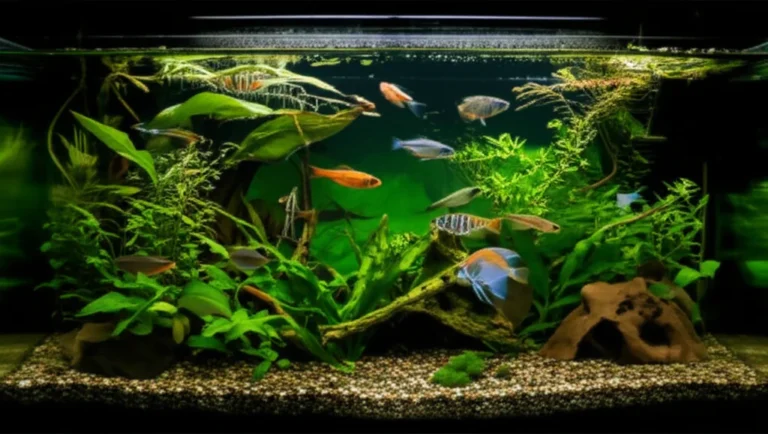
Ever stared at a glass box of gravel and wondered, “Is this all there is?” or dreamed of a lush, underwater jungle where your fish play hide-and-sek? At Aquarium Music™, we’ve seen it all: from the minimalist “bare bones” setups that look like sterile labs to the vibrant, self-sustaining ecosystems that feel like a slice of the Amazon. The truth is, the difference between a planted tank and a traditional fish tank isn’t just about aesthetics; it’s a fundamental clash of philosophies regarding water chemistry, maintenance, and the very nature of the hobby.
While a traditional tank relies on heavy filtration and frequent water changes to manage waste, a planted tank turns the tables, using live plants as biological filters that consume toxins and oxygenate the water. But here’s the twist that might surprise you: a well-balanced planted tank can actually be easier to maintain than a traditional one, provided you master the art of the nitrogen cycle and light spectrum. In this guide, we’ll dissect every aspect of these two worlds, from the specific lighting needs of NICREW LEDs to the surprising behavior changes in fish when they have a leafy sanctuary. We’ll even reveal the “Blackout Method” to crush algae outbreaks without harming your tank’s inhabitants—a trick we’ve used to save countless hobbyists from disaster.
Key Takeaways
- Ecosystem vs. Exhibit: Traditional tanks focus on fish visibility with inert substrates, while planted tanks create a living ecosystem where plants actively filter water and reduce nitrates.
- Maintenance Reality: Contrary to popular belief, a balanced planted tank often requires less frequent water changes than a traditional tank, though it demands more precise monitoring of light, CO2, and nutrients.
- Fish Compatibility Matters: Not all fish belong in a jungle; peaceful species like Tetras thrive in planted tanks, while destructive fish like Goldfish are better suited for traditional setups.
- Lighting is Critical: Planted tanks require specific light spectrums (high PAR) to drive photosynthesis, whereas traditional tanks only need enough light to see the fish.
- Budget Flexibility: You can start a low-tech planted tank for a similar price to a traditional setup, but high-tech CO2 systems will increase initial and ongoing costs.
Table of Contents
- ⚡️ Quick Tips and Facts
- 🌿 From Bare Bones to Jungle: The Evolution of Aquarium Keeping
- 🥊 The Ultimate Showdown: Planted Tank vs. Traditional Fish Tank
- 🛠️ Gear Up: Essential Equipment for Each Tank Type
- 🚀 Step-by-Step: How to Start Your First Planted or Traditional Tank
- 🐟 Top 10 Beginner-Friendly Fish for Planted Tanks
- 🌿 Top 10 Hardy Plants for Low-Light Planted Tanks
- 🤔 Common Myths and Misconceptions Debunked
- 📊 Side-by-Side Comparison: Planted vs. Traditional Tank at a Glance
- ✅ Final Verdict: Which Tank Style Fits Your Lifestyle?
- 🏁 Conclusion
- 🔗 Recommended Links
- ❓ FAQ
- 📚 Reference Links
⚡️ Quick Tips and Facts
Before we dive into the deep end of the aquarium world, let’s drop a few anchor lines to keep you grounded. Whether you’re dreaming of a lush underwater jungle or a sleek, minimalist fish display, here are the non-negotiable truths we’ve learned at Aquarium Music™:
- Plants are Living Filters: Unlike plastic decorations, live plants actively absorb nitrates and ammonia, acting as a biological buffer for your water. 🌿
- Lighting is the Engine: You can have the best fish in the world, but without the right light spectrum and intensity, a planted tank will turn into a brown, algae-ridden soup. ☀️
- Substrate Matters: Gravel is fine for goldfish, but most aquatic plants need nutrient-rich soil or specialized substrates to thrive.
- The “Just Add Water” Myth: A planted tank is not a “set it and forget it” system. It requires a delicate balance of CO2, nutrients, and light.
- Fish Behavior Changes: Fish in planted tanks often display more natural behaviors, using the foliage for shelter and breeding, whereas fish in bare tanks may show more stress or aggression.
Pro Tip: If you’re new to the hobby, don’t try to build a high-tech CO2 planted tank on day one. Start with a low-tech setup to master the basics of water chemistry before adding complexity. For a deep dive into keeping your water pristine, check out our comprehensive 🧹 15-Step Fish Tank Cleaning & Maintenance Guide (2026).
🌿 From Bare Bones to Jungle: The Evolution of Aquarium Keeping
The story of the aquarium is a tale of two diverging paths. It started with the Victorian Era, where keeping fish was a status symbol, but the tanks were often little more than glass boxes filled with gravel and a few hardy fish like goldfish. The focus was entirely on the animal; the environment was an afterthought.
Fast forward to the 190s and the explosion of Aquascaping. Pioners like Takashi Amano revolutionized the hobby by treating the tank as a living canvas. Suddenly, the fish became the “actors” in a lush, green “theater.” This shift wasn’t just aesthetic; it was ecological. We realized that a planted tank creates a more stable, self-sustaining ecosystem.
Today, we have two distinct philosophies:
- The Traditional Fish Tank: Focuses on the fish, prioritizing easy maintenance, durability, and often using artificial decor.
- The Planted Tank: Focuses on the ecosystem, prioritizing plant growth, natural behavior, and biological stability.
But which one is right for you? Is it the low-maintenance zen of a traditional setup, or the rewarding challenge of a planted jungle? Let’s break it down.
🥊 The Ultimate Showdown: Planted Tank vs. Traditional Fish Tank
At Aquarium Music™, we often get asked: “Which is better?” The answer is as subjective as music taste. Some prefer the simplicity of a classical symphony (Traditional), while others crave the complex layers of a jazz improvisation (Planted).
The Core Philosophy
- Traditional Tanks: The goal is fish health and visibility. The environment is designed to be robust, forgiving, and easy to clean. Think of it as a minimalist apartment: functional, clean, and focused on the resident.
- Planted Tanks: The goal is ecological balance and aesthetics. The environment is a living organism that requires specific inputs (light, CO2, nutrients) to function. Think of it as a terrarium that happens to be underwater.
The “Algae” Factor
Here is the great irony: Traditional tanks often suffer from algae because they lack the biological competition of plants. Planted tanks, when balanced correctly, are actually less prone to algae because the plants outcompete the algae for nutrients. However, if you mess up the balance in a planted tank, the algae explosion can be catastrophic.
Curiosity Check: Why do some fish seem happier in a planted tank while others seem to ignore the plants entirely? We’ll uncover the secrets of fish compatibility later in this guide!
1. 🌱 The Green Factor: Live Plants vs. Plastic Decor
This is the most obvious difference, but the implications run deep.
Live Plants: The Living Decor
In a planted tank, the plants are the main event. They provide:
- Oxygenation: Plants release oxygen during the day.
- Nitrate Reduction: They consume waste products.
- Stress Reduction: Fish feel safer with hiding spots.
- Natural Breding Grounds: Many species spawn on leaves.
Popular Choices:
- Low Tech: Java Fern, Anubias, Amazon Sword.
- High Tech: Red Stem plants, Carpeting plants like Dwarf Hairgrass.
Plastic Decor: The Static Stage
Traditional tanks often rely on plastic castles, resin rocks, and silk plants.
- Pros: Durable, no light requirements, won’t rot, easy to clean.
- Cons: No biological benefit, can harbor bacteria if not cleaned, often looks “fake” up close.
Real Talk: We once saw a client spend $20 on a plastic “Roman Ruin” that looked great for a week, then turned into a slime-covered eyesore because the water flow was poor. A simple Java Fern attached to a piece of driftwood would have looked better and cleaned the water!
🌿 Aquascaping and Aquatic Plants
2. 💧 Water Chemistry: The Nitrogen Cycle and Nutrient Balancing Act
The chemistry of water is where the rubber meets the road.
Traditional Tanks: The “Clean Water” Approach
- Goal: Keep ammonia and nitrite at 0, and nitrates low through frequent water changes.
- Substrate: Inert gravel or sand. It doesn’t affect water chemistry.
- Filtration: Heavy reliance on mechanical and biological filtration (sponges, ceramic rings).
- Maintenance: Weekly 25-50% water changes are standard to remove nitrates.
Planted Tanks: The “Nutrient Cycling” Approach
- Goal: Maintain a balance where plants consume nitrates as fast as they are produced.
- Substrate: Often uses aquasoil (like ADA Amazonia or Fluval Plant & Shrimp) which buffers pH and releases nutrients.
- Filtration: Still needed, but plants do a significant portion of the biological work.
- Maintenance: Water changes are still necessary, but often less frequent if the plant load is high. However, you must monitor liquid fertilizers and CO2 levels.
| Feature | Traditional Tank | Planted Tank |
|---|---|---|
| Primary Filter | Mechanical/Biological | Biological + Plant Uptake |
| Substrate | Inert Gravel/Sand | Nutrient-Rich Soil or Sand |
| Nitrates | Removed via Water Changes | Consumed by Plants |
| pH Stability | Depends on water source | Buffered by Soil (often lower) |
| Fertilization | None (usually) | Liquid, Root Tabs, or CO2 |
3. 💡 Lighting Needs: Sunlight for Plants vs. Visibility for Fish
Lighting is the single most critical difference in equipment requirements.
Traditional Tank Lighting
- Purpose: To see the fish and make colors pop.
- Intensity: Low to Medium.
- Spectrum: Full spectrum is nice, but not strictly necessary for plant growth.
- Duration: 8-10 hours is fine.
- Tech: Simple LED strips or standard fluorescent tubes.
Planted Tank Lighting
- Purpose: To drive photosynthesis.
- Intensity: Medium to High (depending on plant choice).
- Spectrum: Must include specific red and blue spectrums (PAR value matters).
- Duration: Strictly controlled (6-8 hours) to prevent algae.
- Tech: Programmable LEDs with diming capabilities (e.g., NICREW, Fluval, Twinstar).
Did You Know? Too much light in a planted tank without enough CO2 or nutrients is the #1 cause of algae outbreaks. It’s like giving a car a full tank of gas but no engine.
4. 🍽️ Feding Frenzy: Algae Eaters vs. Flakes and Pelets
What you feed your tank depends on what lives in it.
Traditional Tank Feding
- Diet: High-protein flakes, pellets, frozen foods.
- Frequency: 1-2 times a day.
- Leftovers: Must be removed quickly to prevent water quality spikes.
- Specialists: Algae eaters (like Plecos) are often added specifically to clean up waste.
Planted Tank Feding
- Diet: Similar foods, but often supplemented with algae wafers or blanched vegetables (zucchini, spinach) for herbivorous fish.
- Frequency: Often fed less frequently (once a day or every other day) to prevent excess nutrients.
- The Plant Factor: Some plants (like Java Fern) can absorb nutrients directly from the water column, reducing the need for root tabs if the fish food is sufficient.
- Algae Control: In a balanced planted tank, you often don’t need “cleaner fish” because the plants outcompete the algae.
🐠 Fish Care and Species Profiles
5. 🧹 Maintenance Mayhem: Pruning and CO2 vs. Gravel Vacuuming
Let’s address the elephant in the room: Which is more work?
Traditional Tank Maintenance
- Weekly: Vacuum the gravel (crucial to remove waste), change 25-50% of the water, clean the filter media.
- Monthly: Check equipment, wipe glass.
- Effort: High physical effort (siphoning gravel), but low mental effort (no complex chemistry to balance).
Planted Tank Maintenance
- Weekly: Water change (10-30%), trim overgrown plants, check CO2 bubble rate, dose fertilizers.
- Monthly: Clean leaves, prune carpeting plants, check substrate health.
- Effort: Lower physical effort (no heavy gravel vacuuming if using sand), but higher mental effort (monitoring parameters, adjusting light/CO2).
Myth Buster: “Planted tanks are high maintenance.”
Reality: A well-balanced planted tank is actually lower maintenance than a traditional tank because the plants handle the waste. However, the learning curve is steeper. If you don’t know what you’re doing, it becomes a nightmare.
6. 🐠 Fish Compatibility: Community Harmony in Green vs. Open Water
Not all fish play nice with plants.
Traditional Tank Fish
- Preferences: Open swimming space, hardy, often dig or uproot plants.
- Examples: Goldfish, Cichlids (like Oscars or African Cichlids), large Catfish.
- Why: These fish are often too large, too aggressive, or too destructive for delicate plants.
Planted Tank Fish
- Preferences: Peaceful, small to medium, appreciate hiding spots.
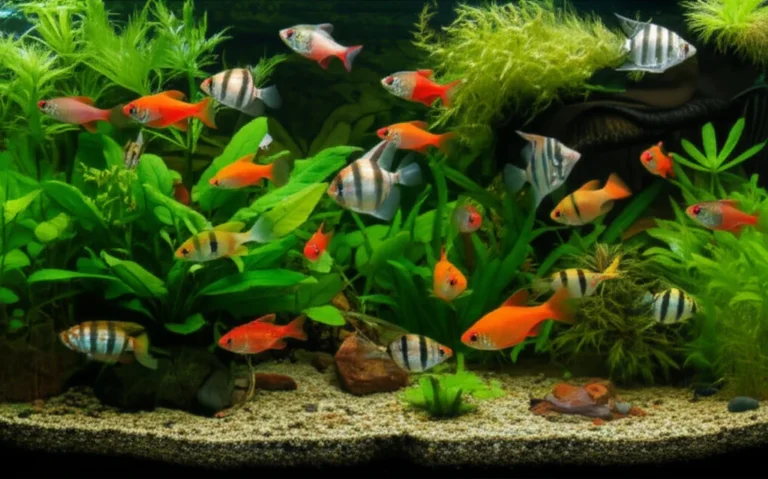
- Examples: Tetras, Rasboras, Guppies, Molly, Dwarf Gouramis, Corydoras, Otocinclus.
- Why: These fish thrive in the complexity of a planted environment. They use the plants for breeding and protection.
Pro Tip: If you have a “plant-eater” like a Goldfish, stick to a traditional tank with heavy-duty plastic decor or just rocks. Don’t try to force a planted tank; it will end in tears (and uprooted plants).
7. 💰 Budget Breakdown: Initial Setup Costs and Long-Term Expenses
Let’s talk money. Which one burns a hole in your pocket?
Traditional Tank Costs
- Initial: Lower. You need a tank, filter, heater, and basic lighting. Decor is cheap (plastic).
- Ongoing: Moderate. Fish food, water conditioner, occasional filter media.
- Hidden Costs: Frequent water changes (water bill), replacement of dead fish (if water quality crashes).
Planted Tank Costs
- Initial: Higher. You need a tank, filter, heater, high-intensity light, CO2 system (optional but recommended), aquasoil, and live plants.
- Ongoing: Moderate to High. Liquid fertilizers, CO2 refills, root tabs, specialized plant food.
- Hidden Costs: Electricity (for lights/CO2), replacement of plants if they die.
| Cost Category | Traditional Tank | Planted Tank (Low Tech) | Planted Tank (High Tech) |
|---|---|---|---|
| Lighting | $20 – $50 | $50 – $10 | $150 – $40+ |
| Substrate | $10 – $30 | $40 – $80 | $60 – $120 |
| CO2 System | N/A | N/A | $80 – $20 |
| Fertilizers | N/A | $20/year | $10+/year |
| Plants | $0 | $30 – $10 | $10 – $30+ |
🛠️ Gear Up: Essential Equipment for Each Tank Type
Traditional Tank Essentials
- Tank: Glass or acrylic.
- Filter: Hang-on-back (HOB) or Canister.
- Heater: Adjustable, based on tank size.
- Light: Basic LED strip.
- Substrate: Gravel or sand.
- Decor: Plastic rocks, silk plants.
Planted Tank Essentials
- Tank: Glass (preferably with a black background).
- Filter: Canister filter (for better flow and media capacity).
- Light: Programmable LED with high PAR.
- Substrate: Aquasoil (e.g., ADA Amazonia, Fluval Stratum) or capped sand.
- CO2 System: Pressurized CO2 kit (for high tech) or yeast DIY (for low tech).
- Fertilizers: Liquid (e.g., Seachem Flourish) and Root Tabs (e.g., Seachem Flourish Tabs).
- Tools: Long twezers, scissors, algae scraper.
👉 CHECK PRICE on:
- Fluval Plant & Shrimp Substrate: Amazon | Chewy | Fluval Official
- Seachem Flourish Liquid Fertilizer: Amazon | Petco | Seachem Official
- NICREW LED Light: Amazon | NICREW Official
🚀 Step-by-Step: How to Start Your First Planted or Traditional Tank
Starting a Traditional Tank
- Rinse: Rinse gravel and decor thoroughly.
- Setup: Place tank, add substrate, add decor.
- Fill: Add dechlorinated water.
- Equip: Install filter and heater.
- Cycle: Run the tank for 4-6 weeks to establish the nitrogen cycle.
- Stock: Add fish slowly (1-2 per week).
Starting a Planted Tank
- Substrate: Add aquasoil (do not rinse!) or sand.
- Hardscape: Place rocks and driftwood.
- Plant: Insert plants (stem plants in back, rosete in middle, carpet in front).
- Fill: Slowly add water to avoid disturbing the soil.
- Equip: Install filter, heater, and light.
- CO2: Start CO2 injection (if applicable) 1 hour before lights on.
- Cycle: You can “fishless cycle” or add hardy fish immediately if using a mature soil.
- Fertilize: Start dosing fertilizers once plants show new growth.
Wait, what about the “Blackout” method? If you start a planted tank and get an algae bloom, don’t panic. We’ll cover how to fix it in the “Common Myths” section!
🐟 Top 10 Beginner-Friendly Fish for Planted Tanks
If you decide to go the planted route, these are your best friends:
- Neon Tetra: Classic, schooling, loves plants.
- Cardinal Tetra: Similar to Neon but more vibrant.
- Guppy: Hardy, colorful, breeds easily.
- Platy: Peaceful, comes in many colors.
- Molly: Active, loves plants (but can eat some soft ones).
- Corydoras Catfish: Bottom dwellers, great for cleaning.
- Otocinclus: The ultimate algae eater for planted tanks.
- Dwarf Gourami: Beautiful, territorial but manageable.
- Ram Cichlid: Colorful, needs stable water (planted tanks provide this).
- Harlequin Rasbora: Peaceful, schooling, very hardy.
🐠 Fish Care and Species Profiles
🌿 Top 10 Hardy Plants for Low-Light Planted Tanks
Don’t have a high-tech light? No problem. Start with these:
- Java Fern: Grows on wood/rocks, very hardy.
- Anubias: Slow growing, tough leaves.
- Amazon Sword: Great for background, needs root tabs.
- Hornwort: Fast growing, no roots needed.
- Java Moss: Can be attached to anything.
- Cryptocoryne: Slow to start, then explodes.
- Water Wisteria: Fast growing, adaptable.
- Sword Plant (Echinodorus): Large, dramatic.
- Bucephalandra: Small, slow, beautiful.
- Vallisneria: Grass-like, great for background.
🌿 Aquascaping and Aquatic Plants
🤔 Common Myths and Misconceptions Debunked
Let’s clear the air on some persistent myths.
Myth 1: “Planted tanks are too expensive.”
Truth: You can start a low-tech planted tank for the same price as a traditional tank. The cost only goes up if you want high-tech CO2 and exotic plants.
Myth 2: “Planted tanks are high maintenance.”
Truth: A balanced planted tank is easier to maintain than a traditional tank because plants handle the waste. The setup is harder, but the maintenance is lighter.
Myth 3: “I need CO2 for plants to grow.”
Truth: Many plants grow fine without injected CO2. You just need to choose the right plants and accept slower growth.
Myth 4: “Fish in planted tanks are happier.”
Truth: Generally yes, but it depends on the species. A Goldfish in a planted tank is miserable. A Tetra in a bare tank is stressed. Match the fish to the tank!
Myth 5: “Algae is bad.”
Truth: Algae is a symptom of imbalance. In a planted tank, a little algae is normal. The goal is to manage it, not eliminate it entirely.
📊 Side-by-Side Comparison: Planted vs. Traditional Tank at a Glance
| Feature | Traditional Fish Tank | Planted Tank |
|---|---|---|
| Primary Focus | Fish | Ecosystem (Plants + Fish) |
| Substrate | Gravel/Sand (Inert) | Aquasoil/Sand (Nutrient-rich) |
| Lighting | Low/Medium (Visibility) | Medium/High (Photosynthesis) |
| CO2 | Not needed | Optional (Low Tech) or Essential (High Tech) |
| Fertilizers | None | Liquid & Root Tabs |
| Maintenance | Frequent water changes | Pruning, dosing, water changes |
| Algae Risk | High (if overfed) | Low (if balanced) |
| Fish Choice | Broad (including digers) | Limited (peaceful, non-diggers) |
| Aesthetic | Open, minimalist | Lush, natural, complex |
| Difficulty | Beginner | Beginner to Advanced |
✅ Final Verdict: Which Tank Style Fits Your Lifestyle?
So, where do you stand?
- Choose a Traditional Tank if: You want a low-stress setup, you love large or aggressive fish (like Goldfish or Cichlids), you don’t want to deal with fertilizers or CO2, and you prefer a minimalist look.
- Choose a Planted Tank if: You love nature, you want a self-sustaining ecosystem, you enjoy the challenge of balancing chemistry, you want to see natural fish behaviors, and you are willing to learn the art of aquascaping.
The Verdict: If you are a beginner, start with a Low-Tech Planted Tank. It offers the best of both worlds: the beauty of plants with the simplicity of traditional care. It’s the perfect entry point to the symphony of aquatic life.
Wait, what about that “Blackout” method I mentioned? If you ever get an algae outbreak in your new planted tank, don’t panic. A 3-day blackout (covering the tank completely) will starve the algae without harming your plants or fish. It’s a trick we use all the time at Aquarium Music™!
🏁 Conclusion

The debate between planted tanks and traditional fish tanks isn’t about which is “better”—it’s about which fits your vision and lifestyle.
A traditional tank is a reliable, straightforward home for your fish. It’s the classic choice, perfect for those who want to focus solely on the animals without the added complexity of plant care. It’s the “easy mode” of the aquarium world, but don’t mistake “easy” for “boring.” A well-maintained traditional tank with vibrant fish and clean water is a thing of beauty.
On the other hand, a planted tank is a living, breathing ecosystem. It’s a journey into the heart of nature, where you become the gardener, the chemist, and the artist. Yes, it requires more knowledge and a bit more initial investment, but the reward is a self-sustaining world that feels almost magical. The fish are happier, the water is cleaner, and the view is breathtaking.
At Aquarium Music™, we believe that the best tank is the one that brings you joy. Whether you choose the simplicity of a traditional setup or the complexity of a planted jungle, the most important ingredient is your passion.
Ready to start your journey?
- If you’re leaning towards plants, grab some Java Fern and Anubias and start with a low-tech setup.
- If you’re sticking to tradition, focus on getting your nitrogen cycle perfect before adding a single fish.
Remember, every great aquarist started with a single tank. What will your story be?
🔗 Recommended Links
Essential Products for Your Tank
- For Planted Tanks:
ADA Amazonia Soil: Amazon | Bulk Reef Supply | ADA Official
Seachem Flourish Fertilizer: Amazon | Chewy | Seachem Official
NICREW LED Light: Amazon | NICREW Official - For Traditional Tanks:
Fluval HOB Filter: Amazon | Petco | Fluval Official
Marineland Gravel Vacuum: Amazon | PetSmart | Marineland Official
Books to Deepen Your Knowledge
- “The Art of the Nature Aquarium” by Takashi Amano: Amazon
- “Aquarium Plants: The Complete Guide” by Frank Schäfer: Amazon
❓ FAQ

How do planted tanks impact water quality compared to traditional fish tanks?
Planted tanks generally have better water quality stability because live plants absorb nitrates and ammonia as food. In a traditional tank, these toxins must be removed entirely through water changes. However, if a planted tank is unbalanced (too much light, not enough CO2), it can suffer from algae blooms that degrade water quality.
What equipment is essential for a successful planted tank setup?
At a minimum, you need a tank, a filter, a heater, a programmable LED light, and a nutrient-rich substrate. For a high-tech setup, a CO2 system and liquid fertilizers are essential. Don’t forget tools like long twezers and scissors for planting and trimming.
Read more about “🌊 Brackish Water Aquariums: The Ultimate 2026 Guide to Estuarine Life”
How do lighting requirements vary between planted and traditional aquariums?
Traditional tanks need enough light to see the fish and make colors pop (low to medium intensity). Planted tanks need specific light spectrums (high PAR) to drive photosynthesis. The duration is also stricter in planted tanks (6-8 hours) to prevent algae.
Read more about “🌿 8 Essential Aquatic Plant Species for 2026: From Tanks to Lakes”
What types of fish are best suited for planted tanks versus traditional tanks?
Planted tanks suit peaceful, small to medium fish like Tetras, Rasboras, Guppies, and Corydoras. Traditional tanks can accommodate larger, more aggressive, or destructive fish like Goldfish, Oscars, and large Cichlids that might uproot plants.
Read more about “7 Best Fish Tank Lighting Options: LED, T5, T8 & How to Choose (2026) 💡”
Can traditional fish tanks be converted into planted tanks?
Yes! You can convert a traditional tank by replacing the gravel with aquasoil, adding a stronger light, and introducing hardy plants. You may need to adjust your fish population if they are plant-eaters.
How does maintenance differ between planted tanks and traditional fish tanks?
Traditional tanks require frequent gravel vacuuming and large water changes to remove waste. Planted tanks require plant trimming, dosing fertilizers, and monitoring CO2 levels. Water changes are still needed but can be less frequent if the plant load is high.
Are planted tanks more difficult to maintain than traditional fish tanks, and why or why not?
The learning curve is steeper for planted tanks because you must understand the balance of light, CO2, and nutrients. However, once balanced, a planted tank is often easier to maintain because the plants handle the waste, reducing the need for frequent water changes.
What are some common mistakes to avoid when setting up and maintaining a planted aquarium?
- Over-lighting: Leads to algae.
- Under-fertilizing: Leads to stunted growth.
- Using the wrong substrate: Inert gravel won’t support plant growth.
- Adding fish too fast: Overloads the system before plants can establish.
How often should I fertilize my planted tank to maintain optimal water conditions?
For low-tech tanks, dosing liquid fertilizer once a week is often enough. For high-tech tanks with CO2, you may need to dose daily or use root tabs every few months. Always follow the product instructions and monitor plant health.
Can I keep the same types of fish in a planted tank as I would in a traditional tank?
Not always. Fish that dig (like Goldfish) or eat plants (like some Cichlids) are not suitable for planted tanks. Stick to peaceful, non-destructive species for the best results.
What type of lighting is required for a planted tank to support healthy plant growth?
You need an LED light with a high PAR value and a spectrum that includes red and blue wavelengths. Brands like NICREW, Fluval, and Twinstar offer excellent options. The light should be on for 6-8 hours a day.
Read more about “🌿 10 Top Eco-Friendly Aquarium Options for a Sustainable 2026 Tank”
How do I choose the right plants for my aquarium to create a thriving ecosystem?
Choose plants based on your lighting level and CO2 availability. For beginners, start with low-light, hardy plants like Java Fern and Anubias. As you gain experience, you can add more demanding species.
Read more about “🐟 Top 10 Automated Fish Feeders for 2026: Never Overfeed Again!”
What are the benefits of having a planted tank over a traditional fish tank?
Planted tanks offer natural water filtration, reduced algae (when balanced), more natural fish behavior, and a stunning aesthetic. They create a self-sustaining ecosystem that is more resilient to minor fluctuations.
Read more about “🌊 7 Steps to a Striking Home Aquarium (2026)”
📚 Reference Links
- Aquarium Co-Op Forum: Best Nicrew light – General Chat
- UKAPS Forum: What is the basic difference? (Note: Original content may be unavailable due to server issues, but the discussion remains a valuable resource for community insights).
- Seachem: Plant Nutrition Guide
- Fluval: Aquarium Plant Care
- ADA (Aqua Design Amano): Nature Aquarium Concept
- National Geographic: Aquarium Ecosystems
- PetMD: Fish Tank Water Quality