Support our educational content for free when you purchase through links on our site. Learn more
🌊 7 Marine Aquarium Recycling Systems Secrets for 2026

Ever wonder how the Georgia Aquarium keeps 10 million gallons of water crystal clear without dumping a single drop? It’s not magic; it’s the incredible power of marine aquarium recycling systems. Here at Aquarium Music™, we’ve spent decades diving into the symphony of aquatic life, and we can tell you that the difference between a murky, algae-choked tank and a thriving, self-sustaining reef often comes down to one thing: how well you recycle your water.
We’ve all been there: you buy the most expensive skimmer, fill the tank with pristine live rock, and then… pof. A sudden algae bloom or a mysterious parameter spike ruins the show. It feels like you’re fighting a losing battle against nature. But what if you could stop fighting and start orchestrating? In this deep dive, we’re pulling back the curtain on the exact mechanics, the hidden pitfalls, and the eco-friendly innovations that turn a simple fish tank into a miniature ocean. From the ancient art of the nitrogen cycle to the cutting-edge zero-discharge goals of Mote Marine Laboratory, we’ll show you how to build a system that not only saves you money on water changes but also creates a healthier home for your aquatic family.
Ready to unlock the secrets that even the pros sometimes miss? Keep reading to discover the 7 essential components you need, why your skimmer might be failing, and how to achieve that elusive “set it and forget it” stability.
Key Takeaways
- Master the Nitrogen Cycle: The foundation of any successful system is a robust biological filter that converts toxic ammonia into harmless nitrates; without it, even the best equipment will fail.
- Oversize Your Equipment: Never buy a protein skimmer or return pump rated exactly for your tank size; always choose a unit rated for 1.5x your volume to handle unexpected bioloads and ensure peak efficiency.
- Combine Filtration Methods: The most stable systems utilize a synergistic approach, combining mechanical, biological, chemical, and natural (refugium) filtration to tackle waste from every angle.
- Embrace Sustainability: Modern recycling systems significantly reduce water waste and energy consumption, with innovations like LED lighting and DC pumps cutting energy use by up to 90% compared to older technologies.
- Monitor Relentlessly: You cannot manage what you do not measure; consistent testing of alkalinity, calcium, and nitrates is the only way to catch problems before they become disasters.
Table of Contents
- ⚡️ Quick Tips and Facts
- 🌊 The Evolution of Marine Aquarium Recycling Systems: From Ancient Jars to Modern Bio-Lops
- 🔬 Understanding the Core Mechanics: How Closed-Loop Water Filtration Actually Works
- 🧪 The Nitrogen Cycle: The Invisible Engine Behind Your Saltwater Sanctuary
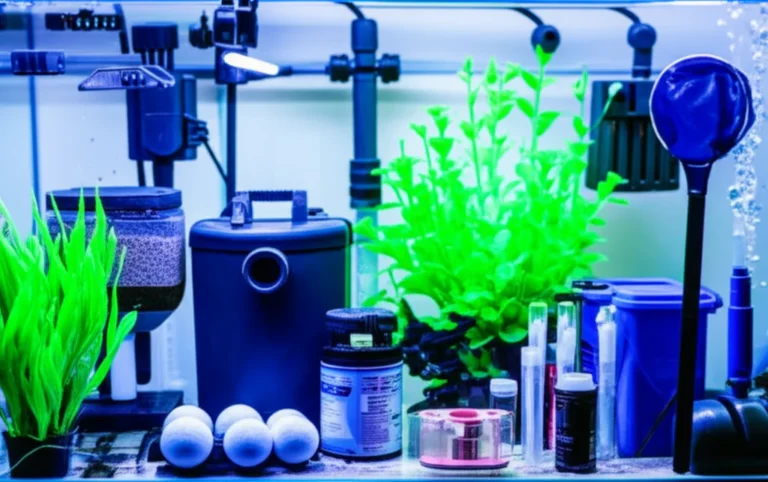
- 🛠️ Top 7 Essential Components of a High-Efficiency Marine Recycling System
- 🧩 Choosing the Right Setup: Nano vs. Reef-Sized Recycling Solutions
- 🚫 Common Pitfalls: Why Your System Might Be Failing (And How to Fix It)
- 💧 Water Quality Monitoring: The Art and Science of Keeping Parameters Stable
- 🌱 Sustainable Practices: Eco-Friendly Innovations in Saltwater Filtration
- 📊 Comparative Analysis: Protein Skimmers vs. Refugiums vs. Chemical Filtration
- 🔧 Maintenance Mastery: A Step-by-Step Guide to Long-Term System Health
- 🧠 Troubleshooting Guide: Diagnosing Algae Bloms, Cloudy Water, and Parameter Spikes
- 🏆 Expert Verdict: Our Favorite Brands and Models for 2024
- 🎓 Conclusion: Mastering the Art of the Self-Sustaining Reef
- 🔗 Recommended Links
- ❓ FAQ: Your Burning Questions About Marine Recycling Systems Answered
- 📚 Reference Links
Body
⚡️ Quick Tips and Facts
Welcome, fellow ocean architects! Before we plunge into the deep end of marine aquarium recycling systems
, let’s surface for a quick breath of fresh, salty air with some essential tidbits. Here at Aquarium Music™,
we believe a great aquarium starts with great knowledge. Think of this as your pre-dive checklist!
- The Heart
of the System: At its core, a marine recycling system is all about the nitrogen cycle. This natural process,
driven by beneficial bacteria, converts toxic fish waste (ammonia) into less harmful substances (nitrates). Mastering this is one
of the 🐠 15 Secrets to Mastering Your Tropical Fish Tank (2026). - It’s Not a Closed Loop (Entirely): While these are often called “closed-loop” systems, they aren’t 100% self
-contained. You’ll still need to perform water changes and top-offs to replenish trace elements and remove accumulated nitrates.
Big League Water Savings: The scale of water recycling can be immense! The Georgia Aquarium, the largest in the Western Hemisphere, recycles a staggering 9% of its
10 million gallons of exhibit water daily, saving nearly $1.5 million annually.
- Eco-Conscious Hobbying: Modern systems are increasingly eco-friendly. The Mote Aquaculture Research Park recycles 10% of its saltwater and impressively, does not discharge any water into the marine environment
. - Bacteria: Friend and Foe: A healthy system is teeming with beneficial bacteria.
However, a poorly maintained one can become a breeding ground for pathogens. A 2006 study in the Research Journal of
Microbiology found that inefficient biological filters can lead to a bloom of opportunistic bacteria like *Vibrio spp.**, which
comprised nearly 49% of the bacterial population in their test system and was linked to poor fish survival. - Not All Filters Are Equal: Your system will likely use a combination of mechanical
, biological, and chemical filtration to keep water pristine. We’ll break down what each one does in just a bit
!
🌊 The Evolution of Marine Aquarium Recycling Systems: From Ancient
Jars to Modern Bio-Lops
Ever wonder how we got from a goldfish in a bowl to the breathtaking, self-sustaining
reef ecosystems we build today? It’s been a wild ride, let me tell you! The journey of the aquarium is a story
of slowly unraveling the ocean’s secrets.
In the old days, “filtration” was just a fancy word for ”
frequent water changes.” Aquarists were basically in a constant battle against nature, scooping out old water and pouring
in new, hoping for the best. It was laborious, inefficient, and stressful for the aquatic life.
The real revolution
began when we stopped fighting the natural processes and started working with them. The discovery of the nitrogen cycle was the
“eureka!” moment for our hobby. Suddenly, we understood that an invisible army of microbes was the key to a stable environment
. This led to the development of under-gravel filters, which, while primitive by today’s standards, were the
first real attempt to cultivate these beneficial bacteria in a dedicated space.
Fast forward through decades of innovation: canister filters, wet
/dry sumps, protein skimmers, and the rise of live rock as the ultimate biological filter. Each step brought
us closer to mimicking the ocean’s own incredible recycling capabilities. Today’s systems, like the massive, custom-built sand
filters used by the [Georgia Aquarium](https://www.xylem.com/en-id/making-waves/
industrial-news/georgia-aquarium-tackles-nitrate-challenge-while-exceed
ing-sustainability-goals/), are marvels of engineering designed to maintain a perfect bacterial balance on a colossal scale. We’ve gone from jars to jungles, and the best is yet to come.
🔬 Understanding the Core Mechanics: How Closed-Loop Water Filtration Actually Works
So, what’s the magic behind
making a small box of water behave like a vast ocean? It’s not magic—it’s a beautifully choreographed
dance of physics, chemistry, and biology. Think of your aquarium’s recycling system as the life support for a tiny
astronaut—your fish. It provides everything needed to survive in an alien environment (your living room).
A “closed-loop”
or “recirculating aquaculture system” (RAS) works by continuously moving water from the display tank through a series of filtration components
(usually hidden in a sump or cabinet) and then pumping it back in. It’s a perpetual cycle of dirty
water out, clean water in.
Here’s the basic flow:
- The Overflow: Water at
the surface of your tank spills over into an overflow box. This is crucial because it skims off proteins and oils that accumulate on the
water’s surface. - The Sump: Gravity carries the water down into a sump—a secondary
tank that houses all your filtration equipment. This is the system’s command center. - The Filtration Ga
untlet: In the sump, the water is forced through mechanical, chemical, and biological filters. It might get zapped by a
UV sterilizer or frothed up in a protein skimmer. - The Return: A return pump,
the powerful heart of the system, pushes the now-purified water back up into the display tank, creating life-giving
flow and oxygenation.
This continuous circulation is what allows massive public aquariums to maintain 10 million gallons of artificial
seawater, creating a stable home for everything from tiny clownfish to giant whale sharks. It’s
a scalable solution that works just as well for your 40-gallon reef as it does for their 6.3-
million-gallon Ocean Voyager exhibit.
🧪 The Nitrogen Cycle: The Invisible Engine Behind Your Saltwater Sanctuary
If
the return pump is the heart of your system, the nitrogen cycle is its soul. This is, without a doubt,
the single most important biological process you need to understand. Get this right, and you’re 90% of
the way to a successful marine tank.
In simple terms, it’s nature’s three-step waste management
program:
- Ammonia (NH₃) Production: Your beautiful Fish and Aquatic Life produce waste. Uneaten food decays. This
all breaks down into ammonia, which is extremely toxic to fish and invertebrates. - Nit
rite (NO₂) Conversion: A group of beneficial bacteria, primarily from the Nitrosomonas genus, consumes the
ammonia and converts it into nitrite. Nitrite is also highly toxic, so we’re not out
of the woods yet! - Nitrate (NO₃) Conversion: A second group of bacteria, mainly
Nitrobacter, swoops in to save the day. They consume the toxic nitrite and convert it into **nitrate
**. Nitrate is far less harmful and is tolerated by most marine life in moderate amounts. It also serves as food for algae and corals
.
This entire process is called nitrification. Your job as an aquarist is to provide plenty of surface area—
like live rock, sand, and dedicated bio-media (like the bioballs mentioned in the research study)—for these bacterial colonies to grow and thrive.
But what happens if this delicate bacterial balance is thrown off? The *
Research Journal of Microbiology* study gives us a chilling look. They found that systems with inefficient biological filtration saw a population explosion
of harmful bacteria. This underscores the importance of a mature, properly functioning biofilter. Without it
, you’re not just failing to remove toxins; you’re actively cultivating a hazardous environment.
🛠️ Top 7 Essential Components of a High-Efficiency Marine Recycling System
Ready to build your filtration dream
team? A truly effective marine recycling system is more than just one piece of gear; it’s a synergistic assembly of components
, each with a vital role. Here are the seven players we at Aquarium Music™ consider essential for a top-tier setup
.
- Mechanical Filtration
- What it is: The first line of defense.
This component physically traps large debris—uneaten food, fish poop, and other floating gunk—before it can break
down into ammonia. - Common Forms: Filter socks, filter floss, and sponges.
Expert Tip: Clean or replace mechanical media frequently (every few days for filter socks). If you don
‘t, it becomes a nitrate factory, defeating its own purpose!
- Protein Skimmer
- What it is: A miracle worker for saltwater tanks. It injects fine air bubbles into a reaction
chamber. Organic waste compounds stick to the surface of these bubbles and are carried up into a collection cup as a gross, dark foam called
“skimmate.” - Why it’s crucial: It removes waste before it enters the nitrogen cycle
. This means less ammonia, less nitrite, and ultimately, less nitrate. It’s proactive, not reactive, filtration
. - Top Brands: Bubble Magus, Reef Octopus, Simplicity.
- Biological Filtration Media
- What it is: The housing development for your beneficial bacteria
. This is any material with a high surface area where nitrifying bacteria can colonize.
Common Forms:** Live rock (the classic!), sand beds, and modern synthetic media like MarinePure Bio-Filter Media or the bioballs used in the research
study.
- Key Insight: The more surface area, the larger the
bacterial colony your tank can support, and the more stable your system will be.
- Chemical Filtration
- What it is: This involves using specific media to absorb or adsorb impurities that other filtration types miss
, such as dissolved organics, medications, or phosphates. - Common Forms:
- ✅
Granular Activated Carbon (GAC): “Polishes” the water, removing yellowing compounds and odors for crystal-clear
viewing. We love ROX 0.8 Carbon. - ✅ Granular Ferric Oxide (GFO): Specifically
targets and removes phosphates, a primary fuel for nuisance algae. - ✅ Specialty Resins: Products
like Chemipure Blue combine carbon and resins for all-in-one chemical filtration.
- Refugium /
Algae Scrubber
-
What it is: A natural filter on steroids! A refugium is a
dedicated, protected area (usually a chamber in your sump) where you can grow macroalgae, like Chaetomorpha. -
The Double Benefit: As the algae grows, it consumes nitrates and phosphates directly from the water.
It also becomes a breeding ground for beneficial microfauna like copepods, which flow into the display tank as a free
, nutritious food source for your fish and corals.
- UV Sterilizer
- What
it is: An insurance policy. Water is pumped past an ultraviolet lamp, which irradiates and kills or neutralizes free-floating
algae spores, bacteria, and parasites. - Is it essential? Not for every tank, but highly
recommended for controlling disease outbreaks (like Marine Ich) and preventing “green water” algae blooms. The study on bacterial dynamics
used a UV sterilizer specifically to control bacterial populations, highlighting its effectiveness.
Popular Choices:** Aqua Ultraviolet, Pentair Aquatics.
7
. Return Pump & Plumbing
- What it is: The heart and arteries of your system
. The return pump drives the entire recirculation process, while the plumbing ensures water gets where it needs to go efficiently and safely
. - What to look for: A reliable, quiet, and controllable DC pump is the modern standard
. Brands like Ecotech Marine and Sicce are industry leaders. Proper plumbing with safety features like emergency overflows
is non-negotiable.
🧩 Choosing the Right Setup: Nano vs. Reef-Sized
Recycling Solutions
Is a bigger aquarium always better? When it comes to stability, often yes. But that doesn’t mean
you can’t have a thriving nano reef! The key is to match the scale of your recycling system to the volume
and bioload of your tank. Let’s break down the differences.
The Nano Reef (Under 30 Gallons)
Nano tanks are like tiny sports cars: quick, nimble, but also unforgiving of mistakes. A small
water volume means that any change—a dead snail, a bit of overfeeding—can cause water parameters to swing wildly.
- Filtration Strategy: Simplicity and efficiency are paramount. All-in-one (AIO)
tanks are king here. Brands like Innovative Marine and Waterbox have perfected the AIO design, which incorporates hidden rear chambers for all
your filtration components. - Key Components:
- A small, efficient protein skimmer designed for nano tanks (e.g., Tunze Comline DOC Skimmer).
- A media basket for running filter floss, carbon
, and GFO. - Often, there isn’t space for a full refugium, but some aqu
arists successfully grow macroalgae in one of the rear chambers. - The Challenge: You are the
primary stabilizing force. Diligence in maintenance and testing is not optional; it’s a requirement.
The Full
-Sized Reef (50+ Gallons)
Larger tanks are like cruise ships: they have a lot of
momentum and are much more resistant to sudden changes. This inherent stability gives you more flexibility and a larger margin for error.
- Filtration Strategy: This is where the classic sump-based system shines. A large sump under the stand gives
you ample room for powerful, specialized equipment. Check out our Aquarium Setup guides for more on this. - Key Components:
A powerful, oversized protein skimmer. Our rule of thumb: buy a skimmer rated for a tank at least
1.5x the size of yours.
- A large refugium chamber to maximize natural nutrient export.
Dedicated reactors for running carbon and GFO, which are more efficient than media bags.
- Space for additional
tech like calcium reactors, dosing pumps, and automatic water change systems. - The Advantage: Automation can take over many
of the daily chores, and the system’s stability means you can focus more on the art of Aquascaping and Aquatic Plants and less on firefighting.
🚫 Common Pitfalls:
Why Your System Might Be Failing (And How to Fix It)
We’ve all been there. You’ve spent
a fortune on the best gear, your tank looks amazing for a few weeks, and then… disaster strikes. Algae blooms,
sick fish, dying corals. What went wrong? More often than not, a failing system comes down to a few common,
avoidable mistakes.
-
Pitfall #1: Undersized Equipment
-
The Mist
ake: Buying a protein skimmer or pump rated for your exact tank size to save a few bucks. Manufacturers’ ratings are often
… optimistic, shall we say. They’re based on a very light bioload. -
The Fix: **
Always oversize your key equipment**, especially your protein skimmer and return pump. A more powerful skimmer will pull out more g
unk, and you can always dial back a powerful DC pump, but you can’t get more power from an unders
ized one. -
Pitfall #2: The “Set It and Forget It” Mindset
-
The Mistake: Believing your high-tech system is a substitute for regular maintenance. An overflowing skimmer cup
or a clogged filter sock is actively harming your tank. -
The Fix: Create and stick to a maintenance
schedule. Your recycling system is a tool, not a magic box. It needs to be cleaned and managed to function properly
. -
Pitfall #3: Neglecting the Source of the Problem
-
The Mistake:
Using GFO to fight a phosphate problem caused by chronic overfeeding or using impure top-off water. You’re treating the
symptom, not the disease. -
The Fix: Practice good aquarium husbandry. Feed sparingly, use high-quality frozen
foods, and most importantly, use RODI (Reverse Osmosis De-Ionized) water for all top
-offs and salt mixing. Tap water is a primary source of phosphates, silicates, and other algae fuel.
Pitfall #4: Inefficient Biological Filtration
- The Mistake: Not providing enough high
-quality surface area for bacteria to colonize, or “nuking” your tank with un-dosed chemicals
, killing off your beneficial bacteria. - The Fix: Be patient when cycling a new tank. Use
plenty of porous live rock or high-quality media like MarinePure spheres. As the 2006 study critically
noted, “The low efficiency of biological filter media causes the bloom of opportunistic pathogenic bacteria in the rearing tanks.” Your biofilter is the foundation of your tank’s health—protect it!
💧 Water Quality Monitoring: The Art and Science of Keeping Parameters Stable
You can’t manage what you don’
t measure. In a closed marine system, you are the ocean. You are responsible for maintaining the delicate chemical balance that allows
life to flourish. That makes regular water testing the most crucial task in your maintenance routine.
The Essential Parameters:
What to Test and Why
| Parameter | Ideal Range | Why It Matters | Recommended Test Kit |
|---|---|---|---|
| :— | :— | :— | :— |
| Salinity | 1.024 – 1.0 | ||
| 26 sg | The salt concentration of the water. The most fundamental parameter for marine life. | Hanna Instruments Salinity Tester / Refractometer | |
| Ammonia (NH₃) | 0 ppm | Highly | |
| toxic. Any detectable level indicates a problem with your biological filter. | API Saltwater Master Test Kit | ||
| Nitrite (NO₂) | 0 ppm | Also highly toxic. A sign of an incomplete or failing nitrogen cycle. | API Saltwater Master Test |
| Kit | |||
| Nitrate (NO₃) | < 10 ppm | The end product of the nitrogen cycle. Less | |
| toxic, but high levels fuel algae growth. | Salifert Nitrate Test Kit | ||
| pH | 8.1 – 8.4 | Measures the acidity/ | |
| alkalinity of the water. Stability is key. | API Saltwater Master Test Kit | ||
| **Alkalinity | |||
| (dKH)** | 8 – 12 dKH | A measure of the water’s buffering capacity. Crucial for | |
| coral skeleton growth. | Hanna Alkalinity Checker / Salifert | ||
| Calcium (Ca) | |||
| 400 – 450 ppm | A primary building block for coral skeletons and invertebrate shells. | Sal | |
| ifert Calcium Test Kit | |||
| Magnesium (Mg) | 1250 – 1350 ppm | ||
| Works with Calcium and Alkalinity to maintain stability. Prevents precipitation. | Salifert Magnesium Test Kit |
Testing Frequency
- New Tank (Cycling): Test Ammonia and Nitrite daily.
- Established Fish-
Only Tank: Test Nitrate, pH, and Alkalinity weekly. - Reef Tank: Test the
“Big Three” (Alkalinity, Calcium, Magnesium) at least twice a week, along with Nitrates.
Investing in reliable test kits is non-negotiable. While API is great for cycling, we recommend stepping up to brands
like Salifert, Red Sea, or Hanna Instruments for the precision required for a reef tank. You can find these
and other essential tools in our Aquarium Equipment section.
🌱 Sustainable Practices: Eco-Friendly Innovations in Saltwater Filtration
Let’s be
honest: our hobby can be resource-intensive. The lights, the pumps, the constant need for pure water—it all adds up
. The good news? The industry is making massive strides towards sustainability, and you can incorporate these eco-friendly practices at
home!
Water Conservation: The Closed-Loop Advantage
The very nature of a recirculating system is a huge
step towards sustainability. Instead of the old “dump and fill” method, we clean and reuse the same water for months or
even years. This is sustainability in action, and it has a real economic impact.
- The Georgia Aquarium Case
Study: By recycling 10 million gallons of water, they avoid the astronomical cost of creating and disposing of that much artificial
seawater, which they calculate costs 14 cents per gallon. That’s a powerful
incentive to conserve! - Mote Marine Laboratory’s Zero-Discharge Goal: Mote’s research
facility takes it a step further. Their marine aquaculture systems are designed to not discharge any water into the environment, a
truly ambitious goal for sustainability.
Energy Efficiency: Reducing Your Carbon Fin-Print
Your
aquarium’s life support systems can be a significant drain on electricity. But modern technology is here to help.
- DC
Pumps: Controllable DC pumps (like the Ecotech Marine Vectra) are far more energy-efficient than their AC counterparts. They also allow you to dial in the perfect flow,
so you’re not wasting energy on more power than you need. - LED Lighting: This has been a game
-changer. As Mote discovered when they upgraded their shark exhibit, switching from metal halides to LEDs reduced the wattage from
6,000 watts to just 600 watts. That’s a
90% reduction! This not only saves energy but also reduces heat transfer to the water, lessening the load on your
chiller. - Energy Recovery: Mote also employs clever heat exchange technology to recover energy from discharge water, using
it to warm or cool incoming seawater. While this is large-scale, the principle of smart
energy use applies to any system.
Nutrient Recycling: From Waste to Wonder
What if you could turn fish waste into a
resource? That’s the idea behind nutrient recycling.
- The Refugium: This is the home
aquarist’s version of nutrient recycling. The nitrates and phosphates produced by your fish become fertilizer for macroalgae.
You can then harvest the excess algae and either discard it (permanently removing the nutrients from your system) or use it to
feed herbivorous fish. - Mote’s Aquaponics: Mote uses nutrients from their fish waste to grow
marine and wetlands plants, which are then used in habitat restoration projects. It’s a beautiful, circular
system where waste becomes a tool for conservation.
By adopting these practices, you’re not just creating a beautiful aquarium
; you’re becoming a better steward of the environment.
📊 Comparative Analysis: Protein Skimmers vs
. Refugiums vs. Chemical Filtration
When it comes to nutrient and waste export, you have several powerful tools at your
disposal. But which one is right for your tank? And should you use just one, or a combination? Let’
s put the three main methods head-to-head.
| Feature | Protein Skimmer | Refugium (with Macroalgae) | Chemical Filtration (Carbon/GFO) |
|---|---|---|---|
| :— | :— | :— | :— |
| Mechanism | Physical Removal: Uses air bubbles to attract and remove dissolved organic compounds (DOCs) before they break down. | Biological Uptake: Macroalgae consumes nitrates and phosphates as it | |
| grows. | Adsorption/Absorption: Media actively binds to specific impurities like phosphates, silicates, and dissolved organics. |
| Pros | ✅ Highly efficient at waste removal.
✅ Increases gas exchange and oxygenates water.
✅ Removes a wide range of organic pollutants. | ✅ Natural, self-sustaining process.
✅ Consumes nitrates
and phosphates.
✅ Cultivates beneficial pods as a food source.
✅ Helps stabilize pH. | ✅ Targets
specific pollutants with high precision.
✅ “Polishes” water for exceptional clarity.
✅ Can quickly resolve acute
problems (e.g., a phosphate spike). |
| Cons | ❌ Can be noisy.
❌ Requires regular cleaning and maintenance.
❌ Can remove some beneficial trace elements. | ❌ Requires dedicated space and
proper lighting.
❌ Can be slow to establish.
❌ If algae dies, it releases nutrients back into the
water. | ❌ Media is a consumable and needs to be replaced regularly.
❌ Can strip water too quickly if
used aggressively.
❌ GFO can sometimes release fine dust into the system. |
| Best For | **
Nearly all saltwater tanks**, especially those with a heavy fish load or SPS corals that require ultra-low nutrient levels. | Mixed
reef and soft coral tanks. Excellent for aquarists who prefer a more natural, holistic approach to filtration. | **
Targeted problem-solving and water polishing.** Essential for high-end reef tanks and for dealing with specific water quality issues. |
The Verdict? Why choose? The most successful and stable marine recycling systems use a combination of all three.
A protein skimmer acts as the system’s workhorse, a refugium provides natural stability and a food source, and
chemical filtration is the scalpel used for precision control.
🔧 Maintenance Mastery: A Step
-by-Step Guide to Long-Term System Health
An aquarium is a living piece of art, and like any masterpiece
, it requires care and attention. A consistent maintenance routine is the secret to long-term success. It prevents problems before
they start and keeps your recycling system running at peak efficiency.
Here’s our recommended schedule:
Daily (2-5 Minutes)
- ✅ Visual Check: Look at your fish. Are they behaving normally? Check
the equipment. Is everything running? - ✅ Empty Skimmer Cup: If it’s full or close to it
, empty and rinse it. Don’t let that gunk sit there! - ✅ Top-Off Water
: Check and refill your Automatic Top-Off (ATO) reservoir with fresh RODI water.
Weekly (15-30 Minutes)
- ✅ Water Testing: Test your key parameters (Alkalinity, Calcium, Magnesium, Nitrate). Log the results to track trends.
- ✅ Clean the Glass: Use an algae scraper or
magnetic cleaner to keep the viewing panes crystal clear. - ✅ Water Change: Perform a 10-1
5% water change. This replenishes trace elements and helps dilute accumulated nitrates and other compounds. - ✅ Clean Filter
Socks/Floss: Replace or rinse your mechanical filtration media.
Monthly (30-60 Minutes)
✅ Clean Pumps and Powerheads: Salt creep and algae can build up on pumps, reducing their efficiency and lifespan. A
quick soak and scrub in a vinegar/water solution works wonders.
- ✅ Clean Protein Skimmer: Give
the skimmer body and pump a thorough cleaning to ensure it’s producing the best foam possible. - ✅ Replace
Chemical Media: Swap out your carbon and GFO. Most have an effective lifespan of about 3-4 weeks.
✅ Harvest Refugium: Trim back about 1/3 to 1/2 of your macroal
gae to encourage new growth and permanently export the nutrients it has absorbed.
The Importance of Pure Water
All your
maintenance efforts can be undermined if you’re using impure water. Tap water contains chlorine, chloramine, heavy metals, phosphates, and
silicates—all things you don’t want in a reef tank. This is why a Reverse Osmosis De
-Ionization (RODI) system is not a luxury; it’s a necessity.
As the first YouTube video in this article demonstrates, you can even upgrade a standard RODI unit to be more efficient. By adding a second
membrane, you can potentially double your pure water production while cutting wastewater in half. This is a
fantastic weekend project that pays dividends in both time and water saved, ensuring your recycling system is always being replenished with the purest
water possible.
🧠 Troubleshooting Guide: Diagnosing Algae Blooms, Cloudy Water,
and Parameter Spikes
Even in the best-kept systems, problems can arise. The key is to diagnose the root
cause quickly and act decisively.
Problem: Nuisance Algae Bloom (Green Hair, Bryopsis, etc.)
- Symptoms: Unsightly green, brown, or red algae covering your rocks and sand.
Likely Causes:
- High Nutrients (Nitrates/Phosphates): This
is the #1 cause. Your nutrient export (skimmer, refugium) isn’t keeping up with your nutrient import
(feeding, source water). - Inadequate Flow: Dead spots in the tank allow algae to get
a foothold. - Lighting Issues: Old bulbs shifting spectrum or a photoperiod that is too long.
- Solutions:
- Test your water! Check Nitrates and Phosphates. If they
are high, increase water changes and check your filtration. - Reduce feeding for a week or two
. - Add or adjust powerheads to eliminate dead spots.
- Introduce a ”
clean-up crew” of algae-eating snails and hermit crabs. - Run GFO to directly
reduce phosphates.
Problem: Cloudy or Milky Water
- Symptoms: The water in the tank is hazy and
visibility is reduced. - Likely Causes:
- Bacterial Bloom: Often happens
in new tanks or after a large disturbance. It’s a population explosion of heterotrophic bacteria feeding on excess organic waste
. - Sandstorm: A powerhead aimed at the sandbed or a new critter digging
can kick up fine particles. - Precipitation: A sudden, large spike in alkalinity or calcium can cause
it to precipitate out of the solution, creating a “snowstorm” effect.
- Solutions:
For a bacterial bloom: Be patient. It will usually resolve on its own in a few days. Adding a UV
sterilizer can speed up the process. Do not do a large water change, as this can fuel the bloom
.
- For a sandstorm: Adjust your powerheads and wait for it to settle. Running fine
filter floss will help trap the particles. - For precipitation: Test your Alkalinity and Calcium immediately. Stop
any dosing until parameters are back in line.
Problem: Sudden Ammonia or Nitrite Spike
- Symptoms
: Your test kit shows a reading for Ammonia or Nitrite in an established tank. Fish may be gasping at the surface or showing
signs of distress. - Likely Causes:
- A recent death: A dead
fish or large invertebrate is decaying somewhere in the tank. - Bio-filter crash: Something has
killed off a significant portion of your beneficial bacteria (e.g., medication, a large pH swing).
Major overfeeding event.
- Solutions:
- This is an emergency! Perform
an immediate 25-50% water change to dilute the toxins. - Dose
a detoxifier like Seachem Prime, which will
temporarily bind the ammonia and nitrite, making them harmless. - Find and remove the source of the spike
(e.g., the dead fish). - Add a bottled bacteria product like FritzZyme TurboStart to help re-seed your biological filter.
Remember, the presence of harmful microorganisms is a
constant threat if a system is not balanced. The research study found that high concentrations of bacteria like *Pseudomonas aeruginosa and _
Vibrio cholerae_ were present in struggling tanks, posing a potential risk not just to the fish, but to
humans as well. This highlights why troubleshooting effectively is so critical.
🏆
Expert Verdict: Our Favorite Brands and Models for 2024
After countless hours of testing, tinkering, and talking
with fellow hobbyists, we’ve developed some strong opinions on the gear that truly performs. Here are our top picks for the
core components of a fantastic marine recycling system.
All-In-One (AIO) Systems: The Complete
Package
For those who want a streamlined, elegant solution, AIO tanks are the way to go. They integrate the filtration
seamlessly into the back of the aquarium.
Our Pick: Waterbox Aquariums (REEFER and Peninsula Series)
| Feature | Rating (1-10) | Analysis |
|---|---|---|
| Design & Aesthetics | 10 | Simply |
| stunning. Ultra-clear glass, clean lines, and high-quality cabinetry make these a true centerpiece. | ||
| **Fil | ||
| tration System** | 9 | The sump systems are intelligently designed with filter socks, dedicated skimmer/reactor chambers, and refug |
| iums. | ||
| Build Quality | 9 | Excellent craftsmanship on both the tank and the stand. The |
| plumbing is pre-fabricated and easy to assemble. | ||
| Value | 8 | These are premium systems |
| with a price to match, but the quality and completeness of the package justify the cost. |
Waterbox has consistently
impressed us with their attention to detail and commitment to quality. The included sumps are well-thought-out, providing the
perfect foundation for a high-efficiency recycling system.
👉 CHECK PRICE on:
- Waterbox Aquariums
: Brand Official | Bulk Reef Supply | Marine Depot
Protein Skimmers: The Heart of Filtration
A great
protein skimmer is the single best investment you can make for your tank’s health.
**Our Pick: Reef Octopus Regal & Classic Series
**
| Feature | Rating (1-10) | Analysis |
|---|---|---|
| :— | :— | :— |
| Performance | 10 | These skimmers are absolute beasts. They produce a stable, thick |
| foam and pull out an incredible amount of dark, nasty skimmate. | ||
| Build Quality | 9 | |
| High-quality cast acrylic and durable, quiet pumps. The gate valve for precise adjustment is a fantastic feature. |
| Ease of Use | 8 | Simple to assemble and dial in. The twist-off collection cup makes maintenance
a breeze. |
| Noise Level | 8 | The VarioS DC pumps are exceptionally quiet, a
huge plus for tanks in living areas. |
Reef Octopus has been a leader for years, and for good reason. Their
skimmers are reliable, powerful, and built to last. The Regal series, with its controllable DC pump, is our
top choice for the discerning reefer.
👉 CHECK PRICE on:
- Reef Octopus: Amazon | Bulk Reef Supply | Marine Depot
Return Pumps: The Unsung Hero
Your
return pump runs 24/7. It needs to be reliable, quiet, and efficient.
Our Pick: Ecotech Marine Vectra Series
| Feature | Rating (1-10) | Analysis |
|---|---|---|
| Reliability | ||
| 10 | Built like a tank. We have Vectra pumps that have been running for years without a single issue. |
| Controllability | 10 | The wireless connectivity and integration with the Mobius app are best
-in-class. You can calibrate flow, set a feed mode, and get notifications. |
| **Noise Level
** | 9 | Virtually silent at most operating speeds. |
| Efficiency | 9 | The DC motor is
highly efficient, saving you money on your electricity bill over the long run. |
The Vectra is more than just a pump
; it’s the brain of your tank’s circulation. The smart features and bulletproof reliability make it our go
-to recommendation for any serious reef aquarium.
👉 CHECK PRICE on:
- Ecotech Marine Vectra
: Amazon | Bulk Reef Supply | Brand Official