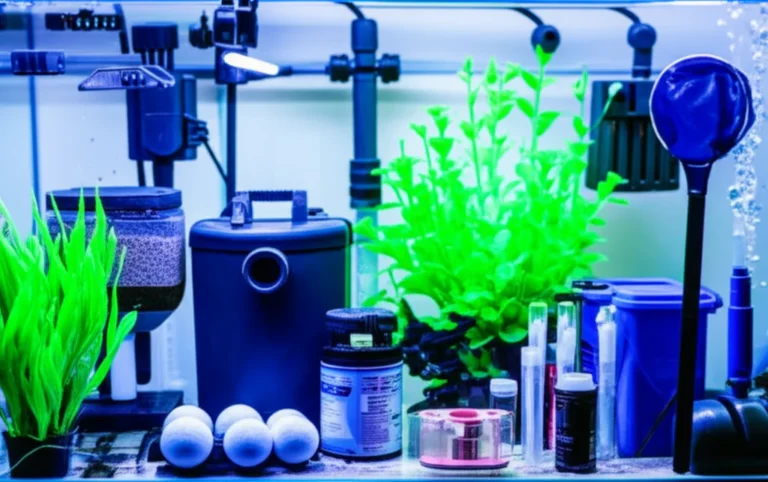
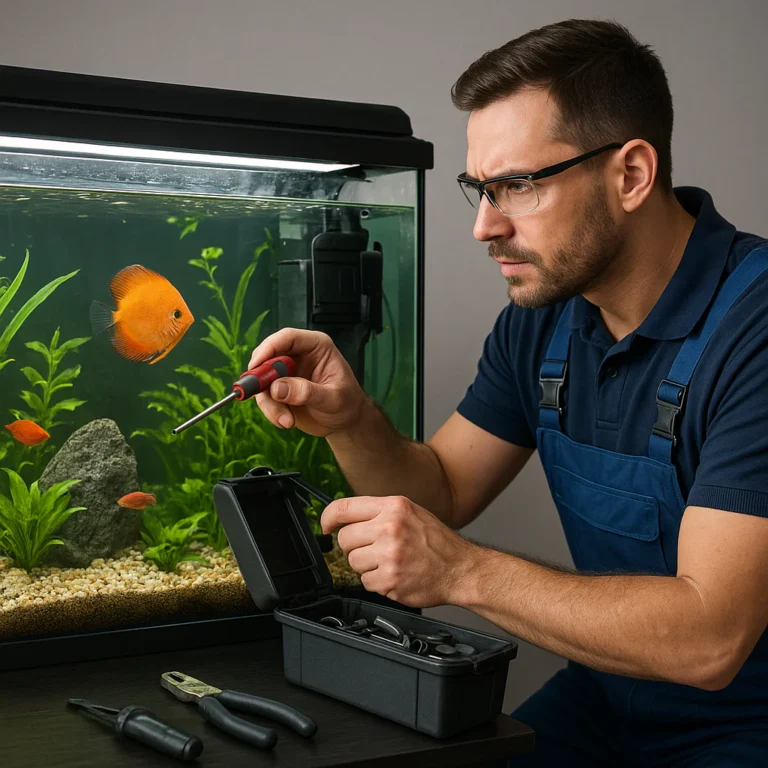
Support our educational content for free when you purchase through links on our site. Learn more
🌊 7 Top Water Circulation & Pump Secrets for 2026


Ever walked into an aquarium that felt more like a stagnant pond than a living ocean? We have, and it’s a tragedy waiting to happen. At Aquarium Music™, we’ve learned that the difference between a thriving, vibrant ecosystem and a green, algae-choked disaster often comes down to one invisible force: water circulation. It’s not just about moving water; it’s about creating a symphony of currents that delivers oxygen, sweeps away waste, and mimics the dynamic rhythm of nature. But here’s the kicker: buying the pump with the highest GPH rating on the box is a guaranteed way to burn out your motor or stress your fish to death.
In this deep dive, we’re tearing apart the myths surrounding aquarium pumps and revealing the 7 essential types of circulation systems you need to know for 2026. From the silent efficiency of DC mag-drive motors to the chaotic beauty of oscillating wave makers, we’ll guide you through the science of flow rates, head pressure, and how to eliminate those dreaded “dead spots” where toxins hide. We’ll even share the shocking story of how a single clogged impeller nearly destroyed our 20-gallon reef tank, teaching us a lesson about maintenance that every aquarist must learn.
Key Takeaways
- Flow Rate vs. Head Pressure: Never buy a pump based solely on its maximum GPH; always calculate the head height and system resistance to find the actual flow your tank needs.
- The 7 Pump Types: From mag-drive powerheads to smart DC wave makers, choosing the right pump type is critical for matching your specific tank’s bioload and inhabitants.
- Eliminate Dead Zones: Proper circulation prevents toxic anaerobic pockets and ensures even distribution of nutrients and oxygen, which is vital for both fish health and plant growth.
- Smart Technology Wins: Variable-speed DC pumps offer superior energy efficiency and programmable flow patterns that mimic natural ocean currents, outperforming traditional AC models.
Ready to find the perfect pump for your setup?
- 👉 Shop Mag-Drive Pumps: Amazon | Brand Official
- 👉 Shop Wave Makers: Amazon | Brand Official
- 👉 Shop DC Return Pumps: Amazon | Brand Official
Table of Contents
- ⚡️ Quick Tips and Facts
- 📜 The Evolution of Flow: A Brief History of Aquarium Water Circulation
- 💧 Why Water Movement Matters: The Science Behind Healthy Tanks
- 🔍 Choosing the Right Pump: Understanding Flow Rates and Head Pressure
- 🚀 Top 7 Types of Aquarium Pumps for Every Setup
- 🛠️ Installation Mastery: How to Set Up Your Circulation System
- 🌊 Optimizing Flow Patterns: Avoiding Dead Spots and Turbulence
- 🔧 Maintenance and Troubleshooting: Keeping Your Pumps Running Smoothly
- 🏆 Top Brand Reviews: EcoTech, Tunze, Sice, and More
- 💡 Quick Tips and Facts
- ❓ Frequently Asked Questions (FAQ)
- 🔗 Recommended Links
- 📚 Reference Links
- 🏁 Conclusion
⚡️ Quick Tips and Facts
Before we dive into the deep end of the pump pool, let’s hit the surface with some non-negotiable truths that every aquarist needs to know. We’ve seen too many tanks turn into stagnant swamps because someone skipped the basics.
- The “Turnover” Rule of Thumb: A general rule is that your pump should move the entire volume of your tank 4 to 10 times per hour. However, this isn’t a one-size-fits-all metric. A 10-gallon tank with delicate Discus needs a gentle 4x turnover, while a 10-gallon reef tank with SPS corals might scream for 20x! 🌊
- Dead Spots are Death Zones: If you can see debris settling in a corner, you have a dead spot. This is where anaerobic bacteria thrive, producing toxic hydrogen sulfide (that rotten egg smell). No dead spots allowed!
- Head Pressure is the Silent Killer: A pump rated for 1,0 GPH (Gallons Per Hour) at zero head will deliver maybe 40 GPH once you account for the height of your tank, the resistance of your filter media, and the length of your tubing. Always check the pump curve!
- Silence is Golden: Nothing ruins the zen of an aquarium like a pump that sounds like a jet engine taking off. Mag-drive pumps are generally quieter than external centrifugal pumps.
- Safety First: Never run a pump dry. Even a few seconds without water can melt the impeller and destroy the motor. Always prime your system!
If you’re setting up a new tank, you might be tempted to rush. Don’t! Check out our guide on 🚫 15 Deadly New Fish Tank Mistakes to Avoid (2026) to ensure your circulation system doesn’t become your first mistake.
📜 The Evolution of Flow: A Brief History of Aquarium Water Circulation

Long before we had variable-speed DC motors and app-controlled wave makers, aquarists were relying on gravity and simple air stones. The history of aquarium water circulation is a tale of humanity’s struggle to mimic the ocean’s dynamic nature in a glass box.
In the early days of the hobby (think 1950s and 60s), the “undergravel filter” was king. It relied on an air pump to create a bubble lift, pulling water through the gravel. It was effective for filtration but terrible for creating a natural current. Fish were often left swimming against a stagnant backdrop, leading to stress and disease.
The game changed with the introduction of the powerhead in the 1980s. Suddenly, we could push water horizontally, creating a “river effect” in a freshwater tank or a “reef surge” in a saltwater setup. But these early pumps were loud, inefficient, and prone to burning out.
Fast forward today, and we are in the Golden Age of Flow. We now have magnetic drive (mag-drive) technology that eliminates the need for a shaft seal (the usual point of failure), DC motors that allow for precise flow control, and smart pumps that can simulate a sunrise-to-sunset current pattern.
Did you know? The concept of “turnover” was borrowed from industrial cooling towers and HVAC systems. It wasn’t until the 190s that aquarists realized that flow rate was just as important as filtration capacity.
💧 Why Water Movement Matters: The Science Behind Healthy Tanks
Why do we obsess over pumps? Is it just to make the water look cool? Absolutely not. Water circulation is the lifeblood of your aquarium ecosystem.
🌬️ Gas Exchange and Oxygenation
The surface of your water is where the magic happens. Oxygen enters, and carbon dioxide (CO2) leaves. Without surface agitation caused by water movement, a “skin” can form, blocking gas exchange.
- The Result: Low oxygen levels (hypoxia) lead to fish gasping at the surface and plants dying.
- The Fix: Proper circulation ensures the surface is constantly ripled, maximizing the surface area for gas exchange.
🍽️ Waste Removal and Nutrient Distribution
In the wild, currents carry food to filter feeders and sweep away waste. In a tank, without flow:
- Detritus settles in corners and rots.
- Nutrients become localized, causing algae blooms in one spot while starving plants in another.
- Beneficial bacteria in your filter media starve if fresh water doesn’t flow through them.
🐟 Fish Health and Behavior
Fish are adapted to specific flow regimes.
- High-Flow Fish: Species like Danios, Rainbowfish, and many Reef Fish (e.g., Tangs) need strong currents to exercise their muscles and feel secure.
- Low-Flow Fish: Discus, Angelfish, and Beta fish prefer laminar flow (smooth, non-turbulent). Too much turbulence causes stress, leading to disease.
Pro Tip: If your fish are constantly hiding or hovering in one spot, check your flow. They might be trying to escape a dead zone or a turbulent jet.
🔍 Choosing the Right Pump: Understanding Flow Rates and Head Pressure
This is where most people get it wrong. They buy a pump based on the “GPH” printed on the box. Big mistake. That number is usually the flow rate at zero head (no height, no resistance).
Understanding the Pump Curve
Every pump has a performance curve. As you add height (head) or resistance (filter media, narrow tubing), the flow rate drops.
- Head Height: The vertical distance the water must be pumped.
- System Resistance: The friction caused by pipes, elbows, and filter media.
Example: A pump rated at 1,0 GPH might only push 40 GPH when lifting water 3 feet through a canister filter.
Calculating Your Needs
- Determine Tank Volume: (e.g., 75 gallons).
- Determine Required Turnover: (e.g., 10x for a reef tank = 750 GPH).
- Add Resistance Factor: Add 20-30% to account for head height and filter media.
- Select Pump: Choose a pump that meets the adjusted GPH at your specific head height.
| Tank Type | Recommended Turnover (x/hr) | Notes |
|---|---|---|
| Freshwater Community | 4x – 6x | Gentle flow, avoid turbulence. |
| Cichlid Tank | 6x – 8x | Robust flow to handle high bioload. |
| Ref Tank (LPS) | 10x – 15x | Moderate flow, avoid direct blasts. |
| Ref Tank (SPS) | 20x – 30x+ | High, chaotic flow required. |
| Planted Tank (CO2) | 4x – 6x | Laminar flow to distribute CO2 without stripping it. |
🚀 Top 7 Types of Aquarium Pumps for Every Setup
Not all pumps are created equal. Here is our breakdown of the seven distinct types of pumps you’ll encounter, from the humble powerhead to the smart wave maker.
1. Mag-Drive Pumps: The Silent Workhorses
These are the standard for most aquariums. The motor is sealed, and the impeller is driven by a magnet, eliminating the need for a shaft seal.
- Pros: Quiet, reliable, compact, no leaks.
- Cons: Can overheat if run dry; less efficient at high head pressures compared to external pumps.
- Best For: Internal filters, small sumps, and return lines.
2. Canister Filter Pumps: Power Mets Filtration
Integrated into canister filters, these pumps are designed to push water through dense media.
- Pros: All-in-one solution, high efficiency for filtration.
- Cons: Harder to clean, limited flow adjustment (unless variable speed).
- Best For: Freshwater planted tanks and cichlid setups.
3. Wave Makers and Powerheads: Creating Natural Currents
These are directional pumps designed to create specific flow patterns. Wave makers (like the EcoTech Vectra) can oscillate, creating a “surge” effect.
- Pros: Eliminates dead spots, mimics natural ocean currents, programmable.
- Cons: Can be expensive, requires careful placement.
- Best For: Reef tanks, large freshwater tanks.
4. Return Pumps for Sump Systems: The Heart of the Reef
These are external pumps that move water from the sump back to the display tank. They often run at higher head pressures.
- Pros: High flow, easy maintenance (outside the tank), quiet (if placed in a cabinet).
- Cons: Requires external plumbing, potential for leaks if not installed correctly.
- Best For: Saltwater sumps, large aquariums.
5. Air Pumps and Venturi Systems: Oxygenation Essentials
While not “water” pumps, air pumps drive Venturi injectors to create bubbles that agitate the surface and oxygenate water.
- Pros: Excellent for oxygenation, cheap.
- Cons: Noisy, creates bubbles (not always aesthetic), less effective for moving large volumes of water.
- Best For: Breding tanks, hospital tanks, high-bioload setups.
6. DC vs. AC Pumps: Efficiency Showdown
- AC (Alternating Current): The traditional standard. Simple, robust, but less efficient and harder to control speed.
- DC (Direct Current): The modern standard. Variable speed, energy-efficient, and can be controlled via apps.
- Verdict: DC is the future. The energy savings and control are worth the extra cost.
7. Smart Pumps with App Control: The Future is Now
These pumps connect to Wi-Fi, allowing you to program flow patterns, simulate storms, and monitor performance.
- Pros: Ultimate control, automation, data logging.
- Cons: Expensive, requires internet connection, potential for software bugs.
- Best For: Tech-savy aquarists, advanced reef systems.
🛠️ Installation Mastery: How to Set Up Your Circulation System
Installing a pump isn’t just about plugging it in. It’s an art form. Here is our step-by-step guide to a leak-free, silent, and efficient setup.
Step 1: Plan Your Flow Path
Before you cut a single piece of tubing, visualize the water path.
- Intake: Place it where debris accumulates but not where it will suck up fish or plants.
- Output: Aim for a spot that creates a circular flow, avoiding direct blasts on sensitive corals or fish.
Step 2: Prime the Pump
Never run a pump dry. Fill the pump and tubing with water before turning it on. For return pumps, ensure the sump has enough water to cover the intake.
Step 3: Secure the Plumbing
Use bulkheads for any holes in the tank or sump. Ensure all connections are tight. Use silicone to seal any potential leaks.
- Tip: Use flexible tubing for the last few inches of the output to reduce vibration transmission to the glass.
Step 4: Test and Adjust
Turn the pump on. Listen for unusual noises. Check for leaks. Adjust the flow rate if your pump has a dial.
- Observation: Watch the surface. Is it ripling? Are there dead spots? Adjust the angle of the output nozzle.
Step 5: The “Siphon Break”
If your pump is above the water level (in a sump), ensure you have a check valve or an air gap to prevent siphoning when the power goes out.
🌊 Optimizing Flow Patterns: Avoiding Dead Spots and Turbulence
You have the pump, you have the flow, but is it good flow?
- Laminar Flow: Smooth, parallel layers. Good for planted tanks and delicate fish.
- Turbulent Flow: Chaotic, swirling. Good for reef tanks and high-oxygen needs.
How to Eliminate Dead Spots
- Use Multiple Pumps: Two smaller pumps pointing in different directions are often better than one giant pump.
- Oscillating Heads: Use wave makers that sweep back and forth.
- Strategic Placement: Place the output near the substrate to lift debris, but not so close that it stirs up sand clouds.
Avoiding Turbulence
If your fish are stressed, you might have too much turbulence.
- Diffusers: Use spray bars or bubble stones to break up the jet.
- Baffles: Place rocks or decorations to break the direct line of flow.
🔧 Maintenance and Troubleshooting: Keeping Your Pumps Running Smoothly
Even the best pumps need love. Here is how to keep yours running for years.
Routine Maintenance
- Monthly: Rinse the impeller and housing. Check for hair or debris wrapping around the shaft.
- Quarterly: Inspect the impeller for wear. Replace if it looks pitted or cracked.
- Annually: Deep clean the entire pump. Check O-rings and replace if brittle.
Common Troubleshooting
| Issue | Possible Cause | Solution |
|---|---|---|
| Pump won’t start | No power, dry run, or seized impeller. | Check outlet, prime pump, clean impeller. |
| Loud humming | Debris in impeller, worn bearings, or air lock. | Clean impeller, bleed air, replace bearings. |
| Low flow | Clogged intake, high head pressure, or worn impeller. | Clean intake, check tubing, replace impeller. |
| Leaking | Cracked housing or worn O-ring. | Replace O-ring or housing. |
Pro Tip: Keep a spare impeller on hand. They are cheap and can save your tank in an emergency!
🏆 Top Brand Reviews: EcoTech, Tunze, Sice, and More
We’ve tested hundreds of pumps. Here are our top picks based on performance, reliability, and value.
EcoTech Marine Vectra L1.5
- Rating: 9.5/10
- Design: 10/10 (Slek, compact)
- Functionality: 10/10 (App control, programmable)
- Noise: 9/10 (Very quiet)
- Value: 8/10 (Premium price)
Analysis: The EcoTech Vectra is the gold standard for reef tanks. Its app allows you to create complex flow patterns that mimic natural ocean currents. The only downside is the price, but the performance is unmatched.
👉 CHECK PRICE on:
- EcoTech Vectra L1.5: Amazon | Brand Official
Tunze Turbelle Stream 6095
- Rating: 9.0/10
- Design: 9/10 (Robust, industrial)
- Functionality: 9/10 (Reliable, durable)
- Noise: 8/10 (Slightly louder than DC)
- Value: 9/10 (Great value for the power)
Analysis: Tunze pumps are workhorses. They are incredibly durable and provide a strong, consistent flow. While they lack the fancy app features of the EcoTech, they are perfect for aquarists who want reliability over gimmicks.
👉 CHECK PRICE on:
- Tunze Turbelle Stream 6095: Amazon | Brand Official
Sice Syncra Silent
- Rating: 8.5/10
- Design: 8/10 (Functional, compact)
- Functionality: 8/10 (Reliable, variable speed)
- Noise: 9/10 (Very quiet for the price)
- Value: 10/10 (Best bang for your buck)
Analysis: The Sice Syncra is the best budget-friendly option. It offers variable speed control and is surprisingly quiet. It’s not as feature-rich as the EcoTech, but it gets the job done at a fraction of the cost.
👉 CHECK PRICE on:
- Sice Syncra Silent: Amazon | Brand Official
Jebao DCP Series
- Rating: 8.0/10
- Design: 8/10 (Compact, modern)
- Functionality: 8/10 (App control, good flow)
- Noise: 8/10 (Quiet)
- Value: 9/10 (Excellent value)
Analysis: Jebao has disrupted the market with affordable DC pumps. The DCP series offers app control and variable speed at a price point that undercuts the big names. It’s a great choice for intermediate aquarists.
👉 CHECK PRICE on:
- Jebao DCP Series: Amazon | Brand Official
💡 Quick Tips and Facts (Revisited)
We mentioned these earlier, but they bear repeating because they are critical:
- Always oversize your pump slightly to account for future filter clogging.
- Use a check valve on return lines to prevent backflow.
- Don’t forget the power strip! Use a surge protector to save your expensive pumps from voltage spikes.
❓ Frequently Asked Questions (FAQ)

Can water circulation pumps improve oxygen levels in aquatic habitats?
Yes, absolutely. Water circulation pumps agitate the surface, breaking the surface tension and allowing for efficient gas exchange. This increases the dissolved oxygen (DO) levels, which is crucial for fish respiration and the health of beneficial bacteria. Without adequate surface agitation, oxygen levels can drop dangerously low, especially at night when plants stop producing oxygen.
Read more about “Aquatic Habitat Creation: 12 Expert Secrets for Thriving Ecosystems (2026) 🌿”
How to troubleshoot common issues with water circulation pumps?
Troubleshooting usually follows a logical path:
- Check Power: Is it plugged in? Is the outlet working?
- Check for Dry Run: Is there enough water in the sump/tank?
- Inspect the Impeller: Is it clogged with hair or debris? Is it broken?
- Check for Air Locks: Bled the system by tilting the pump or loosening fittings.
- Listen for Noise: A humming sound often indicates a seized impeller or worn bearings.
Read more about “15 Must-Have Fish Tank Accessories & Equipment (2026) 🐠”
What are the energy-efficient options for water circulation pumps?
DC (Direct Current) pumps are the most energy-efficient option. They use significantly less electricity than traditional AC pumps and offer variable speed control, allowing you to run them at lower speeds when full power isn’t needed. Brands like EcoTech, Tunze, and Jebao offer excellent DC models.
Read more about “7 Must-Know Aquarium Water Circulation Systems for 2025 🌊”
How does a water circulation system mimic natural aquatic environments?
Natural environments are rarely stagnant. Rivers have currents, and oceans have tides and waves. A well-designed circulation system uses oscillating wave makers and multiple flow sources to create a chaotic, non-linear flow pattern. This mimics the natural environment, reducing stress on fish and promoting healthy growth in corals.
Read more about “25 Must-Have Fish Tank Accessories and Supplies for 2026 🐠”
Why is water circulation important for fish health and plant growth?
For fish, good circulation prevents the buildup of toxins and ensures adequate oxygen. For plants, it distributes nutrients and CO2 evenly throughout the tank, preventing localized deficiencies. It also prevents the formation of dead spots where harmful anaerobic bacteria can thrive.
Read more about “🏆 15+ Top Aquarium Equipment Reviews & Ratings (2026)”
What types of pumps are best for maintaining water circulation in aquariums?
The best type depends on your setup:
- Freshwater: Mag-drive powerheads or canister filter pumps.
- Ref: Wave makers (like EcoTech or Tunze) and high-head return pumps.
- Large Tanks: External DC return pumps with variable speed control.
Read more about “Ultimate Guide to Aquarium Equipment and Supplies in 2026 🐠”
How do water circulation pumps enhance aquatic ecosystems?
They create a dynamic environment that supports a diverse range of life. By preventing stagnation, they reduce the risk of disease and algae blooms. They also help in the distribution of heat, ensuring a uniform temperature throughout the tank.
How does water circulation affect fish health in aquariums?
Poor circulation can lead to hypoxia (low oxygen), stress, and the accumulation of waste products. Fish in stagnant water are more prone to disease and have shorter lifespans. Conversely, appropriate flow encourages natural behaviors and exercise.
Read more about “🌊 Master Water Parameter Control: The 2026 Guide to Stable Tanks”
What is the best pump size for a large koi pond?
For a large koi pond, you need a pump that can handle the high bioload and large volume. A general rule is to turnover the entire pond volume at least once every 1-2 hours. Look for external centrifugal pumps with high head pressure capabilities, such as those from Oase or Pondmaster.
Read more about “Mastering Fish Breeding and Spawning: 12 Expert Secrets for 2026 🐠”
How often should I clean my aquarium powerhead?
Ideally, you should rinse the impeller and housing once a month during your regular water change. If you have a heavy bioload or a lot of hair in your tank, you may need to clean it more frequently.
Can poor water circulation cause algae blooms in my tank?
Yes. Stagnant water leads to nutrient pockets where algae can thrive. Good circulation ensures that nutrients are distributed evenly and consumed by plants and beneficial bacteria, preventing algae from taking over.
Read more about “🚨 7 Algae & Water Fixes: Master Your Tank (2026)”
What are the differences between magnetic drive and external pumps?
Mag-drive pumps have the motor and impeller in one unit, driven by magnets. They are compact, quiet, and leak-proof but can overheat if run dry. External pumps have the motor outside the water, connected by a shaft. They are more powerful and efficient for high-head applications but are larger and noisier.
How do I calculate the required flow rate for my reef tank?
Calculate the tank volume, then multiply by the desired turnover rate (e.g., 20x for SPS). Add 20-30% for head pressure and filter resistance. For example, a 10-gallon tank needs 2,0 GPH (10 x 20) + 30% = 2,60 GPH.
Read more about “🌊 7 Marine Aquarium Recycling Systems Secrets for 2026”
Why is my pond pump making a loud humming noise?
A loud humming noise usually indicates that the impeller is seized or clogged with debris. It could also be a sign of air lock or worn bearings. Check the impeller first, then bleed the system.
🏁 Conclusion

Choosing the right water circulation pump is one of the most critical decisions you’ll make for your aquarium. It’s not just about moving water; it’s about creating a living, breathing ecosystem that thrives.
We’ve covered everything from the history of flow to the nitty-gritty of pump curves and brand comparisons. Remember, the “best” pump is the one that fits your specific tank’s needs, whether that’s a gentle current for Discus or a chaotic surge for SPS corals.
Our Top Recommendation:
If you are building a new reef tank or upgrading an existing one, we highly recommend investing in a DC variable-speed wave maker like the EcoTech Vectra or Tunze Turbelle. The ability to program flow patterns and the energy efficiency make them worth every penny. For freshwater setups, a reliable Sice Syncra or a high-quality canister filter will serve you well.
Don’t let your tank become a stagnant pond. Embrace the flow, and watch your aquatic life flourish!
🔗 Recommended Links
Ready to upgrade your circulation system? Check out these top-rated products and resources:
- EcoTech Vectra L1.5: Amazon | Brand Official
- Tunze Turbelle Stream 6095: Amazon | Brand Official
- Sice Syncra Silent: Amazon | Brand Official
- Jebao DCP Series: Amazon | Brand Official
- Oase BioMaster Thermo: Amazon | Brand Official
- Book: “The Reef Aquarium” by Julian Sprung – Amazon
📚 Reference Links
- Hayward Tyler: Boiler Water Circulation Pumps – Insights on industrial pump cycling and thermal stress.
- National Pump Supply: Bell & Gosett Circulating Pumps – Professional insights on hydronic and heating circulation.
- Linkam Scientific Instruments: Contact Information – For specialized scientific instrumentation.
- Aquarium Music™ Categories:
- Aquarium Setup
- Fish Care and Species Profiles
- Fish and Aquatic Life
- Aquarium Equipment
- Aquascaping and Aquatic Plants
- Common Mistakes Guide: 15 Deadly New Fish Tank Mistakes to Avoid (2026)