Support our educational content for free when you purchase through links on our site. Learn more
12 Aquatic Garden Designs to Transform Any Space 🌿

The best aquatic garden designs match your space, light, and maintenance routine—not just your Pinterest board. From planted aquariums and peaceful patio ponds to wildlife-friendly backyard water gardens, the right layout can make even a small corner feel like a miniature world.
We love the moment a simple container stops looking like a pot of water and starts feeling like a garden: a few well-placed stones, leaves catching the light, and a gentle ripple from a small pump. The secret is planning the plants, focal point, and water movement together—before you fill the vessel or buy a single fish.
Key Takeaways
- Choose a design that fits your space and upkeep: Aquariums, container ponds, paludariums, and backyard ponds each have different needs.
- Plan the layout before shopping: A clear focal point, thoughtful planting zones, and some open space make a garden feel intentional.
- Match plants and animals to the habitat: Check mature plant size, local invasive-species guidance, and species-specific care requirements.
- Treat small water gardens thoughtfully: Limited water volume can mean faster changes in temperature and water quality; many small containers are better suited to plants than fish.
- Keep maintenance simple and consistent: Check equipment, remove decaying plant matter, and monitor water conditions.
- Build responsibly: Never release unwanted fish or aquatic plants into natural waterways.
Table of Contents
- ⚡ Quick Tips and Facts for Aquatic Garden Designs
- 🌿 What Counts as an Aquatic Garden?
- 📜 The Roots of Aquatic Gardening: From Garden Ponds to Aquascapes
- 🎨 Aquatic Garden Design Styles to Inspire Your Setup
- Nature Aquarium and Dutch Aquascapes
- Iwagumi, Biotope, and Jungle Designs
- Outdoor Water Gardens and Wildlife Ponds
- Container Water Gardens for Patios and Small Spaces
- 🪴 12 Aquatic Garden Design Ideas for Indors and Outdoors
- 1. Low-Tech Planted Aquarium
- 2. High-Tech Nature Aquarium
- 3. Dutch-Style Plant Showcase
- 4. Minimalist Iwagumi Layout
- 5. Blackwater Biotope
- 6. Shrimp-Focused Aquascape
- 7. Paludarium with Aquatic and Terestrial Plants
- 8. Patio Container Water Garden
- 9. Small Wildlife Pond
- 10. Formal Pond with a Waterfall
- 11. Naturalistic Bog Garden
- 12. Balcony Mini Pond
- 🧭 Plan Your Aquatic Garden: Space, Light, and a Realistic Budget
- Choosing an Aquarium, Pond, or Container
- Placement, Sunlight, and Structural Support
- Designing for Focal Points, Scale, and Open Space
- 🪨 Substrate, Hardscape, and Water Features
- Aquarium Soil, Gravel, Sand, and Pond Substrates
- Safe Rocks, Driftwood, and Natural Materials
- Pond Liners, Pumps, Filters, and Waterfalls
- 🌱 Aquatic Plants: Selection, Placement, and Growth
- Foreground, Midground, Background, and Floating Plants
- Easy Plants for Beginners and Low-Light Gardens
- Planting Techniques and Aquatic Plant Care
- Native Pond Plants and Invasive-Species Cautions
- 🐠 Fish, Shrimp, Snails, and Wildlife: Choosing Suitable Inhabitants
- Stocking an Aquarium Without Overcrowding
- Pond Fish, Frogs, and Beneficial Wildlife
- Animal Welfare and Responsible Sourcing
- 💧 Water Quality, Lighting, and Filtration Essentials
- Cycling, Testing, and Water Parameters
- Aquarium Lighting, CO₂, and Fertilizer
- Pond Circulation, Aeration, and Filtration
- 🛠️ How to Build an Aquatic Garden Step by Step
- Setting Up a Planted Aquarium
- Building a Container Water Garden
- Creating a Backyard Pond
- 🧹 Maintenance Through the Seasons
- Weekly and Monthly Aquarium Care
- Spring, Summer, Fall, and Winter Pond Care
- Pruning, Cleaning, and Equipment Checks
- 🐛 Common Aquatic Garden Problems and Practical Fixes
- Algae Bloms and Green Water
- Cloudy Water, Plant Melt, and Nutrient Deficiencies
- Leaks, Mosquitoes, and Unwanted Pests
- ♻️ Sustainable and Wildlife-Friendly Aquatic Garden Design
- 💡 Aquatic Garden Design Mistakes to Avoid
- ✅ Conclusion
- 🔗 Recommended Links
- ❓ FAQ
- 📚 Reference Links
⚡️ Quick Tips and Facts for Aquatic Garden Designs
Aquatic garden designs range from a planted aquarium on your desk to a wildlife-friendly pond outdoors. The right choice depends on available space, sunlight, climate, upkeep, and whether you want fish—not just which layout looks most dazzling in a photo. 🌿
| Quick fact | Practical takeaway |
|---|---|
| Container size affects what you can grow | A water garden container around 12 inches deep can work; 18 inches or deeper gives you more options, according to the Greater Green Bay Botanical Garden. |
| Sunlight is a balancing act | For many container gardens, start with 4–6 hours of direct sun and adjust to your plants and climate. More sun can mean more algae and warmer water. |
| Plants do more than decorate | Aquatic plants provide shade and structure, and can take up nutrients. They do not replace filtration or sensible stocking in a fish aquarium. |
| Small does not mean effortless | A small pond or aquarium can be easier to fit into your life, but its limited water volume can change temperature and water quality quickly. For the trade-offs, see our guide to large vs. small fish tanks. |
| Mosquito control needs a plan | Water movement can help, but it is not a guarantee. Use appropriate circulation, keep the water maintained, and follow local guidance on mosquito-control products. |
| Responsible disposal matters | Never release aquarium fish, plants, or pond water into local waterways. Check local rules and dispose of unwanted species safely. |
Our quickest design advice: sketch the planting zones and focal point before buying the pump, rocks, or aquatic plants. It is much easier to move a pencil pond than a water-filled one.
🌿 What Counts as an Aquatic Garden?
An aquatic garden is a designed water environment where plants, hardscape, and sometimes animals share the spotlight. It might be a planted freshwater aquarium, a patio container pond, a backyard wildlife pond, or a paludarium that blends water with land.
The phrase can sound like it means “a pond with lilies,” but the design possibilities are much broader:
- Aquarium aquascapes: Underwater gardens built inside glass tanks, often with aquatic plants, rocks, and driftwood.
- Container water gardens: Watertight tubs, bowls, or pots holding aquatic plants and sometimes a small fountain.
- Wildlife ponds: Outdoor ponds designed to support native plants and visiting wildlife.
- Paludariums: Enclosures combining an aquatic section with a planted terrestrial or semi-aquatic area.
- Bog gardens: Moist planting areas that use water-loving plants, often beside a pond or stream.
Aquatic garden, aquascape, or water garden?
| Term | Usually describes | Typical priorities |
|---|---|---|
| Aquascape | A designed underwater aquarium layout | Composition, plant growth, water quality, and livestock suitability |
| Water garden | An outdoor or container-based water feature with plants | Landscape fit, planting, circulation, and seasonal care |
| Aquatic garden | A broad category covering aquatic planting indoors and outdoors | A balance of aesthetics, habitat, and manageable maintenance |
| Paludarium | A land-and-water enclosure | Humidity, drainage, plant compatibility, and safe animal habitat |
For aquarium-focused layouts and plant inspiration, browse our aquascaping and aquatic plants and aquarium setup guides.
📜 The Roots of Aquatic Gardening: From Garden Ponds to Aquascapes
People have shaped water in gardens for centuries, from formal reflecting pools and ornamental ponds to naturalistic ponds made to look as though they belong to the landscape. Modern aquarium aquascaping brings that same design instinct underwater: create depth, guide the eye, and make a small habitat feel like a complete scene.
Today’s aquatic garden can be formal or wild, carefully trimmed or deliberately lush. A Japanese-inspired aquarium may use a few stones and a carpet of plants; a patio pond might feature a lily, marginal plants, and the soft sound of a small fountain. A naturalistic backyard pond may prioritize native vegetation and wildlife access over symmetry.
The shared design question is simple: How do you make water look intentional without making it feel artificial? Our answer is to begin with a clear focal point, then choose plants and materials that fit the setting.
For a more handcrafted take, the featured Shishi-odoshi video offers a fun miniature-garden perspective: its creator built a working bamboo tipping fountain using bamboo stakes, a mini pump, river stones, moss, and a glass enclosure. The creator says the fountain “took a while to engineer,” but calls it their favorite part. That tracks with our experience: moving water can turn a pretty setup into one you keep watching.
🎨 Aquatic Garden Design Styles to Inspire Your Setup
Before choosing a style, ask what you want the garden to do. Is it a tranquil focal point, a home for fish, a wildlife stopover, or a tiny experiment in moss and moving water? A strong design gives the answer away at a glance.
Nature Aquarium and Dutch Aquascapes
A nature aquarium uses plants, stones, and driftwood to suggest a landscape such as a valley, forest, or hillside. It often relies on a focal point and carefully arranged depth. Dutch-style aquascaping is more plant-forward: contrasting plant colors, leaf shapes, and height create orderly underwater “strets” and groups.
| Style | Visual character | Best fit | Watch-out |
|---|---|---|---|
| Nature aquarium | Natural-looking slopes, stones, and wood | A landscape-inspired planted tank | Hardscape can look crowded if every gap is filled |
| Dutch aquascape | Dense plant groupings and strong color contrasts | Plant collectors and regular pruners | Frequent trimming keeps the layout crisp |
A nature aquarium can feel relaxed, but its best layouts are rarely accidental. Use the aquascaping and aquatic plants section for plant and layout ideas.
Iwagumi, Biotope, and Jungle Designs
- Iwagumi: A minimalist stone layout, commonly built around a dominant stone and a few supporting rocks. Negative space is part of the design, not empty real estate.
- Biotope: A habitat-inspired setup that aims to represent a particular natural environment. Research the habitat and livestock before assembling it; a handful of driftwood pieces does not automatically make a biotope.
- Jungle aquascape: A densely planted, naturalistic aquarium with varied shapes and growth. It can be forgiving visually, but plants still need appropriate light and nutrients.
For fish selection and species-specific needs, start with our fish care and species profiles and fish and aquatic life resources.
Outdoor Water Gardens and Wildlife Ponds
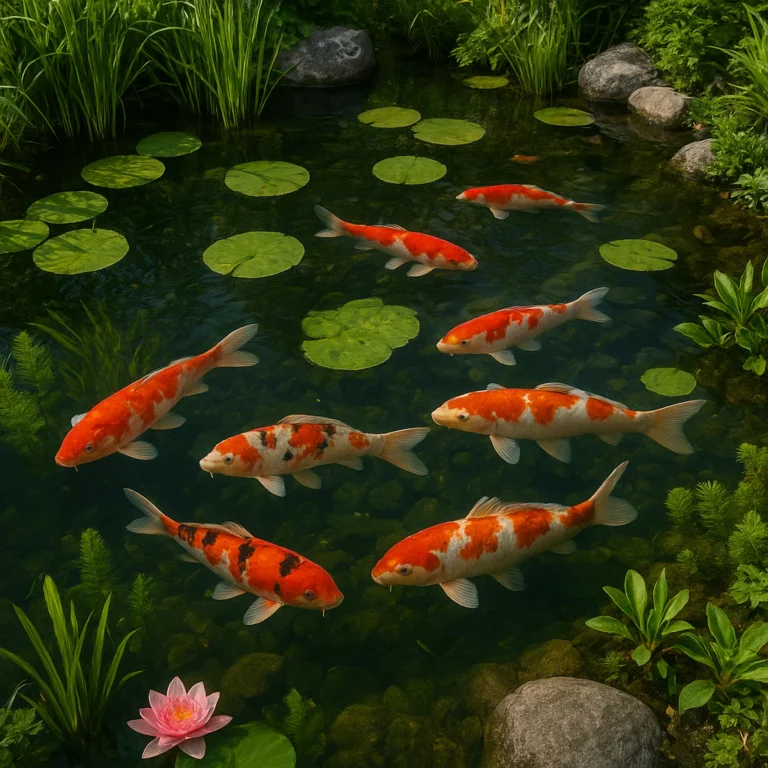
Outdoor water gardens can be formal, naturalistic, or somewhere between. A formal design may use a clear geometric basin and a fountain. A wildlife pond typically uses a more natural outline, shallow edges, and plants suited to the local climate.
Think about more than the view from the patio:
- Can small wildlife reach the water and climb out?
- Will the site receive enough light for the plants you want?
- Can you prevent runoff, lawn chemicals, or soil from entering?
- Is the pond suitable for fish, or is a fish-free wildlife design a better fit?
A pond designed for wildlife does not need to be stocked with fish. In some settings, leaving fish out can better suit the goal of supporting other pond life. Check local recommendations and avoid introducing non-native species.
Container Water Gardens for Patios and Small Spaces
A container pond is a smart choice for a patio, balcony, or garden corner where digging a full pond is not practical. The Impatient Gardener’s water-garden article describes container ponds as a flexible alternative, with designs ranging from planted basins to fountains and even tabletop features.
The Greater Green Bay Botanical Garden’s container guide recommends a container at least 12 inches deep, with 18 inches preferred for a broader range of plants. Container depth is useful guidance, not a universal rule: the plant species, vessel shape, winter conditions, and whether you plan to keep fish all matter.
✅ Best for: A compact focal point with aquatic plants and simple circulation.
❌ Not ideal for: Large fish, unattended winter conditions, or anyone expecting a maintenance-free ecosystem.
🪴 12 Aquatic Garden Design Ideas for Indors and Outdoors
Here are twelve layouts we’d happily sketch on a napkin—and, in several cases, have helped refine for real homes and gardens. Pick one that suits your space and care routine, not just your favorite photo.
| # | Design idea | Where it works | Design signature |
|---|---|---|---|
| 1 | Low-tech planted aquarium | Indors | Easy-care aquatic plants, moderate light |
| 2 | High-tech nature aquarium | Indors | Strong lighting, CO₂, detailed plant growth |
| 3 | Dutch-style plant showcase | Indors | Dense groups and contrasting foliage |
| 4 | Minimalist Iwagumi layout | Indors | Stones, open space, restrained planting |
| 5 | Blackwater biotope | Indors | Habitat-specific hardscape and subdued tones |
| 6 | Shrimp-focused aquascape | Indors | Mosses, hiding places, gentle flow |
| 7 | Plant-filled paludarium | Indors | Water, land, humidity-loving plants |
| 8 | Patio container water garden | Outdoors | Aquatic plants in a watertight vessel |
| 9 | Small wildlife pond | Outdoors | Shallow edges and suitable native plants |
| 10 | Formal pond with a waterfall | Outdoors | Defined geometry and moving water |
| 11 | Naturalistic bog garden | Outdoors | Moisture-loving planting and soft transitions |
| 12 | Balcony mini pond | Outdoors | Compact container, careful weight and sun planning |
1. Low-Tech Planted Aquarium
Choose hardy plants such as Anubias, Java fern, and Java moss, then use moderate lighting and a simple, stable layout. These plants are often attached to wood or rock rather than buried deeply in substrate.
Why we like it: A low-tech planted aquarium can beautiful without high-output lighting or injected CO₂.
Trade-off: Growth may be slower, and low-tech still means testing water, maintaining the filter, and trimming plants.
See aquarium equipment for setup basics and verify care needs for each species before planting.
2. High-Tech Nature Aquarium
A high-tech nature aquarium pairs strong lighting with a nutrient plan, active plant care, and often pressurized CO₂. This can support demanding carpet plants and fast growth, but the equipment and maintenance should match your confidence and schedule.
✅ Good for: Aquascapers who enjoy tuning plant growth and layout.
❌ Think twice if: You want a set-and-forget display or cannot respond to rapid growth and algae changes.
3. Dutch-Style Plant Showcase
Build groups of plants with contrasting colors, leaf shapes, and heights. Give each group enough room to read as a distinct “street,” and trim regularly to preserve the layered appearance.
Design tip: Repeating a plant in more than one area can make the layout feel connected, while too many unrelated colors can make it look like an underwater seed catalog.
4. Minimalist Iwagumi Layout
Arrange a small number of stones around one clear main stone, then use a restrained plant palette. Keep some open areas so the stones can do their job.
The visual challenge is proportion: if every stone is the same size and points the same way, the layout can look like a rock pile rather than a landscape.
5. Blackwater Biotope
A blackwater-inspired aquarium uses habitat-appropriate hardscape and subdued tones to create a forest-stream mood. Research water chemistry and the needs of any fish you plan to keep before treating the style as a recipe. Do not assume every fish from a region thrives in identical conditions.
Use reliable species references and build the habitat around the animals’ needs, not just the amber color.
6. Shrimp-Focused Aquascape
Mosses, fine-leaved plants, and small hiding places give shrimp a visually rich environment. Select peaceful tankmates carefully; many fish will eat baby shrimp.
For species-specific care, consult our fish and aquatic life resources and check reputable husbandry references before stocking.
7. Plant-Filled Paludarium
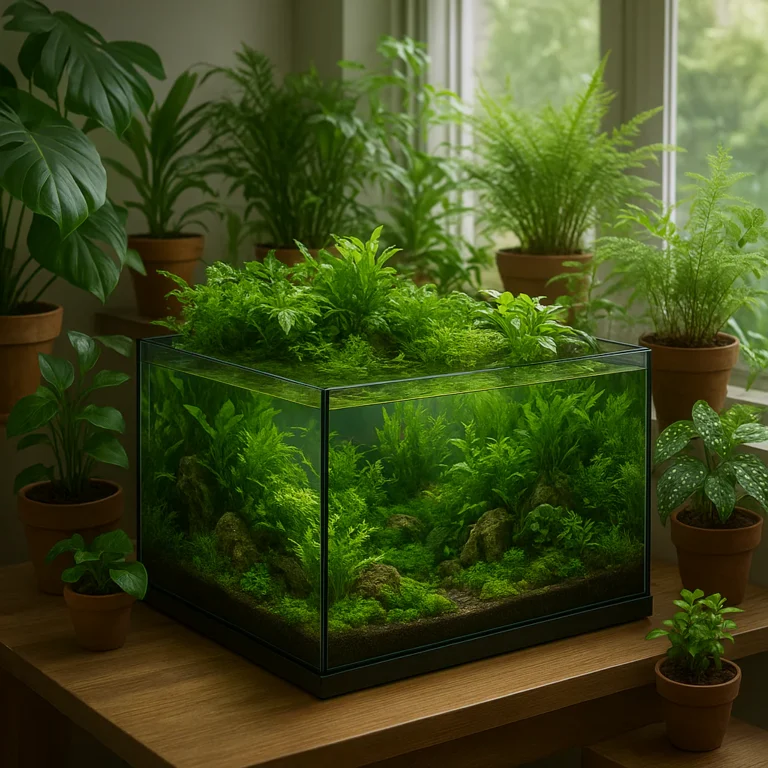
A paludarium combines water with a terrestrial planting area. It can support a striking mix of mosses and humidity-loving plants, but needs a thoughtful approach to drainage, lighting, humidity, and escape-proof construction if animals are involved.
The featured Shishi-odoshi garden video offers a miniature inspiration point: the creator used a glass enclosure, bamboo, moss, duckweed, river stones, and a small pump to combine planted land with moving water.
8. Patio Container Water Garden
Use a watertight vessel, aquatic plants, and optional gentle circulation. The Greater Green Bay Botanical Garden guide suggests aquatic crates to make plants easier to move and bricks or clay pots to position them at different heights.
Design choice: Let the plants fill the vessel for a lush look, or leave more open water for a calmer, reflective surface.
9. Small Wildlife Pond
Give the pond a shallow edge or other safe access and use plants suited to your region. A wildlife pond does not need fish or a fountain to feel alive. For native-plant and wildlife guidance, consult your local extension service or conservation organization.
10. Formal Pond with a Waterfall
A geometric pond, clean coping, and a controlled waterfall create a strong architectural feature. Plan pump access, splash, water loss, and safe electrical installation before building. Select equipment from established manufacturers such as Aquascape and follow the product and electrical-safety instructions.
11. Naturalistic Bog Garden
A bog garden uses persistently moist soil or a designed water-fed planting area to support moisture-loving plants. It can soften the edge of a pond or stand alone as a rain-garden-style feature. Choose plants that match the site’s water level and local conditions.
12. Balcony Mini Pond
A small, stable container can bring water to a balcony, but weight and building rules come first. Water is heavy, and a filled vessel can place substantial load on a small area. Check with your landlord, building manager, or a qualified professional before installing a large container or placing one on an elevated structure.
🧭 Plan Your Aquatic Garden: Space, Light, and a Realistic Budget
The best design starts with constraints, not shopping. Measure the site, observe its light, and decide how much ongoing care fits your week. If you are planning an aquarium, compare tank size and stocking needs using our guide to large vs. small fish tanks.
Choosing an Aquarium, Pond, or Container
| Feature | Aquarium | Container water garden | Backyard pond |
|---|---|---|---|
| Best setting | Indors | Patio, deck, or garden | Yard or landscape |
| Main design focus | Underwater composition | Vessel, plants, and water surface | Landscape integration and habitat |
| Key limitation | Equipment and water quality | Volume and seasonal exposure | Excavation, safety, and ongoing upkeep |
| Livestock flexibility | Depends on tank volume and species | Limited; avoid assuming fish are suitable | Depends on size, depth, climate, and filtration |
| First planning priority | Tank placement and support | Vessel placement before filling | Site, utilities, local rules, and safety |
A container pond is not simply a small fish pond. Its small water volume can heat or cool rapidly, so we generally recommend plant-focused container designs rather than fish stocking, especially for beginners.
Placement, Sunlight, and Structural Support
- Check the surface: Filled aquariums and water containers are heavy. Use a level, appropriately rated stand or support.
- Observe the sun: The Greater Green Bay Botanical Garden suggests 4–6 hours of direct sunlight for a container garden. Treat that as a starting point, then consider plant requirements, local heat, and algae.
- Avoid sudden temperature extremes: Shade a container if summer sun heats it excessively, and plan winter protection in cold climates.
- Place it before filling: A water-filled container is not a casual furniture rearrangement.
- Plan access: Keep filters, pumps, and outlets reachable for maintenance.
Designing for Focal Points, Scale, and Open Space
A garden looks composed when it has a visual hierarchy. Choose one primary focal point—a striking stone, a water lily, a driftwood branch, or a small fountain—and let supporting plants frame it.
Use these simple layout principles:
- Foreground: Low plants or open substrate draw the eye inward.
- Midground: Stones, roots, or medium plants create structure.
- Background: Taller plants and hardscape build depth.
- Negative space: Leave room for water, movement, and the viewer’s eye.
- Repetition: Repeat a plant or stone type to make the scene feel coherent.
- Scale: Choose details suited to the container; one oversized rock can make a small aquascape feel cramped.
🪨 Substrate, Hardscape, and Water Features
Substrate and hardscape are not mere decoration. They affect planting, stability, water movement, and how easily you can maintain the setup. Before adding anything collected outdoors, check that it is safe, clean, and appropriate for the water system.
Aquarium Soil, Gravel, Sand, and Pond Substrates
| Material | Common use | Benefits | Considerations |
|---|---|---|---|
| Aquarium soil | Planted tanks | Made for planted aquarium use; can support rooted plants | Follow product instructions; may affect water chemistry |
| Gravel | Aquariums and plant baskets | Easy to siphon and available in varied sizes | Fine roots may need a nutrient source |
| Sand | Naturalistic layouts and pond baskets | Smooth, clean visual finish | Can compact; choose suitable grain size |
| Aquatic soil | Container water gardens | Designed for aquatic planting | Keep it contained so it does not cloud the water |
| Clay-rich soil | Some aquatic plant baskets | Can hold roots and nutrients | Excess fine clay may cloud water or hinder drainage |
For container gardens, the Greater Green Bay Botanical Garden recommends aquatic soil or suitable clay soil, with gravel on top to hold soil in place. In aquariums, select substrate based on the plants and livestock rather than assuming one substrate suits every layout.
Safe Rocks, Driftwood, and Natural Materials
- Use aquarium-safe materials from reputable suppliers when possible.
- Avoid rocks that can alter water chemistry unless that effect is intentional and suitable for your inhabitants.
- Clean hardscape without household soaps or chemicals.
- Anchor unstable pieces securely, especially if fish might dig or move through the layout.
- Do not collect protected materials or transport aquatic plants and organisms between waterways.
The featured miniature Shishi-odoshi project used river stones, clay brick fragments, and pebbles to form its landscape. It is a lovely reminder that hardscape can be functional as well as decorative—but any material used in a live aquatic system must be safe for its inhabitants.
Pond Liners, Pumps, Filters, and Waterfalls
| Component | What it does | Design check |
|---|---|---|
| Pond liner or watertight vessel | Holds water | Confirm suitability for aquatic use and check for leaks |
| Pump | Moves water | Match flow to the feature and pond; maintain access for cleaning |
| Filter | Captures debris and supports water treatment | Size and maintain it according to the system and livestock |
| Aeration | Encourages gas exchange and circulation | Use where appropriate to temperature, stocking, and pond conditions |
| Waterfall or fountain | Adds sound, movement, and visual interest | Account for splash, evaporation, and pump upkeep |
For small fountains, brands such as Aquascape offer pond and water-feature equipment. In an aquarium, manufacturers including EHEIM and Fluval provide filtration options. Choose equipment based on the actual system—not the most dramatic packaging claim.
🌱 Aquatic Plants: Selection, Placement, and Growth
Plants are the living architecture of an aquatic garden. Choose them for their mature size, growth habit, light needs, and suitability for your climate or aquarium conditions. The plant that looks tiny in its nursery pot may have other plans.
Foreground, Midground, Background, and Floating Plants
| Planting zone | Design role | Examples to research |
|---|---|---|
| Foreground | Creates a low border or carpet | Dwarf hairgrass and other suitable carpeting plants |
| Midground | Connects low planting to taller structure | Anubias, smaller Cryptocoryne varieties |
| Background | Adds height and hides equipment | Vallisneria, taller stem plants |
| Attached to hardscape | Softens stone and wood | Java fern, Java moss, Anubias |
| Floating or surface | Shades water and adds a surface layer | Duckweed or regionally suitable floating plants |
| Marginal pond zone | Frames the water’s edge | Dwarf cattail, iris, and other suitable marginals |
Plant names alone are not enough: check growth height, spread, temperature range, and invasive status before purchase. Some plants sold for water gardens can become invasive in particular regions.
Easy Plants for Beginners and Low-Light Gardens
Often-used beginner aquarium plants include:
- Anubias: Slow-growing; attach the rhizome to hardscape rather than burying it.
- Java fern: Commonly attached to stone or wood.
- Java moss: Useful for texture and small hiding spaces.
- Cryptocoryne: A versatile group of plants, though some may shed older leaves when adjusting.
- Vallisneria: A background option that can spread; leave it room.
For outdoor containers, the Botanical Garden’s guide lists examples such as water lilies, dwarf cattail, northern blue flag iris, taro, starwort, water buttercup, and duckweed. Plant suitability varies by climate and region, and some species may be restricted or invasive. Confirm local guidance before buying.
Planting Techniques and Aquatic Plant Care
Aquarium planting basics
- Plan the layout dry. Arrange wood and stone before adding water.
- Prepare plants. Remove nursery materials and inspect for hitchikers.
- Place rooted plants. Keep crowns and rhizomes positioned according to the species’ needs.
- Attach epiphytes. Secure Java fern or Anubias to rocks or wood without burying their rhizomes.
- Fill gently. Pour water onto a plate or bag to reduce substrate disturbance.
- Trim and observe. Watch for melting leaves, algae, and new growth; adjust care gradually.
Container water-garden planting
- Select a watertight container and put it in its final location while empty.
- Add aquatic plants in baskets or crates using an appropriate aquatic planting medium.
- Set plants at different heights with stable bricks or inverted pots.
- Cover exposed planting soil with gravel to help keep it in place.
- Add water gently and arrange floating plants only after the rooted plants are positioned.
- Keep invasive plants and excess growth out of natural waterways.
The Botanical Garden’s container guide recommends leaving room between plants rather than overcrowding the vessel. That advice is worth keeping: a packed container may look lush on day one but can become a wrestling match by midsummer.
Native Pond Plants and Invasive-Species Cautions
Check local invasive-species lists before planting or disposing of aquatic plants. The Greater Green Bay Botanical Garden warns that plants such as water hyacinth can be invasive and advises against dumping plant material into waterways.
- Choose native or non-invasive plants appropriate to your location.
- Never empty aquarium or pond contents into storm drains, lakes, streams, or wetlands.
- Bag unwanted plant material for disposal according to local rules.
- Do not assume a plant is safe just because it is sold at a garden center.
🐠 Fish, Shrimp, Snails, and Wildlife: Choosing Suitable Inhabitants
An animal belongs in a design only if the habitat can meet its needs. A tiny water garden may be ideal for plants and water movement but still unsuitable for fish. Likewise, adding fish to a wildlife pond can change what wildlife visits and what survives there.
Stocking an Aquarium Without Overcrowding
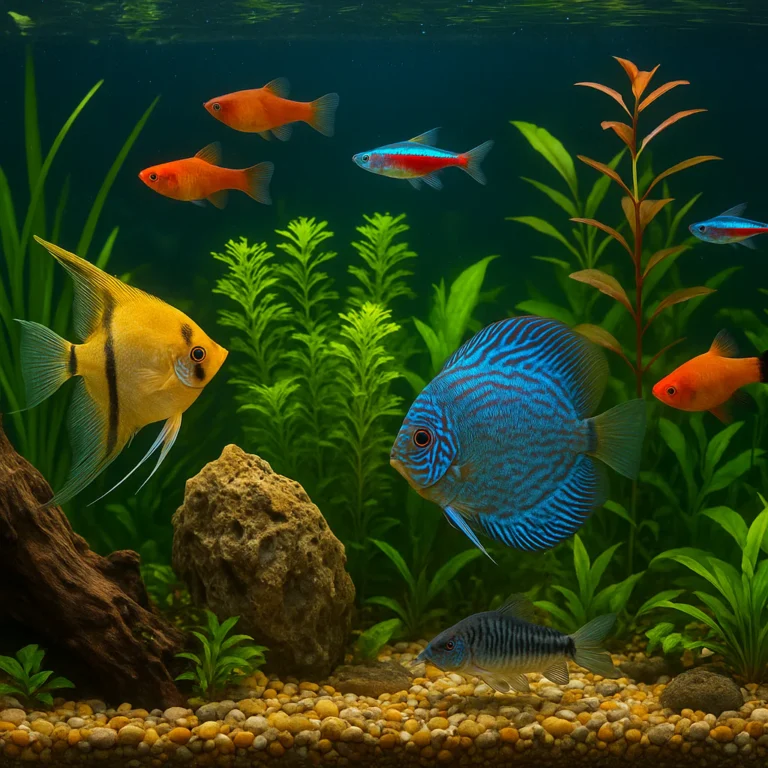
Choose livestock based on adult size, behavior, water requirements, and tank dimensions, not the size of the juvenile fish at the store. Research compatibility before buying, quarantine new animals when appropriate, and cycle an aquarium before adding livestock.
For species profiles and care basics, see Fish Care and Species Profiles. Our fish and aquatic life section can help you continue researching compatible inhabitants.
Pond Fish, Frogs, and Beneficial Wildlife
A wildlife-focused pond can invite insects, birds, amphibians, and other visitors without being stocked with fish. If you do want pond fish, plan for adult size, oxygen, filtration, seasonal temperature changes, and predator protection.
A small patio pond should not be stocked using a casual “a few little fish will be fine” rule. The Impatient Gardener’s article shares an example of a large container holding several small fish, but that anecdote is not a general stocking standard. Container shape, water volume, temperature, filtration, and fish species all change what is humane and workable.
Animal Welfare and Responsible Sourcing
✅ Research species needs before buying.
✅ Choose captive-bred animals where appropriate and available.
✅ Make sure the aquarium or pond is established and equipped first.
❌ Do not release aquarium fish or plants into the wild.
❌ Do not add fish simply to “eat algae” or control mosquitoes without considering their welfare and ecological impact.
For a plant-focused container garden, omitting fish is often the safer, simpler choice.
💧 Water Quality, Lighting, and Filtration Essentials
A beautiful aquatic garden still needs stable conditions. In aquariums, that means cycling, testing, and filtration. In an outdoor pond, it means matching circulation and plant choices to the site, season, and inhabitants.
Cycling, Testing, and Water Parameters
Before adding aquarium animals, establish the biological filtration system and test water. The U.S. Environmental Protection Agency explains the role of ammonia and nitrogen cycling in aquatic systems, while aquarium keepers should use a reliable test kit and species-specific husbandry guidance.
Track at least:
- Amonia and nitrite: Important indicators of aquarium biological filtration.
- Nitrate: Useful to monitor as the system matures.
- Temperature: Essential for tropical aquarium inhabitants and seasonal ponds.
- pH and hardness: Match these to the species and plants you plan to keep.
Tap-water treatment depends on your municipal supply. Do not rely on simply letting water sit unless you know that method addresses the disinfectant used locally. Use a suitable water conditioner when needed and follow its instructions.
Aquarium Lighting, CO₂, and Fertilizer
- Light: Match intensity and duration to the plants, tank depth, and room conditions.
- CO₂: Optional in many low-tech aquariums; commonly used in demanding planted layouts.
- Fertilizer: Dose based on plant growth, product instructions, and aquarium conditions.
- Consistency: Suden changes in light, nutrients, or CO₂ can destabilize growth and encourage algae.
Start with a manageable photoperiod and make adjustments gradually. More light is not automatically more plant growth; without matching nutrients and carbon availability, it can simply give algae a brighter stage.
Pond Circulation, Aeration, and Filtration
For ponds, circulation helps move water through a pump or filter, while fountains and waterfalls add visible movement. The right equipment depends on pond volume, stocking, climate, and the effect you want.
The Impatient Gardener’s patio-pond article reports that small pumps can be used in container features and notes solar-powered options. That is a useful design possibility, but solar performance depends on the pump, panel, sunlight, and installation. A fountain can also lose water through splash and evaporation, so check the level regularly.
🛠️ How to Build an Aquatic Garden Step by Step
The construction order matters. Build the structure first, add plants with care, and introduce livestock only after the habitat is ready. Rushing the sequence is how a lovely design becomes a cloudy-water rescue mission.
Setting Up a Planted Aquarium
- Choose a suitable tank and location. Use a sturdy, level stand away from direct heat and strong sun.
- Select equipment. Match the filter, heater if needed, and light to the tank and livestock plan. Browse dependable equipment options in our aquarium equipment category.
- Plan the composition. Sketch a focal point, hardscape, plant zones, and open swimming areas.
- Add substrate and hardscape. Rinse materials as appropriate and secure unstable stones or wood.
- Plant thoughtfully. Follow species-specific placement guidance and avoid burying plants that should be attached.
- Fill slowly. Minimize disturbance to the substrate and plants.
- Start the filter and monitor the system. Test water and allow the aquarium to cycle before livestock is introduced.
- Add animals responsibly. Select compatible species and introduce them only when the aquarium is ready.
- Maintain steadily. Check equipment, perform appropriate water changes, and trim plants as needed.
Building a Container Water Garden
- Choose the vessel. It must be watertight and suitable for holding water. The Botanical Garden recommends around 12 inches of depth or more, with 18 inches offering additional planting options.
- Pick the site before filling. Consider sunlight, access to an outlet if needed, winter conditions, and structural support.
- Choose plants for local conditions. Combine suitable marginal, floating, and submerged plants without crowding.
- Prepare planting baskets. Use aquatic soil or suitable clay soil; keep it contained and cap exposed soil with gravel.
- Create height. Raise selected baskets on stable bricks or clay pots.
- Add water gently. Rainwater may be suitable where clean and safe; if using tap water, use a treatment approach appropriate to your water supply.
- Add circulation if desired. A small pump or bubbler can create movement; position it so the display remains attractive and easy to maintain.
- Monitor and adjust. Top up evaporation, remove decaying leaves, and watch water temperature and algae.
The Botanical Garden’s guide advises covering roughly two-thirds of the water surface with plant growth to shade the water and help limit algae. Treat this as a design suggestion, not a universal target: plant growth, local heat, and open-water needs vary.
Creating a Backyard Pond
- Research rules and safety. Check local regulations, underground utilities, and child-safety requirements.
- Choose a site. Avoid locations where runoff, fertilizer, or soil will wash into the pond.
- Set the design and depth. Decide whether the pond is ornamental, wildlife-focused, or intended for fish; those goals affect construction.
- Install the basin or liner. Follow manufacturer instructions and ensure the base is properly prepared.
- Add circulation and filtration if needed. Size equipment for the pond and its inhabitants.
- Plant in suitable zones. Use species suited to the local climate and the depth of each planting area.
- Fill and check for leaks. Start pumps only after confirming the system is correctly installed.
- Stabilize before stocking. Monitor water conditions and introduce livestock only when the habitat is ready.
- Plan seasonal care. Know what happens to plants, pumps, and fish during heat waves, storms, and winter.
For outdoor water-feature equipment, consult manufacturers such as Aquascape and follow their installation guidance.
🧹 Maintenance Through the Seasons
The best maintenance schedule is regular and modest. A few checks each week are easier than a dramatic algae intervention after the water starts auditioning for pea soup.
Weekly and Monthly Aquarium Care
Weekly or as needed:
- Observe fish and shrimp for changes in behavior.
- Check temperature and equipment operation.
- Remove dead leaves and visible debris.
- Test water when establishing a tank or troubleshooting.
Regularly, according to tank conditions:
- Perform partial water changes.
- Clean filter media in a way that preserves beneficial biological filtration.
- Trim fast-growing plants.
- Review light duration and fertilizer use if algae increases.
Use our aquarium setup resources for foundational care, and follow equipment manufacturers’ maintenance instructions.
Spring, Summer, Fall, and Winter Pond Care
| Season | Common priorities |
|---|---|
| Spring | Remove accumulated debris, inspect pumps, and restart equipment according to manufacturer instructions |
| Summer | Watch water temperature, evaporation, plant growth, and oxygen conditions |
| Fall | Remove excess leaves and prepare equipment and plants for local winter conditions |
| Winter | Follow climate-specific guidance for ponds, pumps, and any fish; do not assume a small container can safely overwinter livestock |
The Impatient Gardener describes bringing a patio feature indoors or emptying it for winter. That approach may suit some containers, but the right plan depends on the vessel, climate, plants, and any animals. A small container pond should not be treated as an overwintering habitat for fish without expert, species-specific advice.
Pruning, Cleaning, and Equipment Checks
- Remove dead or decaying plant material before it accumulates.
- Keep pump intakes clear, using an appropriate pre-filter where needed.
- Check tubing, fittings, and electrical equipment for wear.
- Clean filters according to their instructions rather than sterilizing biological media.
- Top up water while accounting for water-treatment needs.
- Dispose of removed plants responsibly; never dump them into natural waterways.
🐛 Common Aquatic Garden Problems and Practical Fixes
Most aquatic-garden problems have more than one possible cause. Look for patterns before changing several things at once.
Algae Bloms and Green Water
Likely contributors: Excess nutrients, too much light, unstable conditions, or decaying plant matter.
Try this order:
- Remove decaying leaves and visible excess algae.
- Check lighting duration and direct sun exposure.
- Test water and review fertilizer use.
- Add suitable plant growth and improve maintenance consistency.
- Check filtration and circulation where applicable.
In an outdoor container, shade and a suitable planting balance can help, but no single plant or gadget guarantees algae-free water.
Cloudy Water, Plant Melt, and Nutrient Deficiencies
- Cloudiness after setup: May follow substrate disturbance or a new system settling. Test water and avoid adding livestock until conditions are appropriate.
- Plant melt: Some plants lose leaves while adjusting after a move. Remove decaying leaves and observe for new growth.
- Yellowing or weak growth: Could reflect light, nutrients, substrate, or water conditions. Check plant-specific requirements before increasing fertilizer.
- Suden livestock distress: Test water promptly and check temperature, filtration, and equipment.
Make one measured change at a time. Aquarium troubleshooting is less like flipping a switch and more like tuning an instrument: change too many notes at once and you do not know which one was out of tune.
Leaks, Mosquitoes, and Unwanted Pests
- Leaks: Inspect the container or liner before installation and recheck fittings after the first fill.
- Mosquitoes: Reduce stagnant pockets where practical and maintain appropriate circulation. Water movement may discourage mosquitoes, but it is not a guarantee.
- Pests and hitchikers: Inspect new plants and hardscape; quarantine aquarium plants or animals when appropriate.
- Unwanted wildlife: Secure the design without harming native animals, and seek local advice before using chemical controls.
The Botanical Garden recommends a floating bubbler or an appropriate mosquito dunk as possible mosquito-management tools. Always follow the product label and local environmental guidance; do not add mosquito-eating fish without first considering fish welfare and ecological consequences.
♻️ Sustainable and Wildlife-Friendly Aquatic Garden Design
A beautiful aquatic garden should not create a problem downstream. Sustainable choices begin with what you buy, how you maintain the system, and what you do with plants and animals you no longer want.
- Choose native or non-invasive plants suited to your region.
- Prefer durable, repairable equipment and use pumps appropriate to the feature.
- Prevent fertilizer, soil, and contaminated runoff from entering ponds.
- Never release fish, snails, aquatic plants, or aquarium water into local waterways.
- Follow local rules for pond construction, wildlife, and electrical safety.
- Leave safe access for wildlife where appropriate and avoid stocking animals that conflict with your habitat goals.
- Use solar circulation only when the system’s actual sunlight and pump requirements make it practical.
The Greater Green Bay Botanical Garden’s container guide emphasizes responsible disposal of invasive plants. We’d underline that advice twice: the easiest way to prevent an aquatic plant from becoming tomorrow’s local nuisance is to keep it out of natural waterways today.
💡 Aquatic Garden Design Mistakes to Avoid
| Common mistake | Better approach |
|---|---|
| Choosing a site after filling the vessel | Place the empty container first and confirm support |
| Buying plants without checking mature size | Research spread, height, climate, and invasive status |
| Adding fish to every water feature | Decide whether the system can meet their long-term needs |
| Overcrowding the layout | Leave room for growth, water movement, and visual breathing space |
| Using stronger light to “fix” slow plants | Check species needs, nutrients, and CO₂ before increasing light |
| Assuming fountains solve mosquitoes | Combine sensible circulation with local, responsible control methods |
| Releasing unwanted plants or animals outdoors | Use safe, locally approved disposal or rehoming options |
| Treating anecdote as a stocking rule | Use expert care guidance and species-specific requirements |
| Building a pond without planning winter care | Decide how plants, equipment, and any livestock will be managed year-round |
The most tempting mistake is usually the most photogenic one: adding just one more plant, one more stone, one more fish. Before you do, ask whether it improves the design and the habitat. Sometimes the most polished choice is leaving a little space empty.