Support our educational content for free when you purchase through links on our site. Learn more
🌊 12 Secrets to Perfect Discus Fish Care (2026)

Have you ever stared into an aquarium, mesmerized by a floating, colorful discus, and wondered if keeping one is a dream or a nightmare? We’ve been there. At Aquarium Music™, we’ve seen tanks turn into crystal-clear symphonies of life and others into tragic, cloudy messes. The difference? It wasn’t the most expensive filter or the rarest fish; it was understanding the delicate balance these “Kings of the Aquarium” demand. Unlike their hardy cousins, the discus is a creature of extreme consistency, thriving only when water parameters, temperature, and social dynamics are tuned to perfection.
In this comprehensive guide, we’re pulling back the curtain on everything from the myth of daily water changes to the secret “milkshake” diet that raises healthy fry. We’ll reveal why a single discus is a lonely soul, how to spot the early signs of Hexamita before it’s too late, and exactly how to set up a tank that mimics the blackwater tributaries of the Amazon without breaking the bank. Whether you are a seasoned aquarist looking to refine your technique or a beginner ready to take the plunge, this article is your roadmap to a thriving discus colony.
Key Takeaways
- Temperature is Non-Negotiable: Maintain a steady 85°F–86°F (29°C–30°C) to ensure optimal metabolism and immune function; drops below 82°F invite disease.
- Water Quality Over Frequency: While daily changes are common among breeders, the true goal is keeping nitrates below 20 ppm through consistent, large water changes (25–50%).
- Schooling is Essential: Never keep a single discus; they are social creatures that require a group of at least 6 to feel secure and display natural behaviors.
- Stability Beats Perfection: A stable pH of 7.0 is far superior to a fluctuating pH of 6.0; avoid sudden swings in GH, KH, and temperature.
- Diet Drives Health: Feed a varied diet of high-quality pellets and frozen foods (like bloodworms) 2–6 times daily, avoiding hard-to-digest staples like beef heart.
Table of Contents
- ⚡️ Quick Tips and Facts
- 📜 From the Amazon to Your Living Room: A Brief History of the Discus
- 🏠 The Ultimate Discus Tank Setup: Size, Filtration, and Flow
- 1. How Big Should Your Discus Tank Actually Be?
- 2. Choosing the Right Filtration System for Crystal Clear Water
- 3. Substrate, Hardscape, and Creating a Natural Amazonian Vibe
- 💧 Water Quality Mastery: Parameters, pH, and the Myth of Daily Changes
- 1. Do Discus Really Need Daily Water Changes? The Truth Revealed
- 2. Mastering pH, GH, and KH for Optimal Health
- 3. The Role of TDS and Water Hardness in Discus Keeping
- 🌡️ Temperature Control: Keeping Your Discus in the Sweet Spot
- 1. What Is the Ideal Temperature for Discus Fish?
- 2. Heater Placement and Avoiding Hot Spots
- 🍽️ Feding Frenzy: Nutrition, Frequency, and the Best Foods
- 1. What Is the Best Food for Discus Fish? Frozen vs. Pelets vs. Live
- 2. How Often Should You Feed Your Discus?
- 3. Special Diets for Fry, Breding Pairs, and Sick Fish
- 🐟 Tank Mates and Community Dynamics: Who Gets Along?
- 1. What Fish Can Be Kept With Discus? The Safe List
- 2. The Dangers of Agressive or Fast-Feding Neighbors
- 3. Schooling Requirements: How Many Discus Do You Need?
- 🐣 Breding and Fry Care: From Spawning to First Swim
- 1. How to Identify Male and Female Discus
- 2. Setting Up a Breding Tank and Encouraging Spawning
- 3. Raising Discus Fry: The Milkshake Diet and Growth Stages
- 🚑 Disease Prevention and Treatment: Keeping Your Fined Friends Healthy
- 1. Common Discus Diseases: Hexamita, Dropsy, and Ich
- 2. Quarantine Protocols: Why New Fish Must Wait
- 3. Medication Guide: Safe Treatments for Sensitive Discus
- 💰 Why Are Discus Fish So Expensive? Breding, Genetics, and Value
- 😊 How Do You Keep Discus Fish Happy? Stress Reduction and Enrichment
- 🛒 Our Top Recommendations: Gear, Food, and Water Conditioners
- 📝 Conclusion
- 🔗 Recommended Links
- ❓ FAQ: Your Burning Discus Questions Answered
- 📚 Reference Links
⚡️ Quick Tips and Facts
Before we dive into the deep end of the Amazonian river, let’s hit the pause button and grab a few life preservers. If you’re here because you saw a stunning, colorful discus in a pet store window and thought, “I need that,” stop! 🛑 Take a breath. Keeping these “King of the Aquarium” fish is less about buying the most expensive gear and more about mastering the art of stability.
Here is the distilled wisdom from our team at Aquarium Music™, where we’ve seen tanks flourish and tanks fail:
- Temperature is King: Forget the “room temperature” myth. Your discus need it hot. We’re talking 85°F to 86°F (29°C – 30°C). If the water drops below 82°F, their metabolism slows, their immune system crashes, and they get sick. It’s that simple.
- Water Changes are Non-Negotiable: While some say “daily” is a myth, we say consistency is the truth. Whether you do 25% daily or 50% every other day, the goal is to keep nitrates below 20 ppm.
- Schooling is Survival: A single discus is a lonely, stressed discus. You need a group. Start with 6 to 10 juveniles of the same size.
- The “Bare Bottom” Debate: Planted tanks are beautiful, but for beginners, a bare-bottom tank makes spotting waste and performing massive water changes infinitely easier.
- Stress is the Enemy: Loud noises, flashing lights, and aggressive tank mates will kill your fish faster than bad water. Reduce stress above all else.
💡 Pro Tip: If you are setting up your first tank, do not skip the cycling process. For a deeper dive into the pitfalls that ruin new setups, check out our guide on 🚫 10 Deadly Fish Tank Mistakes to Avoid (2026).
📜 From the Amazon to Your Living Room: A Brief History of the Discus

To truly care for these majestic creatures, you have to understand where they come from. The discus fish (Symphysodon) hails from the Amazon River basin, specifically the slow-moving, blackwater tributaries like the Rio Negro.
In the wild, they hide among fallen trees (“galhadas”) and submerged roots, feeding on small crustaceans, insects, and plant detritus. The water there is soft, acidic, and warm, with very low mineral content.
The Evolution of the Hobby
When discus were first imported in the 1930s, they were wild-caught and notoriously difficult to keep. They were often referred to as “the fish that kills keepers.” However, thanks to decades of selective breeding, the discus you see today are largely captive-bred.
- Wild vs. Captive: Wild-caught discus are still available but are sensitive to transport stress and require pristine, soft water. Captive-bred discus are hardier, tolerate a wider pH range (up to 7.6), and come in a kaleidoscope of colors (Blue, Red, Pigeon Blood, Turquoise) that don’t exist in nature.
- The “King” Title: They earned the title “King of the Aquarium” not just for their regal appearance, but for their behavior. They are intelligent, can recognize their owners, and even “dance” with their partners.
Did you know? The three main species are Symphysodon discus (Heckel), Symphysodon aequifasciatus (Green Discus), and Symphysodon haraldi (Blue/Brown). Most “Blue” or “Red” discus in stores are hybrids of S. aequifasciatus.
🏠 The Ultimate Discus Tank Setup: Size, Filtration, and Flow
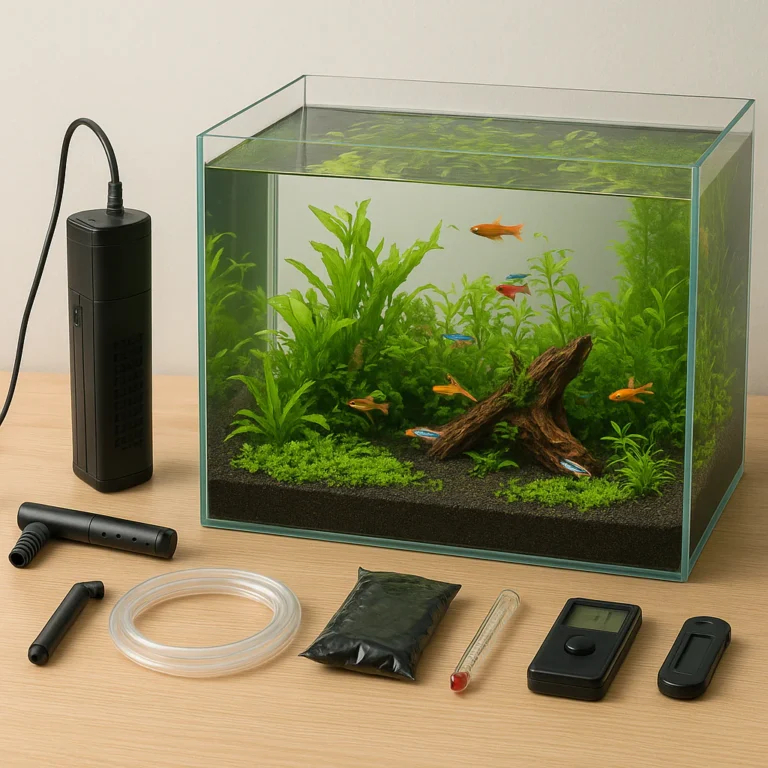
Setting up a discus tank is like composing a symphony; every instrument (or component) must play in harmony. If the filtration is too strong, the fish get exhausted. If the tank is too small, they get stunted.
1. How Big Should Your Discus Tank Actually Be?
This is the most common question we get. The answer depends on your ambition.
- The Minimum: A 75-gallon tank is the absolute floor for a small group of adults.
- The Sweet Spot: A 125-gallon or 180-gallon tank allows for a larger school and more stable water parameters.
- The “Juvenile” Trap: You can start with 10-12 juveniles in a 5-gallon tank, but they will outgrow it quickly. As they hit 4-5 inches, you must upgrade.
Why Size Matters:
Discus are tall, not long. A standard 75-gallon tank is usually 48″ long, which is fine, but a tall tank (like a 75-gallon “High” or a custom 30″ tall tank) provides more vertical swimming space, which they love.
| Tank Size | Max Adult Discus (6-7 inches) | Max Juveniles (2-3 inches) | Water Volume Stability |
|---|---|---|---|
| 5 Gallons | 4-5 | 8-10 | Low (Requires frequent changes) |
| 75 Gallons | 6-8 | 10-12 | Moderate |
| 125 Gallons | 10-12 | 15-18 | High (Ideal for beginners) |
| 180+ Gallons | 15+ | 20+ | Very High (Best for breeding) |
2. Choosing the Right Filtration System for Crystal Clear Water
Discus produce a lot of waste. They are messy eaters and have a high metabolic rate due to the warm water. You need a filter that can handle 4 to 6 tank turnovers per hour.
The Best Options:
- Canister Filters: The gold standard. They offer high capacity for mechanical, chemical, and biological media.
Recommendation: Fluval FX6 or Eheim Pro 4. These can handle the bioload of a 75+ gallon tank easily. - Sponge Filters: Essential for breeding tanks or fry, but often not strong enough as the only filter for adults unless paired with a canister.
- Undergravel Filters: ❌ Avoid. They trap debris and are impossible to clean without disturbing the substrate (if you have one).
Flow Rate Tip: Discus hate strong currents. Use spray bars or adjust the output to create a gentle flow. If you see your fish constantly fighting the current, your flow is too high.
3. Substrate, Hardscape, and Creating a Natural Amazonian Vibe
Do you need sand? Do you need plants?
- Substrate:
Bare Bottom: Highly recommended for beginners. It makes spotting waste and performing water changes effortless.
Sand: If you want a planted look, use fine silica sand. Discus sift through sand, so avoid sharp gravel that can injure their bellies. - Hardscape:
Driftwood: Essential for the “Amazonian” look and to release tannins that lower pH slightly. Use Mopani or Spider Wood.
Rocks: Avoid limestone or marble, as they raise pH and hardness. Stick to Slate or Seiryu Stone. - Plants:
- Discus need shade. Floating plants like Amazon Frogbit or Salvinia are perfect.
- For the bottom, use Anubias and Java Fern attached to wood. They tolerate the high heat (86°F) that kills most other plants.
🌿 Aquascaping Tip: Don’t overcrowd the tank. Discus need open swimming space. A “sparse” look is often better than a dense jungle for their health.
💧 Water Quality Mastery: Parameters, pH, and the Myth of Daily Changes
Here is where the rubber meets the road. Water quality is the single most important factor in discus keeping.
1. Do Discus Really Need Daily Water Changes? The Truth Revealed
The internet is divided. Some say “daily 10%,” others say “weekly 50%.” Who is right? Both, and neither.
The goal isn’t the frequency; it’s the Nitrate Level.
- The Rule: Keep nitrates below 20 ppm at all times.
- The Method:
- If you have a small tank or heavy feeders, you might need daily 25% changes.
- If you have a large tank (125+ gallons) and light feeders, weekly 50% changes might suffice.
- The “Daily” Myth: You don’t have to change water daily if your nitrates are stable. However, many breeders do it because it mimics the constant flow of the Amazon and keeps the fish in peak condition.
Our Recommendation: Start with 25-30% water changes every 2 days. Use a large siphon or a Python Water Changer to make this easy.
2. Mastering pH, GH, and KH for Optimal Health
- pH:
Target: 6.0 to 7.6.
Stability: A stable pH of 7.2 is better than a fluctuating pH of 6.0-6.5. Discus hate swings more than they hate a specific number.
Myth: You do not need to drop pH to 5.5 unless you are breeding. Captive-bred discus thrive at 6.8-7.2. - GH (General Hardness):
Target: 3 to 10 dGH (Soft to Medium).
Why: Soft water mimics the Amazon. Hard water can cause kidney issues and stunted growth. - KH (Carbonate Hardness):
Target: 1 to 5 dKH.
Role: KH buffers pH. If KH is too low, pH crashes. If too high, pH spikes.
Testing Tools:
Don’t guess. Use liquid test kits.
- Recommendation: API Freshwater Master Test Kit or Seachem MultiTest.
3. The Role of TDS and Water Hardness in Discus Keeping
TDS (Total Dissolved Solids) is a measure of all dissolved particles.
- Target: 50 to 150 ppm.
- How to Achieve: If your tap water is hard (high TDS), use Reverse Osmosis (RO) water and remineralize it with Seachem Replenish or Flourish Excel.
- Why it matters: High TDS can stress the fish’s osmoregulation.
💡 Pro Tip: If you are using RO water, you must add minerals back in. Pure RO water has no buffering capacity and will cause pH crashes.
🌡️ Temperature Control: Keeping Your Discus in the Sweet Spot
We mentioned this in the tips, but it deserves its own section because it is critical.
1. What Is the Ideal Temperature for Discus Fish?
- The Magic Number: 85°F to 86°F (29°C – 30°C).
- Why?
Metabolism: At this temperature, their digestion is efficient, and they grow faster.
Immunity: Their immune system is strongest at 86°F.
Coloration: Colors pop more in warm water. - The Danger Zone: Below 82°F, they become lethargic and susceptible to Ich and Hexamita.
Heater Sizing:
Because the water is warm, evaporation is high, and heat loss is significant.
- Rule of Thumb: 5 watts per gallon.
- Example: For a 75-gallon tank, use a 30-watt to 40-watt heater.
- Dual Heaters: Always use two heaters (e.g., two 20W heaters) set to the same temperature. If one fails and turns on full blast, the other acts as a safety net (or use a heater with a built-in thermostat that cuts off).
2. Heater Placement and Avoiding Hot Spots
- Placement: Place heaters near the filter output to ensure heat is distributed evenly.
- Thermometers: Use a digital thermometer or a high-quality glass stick thermometer. Do not rely on the heater’s dial.
- Air Stones: At 86°F, oxygen levels drop. Use an air stone or a venturi on your filter to ensure the water is oxygenated.
🍽️ Feding Frenzy: Nutrition, Frequency, and the Best Foods
Discus are not picky eaters, but they are slow feeders. They have small mouths and need food that is easy to swallow.
1. What Is the Best Food for Discus Fish? Frozen vs. Pelets vs. Live
| Food Type | Pros | Cons | Recommendation |
|---|---|---|---|
| Frozen | High protein, natural, easy to store. | Can foul water if overfed. | Bloodworms, Brine Shrimp, Mysis |
| Pelets | Convenient, sinks slowly, fortified. | Some fish refuse them initially. | Hikari Bio-Gold, Sera Discus Granules |
| Live | Stimulates hunting, high nutrition. | Risk of introducing parasites. | Blackworms, Brine Shrimp |
| Bef Heart | High protein, cheap. | ❌ Not recommended (Hard to digest, fouls water). | Avoid or use sparingly. |
Top Brands:
- Hikari Discus Bio-Gold: Excellent pellet, sinks slowly.
- Sera Discus Granules: High quality, great for color.
- Frozen Bloodworms: The staple diet. Look for San Francisco Bay Brand or New Life Spectrum.
⚠️ Warning: Never feed “Bef Heart” mixes as a staple. They contain fats that discus cannot digest, leading to bloat and dropsy.
2. How Often Should You Feed Your Discus?
- Juveniles (2-4 inches): 4 to 6 times a day. They need constant nutrition to grow.
- Sub-Adults (4-6 inches): 3 to 4 times a day.
- Adults (6+ inches): 2 to 3 times a day.
Portion Control: Feed only what they can eat in 3 to 5 minutes. If food is left over, it’s roting and polluting the water.
3. Special Diets for Fry, Breding Pairs, and Sick Fish
- Fry: They need infusoria or baby brine shrimp immediately after absorbing their yolk sac. Later, they transition to microworms and crushed flakes.
- Breding Pairs: Increase protein intake with live or frozen foods to encourage spawning.
- Sick Fish: If a fish stops eating, try live blackworms. They are irresistible and help rebuild strength.
🐟 Tank Mates and Community Dynamics: Who Gets Along?
Can you keep discus with other fish? Yes, but choose wisely.
1. What Fish Can Be Kept With Discus? The Safe List
Your tank mates must meet three criteria:
- Tolerate 86°F water.
- Be peaceful (no nipping).
- Not be too fast (discus are slow eaters).
Recommended Tank Mates:
- Cardinal Tetras: The classic choice. They love warm water and are peaceful.
- Rummy-Nose Tetras: Beautiful, but need pristine water.
- Sterbai Corydoras: Great bottom cleaners that tolerate heat.
- Bristlenose Pleco: Excellent algae eaters (avoid common plecos; they get too big).
- German Blue Rams: Only if the water is soft and acidic. They can be shy.
2. The Dangers of Agressive or Fast-Feding Neighbors
❌ Avoid These:
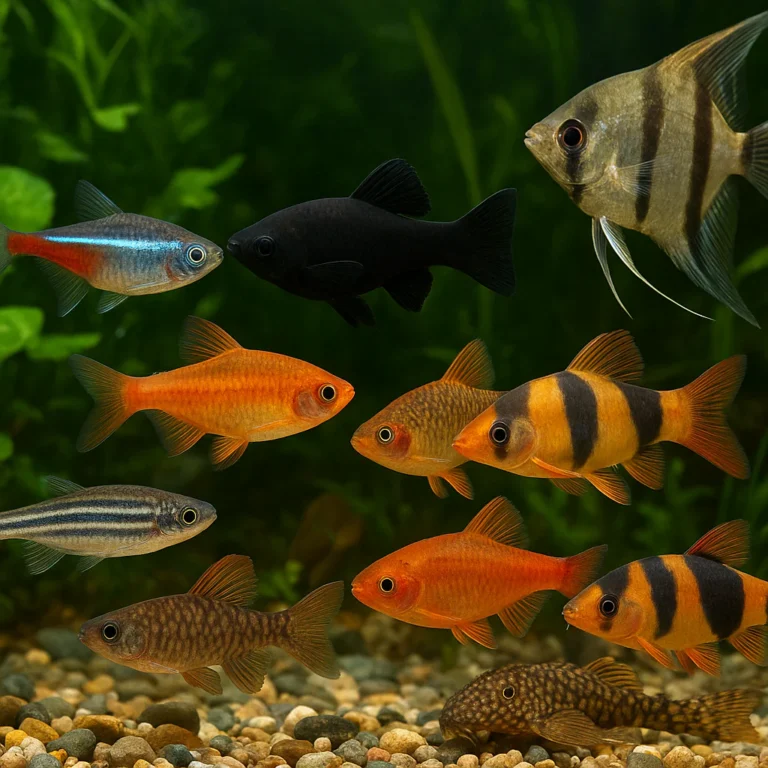
- Barbs (Tiger, Rosy): Nippers! They will tear the fins of your discus.
- Clown Loaches: They get huge and can be aggressive.
- Angelfish: They are related to discus but can be territorial and spread diseases.
- Fast Tetras (Neons): While popular, they are often too fast for discus to compete for food.
- Oscars/Arowanas: Too big and aggressive.
3. Schooling Requirements: How Many Discus Do You Need?
Discus are schooling fish. A single discus will hide, turn dark, and stop eating.
- Minimum: 6 fish.
- Ideal: 8 to 10 fish.
- Strategy: Buy a group of 10-12 juveniles of the same size. Let them establish a hierarchy naturally. Over time, you may end up with a dominant male and a group of females, or a few pairs.
🐣 Breding and Fry Care: From Spawning to First Swim
Breding discus is the ultimate reward. It’s a labor of love, but the “milkshake” diet of the fry is legendary.
1. How to Identify Male and Female Discus
It’s hard with juveniles, but adults show signs:
- Males: Larger, more pointed dorsal and anal fins, often more aggressive.
- Females: Smaller, rounder body, shorter fins, and a thick, conical ovipositor (visible during spawning).
- Behavior: Males will chase females and clean a spawning site.
2. Setting Up a Breding Tank and Encouraging Spawning
- Tank: A 5-gallon bare-bottom tank.
- Spawning Cone: Provide a vertical surface. A clay pot, slate, or a breding cone works best.
- Water: Soft, acidic water (pH 6.0-6.5) encourages spawning.
- Process: The pair will clean the site, the female lays eggs, the male fertilizes them.
3. Raising Discus Fry: The Milkshake Diet and Growth Stages
This is the magic moment.
- The “Milkshake”: After hatching, the fry attach to the parents and feed on a mucus secretion from the parents’ skin. This is their first food.
- Free Swimming: After 5-7 days, they swim off.
- Feding Fry:
Days 1-10: Feed baby brine shrimp and microworms 6-8 times a day.
Days 10-30: Introduce crushed high-quality pellets.
Water Changes: Daily 25-50% water changes are mandatory for fry to prevent stunting.
🚑 Disease Prevention and Treatment: Keeping Your Fined Friends Healthy
Discus are sensitive. Prevention is better than cure.
1. Common Discus Diseases: Hexamita, Dropsy, and Ich
- Hexamita (Hole-in-the-Head):
Symptoms: Holes in the head, stringy white poop, loss of appetite.
Cause: Parasite, often triggered by stress or poor water.
Treatment: Metronidazole (Seachem MetroPlex) or Furan-2. - Ich (White Spot):
Symptoms: White spots, flashing, clamped fins.
Treatment: Raise temperature to 8°F and use Copper-based medication (careful with scaless fish) or Ich-X. - Dropsy:
Symptoms: Bloating, pineconing scales.
Cause: Bacterial infection (often internal).
Treatment: Difficult to cure. Isolate, use Kanaplex or Seachem ParaGuard.
2. Quarantine Protocols: Why New Fish Must Wait
Never put new fish directly into your main tank.
- Duration: 4 to 6 weeks.
- Setup: A separate 20-30 gallon tank with its own heater and filter.
- Process: Observe for signs of disease. Treat prophylactically if needed.
3. Medication Guide: Safe Treatments for Sensitive Discus
Discus are sensitive to copper and some medications.
- Safe Meds: Seachem MetroPlex, Seachem Kanaplex, API General Cure.
- Avoid: Copper sulfate (unless you have no other choice and remove carbon).
- Carbon: Remove activated carbon from the filter before medicating.
💰 Why Are Discus Fish So Expensive? Breding, Genetics, and Value
You might wonder why a “Blue Diamond” costs $50 while a neon tetra is $2.
- Breding Difficulty: Discus take a long time to mature (12-18 months). They produce fewer fry than other fish.
- Labor Intensive: Breeders must feed fry 6-8 times a day and perform daily water changes.
- Genetics: Selective breeding for color, pattern, and body shape takes generations.
- Transport: They are fragile and require specialized shipping.
Value Tip: Don’t buy the cheapest fish. A $5 discus is likely stunted or diseased. A $20-30 juvenile from a reputable breder is an investment in a healthy, beautiful adult.
😊 How Do You Keep Discus Fish Happy? Stress Reduction and Enrichment
We promised to resolve the mystery of the “happy discus.” Here it is:
The Secret is Stress Reduction.
- Dim Lighting: Use floating plants to create shadows.
- Quiet Environment: Keep the tank away from TVs and loud speakers.
- Consistent Routine: Feed at the same time, change water on a schedule.
- No Sudden Movements: Move slowly near the tank.
- Company: Never keep a single discus.
💡 Final Thought: If your discus are swimming freely, eating voraciously, and showing bright colors, you are doing it right. As one expert said, “If you’re enjoying those fish, you’re doing discus correctly.”
🛒 Our Top Recommendations: Gear, Food, and Water Conditioners
Based on our years of experience, here are the products we trust.
👉 CHECK PRICE on:
- Heater: Fluval M-Series Heater | Eheim Jager Heater
- Filter: Fluval FX6 Canister Filter | Eheim Pro 4
- Food: Hikari Discus Bio-Gold | Sera Discus Granules
- Test Kit: API Freshwater Master Test Kit | Seachem MultiTest
- Water Conditioner: Seachem Prime | Aqueon Water Conditioner
👉 Shop on:
- Seachem Official Website: Seachem.com
- Hikari Official Website: Hikari.com
📝 Conclusion

Keeping discus fish is not for the faint of heart, but for those willing to master the art of water stability and temperature control, the reward is unparalleled. These “Kings of the Aquarium” bring a grace and beauty that no other freshwater fish can match.
Key Takeaways:
- Temperature: Keep it at 85-86°F.
- Water Quality: Perform large, frequent water changes to keep nitrates low.
- Schooling: Keep at least 6 fish.
- Stress: Minimize it at all costs.
If you follow these guidelines, you won’t just be keeping fish; you’ll be curating a living masterpiece. Remember, the journey of a thousand miles begins with a single water change. Happy aquascaping!
🔗 Recommended Links
- Books: The Discus Fish: A Complete Guide to Keeping and Breding
- Equipment: Fluval FX6 Canister Filter
- Food: Hikari Discus Bio-Gold
- Test Kits: API Freshwater Master Test Kit
❓ FAQ: Your Burning Discus Questions Answered

What are the best tank mates for discus fish?
The best tank mates are peaceful, heat-tolerant fish like Cardinal Tetras, Rummy-Nose Tetras, Sterbai Corydoras, and Bristlenose Plecos. Avoid fast or aggressive fish like barbs or clown loaches.
Read more about “🐠 Freshwater vs. Saltwater: 5 Tank Types & Your Perfect Match (2026)”
How do I create a natural habitat for discus fish at home?
Use driftwood (Mopani or Spider Wood), fine sand or a bare bottom, and floating plants to provide shade. Keep the water soft and slightly acidic if possible, but stability is more important than perfect parameters.
Read more about “🌊 7 Steps to a Striking Home Aquarium (2026)”
What size tank is recommended for keeping discus fish?
A 75-gallon tank is the minimum for a small group of adults. A 125-gallon or larger tank is ideal for a school of 8-10 fish and provides better water stability.
Read more about “🌈 30 Most Colorful & Exotic Fish for Your Tank (2026)”
How can I prevent common diseases in discus fish?
Prevent disease by maintaining pristine water quality, performing regular water changes, quarantining new fish, and avoiding stress. A strong immune system is the best defense.
Read more about “🐠 The Ultimate Aquatic Pet Care Guide (2026): 15 Secrets to a Thriving Tank”
What type of diet is best for discus fish health?
A varied diet of high-quality pellets (like Hikari Bio-Gold), frozen bloodworms, and brine shrimp is best. Avoid beef heart as a staple.
Read more about “🌊 Marine Aquarium Nutrition: 15 Secrets to Feed Your Reef (2026)”
How often should I change the water in a discus fish tank?
It depends on your tank size and bioload, but aim for 25-30% every 2 days or 50% weekly. The goal is to keep nitrates below 20 ppm.
Read more about “🚫 10 Deadly Fish Tank Mistakes to Avoid (2026)”
What is the ideal water temperature for discus fish care?
The ideal temperature is 85°F to 86°F (29°C – 30°C). Temperatures below 82°F can lead to illness and stress.
Read more about “Dive Into the Top 10 Aquarium Community Forums You Need in 2026 🐠”
Why are my discus fish hiding all the time?
Hiding is a sign of stress. Check your water parameters, ensure the tank is not too bright, verify there are no aggressive tank mates, and confirm the temperature is correct.
Read more about “🌿 Build a Self-Sustaining Fish Tank Ecosystem (2026)”
Can discus fish live with other fish species?
Yes, but only with peaceful, heat-tolerant species. Avoid fast fish, nippers, and aggressive cichlids.
Read more about “🐟 Freshwater Aquarium Fish Breding: 10 Secrets to Raise Fry Like a Pro (2026)”
How do I prevent common discus fish diseases?
Maintain stable water parameters, perform regular water changes, quarantine new fish, and provide a high-quality diet.
Read more about “🐟 15 Deadly Saltwater Fish Diseases: The Ultimate Cure Guide (2026)”
What is the minimum tank size for a group of discus fish?
The minimum is 75 gallons for a group of 6 adults. For juveniles, you can start with 10-12 in a 5-gallon tank, but they will need to be upgraded as they grow.
Read more about “🌊 50+ Best Saltwater Aquarium Fish Species for 2026: From Nano to Giant”
What water parameters are best for discus fish?
- pH: 6.0 – 7.6 (Stability is key)
- GH: 3 – 10 dGH
- KH: 1 – 5 dKH
- Nitrates: < 20 ppm
- Temperature: 85-86°F
Read more about “🚨 15 Ultimate Aquarium Troubleshooting Tips to Save Your Tank (2026)”
How often should I feed discus fish?
- Juveniles: 4-6 times a day.
- Adults: 2-3 times a day.
Feed only what they can consume in 3-5 minutes.
Read more about “🌊 15 Fish Tank Decoration Ideas to Transform Your Tank (2026)”
📚 Reference Links
- Simply Discus Forum: Beginer’s Guide to Getting Started with Discus
- Aquarium Co-op: Discus Fish Care Guide
- Aqueon: Discus Fish Care Guide
- Seachem: Discus Care Information
- Hikari: Discus Nutrition
- FishBase: Symphysodon Species