Support our educational content for free when you purchase through links on our site. Learn more
How Often Should You Clean Your Fish Tank? 🐠 (2026)


For most established freshwater aquariums, clean your fish tank with a 20–30% partial water change once a week, while removing visible waste, checking the filter, and testing the water. The best answer to “How often should I clean my fish tank to keep it healthy?” depends on stocking, aquarium size, plants, feeding, filtration, and nitrate levels.
A sparkling tank is not automatically a healthy tank. Beneficial bacteria live on filter media, substrate, plants, and décor, so completely emptying and scrubbing the aquarium can cause more trouble than a little algae ever did.
We once visited a planted aquarium that looked like it belonged in a showroom. The owner had replaced every filter cartridge and changed nearly all the water after noticing cloudy glass. Two days later, ammonia appeared. The tank was visually spotless but biologically off-balance, a reminder that aquarium cleaning should be targeted rather than extreme.
Watch your fish, track nitrate, and adjust the routine. A lightly stocked planted tank may need less maintenance, while goldfish, turtles, messy cichlids, and overcrowded aquariums can require significantly more frequent water changes.
Key Takeaways
- Change 20–30% of the water weekly as a practical starting point for many established freshwater aquariums.
- Test ammonia, nitrite, nitrate, pH, and temperature rather than judging water quality by appearance alone.
- Clean mechanical filter media when flow declines, rinsing it in removed aquarium water instead of untreated tap water.
- Do not routinely empty or sterilize the entire tank. Preserve beneficial bacteria and stable biological surfaces.
- Vacuum gravel in sections and clean algae, decorations, and plant debris only as needed.
- Increase maintenance for heavily stocked or high-waste aquariums, especially goldfish and turtle systems.
- Use nitrate trends to personalize your schedule. If nitrate rises quickly, clean more often, reduce feeding, improve filtration, or reassess stocking.
- Never use soap, detergent, or household glass cleaner on aquarium equipment or inside the tank.
- Keep fish in the aquarium during routine maintenance whenever possible to avoid unnecessary handling stress.
- A clear aquarium can still be unsafe, so water testing is the real detective in this fishy mystery.
Table of Contents
- ⚡️ Quick Tips and Facts: How Often Should You Clean Your Fish Tank?
- 🧪 The Science Behind Aquarium Cleaning and Water Quality
- The Nitrogen Cycle: Beneficial Bacteria and Amonia Control
- Why Overcleaning a Fish Tank Can Be Harmful
- 📅 Recommended Aquarium Cleaning Schedule
- Daily Fish Tank Maintenance Checklist
- Weekly Aquarium Cleaning Tasks
- Biweekly Water Changes and Glass Cleaning
- Monthly Fish Tank Maintenance
- Seasonal and Annual Aquarium Care
- 🐠 12 Factors That Determine How Often You Should Clean Your Aquarium
- 1. Aquarium Size and Water Volume
- 2. Number and Type of Fish
- 3. Fish Bioload and Waste Production
- 4. Freshwater Versus Saltwater Aquariums
- 5. Planted Versus Unplanted Tanks
- 6. Filtration System and Filter Media
- 7. Feeding Habits and Uneaten Food
- 8. Aquarium Substrate and Decorations
- 9. Water Temperature and Oxygen Levels
- 10. Algae Growth and Direct Sunlight
- 11. Quarantine, New Fish, and Disease Risk
- 12. Tap Water, Water Chemistry, and Local Conditions
- 🧽 How to Clean a Fish Tank Safely: Step-by-Step Method
- Gather the Right Aquarium Cleaning Supplies
- 1. Test the Aquarium Water Before Cleaning
- 2. Unplug Aquarium Equipment Safely
- 3. Remove Algae from Aquarium Glass
- 4. Vacuum the Gravel or Clean the Substrate
- 5. Perform a Partial Water Change
- 6. Clean Aquarium Plants, Rocks, and Decorations
- 7. Rinse Filter Media Without Killing Beneficial Bacteria
- 8. Refill the Tank with Conditioned Water
- 9. Restart Equipment and Observe Your Fish
- 💧 How Much Water Should You Change During Aquarium Cleaning?
- Routine Partial Water Changes
- Emergency Water Changes for Amonia or Nitrite Spikes
- Water Changes for a New Aquarium
- Water Changes for Overcrowded or Heavily Stocked Tanks
- 🔬 Aquarium Water Testing: What to Measure and When
- Amonia, Nitrite, and Nitrate Levels
- pH, General Hardness, and Carbonate Hardness
- Salinity, Phosphate, Chlorine, and Temperature
- How to Interpret Aquarium Test Results
- 🦠 Cleaning Aquarium Filters Without Destroying the Biological Filter
- How Often to Clean Hang-On-Back Filters
- How Often to Clean Canister Filters
- How Often to Clean Sponge Filters
- When to Replace Filter Media
- 🌿 Cleaning Planted Aquariums and Aquascapes
- Pruning Live Aquarium Plants
- Managing Algae on Plants and Hardscape
- Balancing Light, Carbon Dioxide, and Fertilizer
- 🪨 Cleaning Aquarium Gravel, Sand, and Bare-Bottom Tanks
- How to Vacuum Gravel Without Disturbing Fish
- How to Clean Aquarium Sand Without Removing It
- How to Maintain Bare-Bottom Breding Tanks
- 🧂 Saltwater Aquarium Cleaning and Reef Tank Maintenance
- Marine Aquarium Water Changes
- Removing Salt Creep and Cleaning Equipment
- Ref Tank Glass, Sand, and Live Rock Care
- Protein Skimmer and Sump Maintenance
- 🚨 10 Signs Your Fish Tank Needs Cleaning Now
- 1. Cloudy Aquarium Water
- 2. Strong or Rotten-Egg Odor
- 3. Rapidly Rising Nitrate
- 4. Detectable Amonia or Nitrite
- 5. Excessive Algae Growth
- 6. Uneaten Food and Visible Fish Waste
- 7. Fish Gasping at the Surface
- 8. Clamped Fins, Lethargy, or Loss of Appetite
- 9. Clogged Filter Flow
- 10. Falling Water Level and Mineral Deposits
- ❌ 15 Fish Tank Cleaning Mistakes to Avoid
- 1. Replacing All Aquarium Water at Once
- 2. Washing Filter Media Under Tap Water
- 3. Using Soap, Detergent, or Household Chemicals
- 4. Removing All Decorations and Substrate Every Time
- 5. Scrubbing Beneficial Biofilm from Every Surface
- 6. Adding Untreated Tap Water
- 7. Ignoring Water Temperature
- 8. Cleaning on an Unplanned Schedule
- 9. Overfeeding Fish After Cleaning
- 10. Deep-Cleaning a New Aquarium Too Soon
- 11. Replacing All Filter Media Together
- 12. Disturbing a Deep Anaerobic Substrate Layer
- 13. Moving Fish Unecessarily
- 14. Ignoring Equipment and Airflow
- 15. Treating Algae as the Only Water-Quality Problem
- 🧴 Aquarium Cleaning Products: What Is Safe for Fish?
- Safe Tools and Water Conditioners
- Vinegar for Mineral Deposits and Hard Water Scale
- Why Bleach, Glass Cleaner, and Soap Are Dangerous
- 🆘 Emergency Aquarium Cleaning: What to Do After a Crash
- Amonia or Nitrite Spike Response
- Dead Fish, Roting Plants, and Decomposing Material
- Cloudy Water After a Major Cleaning
- Power Outage and Filter Failure
- 🧼 Fish Tank Cleaning by Aquarium Type
- Beta Fish Tanks Goldfish Aquariums Tropical Community Tanks
- Cichlid Aquariums
- Shrimp and Nano Aquariums
- Axolotl and Cold-Water Aquariums
- Turtle Aquariums
- ✅ Creating a Personalized Aquarium Maintenance Calendar
- A Simple Weekly Fish Tank Cleaning Checklist
- Tracking Water Parameters and Maintenance
- When to Adjust Your Cleaning Frequency
- 🤔 FAQ: How Often Should I Clean My Fish Tank?
- Can I Clean My Fish Tank Every Day?
- Should I Remove My Fish During a Water Change?
- How Often Should I Clean a Small Fish Tank?
- How Often Should I Clean a Beta Fish Tank?
- How Often Should I Clean a Goldfish Tank?
- How Often Should I Change Aquarium Filter Media?
- Can I Change 100 Percent of the Aquarium Water?
- Why Is My Fish Tank Still Dirty After Cleaning?
- How Long Can Fish Go Without a Tank Cleaning?
- 🏁 Conclusion
- 🔗 Recommended Links
- 📚 Reference Links
⚡️ Quick Tips and Facts: How Often Should You Clean Your Fish Tank?
The short answer: most established freshwater aquariums benefit from a 20–30% water change once a week, plus light maintenance such as removing uneaten food, checking equipment, and wiping algae when needed. But “cleaning” does not mean stripping the aquarium bare until it looks like a sterile glass box. Your aquarium is a living ecosystem, not a kitchen counter. 🐠
For a first-hand look at how aquarists compare maintenance routines, visit our guide to 15 Best Fish Tank and Aquarium Forums and Communities to Join (2026) 🐟.
The practical maintenance rhythm
| Task | Typical frequency | What we recommend |
|---|---|---|
| Observe fish and equipment | Daily | Check behavior, temperature, filter flow, and water level |
| Remove uneaten food or dead leaves | As needed | Remove promptly, preferably within a few hours |
| Test water | Weekly at first | Test ammonia, nitrite, nitrate, pH, and temperature |
| Partial water change | Usually weekly or biweekly | Start with 20–30%, then adjust from test results |
| Wipe algae from glass | Weekly or as needed | Clean only the viewing panels that need attention |
| Vacuum substrate | Weekly or every 1–2 weeks | Work in sections rather than stripping all substrate |
| Rinse mechanical filter media | When clogged | Use removed aquarium water, never untreated tap water |
| Inspect biological media | Every few months | Rinse only if debris restricts flow |
| Deep-clean equipment | As needed | Clean impellers, tubing, heaters, and intake screens |
The correct schedule is determined by nitrate accumulation, fish load, plant growth, feeding, filtration, and water chemistry, not by a calendar alone. The U.S. Geological Survey explains how nitrogen compounds move through aquatic systems, while aquarium keepers apply that principle by monitoring ammonia, nitrite, and nitrate.
Our safest starting point
✅ Established freshwater community tank: Change 20–30% weekly.
✅ Lightly stocked, planted aquarium: Test first; 20–30% every 1–2 weeks may be adequate.
✅ Goldfish or heavily stocked aquarium: Often requires larger or more frequent changes.
✅ New aquarium: Test ammonia and nitrite frequently because the biological filter is still maturing.
✅ Marine or reef tank: Follow a saltwater-specific schedule and match salinity and temperature carefully.
❌ Do not routinely empty the entire aquarium. A full teardown can destabilize the biological filter and stress fish.
One of the most useful ideas from the first video is that nitrate production should guide your water-change schedule. The video recommends logging nitrate readings for three or four weeks, then adjusting maintenance according to how quickly nitrate rises. Its suggested ceiling is below 40 ppm, but we prefer treating that as an upper warning line rather than a target. Many freshwater keepers aim substantially lower, especially with sensitive species. You can jump to the embedded video using #featured-video.
A tiny schedule that prevents big disasters
Our Aquarium Music™ routine is deliberately boring, because boring aquariums are often healthy aquariums:
- Look at the fish before feeding.
- Check temperature and filter movement.
- Feed sparingly.
- Remove obvious waste or decaying leaves.
- Test water on the chosen schedule.
- Change only the amount of water your test results and maintenance history justify.
- Clean one part of the system without disturbing everything else.
That final step matters. We once serviced a planted 20-gallon tank where the owner had rinsed the sponge, replaced every cartridge, scrubed the decorations, vacuumed every corner, and changed nearly all the water in one afternoon. The aquarium looked sparkling. Two days later, ammonia appeared because the cleaning had removed too much established biological filtration at once. The tank was visually immaculate and biologically wobbly. A fish tank can wear a tuxedo while still having terrible water quality.
🧪 The Science Behind Aquarium Cleaning and Water Quality
Fish produce waste. Uneaten food decomposes. Plants shed leaves. Microrganisms process those materials. Your filtration system, substrate, plants, and water changes work together to keep toxic compounds under control.
The most useful cleaning question is not, “Does the glass look dirty?” It is:
Are waste compounds accumulating faster than the aquarium can process or remove them?
The Nitrogen Cycle: Beneficial Bacteria and Amonia Control
The aquarium nitrogen cycle generally follows this path:
Fish waste and decay → ammonia → nitrite → nitrate
- Amonia can damage fish gills and tissues.
- Nitrite interferes with oxygen transport in fish blood.
- Nitrate is less acutely toxic but accumulates and signals that dissolved waste is building.
- Water changes, plant growth, substrate maintenance, and filtration help control nitrate.
The Merck Veterinary Manual describes ammonia and nitrite as major water-quality concerns in aquarium fish. The RSPCA also emphasizes regular water testing and partial water changes rather than sudden, poorly controlled changes.
A simple target table
| Parameter | Preferred routine reading | Action if elevated |
|---|---|---|
| Amonia | 0 ppm | Test again, reduce feeding, perform a partial water change, inspect the biofilter |
| Nitrite | 0 ppm | Treat as urgent; change water and investigate cycling or filter failure |
| Nitrate | Low and stable | Increase maintenance if it rises rapidly |
| pH | Stable for the species | Avoid chasing a “perfect” number with sudden chemical adjustments |
| Temperature | Appropriate and stable | Match replacement water closely |
| Chlorine/chloramine | 0 ppm | Always use a suitable water conditioner |
These are practical freshwater guidelines, not universal values for every species. Some blackwater fish prefer softer, more acidic water; African cichlids may need harder, more alkaline water; marine systems require salinity testing. Consult reliable species information through our Fish Care and Species Profiles category.
Why Overcleaning a Fish Tank Can Be Harmful
Overcleaning creates several risks:
- Removing too much biological media can reduce nitrifying bacteria.
- Large, poorly matched water changes can cause pH, temperature, or hardness swings.
- Repeatedly dismantling the aquarium stresses fish and disturbs plants, territories, and substrate.
- Scrubbing every surface removes useful biofilm.
- Replacing all filter cartridges together can create a sudden loss of bacterial habitat.
This does not mean you should tolerate a filthy aquarium. It means cleaning should be targeted and measured.
✅ Clean clogged mechanical media.
✅ Remove decaying organic matter.
✅ Vacuum waste before it decomposes.
✅ Correct unsafe water parameters.
❌ Do not sterilize a healthy aquarium as a routine chore.
📅 Recommended Aquarium Cleaning Schedule
Use the schedules below as starting points. Then adjust them using test results, filter flow, fish behavior, and visible waste.
Daily Fish Tank Maintenance Checklist
Daily maintenance takes two minutes and can prevent a weekend-long rescue mission.
- Watch fish during feeding.
- Check for gasping, clamped fins, unusual hiding, flashing, or loss of appetite.
- Confirm the filter is moving water.
- Look for leaks, unusual sounds, and blocked intakes.
- Check the heater indicator and temperature.
- Remove dead leaves, dead fish, and uneaten food.
- Confirm the water level is safe for filters and heaters.
- Check that lids, cords, and air lines are secure.
A fish suddenly gasping at the surface is not “just being dramatic.” It may indicate low oxygen, ammonia, nitrite, overheating, or a clogged filter. Pause feeding and test the water.
Weekly Aquarium Cleaning Tasks
For many freshwater aquariums, weekly care includes:
- Test ammonia, nitrite, nitrate, and pH.
- Inspect the filter intake and output.
- Wipe algae from the front glass.
- Vacuum a portion of the substrate.
- Remove loose debris.
- Perform a 20–30% water change if needed.
- Refill with conditioned water close to the aquarium’s temperature.
- Check plant growth and trim damaged leaves.
- Clean or replace mechanical floss if it is clogged.
Do not automatically clean every component every week. A sponge filter that still has good flow may not need rinsing. A filter floss pad that has turned into a brown brick probably does.
Biweekly Water Changes and Glass Cleaning
A lightly stocked, mature, heavily planted aquarium may remain stable with a water change every two weeks. That is not a license to skip testing; it is a result to earn through stable readings.
A biweekly schedule may work when:
- Nitrate remains low and stable.
- Fish are lightly stocked.
- Plants are actively growing.
- Feeding is controlled.
- The filter has strong flow.
- There is little visible detritus.
- The aquarium has a mature biological filter.
If nitrate rises noticeably before the two-week mark, the schedule is too relaxed. If nitrate barely changes and fish thrive, a smaller or less frequent change may be reasonable.
Monthly Fish Tank Maintenance
Monthly tasks can include:
- Inspecting tubing and airline lines.
- Cleaning algae from equipment.
- Checking the impeller chamber.
- Inspecting heater condition.
- Wiping mineral deposits from the lid.
- Checking that plants are not blocking the filter intake.
- Looking underneath rocks and decorations for trapped waste.
- Reviewing your maintenance log.
If you use an Aqueon water changer or a similar gravel vacuum, inspect the siphon hose for kinks and algae buildup. A siphon that loses flow halfway through a water change is a small problem until it floods the living room. Our team has met that problem personally. The carpet remembers.
Seasonal and Annual Aquarium Care
Every few months, review the whole system:
- Are fish larger than when the tank was stocked?
- Has the bioload increased?
- Have plants become dense enough to restrict circulation?
- Is the filter output weaker?
- Is evaporation causing mineral buildup?
- Has the tap water changed seasonally?
- Are replacement cartridges being changed too often?
- Is the aquarium still appropriately stocked?
A filter rated for a lightly stocked aquarium may struggle after fish grow. Aquarium maintenance is not static because the inhabitants are not static.
🐠 12 Factors That Determine How Often You Should Clean Your Aquarium
1. Aquarium Size and Water Volume
Small aquariums usually change faster. A teaspoon of waste has a much greater effect in a 5-gallon tank than in a 55-gallon aquarium.
| Aquarium type | Stability | Typical maintenance tendency |
|---|---|---|
| Nano tank | Low to moderate | Frequent observation and smaller, careful changes |
| Medium community tank | Moderate to high | Weekly maintenance is commonly manageable |
| Large aquarium | Often more stable | Larger equipment, but more total waste and water volume |
| Overcrowded tank of any size | Low | Frequent testing and corrective maintenance |
A large tank is not automatically easy. A 125-gallon aquarium with messy fish can produce more waste than a carefully stocked 20-gallon planted tank.
2. Number and Type of Fish
Stocking density affects waste production, oxygen demand, aggression, and filtration requirements.
- Goldfish are high-waste fish.
- Plecos can produce substantial waste despite their reputation as algae eaters.
- Cichlids may rearrange substrate and create debris.
- Small schooling fish usually create less individual waste, but a large group still adds bioload.
- Shrimp have a comparatively light bioload but can be sensitive to parameter swings.
Use our Fish and Aquatic Life resources when matching fish to aquarium size and filtration.
3. Fish Bioload and Waste Production
Bioload includes more than fish count. Consider:
- Fish size and adult size.
- Feeding quantity.
- Feeding frequency.
- Waste-producing species.
- Dead plant material.
- Uneaten food.
- Snails and other organisms.
- Filter capacity.
- Substrate depth and detritus accumulation.
A properly stocked aquarium may need less intervention than a smaller tank packed with juvenile fish that are rapidly growing.
4. Freshwater Versus Saltwater Aquariums
Freshwater and marine aquariums share biological principles but differ in maintenance details.
Freshwater systems:
- Usually require dechlorinated tap water or appropriately prepared water.
- Need attention to hardness, pH, and temperature.
- May use planted filtration to remove nutrients.
Saltwater systems:
- Require salinity matching.
- Develop salt creep around lids, plumbing, and equipment.
- May require testing for alkalinity, calcium, magnesium, and phosphate.
- Reef tanks require careful protection of corals and invertebrates.
Our Aquarium Equipment guides cover filtration, heaters, pumps, and maintenance tools for both systems.
5. Planted Versus Unplanted Tanks
Live plants absorb nutrients, provide habitat, and can improve aesthetics, but they do not make water changes obsolete.
A heavily planted aquarium may need less frequent maintenance if:
- Plants are actively growing.
- Light and nutrients are balanced.
- Dead leaves are removed.
- Flow reaches all areas.
- Fish stocking is reasonable.
Plants can also create maintenance problems when decaying leaves collect behind hardscape. Visit our Aquascaping and Aquatic Plants category for pruning and aquascape care.
6. Filtration System and Filter Media
Filtration has three major functions:
- Mechanical filtration: captures particles.
- Biological filtration: houses beneficial microorganisms.
- Chemical filtration: removes specific dissolved compounds when appropriate.
A filter does not eliminate waste. It relocates and processes some of it. Mechanical media becomes a waste basket; biological media becomes a bacterial habitat; chemical media has a limited capacity.
7. Feeding Habits and Uneaten Food
Overfeeding is one of the fastest ways to shorten a cleaning interval.
Feed only what fish can consume in a short period, then observe:
- Is food reaching the substrate?
- Are fish spitting food out?
- Is food collecting behind décor?
- Are bottom feeders actually receiving food?
- Are you feeding because fish need food or because they look persuasive?
Fish are excellent negotiators. Their argument is usually, “We have never been fed in our lives.” Do not let their courtroom performance determine your nitrate level.
8. Aquarium Substrate and Decorations
Gravel, sand, wood, rocks, and ornaments trap debris differently.
- Coarse gravel can collect waste between stones.
- Fine sand tends to keep waste on the surface, but can compact.
- Driftwood may grow harmless biofilm.
- Hollow ornaments can trap food.
- Dense hardscape can create dead-flow zones.
Vacuum around decorations instead of removing everything during every water change.
9. Water Temperature and Oxygen Levels
Warmer water generally holds less dissolved oxygen than cooler water. Overstocking, high temperatures, and weak surface movement can combine into an emergency.
Check:
- Filter outflow.
- Air stone function.
- Surface agitation.
- Heater accuracy.
- Fish behavior near the surface.
A clean-looking tank can still have poor oxygenation.
10. Algae Growth and Direct Sunlight
Algae is not automatically a sign of dirty water. It results from light, nutrients, and available surfaces.
Control it by:
- Limiting direct sunlight.
- Setting a consistent light schedule.
- Avoiding excess fertilizer.
- Removing accumulated nutrients.
- Improving circulation.
- Manually scraping glass.
The Aquarium Co-Op algae guide provides useful practical context, though each aquarium still requires observation.
11. Quarantine, New Fish, and Disease Risk
New fish can introduce pathogens. A quarantine aquarium requires separate equipment, careful observation, and more frequent testing because it is often smaller and less established.
Never share nets, siphons, or buckets between quarantine and display aquariums without cleaning and disinfecting them appropriately.
12. Tap Water, Water Chemistry, and Local Conditions
Tap water varies by municipality and season. It may contain chlorine, chloramine, dissolved minerals, or fluctuating pH.
Check your local water report and test:
- Chlorine or chloramine.
- pH.
- General hardness.
- Carbonate hardness.
- Nitrate.
Always use a water conditioner designed for your water supply. Products such as Seachem Prime and API Tap Water Conditioner are widely used, but follow label directions and do not combine products casually.
🧽 How to Clean a Fish Tank Safely: Step-by-Step Method
Gather the Right Aquarium Cleaning Supplies
Prepare everything before starting:
- Aquarium siphon or gravel vacuum.
- Dedicated bucket used only for aquarium work.
- Water conditioner.
- Aquarium-safe algae scraper.
- Soft algae pad.
- Thermometer.
- Water test kit.
- Clean towels.
- Long twezers or aquascaping scissors.
- Spare filter sponge or floss.
- Small brush for tubing and impellers.
Reliable options include the Python No Spill Clean and Fill for larger aquariums and the Fluval ProVac for targeted substrate cleaning.
Never use a bucket that has held soap, bleach, floor cleaner, or other chemicals.
👉 CHECK PRICE on:
- Python No Spill Clean and Fill: Amazon | Petco | Python Official Website
- Fluval ProVac: Amazon | Chewy | Fluval Official Website
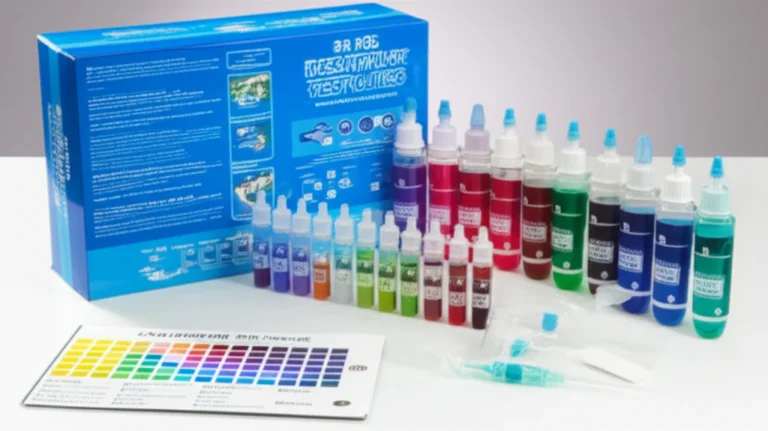
- API Freshwater Master Test Kit: Amazon | Chewy | API Official Website
1. Test the Aquarium Water Before Cleaning
Test before changing water whenever possible. Record:
- Date.
- Temperature.
- Amonia.
- Nitrite.
- Nitrate.
- pH.
- Water-change percentage.
- Unusual observations.
Testing before cleaning tells you whether your routine is working. Testing only afterward can hide the evidence.
2. Unplug Aquarium Equipment Safely
Unplug:
- Heater.
- Internal filter.
- Air pump if water may siphon backward.
- Powerheads.
- Lighting if your hands will be near electrical equipment.
Never let a heater operate above the waterline. Allow it to cool according to the manufacturer’s instructions before removing it.
3. Remove Algae from Aquarium Glass
Use an aquarium-safe scraper:
- Keep magnetic cleaners away from trapped sand, which can scratch glass.
- Use plastic blades on acrylic aquariums.
- Do not scrape silicone seams.
- Clean the front glass first so you can monitor fish and water clarity.
Magnetic cleaners such as the Flipper Magnetic Aquarium Cleaner are convenient, but they are not magic. A grain of sand between the magnet and glass can turn maintenance into accidental abstract art.
4. Vacuum the Gravel or Clean the Substrate
Use the siphon to remove detritus while draining water.
- Start the siphon.
- Place the vacuum just above the substrate.
- Allow debris to rise without sucking out large amounts of gravel.
- Work in sections.
- Stop when the planned water volume has been removed.
- Avoid uproting plants unnecessarily.
For planted aquariums, vacuum open areas and gently hover around roots. Deep-rooted plants may benefit from leaving some substrate undisturbed.
5. Perform a Partial Water Change
A routine change usually removes 20–30% of the aquarium water. More may be required for an emergency, but larger changes should be deliberate.
Avoid removing fish. Catching them can cause more stress than leaving them in the aquarium while you siphon carefully.
6. Clean Aquarium Plants, Rocks, and Decorations
Remove only what actually needs cleaning.
- Trim dead plant leaves.
- Brush algae from removable rocks with an aquarium-only brush.
- Rinse decorations in removed tank water.
- Inspect hollow ornaments for trapped food.
- Do not scrub every surface until no biofilm remains.
If a decoration has sharp edges, flaking paint, or unsafe material, replace it rather than repeatedly cleaning it.
7. Rinse Filter Media Without Killing Beneficial Bacteria
This is where many well-intentioned aquarists accidentally reset their aquarium.
- Remove mechanical media when clogged.
- Rinse sponge or floss in a bucket of removed aquarium water.
- Squeeze gently until flow improves.
- Keep biological media submerged in aquarium water during maintenance.
- Never replace all established biological media at once.
The MonsterFishKeepers discussion summarized above offers a useful real-world perspective: one large system used weekly water changes and cleaned mechanical media according to visible buildup, while the sump itself went months without a full cleaning. Another keeper reported going much longer between sump cleanings because mechanical filtration captured debris effectively. The lesson is not “clean your sump every six months.” It is clean based on flow, debris, and test results.
8. Refill the Tank with Conditioned Water
Before adding water:
- Match temperature closely.
- Add the correct conditioner for the new-water volume.
- Treat chlorine and chloramine.
- Pour gently over a plate, plastic bag, or saucer to avoid disturbing substrate.
- Recheck the water level.
Do not add boiling or ice-cold water. Fish do not appreciate surprise weather.
9. Restart Equipment and Observe Your Fish
Confirm:
- Filter flow is restored.
- Heater is submerged.
- Air bubbles are moving.
- Intake screens are clear.
- No equipment is vibrating abnormally.
- Fish are swimming normally.
Observe for 15–30 minutes after a significant maintenance session. If fish gasp, become uncordinated, or show severe stress, test temperature and water chemistry immediately.
💧 How Much Water Should You Change During Aquarium Cleaning?
Routine Partial Water Changes
A good starting point is:
- 20–30% weekly for many established freshwater aquariums.
- 20–30% every 1–2 weeks for some lightly stocked planted aquariums.
- 30–50% weekly or more for high-bioload systems when testing indicates rapid nitrate accumulation.
The first video’s nitrate-log method is sensible: measure how quickly nitrate rises, then select a water-change frequency that prevents excessive accumulation. If nitrate rises 10 ppm each week, a weekly 25% change may be reasonable. If it rises 20 ppm in a few days, the problem may be stocking, feeding, filtration, or tank size rather than merely an inconvenient cleaning schedule.
Emergency Water Changes for Amonia or Nitrite Spikes
If ammonia or nitrite is detectable:
- Stop or reduce feeding temporarily.
- Test again to confirm the result.
- Perform a partial water change with conditioned, temperature-matched water.
- Check whether the filter is running.
- Look for dead fish, rotting plants, or decaying food.
- Test daily until readings return to zero.
- Avoid replacing all biological media.
The exact change percentage depends on the reading, species, pH, temperature, and severity. Seek aquatic veterinary guidance for valuable or sensitive fish.
Water Changes for a New Aquarium
New tanks can experience “new tank syndrome” while bacterial colonies establish.
- Test ammonia and nitrite frequently.
- Add fish gradually.
- Avoid overfeeding.
- Do not rinse new biological media under chlorinated water.
- Use a reliable test kit rather than relying on clear water.
Clear water does not prove that a tank is cycled.
Water Changes for Overcrowded or Heavily Stocked Tanks
If nitrate rises rapidly, fish gasp, or the filter cannot maintain flow:
- Increase water-change frequency temporarily.
- Reduce feeding.
- Improve mechanical filtration.
- Remove decaying matter.
- Reassess stocking.
- Consider a larger aquarium or fewer fish.
A permanent schedule of massive emergency water changes is a warning that the system needs redesign.
🔬 Aquarium Water Testing: What to Measure and When
Amonia, Nitrite, and Nitrate Levels
Liquid reagent kits such as the API Freshwater Master Test Kit are widely used for freshwater testing. Test strips are convenient for screening, but liquid tests may provide more useful resolution for troubleshooting.
A practical schedule:
- New aquarium: test ammonia and nitrite daily or every other day.
- Established aquarium: test weekly until your pattern is known.
- Stable mature aquarium: test monthly and whenever behavior changes.
- After adding fish, medication, or filter media: test more often.
pH, General Hardness, and Carbonate Hardness
pH is only one part of water chemistry. General hardness affects minerals such as calcium and magnesium. Carbonate hardness helps buffer pH.
Stability is usually more valuable than chasing a textbook number. A fish adapted to stable local water may fare better than a fish exposed to repeated chemical adjustments in pursuit of an ideal reading.
Salinity, Phosphate, Chlorine, and Temperature
Marine aquariums require salinity testing with a refractometer or calibrated digital meter. Reef aquariums also monitor alkalinity, calcium, magnesium, phosphate, and nitrate.
Freshwater aquariums may need chlorine or chloramine testing when municipal water changes. Temperature should be checked with a reliable thermometer rather than trusting a heater dial alone.
How to Interpret Aquarium Test Results
Look for patterns, not one isolated number:
- Is nitrate rising faster than usual?
- Did pH change after a water change?
- Did ammonia appear after filter maintenance?
- Does the result match fish behavior?
- Has stocking changed?
- Did you use a new test kit or reagent?
If a test result seems impossible, clean the vial, check expiration dates, repeat the test, and compare with a second method.
🦠 Cleaning Aquarium Filters Without Destroying the Biological Filter
How Often to Clean Hang-On-Back Filters
Hang-on-back filters often need mechanical-media rinsing every few weeks or sooner if flow declines.
- Rinse the intake tube.
- Clean the impeller.
- Rinse reusable sponge in aquarium water.
- Replace disposable floss when it is clogged.
- Avoid replacing established biological inserts unnecessarily.
Brands such as AquaClear and Seachem offer filters with reusable media, which can reduce the “replace the cartridge every month” trap.
How Often to Clean Canister Filters
Canister filters may go longer between cleanings, but they should not become neglected furniture.
Inspect them when:
- Flow declines.
- Water bypasses the media.
- Hoses darken internally.
- Mechanical media becomes packed.
- The canister contains visible sludge.
A canister can hide a remarkable amount of muck. We once opened a neglected unit that looked fine externally but contained a thick layer of decomposed plant debris. The aquarium had survived because the biological media remained active, but water flow had quietly deteriorated.
How Often to Clean Sponge Filters
Sponge filters are wonderfully simple:
- Remove the sponge during a water change.
- Squeeze it gently in removed aquarium water.
- Reinstall it.
- Confirm bubbles and lift-tube flow.
The correct frequency may range from weekly to every few months, depending on bioload and flow. If the sponge is collapsing, clogged, or deteriorating, replace it gradually and preserve some established media whenever possible.
When to Replace Filter Media
Replace media when it is physically breaking down, permanently clogged, or no longer performing its intended job.
✅ Replace deteriorating foam.
✅ Replace exhausted chemical media according to testing or manufacturer guidance.
✅ Replace dirty floss when it cannot be rinsed effectively.
❌ Replace every cartridge on a fixed schedule if the media is still functional.
❌ Replace all biological media simultaneously.
👉 CHECK PRICE on:
- AquaClear Replacement Foam: Amazon | Chewy | Fluval Official Website
- Seachem Tidal Replacement Media: Amazon | Chewy | Seachem Official Website
- Poret Filter Foam: Amazon | SwissTropicals Official Website
🌿 Cleaning Planted Aquariums and Aquascapes
Pruning Live Aquarium Plants
Remove:
- Yellowing leaves.
- Leaves covered in algae.
- Melted stems.
- Dead roots.
- Floating debris caught in plant clusters.
Trim stems just above a healthy node. Replant healthy cutings where they can receive adequate light and flow.
Managing Algae on Plants and Hardscape
Different algae types suggest different conditions:
- Green spot algae may accompany strong light or low phosphate.
- Hair algae can result from imbalance, excess light, or unstable carbon dioxide.
- Diatoms commonly appear in newer aquariums.
- Blue-green-looking mats may be cyanobacteria rather than algae.
Do not treat every algae issue by scrubbing harder. Review lighting duration, fertilizer, flow, feeding, and nutrient export.
Balancing Light, Carbon Dioxide, and Fertilizer
Aquascaping is a three-way conversation between light, carbon dioxide, and nutrients. Turn up one without considering the others and algae may send a strongly worded letter.
For planted-tank equipment and technique, consult our Aquascaping and Aquatic Plants guides and resources from Tropica and ADA.
🪨 Cleaning Aquarium Gravel, Sand, and Bare-Bottom Tanks
How to Vacuum Gravel Without Disturbing Fish
Insert the siphon into the gravel, then lift slightly as debris rises. Stop before removing excessive substrate. Clean one-third to one-half of the bottom at a time if the tank contains substantial biological activity in the gravel.
How to Clean Aquarium Sand Without Removing It
Hold the siphon just above the surface. Waste should lift into the water column while heavier sand falls back down.
Avoid plunging deeply into compacted sand, especially in mature aquariums, unless you understand the substrate depth and conditions. Stiring deep layers aggressively can release trapped organic material.
How to Maintain Bare-Bottom Breding Tanks
Bare-bottom tanks are easy to spot-clean:
- Siphon waste daily or every few days.
- Use a turkey baster for corners.
- Keep sponge filters protected from fry.
- Test ammonia and nitrite frequently.
- Avoid strong currents for delicate fry.
These systems prioritize hygiene and observation over naturalistic appearance.
🧂 Saltwater Aquarium Cleaning and Reef Tank Maintenance
Marine Aquarium Water Changes
Prepare saltwater in a separate container:
- Use purified water appropriate for the system.
- Add marine salt mix.
- Circulate and heat the water.
- Match salinity and temperature.
- Test before adding it.
- Add slowly to avoid disturbing livestock.
Never add dry salt mix directly to a stocked aquarium.
Removing Salt Creep and Cleaning Equipment
Salt creep forms when saltwater evaporates and leaves crystals behind.
- Wipe it with a damp cloth.
- Keep electrical connections dry.
- Inspect power cords for salt exposure.
- Clean pumps and impellers regularly.
- Top off evaporation with fresh water, not saltwater.
Evaporation removes water but leaves salt behind, so topping off with saltwater gradually increases salinity.
Ref Tank Glass, Sand, and Live Rock Care
Use reef-safe tools and avoid knocking corals. Siphon detritus from open sand while preserving the biological value of live rock. Do not scrub live rock indiscriminately unless treating a specific problem.
Protein Skimmer and Sump Maintenance
Clean skimmer cups frequently enough to maintain efficient foam production. Inspect sump chambers for detritus, microbubbles, and declining flow.
The MonsterFishKeepers reports provide a valuable counterpoint to rigid internet schedules: some large systems require frequent mechanical-media cleaning but very infrequent full sump cleaning. Mechanical media is often the component that needs routine attention; the entire sump may not.
🚨 10 Signs Your Fish Tank Needs Cleaning Now
1. Cloudy Aquarium Water
Cloudiness may indicate bacterial bloom, suspended substrate, overfeeding, or decaying material. Test before assuming a water change alone will solve it.
2. Strong or Rotten-Egg Odor
A sulfur smell can indicate anaerobic decomposition or trapped organic waste. Inspect substrate, decorations, filter chambers, and dead zones promptly.
3. Rapidly Rising Nitrate
A rising nitrate trend means waste is accumulating faster than your system is exporting it. Increase maintenance and investigate why.
4. Detectable Amonia or Nitrite
Any detectable reading in an established aquarium deserves attention. Perform a partial water change, reduce feeding, and inspect filtration.
5. Excessive Algae Growth
Algae may mean excess light, nutrients, or imbalance. Clean the glass, but also correct the underlying conditions.
6. Uneaten Food and Visible Fish Waste
Remove it promptly. Do not wait for the filter to process food that should never have been left in the aquarium.
7. Fish Gasping at the Surface
Check oxygen, temperature, ammonia, nitrite, and filter flow immediately.
8. Clamped Fins, Lethargy, or Loss of Appetite
These signs can result from poor water quality, disease, aggression, temperature stress, or unsuitable parameters. Cleaning may be part of the response, but diagnosis matters.
9. Clogged Filter Flow
Weak flow means less mechanical filtration and potentially less oxygenation. Clean the intake, impeller, tubing, and mechanical media.
10. Falling Water Level and Mineral Deposits
Top off evaporation appropriately, then inspect lids and equipment for buildup. In marine systems, mineral deposits may be salt creep; in freshwater systems, they may be calcium carbonate scale.
❌ 15 Fish Tank Cleaning Mistakes to Avoid
1. Replacing All Aquarium Water at Once
A full water change can produce dramatic chemistry shifts and remove stable water conditions. Reserve it for genuine emergencies or empty-tank sanitation.
2. Washing Filter Media Under Tap Water
Chlorine and chloramine can harm beneficial bacteria. Use removed aquarium water instead.
3. Using Soap, Detergent, or Household Chemicals
Even tiny residues can harm fish. Aquarium tools should be dedicated and chemical-free.
4. Removing All Decorations and Substrate Every Time
This stresses fish and disrupts the habitat. Clean selectively.
5. Scrubbing Beneficial Biofilm from Every Surface
Biofilm is not automatically dirt. Algae-coated glass may need cleaning; every microscopic surface does not.
6. Adding Untreated Tap Water
Always use an appropriate conditioner.
7. Ignoring Water Temperature
Match replacement water closely to reduce thermal shock.
8. Cleaning on an Unplanned Schedule
A schedule based on testing prevents both neglect and unnecessary disruption.
9. Overfeeding Fish After Cleaning
Fish do not need a celebratory buffet because you vacuumed the gravel.
10. Deep-Cleaning a New Aquarium Too Soon
New aquariums need bacterial stability, not repeated sterilization.
11. Replacing All Filter Media Together
Replace media in stages and preserve established biological material.
12. Disturbing a Deep Anaerobic Substrate Layer
Avoid aggressive deep stirring in mature, deep substrates unless you know the substrate design and risks.
13. Moving Fish Unecessarily
Most routine maintenance can be performed with fish safely remaining in the aquarium.
14. Ignoring Equipment and Airflow
A clean tank with a blocked intake is still an unhealthy tank.
15. Treating Algae as the Only Water-Quality Problem
Clear glass does not guarantee safe ammonia, nitrite, nitrate, or oxygen levels.
🧴 Aquarium Cleaning Products: What Is Safe for Fish?
Safe Tools and Water Conditioners
Use:
- Dedicated buckets.
- Aquarium siphons.
- Plastic algae scrapers.
- Soft brushes.
- Water conditioners.
- Aquarium thermometers.
- Liquid or strip test kits.
- Spare filter sponges.
Brands such as Seachem, API, Fluval, and Aqueon offer established aquarium-maintenance products.
Vinegar for Mineral Deposits and Hard Water Scale
Diluted white vinegar can help remove mineral scale from empty equipment and removable décor.
- Remove the item from the aquarium.
- Rinse away debris.
- Wipe or soak with diluted vinegar.
- Scrub gently.
- Rinse repeatedly with clean water.
- Allow it to air-dry before returning it.
Never pour vinegar directly into a stocked aquarium.
Why Bleach, Glass Cleaner, and Soap Are Dangerous
Household cleaners can leave residues toxic to fish and invertebrates. Do not spray glass cleaner near an open aquarium. Clean the outside glass with a damp microfiber cloth or aquarium-safe product applied to the cloth, not sprayed toward the tank.
🆘 Emergency Aquarium Cleaning: What to Do After a Crash
Amonia or Nitrite Spike Response
Respond calmly:
- Test ammonia, nitrite, nitrate, pH, and temperature.
- Perform a partial water change.
- Add conditioned water.
- Stop or reduce feeding.
- Check filter operation.
- Remove decaying matter.
- Test again within 24 hours.
- Repeat appropriate water changes until readings stabilize.
Do not tear down the entire tank automatically.
Dead Fish, Roting Plants, and Decomposing Material
Remove dead fish and rotting vegetation promptly. Search behind décor and inside hollow ornaments. A missed dead fish can create a surprisingly rapid water-quality decline in a small aquarium.
Cloudy Water After a Major Cleaning
Cloudiness after cleaning may come from:
- Disturbed substrate.
- Bacterial bloom.
- Over-cleaned filtration.
- Excess feeding.
- New décor or substrate dust.
Improve mechanical filtration, reduce feeding, and test parameters. Avoid repeated massive water changes unless ammonia or nitrite requires intervention.
Power Outage and Filter Failure
Keep the surface moving with a battery air pump if possible. Avoid feeding during extended outages. For canister filters, follow manufacturer guidance before restarting, especially if media has been stagnant for many hours.
🧼 Fish Tank Cleaning by Aquarium Type
Beta Fish Tanks
Bettas are often kept in small aquariums where waste accumulates quickly. Use a gentle filter, stable temperature, and frequent testing. A filtered, appropriately sized aquarium may need weekly partial water changes, while tiny unfiltered containers require much more frequent attention.
Goldfish Aquariums
Goldfish produce considerable waste and need strong filtration and generous swimming space. Expect more frequent maintenance than with a lightly stocked tropical community tank. The RSPCA goldfish guidance supports providing adequate space, filtration, and water quality rather than relying on small bowls.
Tropical Community Tanks
A moderately stocked, filtered tropical aquarium often fits the 20–30% weekly starting point. Adjust for fish size, plant density, feeding, and nitrate trend.
Cichlid Aquariums
Cichlids may be messy eaters and aggressive digers. Vacuum open areas, protect filter intakes, and monitor nitrate. African cichlids also require attention to hardness and alkalinity.
Shrimp and Nano Aquariums
Shrimp dislike sudden parameter swings. Perform smaller, carefully matched changes and avoid deep substrate disruption. Stable, mature biofilm is valuable.
Axolotl and Cold-Water Aquariums
Axolotls produce significant waste and require cool, clean water with gentle flow. Siphon waste frequently and avoid strong currents that stress them.
Turtle Aquariums
Turtles are exceptionally messy. Oversized filtration, strong mechanical media, frequent spot-cleaning, and substantial water changes are usually necessary. A turtle aquarium should not be maintained like a lightly stocked fish tank.
✅ Creating a Personalized Aquarium Maintenance Calendar
A Simple Weekly Fish Tank Cleaning Checklist
Daily
- Observe fish.
- Check temperature and equipment.
- Remove obvious waste.
Weekly
- Test water.
- Wipe glass.
- Vacuum a section.
- Inspect filter flow.
- Change 20–30% if appropriate.
Monthly
- Clean impeller and intake.
- Inspect tubing.
- Review stocking and plant growth.
- Check your maintenance log.
Every few months
- Inspect biological media.
- Clean accumulated sump debris.
- Calibrate or replace testing equipment.
- Reassess the maintenance schedule.
Tracking Water Parameters and Maintenance
Record:
| Date | Amonia | Nitrite | Nitrate | pH | Temp. | Water change | Notes |
|---|---|---|---|---|---|---|---|
| Monday | 0 | 0 | 10 | 7.2 | 25°C | 0% | Fish active |
| Sunday | 0 | 0 | 20 | 7.2 | 25°C | 25% | Light algae |
After three or four weeks, patterns become visible. That log can answer the question a calendar cannot: how quickly does this specific aquarium accumulate waste?
When to Adjust Your Cleaning Frequency
Increase maintenance if:
- Nitrate rises faster.
- Fish are added or grow.
- Plants begin decaying.
- Filter flow drops.
- Feeding increases.
- The aquarium develops odor.
- Fish show stress.
Reduce unnecessary maintenance if:
- Water chemistry is stable.
- Fish are healthy.
- Filter flow remains strong.
- Nitrate remains low.
- You are disturbing the aquarium more than improving it.
🤔 FAQ: How Often Should I Clean My Fish Tank?

How can I maintain water quality between cleanings to keep fish healthy?
Maintain water quality by feeding modestly, removing uneaten food, checking filter flow, keeping the aquarium appropriately stocked, and testing water regularly.
The most effective habits
- Avoid overfeeding.
- Keep the filter running continuously.
- Do not replace all biological media.
- Remove dead plant material.
- Keep up with partial water changes.
- Maintain stable temperature and oxygenation.
- Quarantine new fish.
Water clarity is not enough. Test ammonia, nitrite, and nitrate because harmful compounds can be invisible.
Read more about “🧹 How Often Should I Clean Your Fish Tank? The 2026 Schedule”
What tools and supplies do I need for effective fish tank maintenance?
You need a dedicated bucket, gravel vacuum, algae scraper, water conditioner, thermometer, test kit, towels, and a brush for filter parts. Planted aquariums benefit from aquascaping scissors and twezers.
For larger tanks, a Python water changer reduces lifting. For smaller tanks, a simple siphon and bucket provide excellent control.
Read more about “15 Eco-Friendly Aquarium Options for 2026 🌿🐠”
Can over-cleaning a fish tank be harmful to the aquatic ecosystem?
Yes. Over-cleaning can remove beneficial bacteria, disturb substrate, stress fish, and cause abrupt changes in pH, temperature, or hardness.
That does not mean dirty tanks are healthier. The goal is targeted cleaning: remove waste, restore flow, maintain safe water chemistry, and preserve stable biological surfaces.
Read more about “🌊 Ultimate Guide to Aquarium Filtration Systems (2026)”
How much water should I change during a fish tank cleaning?
Start with 20–30% weekly for many established freshwater aquariums. Increase frequency or volume when nitrate rises quickly, stocking is heavy, or ammonia or nitrite is detectable.
Use smaller, careful changes for sensitive shrimp and large, deliberate changes only when test results justify them.
Read more about “21 Low-Maintenance Fish Species for Busy Aquarium Owners (2026) 🐠”
What is the best method for cleaning a fish tank without harming the fish?
Leave fish in the aquarium, unplug equipment, siphon a partial volume, clean the glass, remove waste, rinse mechanical media in old aquarium water, and refill with conditioned, temperature-matched water.
Avoid soap, untreated tap water on filter media, sudden temperature changes, and unnecessary fish removal.
Read more about “🌊 Freshwater vs. Saltwater: The Ultimate 2026 Guide to Picking Your Tank”
How does regular cleaning affect the health of my fish?
Regular maintenance reduces toxic waste, improves oxygenation and circulation, removes decomposing material, and helps identify illness early.
It should improve stability, not create repeated swings. A fish benefits from clean water, but also from predictable water.
Read more about “15 Fish-Friendly Aquarium Plants Your Fish Will Love 🐠”
How can I create a cleaning schedule for my fish tank to ensure it remains healthy and thriving?
Start with weekly testing and a 20–30% water change. Log nitrate for three or four weeks. If nitrate rises rapidly, increase maintenance. If it remains low and stable, you may be able to extend the interval slightly.
Build the schedule around:
- Bioload.
- Aquarium size.
- Filter capacity.
- Plant growth.
- Feeding.
- Water chemistry.
- Fish behavior.
What is the importance of regular water testing in maintaining a healthy fish tank?
Testing detects problems before fish show severe symptoms. It reveals whether the nitrogen cycle is functioning, whether waste is accumulating, and whether your cleaning schedule is adequate.
Testing is especially important after adding fish, changing filter media, medicating, or experiencing a power outage.
Read more about “Aquatic Pet Care: 34 Pro Tips for 2026! 🌊”
How do I clean the gravel and decorations in my fish tank without harming the fish?
Vacuum gravel in sections during a partial water change. Brush decorations in removed aquarium water and return them after rinsing. Do not use soap or household cleaners.
Leave some stable surfaces undisturbed so the aquarium retains biological continuity.
Can I use a water filter to keep my fish tank clean, or are there other methods?
A filter is essential for many aquariums, but it is not a substitute for water changes. Filtration captures particles and supports biological processing; it does not make nitrate disappear indefinitely.
Healthy maintenance combines:
- Mechanical filtration.
- Biological filtration.
- Partial water changes.
- Substrate cleaning.
- Plant care.
- Appropriate stocking.
- Water testing.
What are the signs of a dirty fish tank and how can I identify them?
Signs include visible waste, clogged media, foul odor, excessive algae, cloudy water, rapidly rising nitrate, weak filter flow, dead plant matter, and stressed fish.
Remember: a clear aquarium can still contain ammonia or nitrite, so testing is essential.
Read more about “Fish Tank Troubleshooting: 12 Expert Fixes for Clear Water & Happy Fish (2026) 🐠”
How often should I change the water in my fish tank to prevent bacterial growth?
Water changes are not intended to eliminate all bacteria. Beneficial bacteria are part of a healthy aquarium ecosystem. Change water often enough to control dissolved waste while preserving biological media and stable conditions.
For many freshwater aquariums, 20–30% weekly is a sound starting point.
What are the best practices for maintaining a healthy fish tank ecosystem?
The best practices are:
- Cycle the aquarium before full stocking.
- Choose compatible fish.
- Avoid overcrowding.
- Feed carefully.
- Test water.
- Perform consistent partial changes.
- Clean mechanical media before it clogs.
- Preserve biological media.
- Maintain temperature and oxygen.
- Quarantine new fish.
- Remove dead material quickly.
- Keep a maintenance log.
Read more about “🌊 15 Secrets to Mastering Aquatic Life & Habitat Creation (2026)”
Should I completely empty my fish tank when cleaning it?
Usually, no. Completely emptying a healthy aquarium can remove beneficial bacteria, disturb substrate, stress fish, and create chemistry swings.
A full teardown is appropriate for specific situations such as severe contamination, unsafe materials, structural repairs, or moving the aquarium. It is not a routine weekly chore.
Read more about “Unlock Your Dream Aquarium: 7 Steps to Perfect Size (2026) 🐠”
Why does my fish tank look clean but test poorly?
Visual cleanliness and chemical safety are different things. Clear water may still contain ammonia, nitrite, or rising nitrate. Test results should guide maintenance more than appearance alone.
What should I do if my filter is clean but nitrate keeps rising?
A clean filter cannot remove nitrate by itself. Review water-change volume, feeding, stocking, plant growth, substrate debris, and source-water nitrate. Increase water changes temporarily and identify the cause rather than endlessly replacing filter media.
🏁 Conclusion

The healthiest answer to “How often should I clean my fish tank?” is often enough to keep waste and nitrate under control, but gently enough to preserve stability.
For most established freshwater aquariums:
- Observe fish and equipment daily.
- Test water weekly while learning the system.
- Start with a 20–30% weekly water change.
- Vacuum substrate in sections.
- Clean algae as needed.
- Rinse mechanical media in removed aquarium water.
- Protect biological media.
- Adjust the schedule using nitrate trends, fish behavior, stocking, plants, and filter flow.
The conflicting schedules found in aquarium forums are not necessarily contradictory. A high-bioload goldfish aquarium, a heavily planted shrimp tank, and a giant sump-filtered display are three different ecosystems. The MonsterFishKeepers discussion demonstrates why fixed rules fail: one keeper cleaned mechanical media frequently while leaving a healthy sump largely undisturbed for months or years. The first video’s nitrate-log method adds the missing measurement: watch how quickly your aquarium produces nitrate, then build the routine around evidence.
The inaccessible Quora page and Facebook post offer no verifiable maintenance guidance. Their missing information is itself a useful reminder: trust accessible, testable advice over unsourced certainty.
So, should you clean your aquarium today? If the glass is a little spoty but ammonia and nitrite are zero, nitrate is stable, fish are active, and filter flow is strong, perhaps perform light maintenance and leave the ecosystem alone. If the filter is clogged, waste is decomposing, nitrate is climbing, or fish are gasping, your aquarium is asking for help now. Listen before it starts composing a tragedy in three acts. 🎶
🔗 Recommended Links
Aquarium maintenance and equipment
- API Freshwater Master Test Kit: Amazon | Chewy | API Official Website
- Seachem Prime Water Conditioner: Amazon | Chewy | Seachem Official Website
- Python No Spill Clean and Fill: Amazon | Petco | Python Official Website
- Fluval ProVac Gravel Cleaner: Amazon | Chewy | Fluval Official Website
- Flipper Magnetic Aquarium Cleaner: Amazon | Chewy | Flipper Official Website
- AquaClear Filters: Amazon | Chewy | Fluval Official Website
- Seachem Tidal Filters: Amazon | Chewy | Seachem Official Website
Aquarium books
- Aquarium Plants: Amazon
- Ecology of the Planted Aquarium: Amazon
- The Conscientious Marine Aquarist: Amazon
Aquarium Music™ resources
- Aquarium Setup
- Fish Care and Species Profiles
- Fish and Aquatic Life
- Aquarium Equipment
- Aquascaping and Aquatic Plants
- 15 Best Fish Tank and Aquarium Forums and Communities to Join (2026) 🐟
🤔 FAQ: How Often Should I Clean My Fish Tank?

How can I maintain water quality between cleanings to keep fish healthy?
Feed lightly, remove uneaten food, maintain filter flow, keep stocking appropriate, and test water. A stable aquarium does not need constant scrubbing. It needs consistent waste control and observation.
What tools and supplies do I need for effective fish tank maintenance?
Use an aquarium-only bucket, siphon, algae scraper, conditioner, thermometer, water test kit, towels, and filter brush. Planted aquariums benefit from scissors and twezers. Larger tanks may benefit from a Python water changer.
Can over-cleaning a fish tank be harmful to the aquatic ecosystem?
Yes. Removing too much water, scrubbing all surfaces, and replacing all filter media can damage biological stability. Clean the parts that need cleaning while preserving mature biological media.
How much water should I change during a fish tank cleaning?
A 20–30% weekly change is a useful starting point for many established freshwater aquariums. Increase or decrease it based on nitrate trends, stocking, feeding, plant growth, and test results.
What is the best method for cleaning a fish tank without harming the fish?
Keep fish in the aquarium, unplug equipment, clean the glass, siphon waste, rinse mechanical media in old tank water, and refill with conditioned, temperature-matched water.
How does regular cleaning affect the health of my fish?
It reduces waste compounds, improves oxygenation and flow, removes decaying material, and helps identify disease early. Gentle, consistent maintenance is safer than occasional extreme cleanouts.
How can I create a cleaning schedule for my fish tank to ensure it remains healthy and thriving?
Begin with weekly testing and 20–30% weekly water changes. Log nitrate for several weeks, then adjust according to the aquarium’s actual waste-production rate.
What is the importance of regular water testing in maintaining a healthy fish tank?
Testing detects ammonia, nitrite, nitrate, pH, and other changes before visual symptoms become severe. It turns cleaning from guesswork into evidence-based maintenance.
How do I clean the gravel and decorations in my fish tank without harming the fish?
Vacuum gravel in sections and brush decorations with removed aquarium water. Never use soap, detergent, or household disinfectant on items returned to a stocked aquarium.
Can I use a water filter to keep my fish tank clean, or are there other methods?
A filter is essential for mechanical and biological filtration, but it cannot replace water changes, substrate care, plant maintenance, appropriate stocking, or testing.
What are the signs of a dirty fish tank and how can I identify them?
Watch for odor, visible waste, cloudy water, excessive algae, clogged media, weak flow, rising nitrate, and stressed fish. Test the water because a clear tank can still be chemically unsafe.
How often should I change the water in my fish tank to prevent bacterial growth?
Do not change water to eliminate all bacteria. Preserve beneficial bacteria and change enough water to control waste. For many freshwater systems, 20–30% weekly is a sound starting point.
What are the best practices for maintaining a healthy fish tank ecosystem?
Cycle the aquarium, stock responsibly, feed lightly, test water, perform partial changes, clean mechanical media, preserve biological media, maintain temperature and oxygen, quarantine new fish, and keep records.
Should I completely empty my fish tank when cleaning it?
Usually not. Full emptying is reserved for contamination, unsafe materials, repairs, or relocation. Routine cleaning should be partial and targeted.
Why does my fish tank look clean but test poorly?
Water can be visually clear while containing ammonia, nitrite, or rising nitrate. Chemical testing is more reliable than appearance.
What should I do if nitrate keeps rising despite cleaning the filter?
Increase or refine water changes, reduce feeding, inspect stocking, remove decomposing material, test source water, and check plant growth. Filters process waste but do not permanently remove nitrate.
📚 Reference Links
- Merck Veterinary Manual: Water Quality in Aquariums
- RSPCA: Fish Water Quality
- RSPCA: Goldfish Care
- U.S. Geological Survey: Nitrogen and Water
- API Freshwater Master Test Kit
- API Tap Water Conditioner
- Seachem Prime
- Seachem Tidal Filters
- Fluval Aquarium Equipment
- Aqueon Aquarium Maintenance
- Python No Spill Clean and Fill
- Tropica Aquarium Plants
- ADA Aquascaping
- Aquarium Co-Op: Aquarium Algae
- MonsterFishKeepers: Freshwater Sump Maintenance Discussion
- Quora: How Often Should I Completely Empty and Clean My Aquarium?
- Facebook: How Often Should I Clean My Aquarium?
- Aquarium Music™: Aquarium Setup
- Aquarium Music™: Fish Care and Species Profiles
- Aquarium Music™: Aquarium Equipment