Support our educational content for free when you purchase through links on our site. Learn more
🌊 How to Set Up a Saltwater Fish Tank for Beginners (2026)


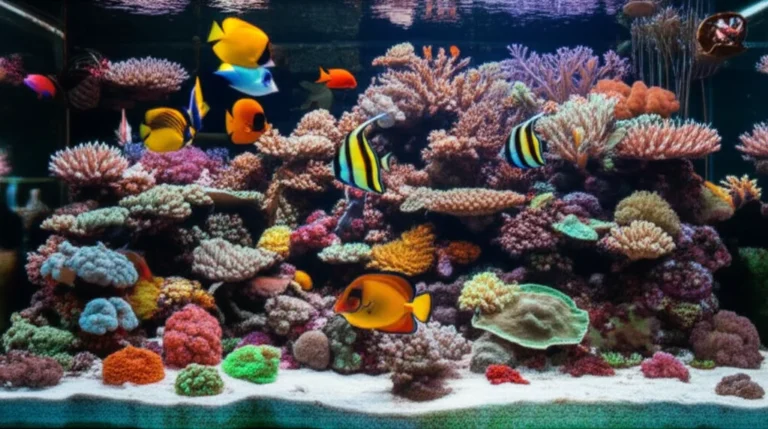
Ever stared at a vibrant coral reef on a documentary and thought, “I could do that in my living room”? You’re not alone. But here’s the twist: the ocean is a chaotic, beautiful mess, and trying to tame it in a glass box is where most beginners crash and burn. We’ve seen it happen a thousand times at Aquarium Music™—the excitement of buying the first clownfish, only to watch it fade away because the water chemistry was a ticking time bomb. Setting up a saltwater fish tank isn’t just about filling a tank with water; it’s about engineering a living, breathing ecosystem that can survive your mistakes.
In this comprehensive guide, we’re stripping away the jargon and giving you the 12-step blueprint we use to turn novices into reef masters. We’ll reveal the one piece of equipment you absolutely cannot skip (hint: it’s not the tank), expose the costly myths about “live rock,” and show you exactly how to cycle your tank without killing a single fish. Whether you’re dreaming of a nano reef on your desk or a massive display wall, the secrets to success lie in patience, precision, and knowing when to hold back.
Key Takeaways
- Patience is Your Best Filter: The nitrogen cycle takes 4–8 weeks; adding fish too soon is the #1 cause of failure.
- Water Quality is Non-Negotiable: Never use tap water; RODI water is essential to prevent toxic spikes.
- Start with Stability: A 20–30 gallon tank offers the perfect balance of stability and manageability for beginners.
- Invest in Testing: A refractometer and liquid test kits are more accurate than cheap strips and save lives.
- Don’t Rush the Stocking: Introduce livestock slowly, starting with hardy species like Ocellaris Clownfish and cleanup crews.
Table of Contents
- ⚡️ Quick Tips and Facts
- 🌊 From Freshwater Dreams to Saltwater Reality: A Brief History of the Home Reef
- 🧠 The Ultimate Saltwater Aquarium Setup Checklist: 12 Essential Steps for Beginners
- 1. Choosing the Right Tank Size and Shape for Your Space
- 2. Selecting the Perfect Stand and Ensuring Structural Integrity
- 3. Mastering the Sump vs. All-in-One Debate
- 4. Filtration Fundamentals: Protein Skimmers, Refugiums, and Mechanical Filtration
- 5. Lighting the Way: LED Fixtures for Coral Growth and Fish Health
- 6. Water Flow Dynamics: Powerheads, Wave Makers, and Circulation
- 7. The Art of Substrate Selection: Live Sand, Aragonite, and Bare Bottoms
- 8. Rockwork Mastery: Live Rock, Dry Rock, and Aquascaping Techniques
- 9. Salinity and Specific Gravity: Mixing Saltwater Like a Pro
- 10. The Nitrogen Cycle Demystified: Cycling Your Tank Before Adding Life
- 1. Stocking Strategy: The Order of Introduction for Fish and Invertebrates
- 12. Maintenance Routines: Water Changes, Testing, and Long-Term Care
- 💰 Beginner Saltwater Aquarium Cost Breakdown: Starter Tank Expenses Revealed
- 🐠 Top 7 Simple Beginner Tips for Starting a Saltwater Reef Aquarium Setup
- 🛠️ How to Maintain & Care for Your Basic Saltwater Aquarium: A Weekly Schedule
- 🚫 Common Saltwater Aquarium Mistakes to Avoid at All Costs
- 🧪 Water Chemistry 101: Understanding pH, Alkalinity, Calcium, and Magnesium
- 🐟 Best Saltwater Fish and Coral Species for Beginners
- 🎥 In This Video: Visualizing Your First Reef Tank Build
- 📝 Description: What You’ll Learn in This Comprehensive Guide
- 📜 Transcript: Key Takeaways from Our Expert Team’s Experience
- 📺 BRStv – Saltwater Aquariums & Reef Tanks: Recommended Viewing
- 🔍 How to Set Up a Saltwater Aquarium: Step-by-Step Beginner’s Guide Recap
- 📚 Saltwater Aquarium 101: Everything You Need to Know Before You Start
- Conclusion
- Recommended Links
- FAQ
- Reference Links
⚡️ Quick Tips and Facts
Welcome to the deep end, but don’t worry, we’ve got your life vest! Before you dive headfirst into the world of saltwater aquariums, let’s hit the pause button on the overwhelm. Setting up a marine tank is like conducting an orchestra; if one instrument is out of tune, the whole symphony sounds off.
Here are the non-negotiables we’ve learned from years of keeping reefs alive (and occasionally losing a few to our own hubris):
- Water is Everything: You cannot just use tap water. Tap water contains chloramines, heavy metals, and phosphates that will kill your livestock. You must use RODI (Reverse Osmosis Deionized) water or high-quality distilled water. Learn more about water preparation here.
- The Nitrogen Cycle is King: Never add fish until your tank has cycled. This biological process converts toxic ammonia into nitrite, and finally into less harmful nitrate. Skipping this is the #1 reason beginners fail.
- Patience is a Virtue: A new tank is not a “set it and forget it” project. It requires weekly testing and monthly water changes to thrive.
- Temperature Stability: Fluctuations are more dangerous than a slightly high temperature. Aim for a steady 76°F–78°F (24°C–26°C). For a deeper dive on thermal dynamics, check out our guide on 🌡️ The Ideal Water Temperature for a Tropical Fish Tank (2026).
- Lighting Matters: If you plan on keeping corals, your light isn’t just for show; it’s their food source.
Pro Tip: Many beginners ask, “Can I start with a 5-gallon tank?” While possible, we strongly recommend starting with at least a 15-20 gallon system. Smaller volumes are chemically unstable; a tiny spill or missed feeding can crash the whole system. Larger water volumes buffer against these errors.
🌊 From Freshwater Dreams to Saltwater Reality: A Brief History of the Home Reef

You might think the saltwater hobby is a modern invention, but the desire to bring the ocean into our living rooms dates back centuries. However, the home saltwater aquarium as we know it is a relatively young beast.
In the early 20th century, keeping marine life was the domain of the wealthy and the scientifically equipped. Without modern protein skimmers or LED lighting, keeping fish alive was a gamble. The breakthrough came in the 1980s and 90s with the introduction of live rock and the understanding of the nitrogen cycle in marine environments.
The “Berlin Method,” popularized in the 1980s, revolutionized the hobby by emphasizing live rock as the primary biological filter, reducing the need for complex mechanical filtration. This shifted the paradigm from “filtering the water” to “creating an ecosystem.”
Today, thanks to advancements in LED technology and automated dosing, the barrier to entry has never been lower. But the core philosophy remains: mimic nature. Whether you are looking at Aquarium Setup or Fish Care and Species Profiles, the goal is to replicate the delicate balance of the reef.
🧠 The Ultimate Saltwater Aquarium Setup Checklist: 12 Essential Steps for Beginners
Ready to build your underwater kingdom? We’ve broken down the process into 12 actionable steps. Don’t skip a single one, or you might find yourself staring at a tank full of cloudy water and sad fish.
1. Choosing the Right Tank Size and Shape for Your Space
The first decision is the most critical. Do you want a nano reef (under 20 gallons) or a full-sized display (5+ gallons)?
- Nano Tanks (10-20 gal): Great for small spaces, lower cost, but require more frequent maintenance due to low water volume.
- Standard Tanks (30-5 gal): The “Goldilocks” zone. Stable enough for beginners, large enough for a variety of fish.
- Large Tanks (75+ gal): High stability, but expensive and heavy.
Crucial Consideration: A 5-gallon tank weighs over 60 pounds when filled. Ensure your floor can support it!
2. Selecting the Perfect Stand and Ensuring Structural Integrity
Never place a saltwater tank on a flimsy table. Saltwater is corrosive, and the weight is immense.
- Material: Look for stands made of powder-coated steel or solid wood designed specifically for aquariums.
- Leveling: Use a bubble level. An unlevel tank can cause glass stress and eventual cracking.
- Stand Height: Ensure the stand is high enough to view the tank comfortably but low enough to reach the top for maintenance.
3. Mastering the Sump vs. All-in-One Debate
This is the eternal debate in the saltwater world.
- All-in-One (AIO): The tank and filter are in one unit.
Pros: Slek look, easy setup, great for beginners.
Cons: Limited filtration capacity, harder to upgrade. - Sump System: A secondary tank (usually in the stand) handles filtration.
Pros: Increases total water volume (stability), hides equipment, allows for advanced filtration (refugiums, skimmers).
Cons: More complex plumbing, higher cost.
Our Verdict: For a first-timer, a high-quality AIO like the Red Sea REFER or Fluval Sea is often the best starting point. If you plan to get serious about corals later, a sump is the way to go.
4. Filtration Fundamentals: Protein Skimmers, Refugiums, and Mechanical Filtration
Saltwater tanks need robust filtration.
- Protein Skimmer: The heart of a reef tank. It removes organic waste before it breaks down into nitrates.
- Refugium: A separate chamber (often in a sump) growing macroalgae (like Chaetomorpha) that absorbs nitrates and phosphates.
- Mechanical Filtration: Filter socks or sponges to catch debris.
Wait, do I need a skimmer? If you are keeping only fish, you might get by without one initially. But if you want corals, a skimmer is mandatory.
5. Lighting the Way: LED Fixtures for Coral Growth and Fish Health
Lighting is the most expensive part of a reef tank, but it’s non-negotiable for corals.
- LEDs: The industry standard. Energy-efficient, low heat, and customizable spectra.
- PAR (Photosynthetically Active Radiation): The measure of light available for photosynthesis. Corals need specific PAR levels.
- Brand Recommendations: Radion XR30, Kessil A360, or AI Hydra.
| Feature | T5 Fluorescent | Metal Halide | LED (Modern) |
|---|---|---|---|
| Energy Efficiency | Low | Very Low | High |
| Heat Output | Medium | High | Low |
| Spectrum Control | Limited | Limited | Full Customization |
| Lifespan | 12-18 months | 12-18 months | 50,0+ hours |
| Cost | Medium | High | Medium-High |
6. Water Flow Dynamics: Powerheads, Wave Makers, and Circulation
Stagnant water is dead water. You need laminar flow (smooth) and turbulent flow (random) to mimic the ocean.
- Return Pump: Moves water from the sump back to the display.
- Powerheads/Wavemakers: Create flow inside the tank.
- Goal: Aim for 20-50x the tank volume in flow per hour.
7. The Art of Substrate Selection: Live Sand, Aragonite, and Bare Bottoms
- Live Sand: Contains beneficial bacteria and microfauna. Essential for a natural look.
- Aragonite: A calcium carbonate sand that helps buffer pH.
- Bare Bottom: Easiest to clean, but lacks the biological benefits of sand.
Tip: Don’t overthink the depth. A 1-2 inch layer of aragonite sand is perfect for beginners.
8. Rockwork Mastery: Live Rock, Dry Rock, and Aquascaping Techniques
Rock is the skeleton of your reef.
- Live Rock: Harvested from the ocean, packed with bacteria. Expensive and can introduce pests.
- Dry Rock: Sterile, cheaper, and you “seed” it with bacteria.
- Aquascaping: Build caves and overhangs. Use aquarium-safe epoxy or super glue gel to secure rocks.
9. Salinity and Specific Gravity: Mixing Saltwater Like a Pro
You need a refractometer (not a hydrometer!) to measure salinity accurately.
- Target: 1.025 specific gravity (35 ppt).
- Mixing: Always mix salt in a separate bucket with a powerhead before adding to the tank. Never dump salt directly into the display!
10. The Nitrogen Cycle Demystified: Cycling Your Tank Before Adding Life
This is the step where most people rush and fail.
- Add amonia source (fish food or pure ammonia).
- Wait for amonia to spike, then drop.
- Wait for nitrite to spike, then drop.
- Wait for nitrate to appear.
- Zero ammonia and nitrite means you are ready!
- Timeframe: 4-8 weeks.
- Accelerant: Use a bacterial starter like Seachem Stability or Dr. Tim’s One & Only.
1. Stocking Strategy: The Order of Introduction for Fish and Invertebrates
Don’t buy everything at once!
- Cleanup Crew: Snails and hermit crabs (wait 2-4 weeks after cycling).
- Hardy Fish: Clownfish, Gobies, Blennies.
- Invertebrates: Shrimp, Crabs.
- Corals: Start with hardy LPS (Large Polyp Stony) or SPS (Small Polyp Stony).
12. Maintenance Routines: Water Changes, Testing, and Long-Term Care
- Weekly: Test water (Amonia, Nitrite, Nitrate, pH, Salinity).
- Bi-Weekly: 10-20% water change with RODI water.
- Monthly: Clean protein skimmer, rinse filter socks, check equipment.
💰 Beginner Saltwater Aquarium Cost Breakdown: Starter Tank Expenses Revealed
Let’s talk money. Saltwater tanks are an investment, but they don’t have to bankrupt you. Here is a realistic breakdown for a 20-30 gallon starter system.
| Item | Estimated Cost Range | Notes |
|---|---|---|
| Tank & Stand | $20 – $40 | AIO kits often include these. |
| Lighting | $150 – $40 | LED is essential. |
| Filtration (Skimmer/Pump) | $150 – $30 | Can be integrated in AIO. |
| Heater & Thermometer | $30 – $60 | Get a reliable digital one. |
| Substrate & Rock | $10 – $20 | Live rock is pricey; dry rock is cheaper. |
| Water Prep (RODI Unit) | $150 – $30 | Or buy bottled RODI water. |
| Test Kits | $40 – $80 | Salinity, Amonia, Nitrite, Nitrate, pH. |
| Salt Mix | $40 – $60 | For initial fill and changes. |
| Livestock | $10 – $30 | Depends on species chosen. |
| Total | $920 – $2,140 | Excludes ongoing costs. |
Note: You can save money by buying used equipment, but be wary of tanks with cracks or old, degraded silicone.
🐠 Top 7 Simple Beginner Tips for Starting a Saltwater Reef Aquarium Setup
- Start Small, Think Big: A 20-gallon tank is easier to manage than a 5-gallon. Master the small one first.
- Invest in a Refractometer: Hydrometers lie. A refractometer tells the truth about your salinity.
- Don’t Overfeed: This is the #1 cause of water quality issues. Feed once a day, and only what they can eat in 2 minutes.
- Use Frozen Food: Frozen Mysis shrimp and Brine shrimp are superior to pellets. They don’t cloud the water.
- Redundancy is Key: Have a backup heater and a temperature controller (like Inkbird) to prevent overheating or freezing.
- Join a Community: The Ref2Ref forums and local fish clubs are invaluable.
- Patience, Patience, Patience: If you rush, you lose. Let the tank mature for 3-6 months before adding sensitive corals.
🛠️ How to Maintain & Care for Your Basic Saltwater Aquarium: A Weekly Schedule
Consistency is the secret sauce. Here is a sample schedule:
| Day | Task |
|---|---|
| Monday | Visual inspection, check equipment, top off evaporated water with RODI. |
| Wednesday | Test water parameters (Amonia, Nitrite, Nitrate, pH, Salinity). |
| Friday | Feed variety (frozen + pellets), clean protein skimmer cup. |
| Sunday | Water Change: 10-20% with pre-mixed, temperature-matched saltwater. |
Monthly Tasks:
- Rinse mechanical filter media (in tank water, never tap water!).
- Check rockwork for stability.
- Inspect corals for signs of stress (bleaching, shrinking).
🚫 Common Saltwater Aquarium Mistakes to Avoid at All Costs
- Adding Fish Too Soon: The “New Tank Syndrome” kills more fish than anything else. Wait for the cycle to complete.
- Using Tap Water: Even if it looks clean, it contains chemicals that kill beneficial bacteria.
- Overstocking: A 20-gallon tank is not a 10-gallon tank. Research the adult size of your fish.
- Ignoring Flow: Dead spots lead to algae and detritus buildup.
- Mixing Salt Directly in the Tank: This causes localized high salinity that can burn corals and fish.
🧪 Water Chemistry 101: Understanding pH, Alkalinity, Calcium, and Magnesium
If you are keeping corals, you need to understand the “Big Three” (plus pH).
- pH: Should between 8.1 and 8.4.
- Alkalinity (dKH): The buffer that stabilizes pH. Target 7-9 dKH.
- Calcium (Ca): Essential for coral skeletons. Target 40-450 ppm.
- Magnesium (Mg): Stabilizes calcium and alkalinity. Target 1250-1350 ppm.
Testing Tip: Use liquid test kits (like Salifert or Red Sea) rather than strips for accuracy.
🐟 Best Saltwater Fish and Coral Species for Beginners
Top 5 Beginner Fish
- Ocellaris Clownfish: Hardy, colorful, and iconic.
- Royal Grama: Beautiful, small, and peaceful.
- Firefish Goby: Stunning colors, but jumpers (need a lid!).
- Blenny: Great algae eaters, personality-packed.
- Damselfish: Caution: Very hardy but can be aggressive. Good for “hardening” a tank, but maybe not for a peaceful community.
Top 5 Beginner Corals
- Zoanthids: Extremely hardy, come in many colors.
- Mushroom Corals: Very forgiving, great for low light.
- Leather Corals: Tough, can handle fluctuating water params.
- Bubble Coral: Fun to watch, hardy.
- Torch Coral (Euphyllia): Beautiful, but needs moderate flow and light.
🎥 In This Video: Visualizing Your First Reef Tank Build
Check out the visual guide below to see a 15-gallon desktop tank come to life!
Featured Video: Setting Up Your First Saltwater Aquarium
In this video, we walk through the entire process of setting up a Hello Reef style 15-gallon tank. You’ll see exactly how to:
- Position the tank for optimal viewing and safety.
- Layer the sand and rockwork to create hiding spots.
- Install the return pump and wavemaker.
- Mix saltwater to the perfect 35 ppt salinity.
- Cycle the tank in just 8 days using a bacterial starter.
- Introduce your first Ocellaris Clownfish and Cleanup Crew.
Key Takeaway: The video emphasizes that while the setup looks complex, breaking it down into small steps makes it manageable. Remember, the tank in the video is a 15-gallon system, perfect for small spaces, but the principles apply to any size.
📝 Description: What You’ll Learn in This Comprehensive Guide
This guide is your roadmap from “I want a fish tank” to “I have a thriving reef.” We cover everything from the history of the hobby to the nitty-gritty of water chemistry. You’ll learn how to choose the right equipment, avoid common pitfalls, and select the perfect livestock. Whether you are a total novice or someone who has tried and failed, this guide will give you the confidence to succeed.
📜 Transcript: Key Takeaways from Our Expert Team’s Experience
At Aquarium Music™, we’ve seen it all. Here are our top takeaways:
- Water Quality is Non-Negotiable: If your water isn’t perfect, nothing else matters.
- Don’t Trust Your Eyes: Use test kits. Clear water can still be toxic.
- Community is Vital: Join forums, ask questions, and learn from others’ mistakes.
- Patience Pays Off: A mature tank is a stable tank. Don’t rush the cycle.
- Enjoy the Journey: The hobby is about the process, not just the result.
📺 BRStv – Saltwater Aquariums & Reef Tanks: Recommended Viewing
For those who love video content, BRStv (Bulk Reef Supply TV) is the gold standard.
- Why Watch? They cover everything from equipment reviews to advanced reefing techniques.
- Must-Watch Series: “Saltwater Aquarium 101” and “Refing with the Pros.”
- Community: Join their Facebook group for real-time advice.
🔍 How to Set Up a Saltwater Aquarium: Step-by-Step Beginner’s Guide Recap
Let’s recap the journey:
- Plan: Choose your tank size and location.
- Equip: Buy the right gear (tank, stand, light, filter, heater).
- Setup: Assemble the tank, add sand, rock, and water.
- Cycle: Wait for the nitrogen cycle to complete.
- Stock: Add fish and corals slowly.
- Maintain: Test, clean, and water change regularly.
📚 Saltwater Aquarium 101: Everything You Need to Know Before You Start
Before you buy that first fish, ask yourself:
- Do I have the space?
- Can I commit to weekly maintenance?
- Do I have the budget for equipment and ongoing costs?
- Am I ready to learn about water chemistry?
If you answered “Yes” to all, you are ready to dive in!
Conclusion

Setting up a saltwater fish tank is one of the most rewarding hobbies you can pursue. It brings the beauty of the ocean into your home, but it demands respect, patience, and dedication. As we’ve seen, the key to success lies in preparation, patience, and consistent maintenance.
Our Final Recommendation:
Start with a 20-30 gallon All-in-One system if you are a complete beginner. It offers the perfect balance of stability and manageability. Invest in a refractometer, a quality LED light, and a protein skimmer. Don’t rush the nitrogen cycle, and always test your water.
Remember, every expert was once a beginner who didn’t give up. Whether you end up with a tank full of clownfish or a vibrant reef ecosystem, the journey is worth it.
Ready to start your journey? Check out our recommended products below and join the Aquarium Music™ community!
Recommended Links
Essential Equipment:
- All-in-One Tanks: Red Sea REFER Series | Fluval Sea Reef | Red Sea Official Site
- LED Lighting: Radion XR30 G5 | Kessil A360 | AI Hydra
- Protein Skimmers: Ref Octopus | Bubble Magus
- Test Kits: Salifert Test Kit | Red Sea Reef Care
- Salt Mix: Ref Crystals | Instant Ocean
Books & Resources:
- The Reef Aquarium by Julian Sprung: Amazon Link
- Saltwater Aquariums for Beginners by Bob Fener: Amazon Link
FAQ

What is the best saltwater fish tank size for beginners?
Answer: We recommend a 20-30 gallon tank. It’s large enough to be stable (buffering against water parameter swings) but small enough to fit in most homes and be affordable. Nano tanks (under 10 gallons) are possible but require expert-level maintenance.
Read more about “🐠 7 Best Fish Tank Sizes for Your Home Aquarium (2026)”
How long does the nitrogen cycle take for a new saltwater tank?
Answer: Typically 4 to 8 weeks. You cannot rush this process. Adding fish before the cycle is complete will result in ammonia poisoning and death. Use bacterial starters to potentially shorten this time, but never skip the waiting period.
Read more about “🐠 Freshwater vs. Saltwater: 5 Tank Types & Your Perfect Match (2026)”
What live rock should I buy for my first saltwater aquarium?
Answer: For beginners, dry rock is often the best choice. It’s cheaper, sterile (no pests), and you can “seed” it with beneficial bacteria. If you want instant biological filtration, live rock is great, but be prepared for potential pest outbreaks.
Read more about “🌡️ The Ideal Water Temperature for a Tropical Fish Tank (2026)”
How much does it cost to start a saltwater fish tank?
Answer: A basic 20-30 gallon setup will cost between $90 and $2,0 initially. This includes the tank, equipment, water prep, and livestock. Ongoing monthly costs (food, salt, electricity) are around $50-$10.
Read more about “🐟 15 Cichlid Aquarium Secrets: Build the Ultimate Tank (2026)”
What are the easiest saltwater fish for beginners to keep?
Answer: Ocellaris Clownfish, Royal Grama, Firefish Goby, and Blennies are among the hardiest. Avoid aggressive species like large damsels or predatory fish until you have experience.
Read more about “What Are the 15 Best Fish for a Beginner’s Tank? 🐠 (2026)”
Do I need a protein skimmer for a beginner saltwater tank?
Answer: If you are keeping only fish, you might get by without one initially. However, if you plan to keep corals or want the best water quality, a protein skimmer is highly recommended. It removes organic waste before it breaks down into nitrates.
Read more about “🌊 15 Secrets to Mastering Aquatic Life & Habitat Creation (2026)”
How often should I test water parameters in a new saltwater aquarium?
Answer: During the cycling phase, test daily for ammonia and nitrite. Once cycled, test weekly for ammonia, nitrite, nitrate, pH, and salinity. If you keep corals, test alkalinity, calcium, and magnesium weekly as well.
What is the difference between a sump and an all-in-one tank?
Answer: An All-in-One (AIO) tank has the filtration built into the back of the display. A Sump is a separate tank (usually in the stand) that handles filtration. Sumps offer more stability and flexibility but are more complex to set up.
Can I use tap water for my saltwater tank?
Answer: No. Tap water contains chloramines, heavy metals, and phosphates that are harmful to marine life. You must use RODI (Reverse Osmosis Deionized) water or high-quality distilled water.
Read more about “🌊 12 Secrets to Perfect Discus Fish Care (2026)”
Reference Links
- Bulk Reef Supply (BRStv): Saltwater Aquarium Setup Guide
- Ref2Ref Forum: The Supreme Guide To Setting Up A Saltwater Reef Aquarium
- National Ocean Service: Coral Reef Conservation Program
- Aquarium Co-Op: Saltwater Aquarium Basics
- Marine Depot: Beginer Saltwater Aquarium Guide
- Red Sea: Ref Care Program
- Seachem: Stability Product Info
- Dr. Tim’s: One & Only Bacteria