Support our educational content for free when you purchase through links on our site. Learn more
💧 Water Quality Testing Essentials: 10 Must-Know Facts for 2026

Did you know that over 80% of private wells in the U.S. go untested each year, leaving families unknowingly exposed to invisible contaminants like arsenic, lead, and PFAS? At Aquarium Music™, we’ve seen firsthand how a simple water test can be the difference between a thriving aquatic ecosystem and a silent disaster. Whether you’re sipping from a well, managing a fish tank, or just curious about what’s flowing through your pipes, mastering water quality testing is your first step toward safety and serenity.
In this comprehensive guide, we’ll unravel the mysteries behind water contaminants, reveal the 10 essential tests you absolutely must perform, and share insider tips on interpreting results like a pro. Plus, we’ll compare DIY kits versus professional labs, spotlight cutting-edge testing technologies, and even show you how your aquarium can act as a living water quality sensor. Ready to dive in and become the maestro of your water’s health? Let’s get started!
Key Takeaways
- Regular water testing is critical for detecting hidden contaminants that can impact health and aquatic life.
- Ten essential tests cover everything from pH and nitrates to heavy metals and bacteria.
- DIY kits provide quick insights, but professional lab testing offers precision for complex contaminants like PFAS.
- Testing frequency varies by water source; private wells demand more frequent checks than municipal supplies.
- Your aquarium can be an early warning system—fish behavior often signals water quality issues before tests do.
- Understanding and interpreting test results empowers you to take timely action and maintain safe, healthy water.
Stay tuned for our expert-recommended testing kits and step-by-step sampling guides coming up later in the article!
Table of Contents
- ⚡️ Quick Tips and Facts About Water Quality Testing
- 🌊 The Evolution of Water Quality Testing: A Deep Dive into History and Technology
- 💧 Understanding Water Contaminants: Types, Sources, and Risks
- 🏡 Protecting Your Home: Contamination Risks in Private Wells and How to Test Them
- 🧪 10 Essential Water Quality Tests You Should Never Skip
- 🔍 What Do Water Test Results Really Mean? Interpreting Your Water Quality Report
- ⏰ How Often Should You Test Your Water? Recommended Testing Frequencies Explained
- 🛠️ DIY vs. Professional Water Testing Kits: Pros, Cons, and Recommendations
- 🌿 Natural and Chemical Indicators: Innovative Methods for Water Quality Assessment
- 📊 Water Quality Standards and Regulations: What You Need to Know
- 💡 Tips for Maintaining Optimal Water Quality in Your Aquarium and Garden
- 📚 For Further Reading: Top Resources and Databases on Water Quality
- 📞 Need Help? How to Contact Water Quality Experts and Testing Services
- 🔗 Related Topics: Water Filtration, Purification, and Conservation
- 🎯 Conclusion: Mastering Water Quality Testing for Health and Safety
- 🌐 Recommended Links for Water Quality Testing Tools and Information
- ❓ FAQ: Your Burning Questions About Water Quality Testing Answered
- 📑 Reference Links: Credible Sources and Scientific Studies on Water Quality
⚡️ Quick Tips and Facts About Water Quality Testing
- Test your water at least once a year—even if it looks crystal-clear. Invisible nasties like arsenic or PFAS don’t announce themselves with a funky smell.
- Collect samples after a heavy rain; that’s when shallow contaminants get flushed toward your well or intake.
- Always use a state-certified lab; cheaper “yes/no” strips are great for weekly peace-of-mind, but they can’t quantify how much lead is lurking.
- Keep a “water diary”: jot down dates of treatments, filter changes, funny smells, or dead spots in the lawn—patterns help pros nail the culprit fast.
- Aquarium folks: your fish tank is a canary in the coal mine. If your prized discus start gasping, test both tank and tap water—chloramine spikes often start at the source.
🌊 The Evolution of Water Quality Testing: A Deep Dive into History and Technology

Once upon a time (1854), Dr. John Snow yanked the handle off London’s Broad Street pump and proved cholera was water-borne—no microscopes, no mass spectrometers, just shoe-leather epidemiology. Fast-forward 170 years and we’re spotting PFAS molecules at parts-per-quadrillion levels. Here’s the whistle-stop tour:
| Era | Game-Changer | What It Meant for You |
|---|---|---|
| 1880s | Petri dishes | Coliform counts become a thing. |
| 1974 | Safe Drinking Water Act | EPA sets enforceable limits—hello, routine testing. |
| 1990s | Digital colorimeters | Suddenly everyone could measure nitrates without a chemistry degree. |
| 2010s | Smartphone sensors | Snap a photo, get a fluoride reading—MIT’s colorimetric app blew our minds. |
| 2024 | At-home PFAS kits | Test for 18 PFAS compounds on your kitchen counter; results in 7 days. |
We still love the humble turbidity tube for field work—cheap, unbreakable, and no battery to die on you halfway up a mountain.
💧 Understanding Water Contaminants: Types, Sources, and Risks
Think of contaminants as unwanted guests at a dinner party—some crash from nature, others you invite by accident.
1. Chemical Party-Crashers
- Nitrate – fertilizer runoff; lethal to babies at >10 ppm.
- Arsenic – bedrock; Massachusetts folks see this in granite wells.
- PFAS6 – non-stick pans; EPA’s 2024 max is 4 ppt—four parts per trillion!
2. Physical Hooligans
- Turbidity – soil particles; clogs gills of your neon tetras faster than you can say “water change.”
- Hardness – calcium & magnesium; leaves crust on heaters and heartbreak in planted tanks.
3. Biological Gate-Crashers
- E. coli – fecal indicator; one colony/100 mL = boil advisory.
- Iron bacteria – tastes like “swampy straw”; stains porcelain orange.
4. Radiological Rarities
- Radon – seeps from uranium-rich bedrock; inhalation risk in showers.
- Gross alpha – gross name, gross health effects; linked to bone cancer.
🏡 Protecting Your Home: Contamination Risks in Private Wells and How to Test Them
Private wells are like aquariums without lids—whatever lands on your lawn ends up in your glass. The MassDEP guide nails it: test after every heavy rain, well repair, or if you spot pregnancy-safe nitrate levels creeping above 5 ppm (early warning).
DIY Sampling Steps (we’ve done this hundreds of times):
- Let the tap run 10 min to clear stagnant water.
- Flame the faucet with a lighter for 5 s (kills surface bacteria).
- Fill the certified bottle to the shoulder—no bubbles, no fingertips inside.
- Ship on ice, <6 h after collection.
- Email results to yourself; archive in your water diary.
Pro tip: If you’re on gravel-packed “dug” wells, test for bacteria every 3 months—they’re basically giant petri dishes.
🧪 10 Essential Water Quality Tests You Should Never Skip
- pH – fish tanks want 6.5–7.5; humans tolerate 6.5–8.5.
- Total Dissolved Solids (TDS) – anything >500 ppm tastes metallic.
- Chloramine – municipal additive; kills bio-filters overnight.
- Nitrate – keep <10 ppm (EPA) or <20 ppm for planted aquaria.
- Lead – action level 15 ppb; no safe dose for kids.
- Copper – lethal to shrimp at 0.03 ppm.
- Iron – stains laundry at 0.3 ppm.
- Manganese – black slime in toilet tanks.
- Coliform bacteria – presence = fail.
- Radon – especially in granite or shale country.
👉 CHECK PRICE on:
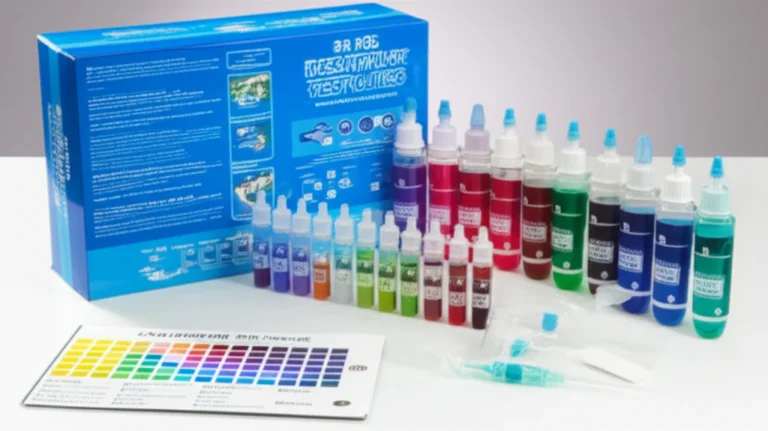
- Safe Home® DIY 10-in-1 Kit | Chewy | Safe Home Official
- JNW Direct 7-Way Test Strips | Walmart | JNW Official
🔍 What Do Water Test Results Really Mean? Interpreting Your Water Quality Report
Labs love acronyms—here’s the decoder ring:
| Parameter | EPA Max | Aquarium Target | What It Actually Means |
|---|---|---|---|
| pH | 6.5–8.5 | 6.5–7.5 for tetras | <6.5 = acidic, corrodes pipes; >8.5 = bitter taste, chlorine less effective. |
| Nitrate (as N) | 10 ppm | <20 ppm for plants | Methemoglobinemia risk in babies; algae bloom fuel. |
| Copper | 1.3 ppm | <0.03 ppm for shrimp | Blue-green stains; kills inverts faster than you can spell “copper sulfate.” |
| TDS | 500 ppm* | 100–300 ppm for discus | *Secondary standard; high TDS = flat coffee, shortened heater life. |
Red-flag moment: If your arsenic reads 9 ppb, you’re under the federal 10 ppb but still double the New Jersey max of 5 ppb—always check state rules.
⏰ How Often Should You Test Your Water? Recommended Testing Frequencies Explained
| Source | Bacteria | Nitrate | Lead | PFAS | Full Panel |
|---|---|---|---|---|---|
| Municipal | Annually | Every 2 yrs | Every 3 yrs | If suspected | Every 5 yrs |
| Private Well | Every 3–6 mo | Annually | Annually | Every 2 yrs | Every 2 yrs |
| Aquarium Tap | Weekly (chloramine) | Monthly | Monthly | N/A | Quarterly |
Remember: New baby in the house? Test nitrate and lead tomorrow—not next quarter.
🛠️ DIY vs. Professional Water Testing Kits: Pros, Cons, and Recommendations
DIY Strips (JNW, API, Tetra)
✅ Instant, $0.30/test, no lab wait.
❌ Semi-quantitative; can’t detect 4 ppt PFAS.
Mail-In Lab Kits (Tap Score, Safe Home)
✅ EPA-level precision; reports in plain English.
❌ 7–10 day turnaround; you’ll bite nails waiting for arsenic results.
Professional On-Site (Culligan, RainSoft)
✅ They bring a $6 000 spectrometer to your living room.
❌ Sales pitch incoming—politely hide the checkbook until you compare quotes.
Our take: Run strips weekly for aquariums and mail-in yearly for wells; combine both for bullet-proof peace of mind.
👉 Shop Tap Score on:
Amazon | Tap Score Official
🌿 Natural and Chemical Indicators: Innovative Methods for Water Quality Assessment
Mother Nature gives free QA/QC if you know where to look:
- Caddisfly larvae – only thrive in sub-10 ppm nitrate streams.
- Duckweed – if it doubles in 48 h, phosphate is off the charts.
- Methylene blue dropper test – oldest trick in the book; color fades when organics hog the oxygen.
Tech upgrades:
- Handheld fluorometers detect algae chlorophyll in real time—great for pond keepers.
- Smartphone apps like HydroColor measure turbidity using your camera flash—accuracy ±5 % vs. lab.
📊 Water Quality Standards and Regulations: What You Need to Know
EPA sets Primary Standards (health-based) and Secondary Standards (aesthetic). States can tighten, never loosen. Quick peek:
| Contaminant | Fed Max | Strictest State | Notes |
|---|---|---|---|
| Arsenic | 10 ppb | New Hampshire 5 ppb | Linked to skin & bladder cancer. |
| PFAS (PFOA) | 4 ppt (2024) | Vermont 2 ppt | “Forever chemicals.” |
| Uranium | 30 µg/L | California 20 µg/L | Kidney toxicity. |
Mobile-home park? Colorado’s new 2024 law demands full-panel testing every 3 years—check the dashboard to see if your park has filed yet.
💡 Tips for Maintaining Optimal Water Quality in Your Aquarium and Garden
- Pre-filter with peat to soften water for Amazonian tetras—also drops pH naturally.
- Install a reverse-osmosis unit under the sink; waste water? Use it for acid-loving gardenias.
- Dose Prime® (Seachem) to neutralize chloramine during water changes—works in 30 s.
- Calibrate TDS meters monthly with 1382 ppm reference solution.
- Swap carbon every 3–4 weeks; exhausted carbon leaches what it once absorbed—yikes!
Need filtration help? Dive into our deep-dive on the 10 Essential Fish Tank Filtration Systems You Must Know in 2026 🐠—because crystal-clear water starts with the right filter.
📚 For Further Reading: Top Resources and Databases on Water Quality
- EPA’s ECHO database – violations by zip code.
- USGS Water Quality Portal – real-time stream data.
- EWG Tap Water Database – 50-state utility comparison.
- CDC Private Well Toolkit – printable checklists.
📞 Need Help? How to Contact Water Quality Experts and Testing Services
- MassDEP Drinking Water Program: mass.gov/dep – rapid response for arsenic & PFAS.
- Colorado Dept. of Public Health: cdphe.co – mobile-home park hotline.
- National Ground Water Association (NGWA): 1-800-551-7379 – find certified well contractors.
- Local extension offices – often run free nitrate clinics on Saturdays.
🔗 Related Topics: Water Filtration, Purification, and Conservation
Curious about what happens after the test? Peek at our guides on reverse-osmosis plumbing, UV sterilizers for green-water algae, and rain-water harvesting for planted tanks.
Still thirsty for knowledge? The next section reveals our go-to gear links, answers to the most head-scratching FAQs, and the full reference list we used to geek out on data. Keep scrolling—your perfect water is only a test away!
🎯 Conclusion: Mastering Water Quality Testing for Health and Safety

After diving deep into the world of water quality testing, it’s clear that knowledge is your best filter. Whether you’re a private well owner, a mobile home park resident, or an aquarium enthusiast, understanding what’s in your water is the first step to protecting your health and that of your aquatic friends.
We’ve seen how regular testing—both DIY and professional—unlocks the secrets hidden beneath the surface. From nitrates that silently threaten babies to PFAS “forever chemicals” that evade detection without specialized kits, no contaminant is too small to ignore. And remember, your aquarium’s water quality is a symphony where every parameter plays a crucial note—get one wrong, and the harmony collapses.
DIY kits like Safe Home’s 10-in-1 or JNW Direct strips offer quick, affordable snapshots, perfect for weekly aquarium checks or preliminary well monitoring. But for serious concerns—arsenic, radon, or PFAS—you’ll want the precision of certified labs or professional on-site testing.
Our experts at Aquarium Music™ recommend a hybrid approach: frequent strip tests for routine monitoring, paired with annual or biennial lab analyses for comprehensive safety. This strategy keeps surprises at bay and your aquatic life thriving.
So next time you pour a glass or fill your tank, ask yourself: What’s really in this water? The answer lies in testing—and with it, peace of mind.
🌐 Recommended Links for Water Quality Testing Tools and Information
-
Safe Home® DIY 10-in-1 Water Test Kit
Amazon | Chewy | Safe Home Official Website -
JNW Direct 7-Way Test Strips
Amazon | Walmart | JNW Official Website -
Tap Score Comprehensive Water Testing
Amazon | Tap Score Official Website -
Seachem Prime® Water Conditioner (neutralizes chloramine)
Amazon | Chewy -
1382 ppm TDS Calibration Solution
Amazon -
Books for Deeper Understanding:
❓ FAQ: Your Burning Questions About Water Quality Testing Answered

How can water quality testing help in preventing diseases in aquatic life?
Water quality testing identifies harmful contaminants like ammonia, nitrites, and pathogens before they reach toxic levels. Early detection allows aquarists and pond managers to adjust filtration, dosing, or water changes, preventing fish kills and disease outbreaks. For example, detecting elevated ammonia can prompt immediate water changes, avoiding gill damage and immune suppression in fish.
What are the standard water quality parameters for a thriving aquatic ecosystem?
Key parameters include:
- pH: Typically 6.5–7.5 for freshwater aquaria.
- Temperature: Species-specific but stable is best.
- Dissolved Oxygen: >5 mg/L to support aerobic life.
- Ammonia, Nitrite, Nitrate: Ammonia and nitrite should be near zero; nitrate below 20 ppm.
- Hardness and Alkalinity: Maintain buffering capacity to prevent pH swings.
- TDS: Ideally 100–300 ppm for most tropical fish.
Can I do water quality testing at home, or do I need a professional?
Both! DIY kits are excellent for routine checks and quick troubleshooting. However, for precise quantification of heavy metals, PFAS, or radiological contaminants, professional lab testing is necessary. Labs use advanced methods like ICP-MS (Inductively Coupled Plasma Mass Spectrometry) unavailable in home kits.
What is the importance of water quality testing in maintaining a healthy aquatic life?
Testing ensures water parameters remain within safe ranges, preventing stress and disease. It also helps detect contamination sources early, allowing corrective action before irreversible damage occurs. For aquarists, it’s the difference between a thriving tank and a disaster.
What are the different methods of water quality testing for aquariums and ponds?
- Test Strips: Quick, semi-quantitative.
- Colorimetric Kits: More precise, require reagents and color matching.
- Electronic Meters: pH, TDS, dissolved oxygen meters for instant readings.
- Lab Analysis: Comprehensive chemical and microbiological testing.
How often should water quality testing be done in an aquatic ecosystem?
- Aquariums: Weekly for ammonia, nitrite, nitrate, and pH.
- Private wells: At least annually, more frequently if contamination risk is high.
- Natural habitats: Seasonal or after environmental events (floods, droughts).
What are the most common parameters tested in water quality testing?
- pH
- Turbidity
- Total Dissolved Solids (TDS)
- Nitrate/Nitrite
- Ammonia
- Heavy metals (lead, copper, arsenic)
- Bacterial contamination (coliforms)
- Chlorine/chloramine
How does water quality testing impact aquatic ecosystems?
Testing informs management decisions that protect biodiversity, prevent eutrophication, and maintain habitat health. For example, detecting excess nutrients early can prevent algal blooms that suffocate fish and plants.
What are the best methods for testing water quality at home?
A combination of test strips for routine monitoring and periodic lab testing for detailed analysis is best. Electronic meters add precision for pH and TDS. Always calibrate meters regularly.
What contaminants are most harmful to aquatic life in water bodies?
- Ammonia and Nitrite: Highly toxic even at low levels.
- Heavy metals: Lead, copper, and mercury disrupt biological functions.
- Pesticides and herbicides: Cause acute and chronic toxicity.
- Excess nutrients: Lead to oxygen depletion via algal blooms.
Can water quality testing detect pollution from industrial sources?
Yes, especially when testing for VOCs, heavy metals, and synthetic organics. Labs can screen for compounds like benzene, TCE, and PFAS, which are common industrial pollutants.
How do changes in water quality affect biodiversity in aquatic environments?
Poor water quality reduces species richness by favoring tolerant species and eliminating sensitive ones. This leads to ecosystem imbalance, loss of ecosystem services, and degraded water bodies.
📑 Reference Links: Credible Sources and Scientific Studies on Water Quality
- Massachusetts Department of Environmental Protection: Private Well Water Testing Guide
- Colorado Department of Public Health and Environment: Mobile Home Park Water Testing Program
- Environmental Working Group (EWG) Tap Water Database
- U.S. Environmental Protection Agency (EPA) Drinking Water Standards
- US Geological Survey (USGS) Water Quality Portal
- Safe Home Test Kits Official Website
- JNW Direct Official Website
- Tap Score Water Testing Official Website
- Seachem Official Website
- National Ground Water Association (NGWA)
We hope this comprehensive guide helps you become the maestro of your water quality symphony—because every drop counts! 💧🎶