Support our educational content for free when you purchase through links on our site. Learn more
🌊 Mastering the Marine Aquarium: Your 2026 Guide to a Thriving Reef


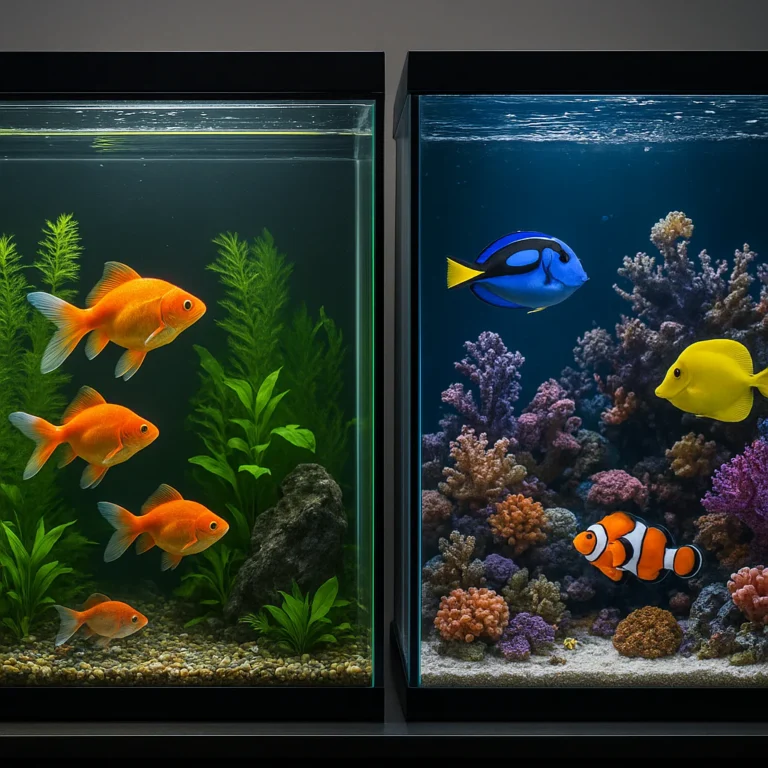
Imagine a world where the ocean’s vibrant chaos is tamed into a symphony of color and movement right in your living room. That is the magic of a marine aquarium, a hobby that has evolved from keeping a single, struggling fish in a jar to cultivating complex, self-sustaining coral ecosystems. But here is the secret that most beginners miss: the difference between a thriving reef and a graveyard isn’t the price of your tank; it’s your understanding of water chemistry and patience. We’ve seen tanks crash because someone rushed the nitrogen cycle, and we’ve seen $50 nano tanks flourish because the owner respected the biology.
In this comprehensive guide, we’re diving deep into the art and science of saltwater keeping. From selecting the perfect live rock to mastering the elusive balance of alkalinity and calcium, we’ll walk you through every step of the journey. We’ll reveal the 8 common mistakes that silently kill fish, introduce you to the top 10 beginner-friendly fish that won’t nible your corals, and show you how to troubleshoot those stubborn red slime algae outbreaks. Whether you are dreaming of a massive SPS reef or a cozy nano tank, this is your roadmap to success.
Key Takeaways
- Stability is King: Unlike freshwater, marine systems demand consistent water parameters; fluctuations in salinity, pH, or alkalinity are the leading cause of livestock loss.
- Patience Pays Off: A proper nitrogen cycle takes 4–8 weeks; skipping this step is the fastest way to lose your first fish to “New Tank Syndrome.”
- Quarantine is Non-Negotiable: Always isolate new arrivals for at least two weeks to prevent disease outbreaks like Ich or Velvet from decimating your established tank.
- Invest in Quality Water Prep: Never use tap water; a RO/DI unit is essential to remove chloramines, heavy metals, and phosphates that fuel algae.
- Start Small, Think Big: Begin with a 30-gallon or larger tank for better stability, and focus on hardy, reef-safe species like Clownfish and Royal Grama before attempting sensitive corals.
Table of Contents
- ⚡️ Quick Tips and Facts
- 🌊 The Evolution of the Saltwater Hobby: A Brief History of Marine Aquariums
- 🛠️ Essential Gear Checklist: 7 Must-Have Items for Your First Saltwater Tank
- 💧 Mastering Water Chemistry: Salinity, pH, and Alkalinity Explained
- 🪨 The Art of the Reef: Choosing the Right Live Rock and Substrate
- 🐠 Top 10 Beginner-Friendly Marine Fish That Won’t Nibble Your Corals
- 🐡 5 Invertebrates and Shrimp to Avoid (Unless You Want a Disaster)
- 🪸 Coral Care 101: Lighting, Flow, and Feding for SPS and LPS
- 🧪 The Nitrogen Cycle in Saltwater: Why Patience is Your Best Filter
- 🚫 8 Common Marine Aquarium Mistakes That Kill Fish (And How to Fix Them)
- 🔬 Advanced Filtration: Protein Skimmers, Refugiums, and Algae Turf Scrubers
- 🏠 Designing Your Dream Reef: Layouts, Hardscaping, and Aesthetics
- 🔍 Troubleshooting Algae Outbreaks: Green, Brown, and Red Slime Solutions
- 📅 Monthly Maintenance Schedule: Keeping Your Saltwater Tank Thriving
- 🌍 The Future of Marine Aquariums: Sustainable Sourcing and Conservation
- 🏆 Conclusion
- 🔗 Recommended Links
- ❓ FAQ
- 📚 Reference Links
⚡️ Quick Tips and Facts
Welcome to the deep end! Before you splash your toes in, let’s drop a few bombs of wisdom that could save your wallet and your fish.
- Patience is your best filter: Unlike freshwater tanks, a marine aquarium demands a slow, deliberate approach. Rushing the cycle is the #1 reason new hobbyists lose their first fish.
- Salinity matters more than you think: A deviation of just 1.02 specific gravity can stress sensitive corals. We aim for 1.025 to 1.026 consistently.
- Live Rock is the engine: It’s not just decoration; it’s a living biological filter housing billions of beneficial bacteria.
- Quarantine is non-negotiable: That beautiful fish you spotted at the store? It could be a ticking time bomb of ich or velvet. Always quarantine.
- Water changes are life: In a closed system, you are the ocean’s current. Regular water changes remove nitrates and replenish trace elements.
For those wondering about the physical footprint of your new obsession, don’t forget to check out our guide on 🐠 10 Fish Tank Sizes & Shapes: The Ultimate 2026 Guide to ensure your tank fits your space and your fish’s future swimming needs.
🌊 The Evolution of the Saltwater Hobby: A Brief History of Marine Aquariums

Have you ever wondered how went from keeping a single goldfish in a bowl to recreating a vibrant coral reef in our living rooms? The journey of the marine aquarium is a tale of human ingenuity, scientific breakthrough, and a whole lot of trial and error.
The Early Days: Glass Jars and Guesswork
In the 19th century, keeping marine life was a luxury reserved for the wealthy and the scientifically curious. Early aquarists relied on natural filtration (often just a jar of seawater) and had no concept of the nitrogen cycle. Fish would often die within days due to ammonia poisoning or oxygen depletion. It was a brutal era where “survival of the fittest” was the only rule.
The Mid-Century Breakthroughs
The 1950s and 60s saw the introduction of protein skimmers and better lighting technologies. Suddenly, keeping saltwater fish wasn’t just a fleeting hobby; it was a science. The discovery of the nitrogen cycle by scientists like Dr. William T. Ines revolutionized the hobby, allowing us to understand why our fish were dying and how to prevent it.
The Modern Reef Era
Fast forward to the 20s, and the hobby exploded with the advent of LED lighting and advanced refugiums. We moved from just keeping fish to cultivating SPS (Small Polyp Stony) and LPS (Large Polyp Stony) corals. Today, we have automated dosing systems and RO/DI units that make water chemistry more stable than ever before.
Did you know? The first successful public marine aquarium opened in London in 1853, but it took nearly a century for home hobbyists to replicate that success reliably.
🛠️ Essential Gear Checklist: 7 Must-Have Items for Your First Saltwater Tank
Starting a marine aquarium is like composing a symphony; if one instrument is out of tune, the whole piece falls apart. You need the right gear to create that perfect harmony. Here is our essential gear checklist based on years of setting up tanks at Aquarium Music™.
1. The Tank and Stand
Don’t skimp here. Glass is durable, but acrylic is lighter and offers better clarity for viewing. Ensure your stand is level and can support the weight (water weighs 8.34 lbs per gallon!).
2. High-Efficiency Filtration
Forget the hang-on-back filters you used for freshwater. You need a sump (a secondary tank below your display) to house your equipment. This increases water volume and stability.
3. Protein Skimmer
This is the heart of your system. It removes organic waste before it breaks down into ammonia.
- Why it’s crucial: It keeps water crystal clear and reduces nitrate buildup.
- Top Pick: The Bubble Magus Curve 5 or Ref Octopus models are industry standards for reliability.
4. Powerful Lighting
Corals need light to photosynthesize. LED technology has made this accessible, offering full spectrum light with low heat.
- Recommendation: Look for tunable LEDs like the Radion XR30 or Kessil lights.
5. Water Movement (Powerheads)
Stagnant water is dead water. You need laminar flow to mimic ocean currents, preventing detritus from settling on corals.
- Pro Tip: Use wavemakers to create random flow patterns.
6. RO/DI Unit
Tap water contains chlorine, chloramines, and heavy metals that can kill your tank instantly. A Reverse Osmosis/Deionization (RO/DI) unit is non-negotiable.
- Brand to trust: SpectraPure or AquaMax.
7. Test Kits
You can’t manage what you don’t measure. You need liquid test kits, not strips.
- Must-haves: Salinity, pH, Alkalinity, Calcium, Magnesium, and Phosphate.
- Top Choice: Salifert or Hanna Checkers.
Gear Comparison Table
| Gear Category | Budget Option | Mid-Range Option | Pro/Enthusiast Option |
|---|---|---|---|
| Lighting | AI Hydra 26 | Kessil A360X | Ecotech Radion XR30 G5 |
| Skimmer | AquaC Remora | Bubble Magus Curve 5 | Reef Octopus Classic 250 |
| Filtration | Hang-on Sump | Custom Sump w/ Baffle | All-in-One System (e.g., Red Sea) |
| Flow | Simple Powerhead | Tunze Stream | Gyre Wavemaker |
| Water Prep | Carbon Filter | 4-Stage RO Unit | 5-Stage RO/DI w/ Resin |
👉 CHECK PRICE on:
- AquaMax Skimmers: Amazon | Bulk Reef Supply | AquaMax Official
- Ecotech Marine Lighting: Amazon | Marine Depot | Ecotech Marine Official
💧 Mastering Water Chemistry: Salinity, pH, and Alkalinity Explained
If you think freshwater chemistry is tricky, wait until you dip your toe into the saltwater world. Here, stability is king. Fluctuations are the enemy.
Salinity: The Foundation
Your specific gravity should hover between 1.025 and 1.026.
- Too low: Corals will retract, and fish will osmoregulate stress.
- Too high: It becomes a hypertonic environment, dehydrating your livestock.
- Tool: Use a refractometer (calibrated with calibration fluid) or a digital salinity meter. Never rely on a hydrometer alone; they are prone to error.
Alkalinity (KH): The Buffer
Alkalinity is the water’s ability to resist pH changes. For reef tanks, aim for 8.0 to 9.0 dKH.
- Why it matters: Corals use alkalinity to build their skeletons. If it drops too low, growth stops. If it spikes, it can cause calcium precipitation.
Calcium and Magnesium
These are the building blocks of coral skeletons.
- Calcium: Target 420-450 ppm.
- Magnesium: Target 1250-1350 ppm. Magnesium prevents calcium from precipitating out of the water.
The pH Puzzle
Aim for 8.1 to 8.4. Modern LED lights can sometimes cause pH to drop at night due to CO2 buildup.
- Solution: Ensure good surface agitation and consider a CO2 scruber if your home has high CO2 levels.
Pro Insight: We once had a tank where the alkalinity was drifting down by 0.5 dKH every day. It turned out the two-part dosing wasn’t mixing properly. A simple stirer fixed it in minutes. Always mix your supplements thoroughly!
🪨 The Art of the Reef: Choosing the Right Live Rock and Substrate
Your tank’s foundation isn’t just sand; it’s live rock. This porous rock is teming with beneficial bacteria, microfauna, and sometimes even small criters like bristleworms (which are actually helpful scavengers!).
Types of Live Rock
- Fiji Live Rock: Dense, heavy, and great for structural integrity.
- Base Rock (Cured): Often cheaper and fully cured, meaning it won’t cause a massive ammonia spike when you add it.
- Dry Rock: Inert rock that you seed with bacteria. It’s cheaper but requires patience to “cure.”
Substrate Choices
- Live Sand: Contains beneficial bacteria and microfauna. Great for refugiums.
- Aragonite Sand: Helps buffer pH.
- No Sand: Some aquarists prefer a “bare bottom” for easier cleaning, but this lacks the biological benefits of sand.
Hardscaping Tips
- Stacking: Use PVC pipes or rock glue to create caves and overhangs.
- Flow: Ensure water flows through the rock, not just over it, to prevent dead spots.
🐠 Top 10 Beginner-Friendly Marine Fish That Won’t Nibble Your Corals
So, you’ve got your tank cycled, your water is perfect, and you’re ready to add life. But which fish? Here are our top 10 beginner-friendly marine fish that are hardy, colorful, and generally reef-safe.
- Clownfish (Amphiprion ocellaris): The poster child of the hobby. Hardy, colorful, and they need anemone (optional) or a host coral.
- Royal Grama: A stunning purple and yellow fish that hides in caves. Very peaceful.
- Firefish (Nemateleotris magnifica): A shy, graceful dartfish. Needs a tight lid (they jump!).
- Coral Banded Shrimp: Not a fish, but a great scavenger. Warning: Can be aggressive towards other shrimp.
- Yellow Watchman Goby: A bottom dweller that pairs well with a pistol shrimp.
- Blue Damsel (Chromis viridis): Schooling fish that add movement. Very hardy.
- Bangai Cardinalfish: Unique appearance, peaceful, but needs a quiet tank.
- Six-Line Wrase: Active and colorful, but can be nippy with other wrasses.
- Green Chromis: Similar to the Blue Damsel but often more active.
- Tomato Clownfish: A bit larger and more aggressive than the ocellaris, but still a great beginner choice.
Fish Selection Table
| Fish Name | Agression Level | Reef Safe? | Max Size | Special Needs |
|---|---|---|---|---|
| Clownfish | Low | Yes | 3-4″ | Host Anemone (Optional) |
| Royal Grama | Low | Yes | 3″ | Hiding spots |
| Firefish | Low | Yes | 3″ | Tight Lid (Jumpers) |
| Six-Line Wrase | Medium | Maybe | 3″ | Needs space |
| Tomato Clownfish | Medium | Yes | 5″ | Larger tank |
👉 Shop Marine Fish on:
- LiveAquaria: Search Marine Fish
- Ref2Ref: Community Sourced Fish
- Amazon: Aquarium Fish
🐡 5 Invertebrates and Shrimp to Avoid (Unless You Want a Disaster)
Not all invertebrates are your friends. Some are coral predators, and others are tank destroyers. Here are 5 you should think twice about before adding to your tank.
- Mantis Shrimp: Beautiful but deadly. They can smash glass and kill fish with a single punch.
- Ocellaris Shrimp (Cleaner Shrimp): Generally safe, but can be aggressive if hungry.
- Hermit Crabs (Coral Eating species): Some species, like the Blue Leged Hermit, are fine, but others will eat your corals.
- Sea Urchins: Great for algae, but they can knock over rocks and damage corals.
- Bristleworms: While helpful scavengers, their stinging bristles can hurt fish and humans.
Warning: Always research the specific species of invertebrate. “Shrimp” is a broad term, and behavior varies wildly between species.
🪸 Coral Care 101: Lighting, Flow, and Feding for SPS and LPS
Corals are the stars of the show. But they are picky. Let’s break down the two main categories: SPS and LPS.
SPS (Small Polyp Stony)
- Examples: Acropora, Montipora.
- Lighting: High intensity (PAR 20+).
- Flow: High, turbulent flow.
- Care: Sensitive to water parameter swings. Requires precise dosing.
LPS (Large Polyp Stony)
- Examples: Torch, Hammer, Frogspawn.
- Lighting: Moderate to High.
- Flow: Moderate, laminar flow.
- Care: More forgiving. Can be fraged easily.
Feding Corals
While corals get energy from light (photosynthesis), they also need food.
- Method: Use a coral feeder or syringe to target feed.
- Food: Phytoplankton, zoplankton, or specialized coral foods like Ref Nutrition.
🧪 The Nitrogen Cycle in Saltwater: Why Patience is Your Best Filter
You’ve heard of the nitrogen cycle, but in saltwater, it’s a bit more complex. It involves amonia, nitrite, and nitrate, but also nitrogen gas (denitrification).
The Steps
- Amonia: Produced by waste. Toxic.
- Nitrite: Converted from ammonia by bacteria. Still toxic.
- Nitrate: Converted from nitrite. Less toxic, but harmful in high amounts.
- Denitrification: In a refugium or deep sand bed, bacteria convert nitrate into nitrogen gas, which escapes into the air.
The “New Tank Syndrome”
This is when ammonia spikes and kills your fish. Do not add fish until ammonia and nitrite are 0. This can take 4-8 weeks.
- Tip: Use fishless cycling with pure ammonia to speed up the process without harming livestock.
🚫 8 Common Marine Aquarium Mistakes That Kill Fish (And How to Fix Them)
We’ve all been there. Here are the top 8 mistakes and how to avoid them.
- Adding Fish Too Soon: The tank isn’t cycled. Fix: Wait for 0 ammonia/nitrite.
- Overfeeding: Leads to high nitrates and algae. Fix: Feed sparingly.
- Ignoring Water Changes: Nitrates build up. Fix: 10-20% weekly.
- Using Tap Water: Chlorine kills bacteria. Fix: Use RO/DI water.
- Poor Flow: Dead spots cause detritus. Fix: Add powerheads.
- Mixing Incompatible Fish: Agression. Fix: Research compatibility.
- Skipping Quarantine: Disease introduction. Fix: Quarantine for 2 weeks.
- Inconsistent Lighting: Algae blooms. Fix: Use a timer.
🔬 Advanced Filtration: Protein Skimmers, Refugiums, and Algae Turf Scrubers
Once you’ve mastered the basics, it’s time to upgrade your filtration.
Protein Skimmers
As mentioned, these remove organic waste. Look for needle wheel impellers for fine bubbles.
Refugiums
A separate tank with macroalgae (like Chaetomorpha) that absorbs nitrates and phosphates. It also houses copepods and amphipods for natural food.
Algae Turf Scrubers
These use light and flow to grow a turf of algae that you scrape off, removing nutrients. Great for phosphate control.
🏠 Designing Your Dream Reef: Layouts, Hardscaping, and Aesthetics
Your tank is a canvas. How do you create a masterpiece?
Layout Styles
- Pico Reef: Small, simple, perfect for beginners.
- Lagoon Style: Open spaces, sandy bottoms, and scattered rocks.
- Cave System: Complex rockwork with hiding spots.
Hardscaping Tips
- Use glue: Two-part epoxy or cyanoacrylate (super glue) to secure rocks.
- Create depth: Place rocks further back to create a sense of depth.
- Flow: Ensure water flows through the structure.
🔍 Troubleshooting Algae Outbreaks: Green, Brown, and Red Slime Solutions
Algae is the nemesis of every aquarist. But it’s also a sign of imbalance.
Types of Algae
- Green Algae: Often indicates high nitrates or light.
- Brown Diatoms: Common in new tanks, indicates silicates.
- Red Slime (Cyanobacteria): Indicates low flow and high phosphates.
Solutions
- Manual Removal: Siphon it out.
- Reduce Light: For diatoms.
- Increase Flow: For red slime.
- Chemical Filtration: Use GFO (Granular Ferric Oxide) for phosphates.
📅 Monthly Maintenance Schedule: Keeping Your Saltwater Tank Thriving
Consistency is key. Here’s a simple schedule:
- Weekly: 10-20% water change, top off with RO/DI water, clean glass.
- Bi-Weekly: Check salinity, pH, and alkalinity. Clean protein skimmer cup.
- Monthly: Test calcium, magnesium, and phosphate. Clean powerheads.
- Quarterly: Replace carbon, check RO/DI membranes.
🌍 The Future of Marine Aquariums: Sustainable Sourcing and Conservation
The hobby is evolving. We are moving towards captive-bred fish and sustainably harvested corals.
Captive-Bred Fish
Breding fish in captivity reduces pressure on wild populations. Brands like Orphek and Ref Aquaculture are leading the way.
Conservation Efforts
Support organizations like the Coral Restoration Foundation or Clearwater Marine Aquarium Research Institute.
Did you know? Over 90% of clownfish in the hobby are now captive-bred!
🏆 Conclusion

Starting a marine aquarium is a journey of patience, learning, and awe. From the initial setup to the first coral frag, every step is a testament to your dedication. Remember, stability is your best friend, and patience is your greatest tool.
We’ve covered everything from gear to water chemistry, fish selection to advanced filtration. But the real magic happens when you sit back and watch your underwater world come to life.
Final Recommendation: If you’re a beginner, start with a 30-gallon tank, focus on water chemistry, and choose hardy fish like clownfish and royal gramma. Don’t rush the cycle, and always quarantine your new arrivals.
For more detailed guides on specific species, check out our Fish Care and Species Profiles category. And if you’re ready to dive deeper into aquascaping, visit our Aquascaping and Aquatic Plants section.
🔗 Recommended Links
Essential Gear:
- Protein Skimmers: Bubble Magus on Amazon | Ref Octopus on Bulk Reef Supply
- Lighting: Ecotech Marine on Amazon | Kessil on Marine Depot
- RO/DI Units: SpectraPure on Amazon | AquaMax on Bulk Reef Supply
- Test Kits: Salifert on Amazon | Hanna Instruments on Bulk Reef Supply
Books:
- The Conscientious Marine Aquarist by Robert Fener: Amazon Link
- Ref Aquarium Fishes by Scott W. Michael: Amazon Link
❓ FAQ

How much does it cost to start a marine aquarium?
Starting a marine aquarium can range from $50 to $2,0+ depending on the size and equipment quality. A small 10-gallon nano reef might cost around $50, while a 75-gallon reef with advanced lighting and skimmers can easily exceed $2,0. Don’t forget to budget for ongoing costs like salt, food, and electricity.
Read more about “🐟 How Often to Feed Fish & Best Food Types (2026)”
What are the best fish for a beginner marine aquarium?
The best beginner fish are hardy, peaceful, and reef-safe. Top choices include Clownfish, Royal Grama, Firefish, and Blue Damsel. Avoid aggressive species like Lionfish or Moorish Idols until you have more experience.
Read more about “🐠 10 Fish Tank Sizes & Shapes: The Ultimate 2026 Guide”
How often should I water change my marine aquarium?
Aim for a 10-20% water change weekly. This helps remove nitrates and replenish trace elements. Consistency is more important than volume.
Read more about “🐟 Top 10 Automated Fish Feeders for 2026: Never Overfeed Again!”
What is the ideal salinity for a marine aquarium?
The ideal salinity is 1.025 to 1.026 specific gravity. Use a refractometer to measure this accurately.
Read more about “🚫 15 Deadly New Fish Tank Mistakes to Avoid (2026)”
How long does it take to cycle a new marine aquarium?
Cycling a new marine aquarium typically takes 4 to 8 weeks. This is the time it takes for beneficial bacteria to establish and convert ammonia to nitrate.
What are the common diseases in marine aquarium fish?
Common diseases include Ich (Cryptocaryon irritans), Velvet (Oodinium), and Broklynella. Quarantine new fish to prevent outbreaks.
Read more about “🌡️ The Ideal Water Temperature for a Tropical Fish Tank (2026)”
Can I keep coral in a small marine aquarium?
Yes, you can keep LPS corals like Torch or Hamer in small tanks. SPS corals require more space and stable water parameters, so they are better suited for larger tanks.
Read more about “💰 Fish Tank Monthly Cost: The Real 2026 Budget Breakdown”
📚 Reference Links
- Clearwater Marine Aquarium Research Institute: Research Institute – Clearwater Marine Aquarium
- National Oceanic and Atmospheric Administration (NOAA): Marine Conservation
- Ref2Ref Community: Ref2Ref Forum
- Bulk Reef Supply: Bulk Reef Supply Blog
- Marine Depot: Marine Depot Resources