Support our educational content for free when you purchase through links on our site. Learn more
🌊 How to Maintain Perfect Water Quality in Your Fish Tank (2026)

The secret to crystal-clear water isn’t a fancy filter; it’s a strict routine of weekly water changes and zero tolerance for ammonia. If you are wondering how do I maintain proper water quality in my fish tank?, the answer lies in mastering the nitrogen cycle and resisting the urge to overfeed.
Most hobbyists fail because they treat their aquarium like a static display rather than a living, breathing ecosystem. We once watched a beautiful 40-gallon tank turn into a cloudy, algae-choked mess in just three days because the owner cleaned the filter too thoroughly, wiping out the very bacteria keeping the fish alive.
Did you know that a single teaspoon of fish food can spike ammonia levels to lethal concentrations in a small tank? It’s a silent killer that often goes unnoticed until the fish start gasping at the surface.
Key Takeaways
- Stability is King: Keep amonia and nitrite at 0 ppm; even tiny spikes can be fatal.
- Routine is Non-Negotiable: Perform 25% water changes weekly to dilute toxins and replenish minerals.
- Test Before You Treat: Never guess; use a liquid test kit to monitor pH, hardness, and nitrogen levels.
- Feed Less: Overfeeding is the #1 cause of poor water quality; stick to the 2-minute rule.
- Protect Your Bacteria: Never rinse biological filter media in tap water; always use old tank water.
Table of Contents
- ⚡️ Quick Tips and Facts
- 🧬 The Nitrogen Cycle: Your Tank’s Invisible Engine
- 📜 A Brief History of Aquarium Water Chemistry
- 🧪 Mastering Water Chemistry and Testing for Freshwater Aquariums
- 🧪 Testing Aquarium pH: Finding the Sweet Spot
- 💧 Testing Aquarium General Hardness (GH): The Mineral Balance
- 🧂 Testing Aquarium Carbonate Hardness (KH) or Alkalinity
- 🚫 Testing Aquarium for Amonia: The Silent Killer
- 🌫️ Testing Aquarium for Nitrite: The Middleman of Doom
- 📉 Testing Aquarium for Nitrate: When Good Becomes Too Much
- 🌿 Testing Aquarium for Phosphate: The Algae Trigger
- 📊 Freshwater Aquarium Optimum Water Conditions Chart
- 🧹 The Art of Mechanical and Biological Filtration
- 💦 Water Change Mastery: Frequency, Volume, and Technique
- 🌡️ Temperature Stability and Oxygenation Strategies
- 🍽️ Feding Habits That Sabotage Water Quality
- 🚿 Tap Water vs. RO/DI: Which Source is Right for You?
- 🌱 Live Plants as Natural Water Purifiers
- 🐠 Stocking Density: How Many Fish Can Your Tank Really Hold?
- 🛠️ Essential Tools and Gadgets for Water Maintenance
- 🏆 Top Recommended Products for Crystal Clear Water
- 💡 LED MiniBow™ Kits with SmartClean® Technology
- 📚 Popular Blogs and Community Resources
- 🔗 Resource Links for Deep Dives
- 📞 Contact Us
- 🍪 Cookie List
- 🔒 Manage Consent Preferences
- 🚫 Do Not Sell or Share My Personal Data
- 🏁 Conclusion
- 🔗 Recommended Links
- ❓ FAQ
- 📖 Reference Links
⚡️ Quick Tips and Facts
Before we wade into the deep end of chemistry and biology, let’s drop a few anchor points that will save your fish from a watery grave. We’ve seen too many tanks crash because hobbyists ignored these golden rules.
- The Zero Rule: The only safe ammonia level is 0 ppm. The only safe nitrite level is 0 ppm. If your test kit shows anything else, you have an emergency.
- The 25% Rule: Changing 15–25% of your water weekly is non-negotiable for most freshwater setups. It’s not just about diluting nitrates; it’s about replenishing essential minerals.
- Don’t Wash Your Filter in Tap Water: Chlorine kills the beneficial bacteria that keep your tank alive. Always rinse filter media in old tank water removed during a water change.
- Overfeeding is the #1 Enemy: If you can’t see the food in 2 minutes, you’ve fed too much. Uneaten food rots, spikes ammonia, and invites algae.
- Patience is a Virtue: A new tank needs 4–6 weeks to cycle. Adding fish too soon leads to “New Tank Syndrome,” a heartbreaking event we’ve all witnessed.
Fun Fact: Did you know that some shrimp and snails are actually your best friends in this battle? They act as a biological early warning system, often showing stress before your fish do. For more on integrating these unsung heroes, check out our guide on 🦐 Can I Keep Shrimp & Snails in My Fish Tank?.
🧬 The Nitrogen Cycle: Your Tank’s Invisible Engine
If your aquarium is a symphony, the Nitrogen Cycle is the conductor. Without it, the music turns into a chaotic screech of dying fish. Many beginners think the filter is the hero, but the filter is just the house; the nitrifying bacteria are the actual musicians.
How the Cycle Actually Works
It’s a biological relay race where waste is passed from one toxic form to a less toxic one.
- Amonia (NH₃/NH₄⁺): Fish poop, decaying food, and dead plants release ammonia. This is highly toxic. It burns gills and damages organs.
- Nitrite (NO₂⁻): A specific bacteria (Nitrosomonas) eats ammonia and excretes nitrite. This is also toxic, preventing blood from carrying oxygen (Brown Blood Disease).
- Nitrate (NO₃⁻): Another bacteria (Nitrobacter or Nitrospira) eats nitrite and excretes nitrate. This is relatively safe in low concentrations but must be removed via water changes.
The “New Tank Syndrome” Trap
We once set up a beautiful 5-gallon tank for a client. They added 10 tetras on day one. By day three, the water was cloudy, and the fish were gasping at the surface. Why? No bacteria colony existed yet. The ammonia spike killed the fish before the bacteria could multiply.
The Fix:
- Fishless Cycling: Add pure ammonia or fish food to feed the bacteria without fish present.
- Seding: Add filter media or gravel from an established tank to jumpstart the colony.
- Patience: Wait until ammonia and nitrite read 0 ppm consistently for a week before adding more fish.
Pro Tip: Don’t trust the “instant cycle” products you see on the shelf. They often contain bacteria that die quickly in the bottle. Real bacteria need time to colonize surfaces.
📜 A Brief History of Aquarium Water Chemistry

Understanding where we came from helps us appreciate why we test water today. In the 19th century, aquarists relied on natural balance. They kept plants and animals in glass jars, hoping nature would handle the waste. It worked, but only for tiny, hardy species.
As we moved into the 20th century, the invention of the air pump and undergravel filters allowed for more fish, but water quality issues skyrocketed. It wasn’t until the 1950s and 60s that scientists like Slobodkin and Wolff began mapping the Nitrogen Cycle in detail.
- 1930s: The concept of “biological filtration” was born, but the specific bacteria were unknown.
- 1950s: The discovery of Nitrosomonas and Nitrobacter revolutionized the hobby.
- 1980s: Test kits became affordable, shifting the hobby from “guessing” to data-driven management.
Today, we know that water chemistry isn’t static; it’s a dynamic dance between biology, chemistry, and physics.
🧪 Mastering Water Chemistry and Testing for Freshwater Aquariums
You can’t manage what you don’t measure. Relying on “clear water” is a trap; water can look crystal clear while being a toxic soup of ammonia.
Why Testing is Non-Negotiable
- Amonia: Invisible killer.
- Nitrite: Invisible suffocator.
- Nitrate: The silent stressor that stunts growth and invites algae.
- pH/KH/GH: The foundation that determines if your fish can even survive the toxins.
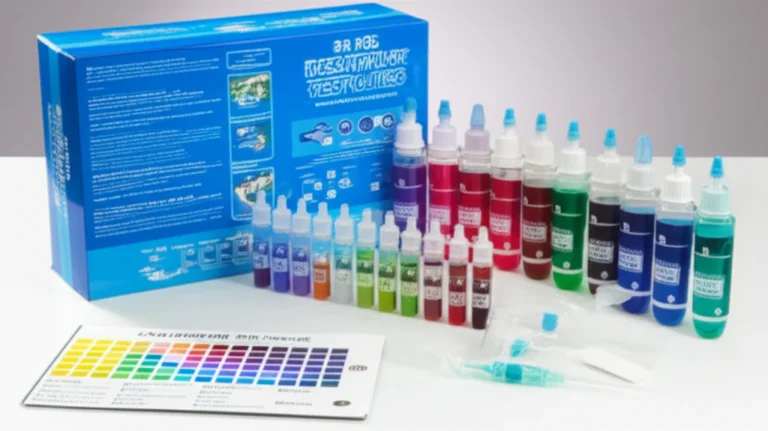
Choosing the Right Test Kit
Liquid test kits are generally more accurate than strips. Strips often suffer from color bleeding and low resolution.
- API Freshwater Master Test Kit: The gold standard for home hobbyists. Reliable, easy to read, and covers the big four (pH, Amonia, Nitrite, Nitrate).
- Salifert or Hanna Checkers: For those who need precision on specific parameters like phosphate or iron.
Link to Validation: For a deep dive into the science of these parameters, visit the University of Florida IFAS Extension.
🧪 Testing Aquarium pH: Finding the Sweet Spot
pH measures how acidic or alkaline your water is on a scale of 0 to 14.
- 7.0 is neutral.
- Below 7.0 is acidic.
- Above 7.0 is alkaline.
Most tropical freshwater fish thrive between 6.8 and 7.8. However, stability is more important than the exact number. A fish from a soft, acidic stream (pH 6.0) will die if you suddenly drop it into hard, alkaline water (pH 8.0), even if 8.0 is “safe” for other species.
The pH Crash:
Over time, organic waste breaks down and releases acids, causing pH to drop. This is why KH (Carbonate Hardness) is crucial; it acts as a buffer to prevent sudden swings.
💧 Testing Aquarium General Hardness (GH): The Mineral Balance
GH measures the concentration of dissolved minerals, primarily calcium and magnesium.
- Soft Water: 0–4 dGH
- Medium Water: 5–8 dGH
- Hard Water: 9+ dGH
Some fish, like Discus and Cardinal Tetras, require soft water. Others, like Livebearers (Guppies, Mollies), need hard water. If your tap water is too soft, you can add Seachem Alkaline Buffer or crushed coral. If it’s too hard, you might need Reverse Osmosis (RO) water.
🧂 Testing Aquarium Carbonate Hardness (KH) or Alkalinity
KH is your water’s buffer capacity. It resists pH changes.
- Low KH (< 4 dKH): pH can swing wildly, stressing fish.
- High KH (> 10 dKH): pH is stable but hard to lower.
The Golden Rule: Never try to adjust pH directly without adjusting KH first. If you lower pH in low-KH water, it will crash back down or swing up violently within hours.
🚫 Testing Aquarium for Amonia: The Silent Killer
Amonia is the first product of the nitrogen cycle.
- Safe Level: 0 ppm.
- Toxicity: Increases with higher pH and temperature. At pH 8.0, ammonia is much more toxic than at pH 6.5.
Symptoms of Amonia Poisoning:
- Fish gasping at the surface.
- Red streaks on fins or body.
- Loss of appetite.
- Lethargy.
Action Plan: If you detect ammonia, perform a 50% water change immediately and add a water conditioner like Seachem Prime to detoxify it temporarily while you fix the biological filter.
🌫️ Testing Aquarium for Nitrite: The Middleman of Doom
Nitrite is the intermediate step. It binds to hemoglobin, turning blood brown and preventing oxygen transport.
- Safe Level: 0 ppm.
- Symptoms: Rapid gill movement, darkened gills, fish lying on the bottom.
Why it happens: Usually, the Nitrobacter bacteria haven’t established a colony yet. This is common in new tanks or after cleaning the filter too aggressively.
📉 Testing Aquarium for Nitrate: When Good Becomes Too Much
Nitrate is the end product. It’s less toxic but still harmful in high doses.
- Safe Level: < 40 ppm for most fish; < 20 ppm for sensitive species like Discus.
- Sources: Fish food, decaying plants, and tap water (some municipal supplies are high in nitrate).
Management:
- Water Changes: The most effective method.
- Live Plants: They consume nitrate as fertilizer.
- Denitrifying Filters: Specialized media that converts nitrate to nitrogen gas (advanced).
🌿 Testing Aquarium for Phosphate: The Algae Trigger
Phosphate (PO4) is the fuel for algae blooms.
- Sources: Tap water, fish food, decaying matter.
- Target: < 0.5 ppm for planted tanks; < 1.0 ppm for fish-only.
If you have green water or hair algae that won’t go away, test your phosphate. You might need to use phosphate removers like Seachem PhosGuard or switch to a low-phosphate fish food.
📊 Freshwater Aquarium Optimum Water Conditions Chart
Not sure where your tank stands? Use this chart as a quick reference guide. Remember, stability is key.
| Parameter | Ideal Range (General Tropical) | Sensitive Species (e.g., Discus) | Livebearers (e.g., Guppies) | Action if Out of Range |
|---|---|---|---|---|
| pH | 6.8 – 7.8 | 6.0 – 7.0 | 7.2 – 8.0 | Adjust KH first, then pH slowly. |
| Temperature | 74°F – 82°F (23°C – 28°C) | 82°F – 86°F (28°C – 30°C) | 72°F – 78°F (2°C – 26°C) | Check heater; avoid rapid swings. |
| Amonia | 0 ppm | 0 ppm | 0 ppm | Water change + Prime. |
| Nitrite | 0 ppm | 0 ppm | 0 ppm | Check cycling status. |
| Nitrate | < 40 ppm | < 20 ppm | < 50 ppm | Increase water change frequency. |
| GH | 4 – 12 dGH | 1 – 4 dGH | 10 – 20 dGH | Add minerals or RO water. |
| KH | 4 – 8 dKH | 1 – 3 dKH | 8 – 12 dKH | Add buffers or crushed coral. |
| Phosphate | < 1.0 ppm | < 0.5 ppm | < 1.0 ppm | Reduce feeding; use phosphate remover. |
🧹 The Art of Mechanical and Biological Filtration
Your filter is the heart of your aquarium, but it’s not just a sponge. It has three distinct jobs:
- Mechanical Filtration: Trapping physical debris (pop, uneaten food).
Media: Filter floss, sponges.
Maintenance: Rinse weekly in tank water. Don’t over-clean! - Biological Filtration: Housing the beneficial bacteria.
Media: Ceramic rings, bio-balls, porous sponges.
Maintenance: Never rinse these in tap water. Only rinse in old tank water if flow is restricted. - Chemical Filtration: Removing dissolved impurities (tannins, odors, medications).
Media: Activated carbon, phosphate removers.
Maintenance: Replace monthly or as directed.
The “Over-Cleaning” Mistake:
We’ve seen tanks crash because owners scrubed their filter media until it was “sparkling clean.” You stripped the bacteria colony. Dirty filter = Happy bacteria.
💦 Water Change Mastery: Frequency, Volume, and Technique
Water changes are the single most effective tool for maintaining water quality. They dilute toxins, replenish minerals, and remove organic waste.
How Often and How Much?
- Standard Rule: 25% weekly.
- High Bioload (Cichlids, Goldfish): 50% weekly or even twice a week.
- Low Bioload (Shrimp, small tetras): 15% weekly might suffice, but don’t skip it.
The Technique Matters
- Turn off equipment: Heater and filter (to prevent sucking up debris).
- Siphon the gravel: Use a gravel vacuum to remove waste trapped in the substrate.
- Match Temperature: New water should be within 1-2°F of tank water.
- Condition the water: Always use a dechlorinator like Seachem Prime or API Stress Coat. Chlorine kills fish instantly.
Pro Tip: If you have a large tank, consider a Python No Spill Clean and Fill system. It connects directly to your sink, making water changes a breeze.
🌡️ Temperature Stability and Oxygenation Strategies
Temperature isn’t just about comfort; it affects oxygen levels and toxicity.
- Warmer water holds less oxygen. If your tank is hot and overcrowded, fish may suffocate even if ammonia is low.
- Temperature swings stress the immune system, making fish prone to disease.
Oxygenation Tips:
- Ensure the filter output creates surface agitation.
- Add an air stone or powerhead if the surface is still.
- Avoid overstocking in warm water.
🍽️ Feding Habits That Sabotage Water Quality
You might think you’re feeding your fish, but you’re actually feeding your algae and amonia.
- The 2-Minute Rule: Feed only what fish can eat in 2 minutes.
- Fast Food: High-quality pellets sink and dissolve slowly. Avoid flake food that floats and rots on the surface.
- Fasting: Skip feeding one day a week. Fish are hardy; they can go days without food, but they can’t survive in toxic water.
Common Mistake: Feding “frozen” food without thawing properly. Large chunks sink and rot. Always rinse frozen food in a sieve before adding it to the tank.
🚿 Tap Water vs. RO/DI: Which Source is Right for You?
Not all water is created equal.
- Tap Water: Convenient, but often contains chlorine, chloramine, heavy metals, and high nitrates.
Solution: Use a high-quality dechlorinator. - RO/DI (Reverse Osmosis/Deionized): Pure water (0 ppm everything).
Pros: Total control over chemistry.
Cons: Expensive, requires remineralization (adding GH/KH back).
Best for: Sensitive species like Discus, Apistograma, or high-tech planted tanks.
The Hybrid Approach: Many hobbyists mix 50% tap water with 50% RO water to get the best of both worlds.
🌱 Live Plants as Natural Water Purifiers
Live plants are the ultimate water quality allies. They absorb amonia, nitrite, and nitrate directly through their leaves and roots.
- Fast-growing plants (e.g., Hornwort, Amazon Sword) are the best at nutrient uptake.
- Floating plants (e.g., Frogbit, Duckweed) provide shade and absorb nutrients from the water column.
Warning: Dead plants rot and release ammonia. Prune regularly and remove dead leaves immediately.
🐠 Stocking Density: How Many Fish Can Your Tank Really Hold?
The “one inch per gallon” rule is mythical and dangerous. A 10-gallon tank cannot hold 10 inches of Oscar fish.
- Bioload: Consider the size of the fish, their waste production, and activity level.
- Surface Area: Oxygen exchange happens at the surface. A long, shallow tank holds more fish than a tall, narrow one of the same volume.
- Behavior: Agressive fish need more space to establish territories.
General Guideline: Start with fewer fish than you think you need. Add more only after testing water parameters for a month.
🛠️ Essential Tools and Gadgets for Water Maintenance
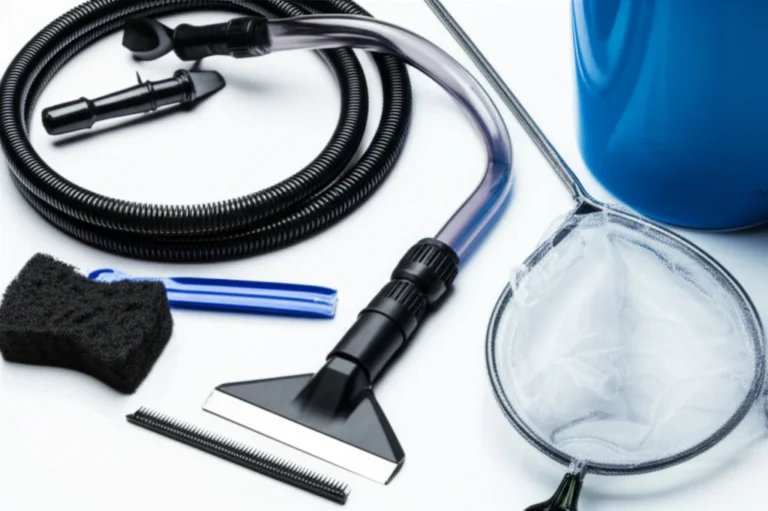
You can’t maintain a tank with your bare hands. Here is the toolkit you need:
- Gravel Vacuum: For siphoning debris.
- Test Kit: Liquid test kits are superior to strips.
- Water Conditioner: To neutralize chlorine and heavy metals.
- Algae Scraper/Magnet: For cleaning glass.
- Bucket: Dedicated only to the aquarium (no soap!).
- Thermometer: To monitor temperature stability.
🏆 Top Recommended Products for Crystal Clear Water
We’ve tested dozens of products. Here are the ones that actually work.
Rating Table: Top Water Quality Products
| Product | Design (1-10) | Functionality (1-10) | Ease of Use (1-10) | Value (1-10) | Overall Rating |
|---|---|---|---|---|---|
| API Freshwater Master Test Kit | 8 | 10 | 9 | 9 | 9.0 |
| Seachem Prime | 9 | 10 | 10 | 8 | 9.2 |
| Fluval FX6 Canister Filter | 9 | 10 | 7 | 7 | 8.5 |
| Python No Spill Clean & Fill | 8 | 9 | 10 | 8 | 8.8 |
| Seachem PhosGuard | 8 | 9 | 9 | 8 | 8.5 |
Detailed Analysis
API Freshwater Master Test Kit
- Design: Classic bottle design with clear instructions.
- Functionality: Highly accurate for pH, Amonia, Nitrite, and Nitrate.
- Pros: The industry standard. Reliable color charts.
- Cons: Liquid reagents can expire; requires mixing.
- Verdict: Every aquarium owner needs this.
Seachem Prime
- Design: Concentrated liquid.
- Functionality: Detoxifies ammonia, nitrite, and nitrate; binds heavy metals.
- Pros: A little goes a long way. Safe for shrimp and scaless fish.
- Cons: Smells like sulfur (roten eggs) initially.
- Verdict: Essential for emergency water changes and cycling.
Fluval FX6 Canister Filter
- Design: Robust, external canister.
- Functionality: High flow rate, excellent biological media capacity.
- Pros: Great for large tanks (up to 40 gallons). Quiet operation.
- Cons: Expensive; maintenance is a bit complex.
- Verdict: The best choice for large, high-bioload tanks.
Python No Spill Clean & Fill
- Design: Hose system connecting to sink.
- Functionality: Siphons dirty water and fills with clean water.
- Pros: No buckets to carry. Fast and clean.
- Cons: Requires a sink close to the tank.
- Verdict: A game-changer for large tanks.
👉 CHECK PRICE on:
- API Freshwater Master Test Kit: Amazon | Petco | Brand Official
- Seachem Prime: Amazon | Chewy | Brand Official
- Fluval FX6: Amazon | PetSmart | Brand Official
- Python No Spill: Amazon | Petco | Brand Official
💡 LED MiniBow™ Kits with SmartClean® Technology
While not a water filter, proper lighting is crucial for plant health, which in turn affects water quality. The MiniBow™ kits from Aqua Illumination feature SmartClean® Technology, which allows for easy maintenance of the light fixture without tools.
- Design: Slek, arched design.
- Functionality: Full spectrum LED for plant growth.
- Pros: Promotes photosynthesis, which helps plants absorb nitrates.
- Cons: Higher price point than standard LEDs.
- Verdict: Excellent for planted tanks where water quality is managed via biology.
👉 CHECK PRICE on:
- Aqua Illumination MiniBow: Amazon | Brand Official
📚 Popular Blogs and Community Resources
Learning never stops. Here are some of the best places to get advice:
- Aquarium Co-op Blog: Great for practical, no-nonsense advice.
- Planted Tank Forum: The go-to for planted tank enthusiasts.
- Reddit r/Aquariums: A massive community for troubleshooting.
🔗 Resource Links for Deep Dives
- University of Florida IFAS Extension – Aquarium Water Quality
- The Spruce Pets – Water Chemistry Guide
- Aquarium Co-op – The Nitrogen Cycle Explained
📞 Contact Us
Have a specific question about your tank? Our team of aquarists at Aquarium Music™ is here to help. Visit our Contact Us page for personalized advice.
🍪 Cookie List
We use cookies to enhance your browsing experience. View our full cookie list here.
🔒 Manage Consent Preferences
You can manage your cookie preferences at any time. Manage Consent Preferences.
🚫 Do Not Sell or Share My Personal Data
We respect your privacy. Do Not Sell or Share My Personal Data.
🏁 Conclusion

Maintaining proper water quality in your fish tank isn’t magic; it’s a science of balance. As we’ve explored, the Nitrogen Cycle is the foundation, but it requires your active participation through testing, water changes, and smart stocking.
Remember the story of the 5-gallon tank that crashed? It wasn’t because the equipment failed; it was because the owner tried to rush the biology. Patience is the most important tool in your kit.
Key Takeaways:
- Test regularly: Don’t guess.
- Change water weekly: Dilute the toxins.
- Don’t overfeed: Less waste means better water.
- Stability over perfection: A stable pH of 7.2 is better than a swinging pH of 6.5–7.5.
If you follow these principles, your tank will become a thriving, crystal-clear ecosystem where your fish can live long, healthy lives. And if you ever feel overwhelmed, remember: even the most experienced aquarists started with a cloudy tank and a lot of questions.
🔗 Recommended Links
👉 Shop Essential Water Quality Products:
- API Freshwater Master Test Kit: Amazon | Petco
- Seachem Prime: Amazon | Chewy
- Fluval FX6 Canister Filter: Amazon | PetSmart
- Python No Spill Clean & Fill: Amazon | Petco
- Seachem PhosGuard: Amazon | Bulk Reef Supply
Recommended Books:
- The Simple Guide to Freshwater Aquariums by Charles Sculthorpe: Amazon
- Aquarium Science: Water Chemistry, Biology, and Technology by David E. Boruchowitz: Amazon
❓ FAQ

What natural additives can improve water quality for freshwater fish?
Natural additives like Indian Almond Leaves (Catappa leaves) release tannins that lower pH and have antibacterial properties. Driftwood also releases tannins and provides a surface for beneficial bacteria. Live plants are the best natural additive, consuming nitrates and phosphates.
Read more about “🌊 15 Secrets to Mastering Your Tropical Fish Tank (2026)”
How does overfeeding affect water quality in a fish tank?
Overfeeding leads to uneaten food sinking and decomposing. This decomposition releases amonia, which spikes toxicity levels. It also increases nitrate and phosphate levels, fueling algae blooms. Always feed sparingly.
Read more about “🐠 15 Secrets to Master Aquarium Fish Breding (2026)”
What types of filters are most effective for maintaining clean tank water?
Canister filters (like the Fluval FX6) are generally the most effective for large tanks due to their high biological and mechanical capacity. Hang-on-back (HOB) filters are great for smaller tanks. Sponge filters are excellent for breeding tanks or shrimp tanks as they provide surface area for bacteria without sucking up small inhabitants.
Read more about “🌊 7 Signs of a Healthy & Thriving Fish Tank Ecosystem (2026)”
How can I balance pH levels in my aquarium water?
First, test your KH (Carbonate Hardness). If KH is low, pH will swing. Add crushed coral or buffer to raise KH. To lower pH, use RO water or peat moss. Never try to adjust pH directly without stabilizing KH first.
What are the common signs of poor water quality in a fish tank?
- Fish gasping at the surface.
- Red streaks on fins or body.
- Lethargy or hiding.
- Cloudy water.
- Algae blooms (green water, hair algae).
- Foul odors.
Read more about “🐟 How Often to Feed Your Fish & Best Foods (2026)”
How often should I change the water in my aquarium to keep it healthy?
A 25% water change weekly is the standard recommendation. For tanks with high bioload (large fish, many fish), 50% weekly or even twice a week may be necessary.
Read more about “🌊 2026 Ultimate Guide: 15+ Must-Have Marine Aquarium Equipment”
What are the common causes of ammonia spikes in fish tanks and how to prevent them?
Causes include overfeeding, overstocking, new tank syndrome (uncycled tank), and dead fish/plants. Prevention involves cycling the tank before adding fish, feeding sparingly, testing regularly, and performing weekly water changes.
Read more about “🌊 Mastering Coral Reef Aquariums: Your 2026 Guide to a Living Masterpiece”
How do temperature fluctuations impact water quality in aquariums?
Fluctuations stress fish, weakening their immune systems. Warmer water holds less oxygen, potentially causing suffocation. Rapid temperature changes can also shock the beneficial bacteria, leading to ammonia spikes.
Read more about “🌊 Aquatic Life Support Systems: The 2026 Ultimate Guide to Keeping Life Alive”
What role do filters play in maintaining aquarium water quality?
Filters provide mechanical (trapping debris), biological (housing bacteria to convert toxins), and chemical (removing dissolved impurities) filtration. They are essential for the Nitrogen Cycle to function.
Read more about “🌊 7 Ways a Fish Tank Heals Your Mind & Soul (2026)”
How can I naturally balance pH levels in my fish tank?
Use live plants to absorb CO2 and stabilize pH. Add driftwood or Indian Almond Leaves to lower pH naturally. Use crushed coral or aragonite sand to raise pH. Always aim for stability rather than a specific number.
Read more about “🐟 10 Critical Factors for Choosing the Perfect Fish Tank Size (2026)”
What are the signs of poor water quality affecting fish health?
Signs include clamped fins, loss of color, rapid breathing, loss of appetite, swollen eyes, and excessive slime coat.
Read more about “🐟 Ultimate Fish Care & Health Guide (2026): 10 Secrets to a Thriving Tank”
How often should I change the water in my aquarium?
See the answer above: 25% weekly is the baseline. Adjust based on bioload and test results.
Read more about “🦐 Can I Keep Shrimp & Snails in My Fish Tank? (2026)”
What are the best methods to test water quality in a fish tank?
Liquid test kits (like API Master Test Kit) are the most accurate. Test strips are less accurate but convenient for quick checks. Digital testers (like Hanna Checkers) offer high precision for specific parameters.
📖 Reference Links
- Aqueon – Maintaining Proper Freshwater Aquarium Water Quality
- API – The Nitrogen Cycle
- Seachem – Water Chemistry Guide
- Fluval – Filtration Guide
- Quora – How to maintain the water quality in my fish tank to ensure the health and well-being of my fish
- University of Florida IFAS Extension – Aquarium Water Quality