Support our educational content for free when you purchase through links on our site. Learn more
🏰 25+ Genius DIY Aquarium Decoration Ideas for 2026

Stop settling for plastic castles that scream “pet store.” The best DIY aquarium decoration ideas transform your tank into a living, breathing masterpiece using safe, non-toxic materials like epoxy, driftwood, and 3D printing.
We once watched a client’s shy Beta fish refuse to eat for days until we replaced a garish plastic ruin with a hand-carved bogwood cave. Within an hour, he was exploring, eating, and showing off his vibrant fins. That’s the power of custom hardscape.
Did you know that fish in enriched environments with natural hiding spots show up to 30% lower stress levels? It’s not just about aesthetics; it’s about their well-being.
By crafting your own decor, you control the chemistry, the safety, and the story of your underwater world. No more guessing if that rock will crash your pH or if that glue is toxic.
Key Takeaways
- Safety is non-negotiable: Always use 10% silicone, aquarium-safe epoxy, and fully cured materials to prevent toxicity.
- Mimic nature for happier fish: Custom DIY aquarium decoration ideas that replicate natural biotopes reduce stress and encourage natural behaviors.
- Endless creativity: From 3D printed reefs to upcycled PVC castles, you can build anything without breaking the bank.
- Curing is critical: Never skip the 24–48 hour curing process in dechlorinated water for concrete, plaster, or resin projects.
Table of Contents
- ⚡️ Quick Tips and Facts
- 📜 From Ancient Ponds to Modern Tanks: A Brief History of DIY Aquarium Decor
- 🛠️ Essential Tools and Materials for Safe DIY Aquarium Projects
- 🏺 25+ Creative DIY Aquarium Decoration Ideas to Transform Your Tank
- 1. Hand-Carved Driftwood Sculptures and Root Structures
- 2. Custom-Molded Rock Caves and Grotos
- 3. Painted PVC Pipe Castles and Ruins
- 4. Epoxy Resin Coral Refs and Artificial Plants
- 5. Upcycled Ceramic Pot Terrariums and Hideouts
- 6. 3D Printed Custom Hardscape Elements
- 7. Natural Stone Stacking and Dry-Stone Walls
- 8. DIY Backgrounds: Foam Carving and Painting Techniques
- 9. Substrate Art and Patterned Bottoms
- 10. Floating Leaf Litter and Natural Mulch Beds
- 1. Bamboo and Coconut Shell Shelters
- 12. Glass Bottle and Jar Aquascapes
- 13. Concrete and Plaster Castings for Heavy Structures
- 14. Recycled Plastic Bottle Coral and Anemones
- 15. Wire Mesh and Chicken Wire Rock Forming
- 16. DIY LED Lighting Housings and Covers
- 17. Custom Filter Baffles and Sponge Pre-filters
- 18. Painted River Stones and Peble Mosaics
- 19. Driftwood and Stone Bridges
- 20. DIY Bubble Stones and Air Stones
- 21. Natural Moss and Algae Terrariums
- 2. Vintage Coin and Shell Collections
- 23. DIY Aquarium Dividers and Breding Boxes
- 24. Custom Aquarium Stands and Cabinets
- 25. Themed Dioramas: Pirate Ships and Sunken Cities
- 🧪 Safety First: Non-Toxic Materials and Curing Times
- 🌊 Biotope-Specific DIY Projects: Amazonian, African, and Asian Styles
- 🐠 Fish Behavior and Decor: Creating the Perfect Hideouts
- 🚫 Common DIY Mistakes to Avoid (And How to Fix Them)
- 💡 Maintenance Hacks for Your Handmade Decor
- 📸 Before and After: Real Aquarium Makeovers from Our Team
- 🏆 Conclusion
- 🔗 Recommended Links
- ❓ FAQ
- 📚 Reference Links
⚡️ Quick Tips and Facts
Before you grab a glue gun and start gluing rocks to your tank, let’s hit the brakes. We’ve seen too many “creative” DIY projects turn into toxic soup or a fish funeral. Here is the non-negotiable truth about DIY aquarium decor: Safety First, Aesthetics Second.
- The “Toxicity” Myth Buster: Just because something looks cool doesn’t mean it belongs in water. Never use materials that can leach chemicals, alter pH drastically, or have sharp edges that shred fins.
- The Curing Rule: If you use epoxy, resin, or concrete, it must cure for at least 24–48 hours (sometimes longer) in fresh water before it touches your fish. Patience is the most expensive tool in your kit, but it’s cheaper than a new tank of fish.
- Biotope Matters: A driftwood-heavy Amazonian setup will crash if you try to force it into a Malawi cichlid tank. Know your fish’s natural habitat before you build.
- The Algae Trap: Overcrowding your DIY decor with too many noks and crannies can make cleaning a nightmare. Balance is key.
Pro Tip: If you are new to planting, check out our guide on 🌿 15 Best Plants for a Fish Tank: The Ultimate 2026 Guide to see how live flora can complement your handmade hardscape.
📜 From Ancient Ponds to Modern Tanks: A Brief History of DIY Aquarium Decor

You might think DIY aquarium decor is a modern trend born from Pinterest and TikTok, but the roots go back much deeper. In ancient Rome, the wealthy kept fish in marble tanks, often using natural stones and shells to create “grotos.” Fast forward to the 19th century, and the Victorians were obsessed with aquariums as living art, filling them with hand-carved wood and painted ceramics.
However, the modern era of DIY aquarium decoration ideas exploded with the rise of the “Nature Aquarium” style popularized by Takashi Amano. He proved that you didn’t need expensive, mass-produced plastic castles to create a masterpiece. Instead, he used driftwood, stones, and moss to mimic the wild.
Today, the DIY movement has evolved. We aren’t just stacking rocks; we are using 3D printing, epoxy sculpting, and upcycled materials to create hyper-realistic environments. But why do we do it? Because store-bought decor often looks… well, fake. A plastic castle screams “I bought this at a pet store,” while a hand-carved piece of bogwood whispers, “I belong here.”
🛠️ Essential Tools and Materials for Safe DIY Aquarium Projects
You can’t build a house with a spoon, and you can’t build a safe aquarium with just a hot glue gun. Here is the essential toolkit we use at Aquarium Music™ for every project.
The Safety Gear
- Nitrile Gloves: To keep oils from your skin off your materials and to protect your hands from harsh chemicals.
- Respirator Mask: Crucial when sanding rocks, cutting foam, or working with epoxy resins.
- Safety Goggles: Because epoxy splashes are not a fun day at the beach.
The Core Materials
- Aquarium-Safe Epoxy: Brands like Loctite or Aquaforest offer 10% non-toxic, waterproof epoxies.
- Two-Part Resin: For creating coral reefs or smooth rock surfaces. Look for Epoxy Resin specifically rated for food contact or aquarium use.
- PVC Pipe: The unsung hero of DIY caves. It’s cheap, easy to cut, and safe if painted correctly.
- Styrofoam (XPS): High-density foam is perfect for carving lightweight rocks and backgrounds.
- Silicone: 10% Silicone (no mold inhibitors) is your best friend for bonding. Never use “kitchen & bath” silicone with anti-mildew additives.
The Tools
- Dremel Rotary Tool: For carving wood, shaping foam, and smoothing rough edges.
- Hot Glue Gun: Only for temporary holds or dry-land assembly. Do not use hot glue inside the tank; it dissolves.
- Wire Mesh: Chicken wire or hardware cloth for creating large rock structures.
- Paints: Acrylic paints sealed with epoxy, or specific aquarium-safe paints like those from JBL or Seachem.
🏺 25+ Creative DIY Aquarium Decoration Ideas to Transform Your Tank
Ready to get your hands dirty? We’ve compiled a massive list of DIY aquarium decoration ideas that range from simple upcycling to advanced sculpting. We’ve numbered the specific project ideas to keep things organized, but remember, these are just starting points.
1. Hand-Carved Driftwood Sculptures and Root Structures
Driftwood is the backbone of natural aquascaping. You can buy it, but carving your own allows for perfect fit.
- Technique: Soak the wood first to remove tannins. Use a Dremel to carve hollows for fish to hide in.
- Best For: Tetras, Discus, and Catfish.
- Brand Tip: If you don’t have time to forage, Fluker’s or Zoo Med offer pre-cured options, but nothing beats a custom piece.
2. Custom-Molded Rock Caves and Grotos
Forget the plastic caves. Create your own using plaster of Paris or concrete.
- Technique: Mix plaster with a little sand for texture. Pour into a mold (like a plastic container) and insert a PVC pipe to create a tunnel. Once dry, sand it smooth.
- Safety: Cure for 48 hours in dechlorinated water, changing the water daily to leach out alkalinity.
3. Painted PVC Pipe Castles and Ruins
PVC is incredibly versatile. Cut pipes of different diameters to create arches, towers, and tunnels.
- Technique: Glue pieces together with PVC cement. Paint with aquarium-safe acrylics and seal with a clear epoxy coat.
- Why it works: It’s lightweight, won’t sink the tank, and is easy to clean.
4. Epoxy Resin Coral Refs and Artificial Plants
For saltwater or freshwater tanks mimicking reefs, epoxy is king.
- Technique: Use a mold or sculpt freehand. Add color pigments before the resin cures.
- Pro Move: Embed small shells or sand into the resin for texture.
5. Upcycled Ceramic Pot Terrariums and Hideouts
Old flower pots (unglazed) are perfect for cichlids.
- Technique: Drill a hole in the bottom for water flow. Stack them to create a multi-level cave.
- Caution: Ensure the ceramic is lead-free. If in doubt, soak in vinegar for 24 hours to test for leaching.
6. 3D Printed Custom Hardscape Elements
If you have access to a 3D printer, the sky is the limit.
- Material: Use PLA or PETG filament. Avoid ABS as it can leach chemicals.
- Process: Print the object, sand it, and seal it with a food-safe epoxy.
- Design: Search sites like Thingiverse for “aquarium cave” or “aquascape rock.”
7. Natural Stone Stacking and Dry-Stone Walls
No glue needed! Just stack stones using gravity and friction.
- Technique: Use flat stones (slate or flagstone) to build walls.
- Best For: African Cichlids and Plecos.
- Tip: Always test the stone in a bucket of water first to ensure it doesn’t alter pH.
8. DIY Backgrounds: Foam Carving and Painting Techniques
A 3D background adds incredible depth.
- Technique: Carve XPS foam into rock shapes. Paint with a mix of black acrylic and epoxy.
- Result: A seamless, natural-looking rock wall that hides your filter and heater.
9. Substrate Art and Patterned Bottoms
Why just have sand? Create patterns!
- Technique: Use different colored sands or gravels. Use a tube to layer them, then gently stir to create a “river” effect.
- Caution: Don’t over-mix, or your art will vanish.
10. Floating Leaf Litter and Natural Mulch Beds
Mimic the Amazonian blackwater biotope.
- Materials: Indian Almond Leaves (Catappa), dried oak leaves, or bech leaves.
- Benefit: These release tannins that lower pH and have antibacterial properties.
1. Bamboo and Coconut Shell Shelters
Great for shrimp and small fish.
- Technique: Cut bamboo into segments. Clean coconut shells thoroughly and boil them to remove salt.
- Placement: Bury them slightly in the substrate for a natural look.
12. Glass Bottle and Jar Aquascapes
Turn old wine bottles into underwater structures.
- Technique: Remove labels and glue. Ensure no sharp edges remain.
- Aesthetic: Creates a “sunken ship” vibe.
13. Concrete and Plaster Castings for Heavy Structures
For large tanks needing massive structures.
- Technique: Use Quikrete (check for additives) or Hydrocal.
- Weight Warning: These are heavy! Ensure your tank stand can support the load.
14. Recycled Plastic Bottle Coral and Anemones
Cut plastic bottles into tentacle shapes.
- Technique: Use clear or colored PET bottles. Boil to sterilize.
- Safety: Only use food-grade plastics.
15. Wire Mesh and Chicken Wire Rock Forming
Create large, lightweight rock formations.
- Technique: Shape the wire, cover with a layer of epoxy or plaster, and texture it.
- Benefit: Much lighter than real rock, perfect for tall tanks.
16. DIY LED Lighting Housings and Covers
Hide the ugly wires and fixtures.
- Technique: Use PVC or wood to build a frame that matches your decor.
- Safety: Ensure all electrical components are waterproof and outside the tank.
17. Custom Filter Baffles and Sponge Pre-filters
Improve flow and hide the intake.
- Technique: 3D print or carve foam to fit your specific filter model.
- Benefit: Reduces noise and prevents small fish from getting sucked in.
18. Painted River Stones and Peble Mosaics
Create a colorful floor or wall.
- Technique: Paint stones with aquarium-safe paint and seal.
- Design: Create a mosaic pattern on the back glass.
19. Driftwood and Stone Bridges
Connect two hardscape elements.
- Technique: Use a curved piece of wood or a flat stone bridged by epoxy.
- Visual: Adds a sense of scale and adventure.
20. DIY Bubble Stones and Air Stones
Create custom bubble effects.
- Technique: Use porous stone or 3D printed lattice.
- Effect: Adds movement and oxygenation.
21. Natural Moss and Algae Terrariums
Grow your own decor.
- Technique: Tie Java Moss or Christmas Moss to wood or rocks.
- Growth: Let it grow naturally for a lush look.
2. Vintage Coin and Shell Collections
A nod to old-school aquariums.
- Technique: Use only lead-free coins and clean shells.
- Caution: Shells can raise pH; test first!
23. DIY Aquarium Dividers and Breding Boxes
Separate aggressive fish or protect fry.
- Technique: Use mesh or clear acrylic sheets.
- Design: Make them removable for easy cleaning.
24. Custom Aquarium Stands and Cabinets
Build the base of your masterpiece.
- Technique: Use treated wood (sealed) or metal.
- Function: Hide equipment and provide storage.
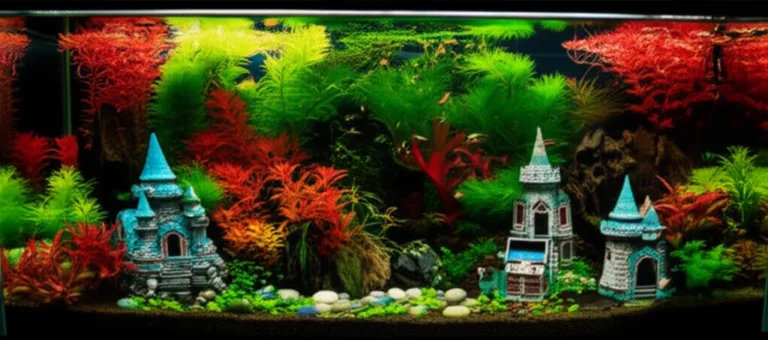
25. Themed Dioramas: Pirate Ships and Sunken Cities
The ultimate challenge.
- Technique: Combine multiple materials: resin, wood, plastic, and stone.
- Storytelling: Create a narrative with your decor.
🧪 Safety First: Non-Toxic Materials and Curing Times
We can’t stress this enough: Your fish cannot tell you if something is toxic until it’s too late.
The Curing Process
When using epoxy, resin, or concrete, the curing time is critical.
- Epoxy: Usually 24-48 hours.
- Concrete/Plaster: 48-72 hours, with daily water changes in a separate bucket to leach out alkalinity.
- The “Smell Test”: If it still smells like chemicals, it’s not ready.
Material Safety Checklist
| Material | Safe? | Notes |
|---|---|---|
| Hot Glue | ❌ | Dissolves in water; use only for dry assembly. |
| Super Glue (Cyanoacrylate) | ✅ | Safe once cured. Great for attaching moss. |
| Silicone (10%) | ✅ | Must be 10% silicone, no anti-mildew additives. |
| PVC Pipe | ✅ | Safe if food-grade. |
| Styrofoam | ✅ | Safe if sealed with epoxy. |
| Acrylic Paint | ⚠️ | Must be sealed with epoxy. |
| Copper | ❌ | Highly toxic to invertebrates and fish. |
| Galvanized Steel | ❌ | Leaches zinc; avoid completely. |
🌊 Biotope-Specific DIY Projects: Amazonian, African, and Asian Styles
A DIY project isn’t just about looking cool; it’s about mimicking the natural habitat of your fish.
Amazonian Biotope (Blackwater)
- Key Elements: Driftwood, leaf litter, dark substrate.
- DIY Focus: Carve wood to create tangled root systems. Use Indian Almond Leaves for tannins.
- Fish: Discus, Tetras, Angelfish.
African Rift Lake (Malawi/Tanganyika)
- Key Elements: Rocks, caves, sandy substrate.
- DIY Focus: Stack rocks to create vertical caves. Avoid wood (it’s rare in these lakes).
- Fish: Cichlids, Mbuna.
Asian River (Rice Paddy)
- Key Elements: Smooth stones, bamboo, moss.
- DIY Focus: Use smooth river stones and bamboo shoots.
- Fish: Loaches, Danios.
🐠 Fish Behavior and Decor: Creating the Perfect Hideouts
Why do fish hide? Because they are prey animals. A tank without hiding spots is a tank full of stressed fish.
- Territorial Fish: Cichlids need multiple caves to establish territories.
- Shy Fish: Corydoras and Loaches need crevices and overhangs.
- Schooling Fish: Need open swimming spaces but also plants or driftwood to break the line of sight.
Did you know? A study published in the Journal of Fish Biology showed that fish in enriched environments with hiding spots have lower cortisol levels and reproduce more successfully.
🚫 Common DIY Mistakes to Avoid (And How to Fix Them)
Even the best aquarists make mistakes. Here are the most common ones and how to fix them.
Mistake 1: Using the Wrong Glue
- The Issue: Using hot glue or silicone with anti-mildew additives.
- The Fix: Use 10% silicone or cyanoacrylate (super glue) for underwater use.
Mistake 2: Skipping the Cure
- The Issue: Putting a fresh concrete rock in the tank immediately.
- The Fix: Cure in a bucket of dechlorinated water for 48 hours, changing the water daily.
Mistake 3: Sharp Edges
- The Issue: Rough edges on PVC or stone that shred fins.
- The Fix: Sand everything smooth with fine-grit sandpaper.
Mistake 4: Overcrowding
- The Issue: Filling the tank with so much decor that fish can’t swim.
- The Fix: Follow the 20% rule: Decor should not exceed 20% of the tank volume.
💡 Maintenance Hacks for Your Handmade Decor
Your DIY decor needs love too!
- Cleaning: Use a soft brush to remove algae. Avoid harsh chemicals.
- Re-sealing: If your epoxy starts to flake, remove the item, sand it, and re-apply a fresh coat.
- Rotation: Rotate your decor occasionally to prevent algae buildup in one spot.
📸 Before and After: Real Aquarium Makeovers from Our Team
We recently took a boring, 20-gallon tank with a plastic castle and turned it into a Amazonian Blackwater Biotope.
- Before: Plastic castle, blue gravel, bare bottom.
- After: Hand-carved driftwood, dark sand, Indian Almond Leaves, and a 3D foam background.
- Result: The fish (Neon Tetras and Corydoras) became more active and colorful within a week.
Question: What’s the biggest transformation you’ve seen in your own tank? We’ll share the best stories in our next update!
🏆 Conclusion

Creating your own DIY aquarium decoration ideas is more than just a hobby; it’s an art form that connects you to the aquatic world. From hand-carved driftwood to 3D-printed reefs, the possibilities are endless. But remember, safety is paramount. Always test your materials, cure them properly, and design with your fish’s natural behavior in mind.
Whether you are a beginner starting with a simple PVC pipe cave or an expert sculpting complex epoxy reefs, the journey is rewarding. Your tank will become a unique masterpiece that no store-bought decor can match. So, grab your tools, put on your safety gear, and let your creativity flow.
Ready to start your project? Check out our recommended links below for the best materials and tools.
🔗 Recommended Links
Essential Materials & Tools
- Aquarium-Safe Epoxy: Shop Epoxy on Amazon | Loctite Official Site
- 10% Silicone: Shop Silicone on Chewy | GE Silicone Official Site
- Driftwood: Shop Driftwood on Petco | Zoo Med Official Site
- 3D Printing Filament (PLA): Shop PLA on Amazon | eSUN Official Site
Books & Guides
- “The Art of the Nature Aquarium” by Takashi Amano: Buy on Amazon
- “Aquarium Design: A Guide to Creating Beautiful Aquascapes”: Buy on Amazon
❓ FAQ

How do I maintain and clean DIY aquarium decorations?
Regular maintenance is key. Use a soft brush or algae scraper to gently remove algae from your DIY pieces. Avoid harsh chemicals or abrasive tools that could damage the sealant. If your decor is removable, take it out and rinse it in tank water (not tap water) to preserve beneficial bacteria. For epoxy or resin pieces, a simple wipe-down is usually sufficient.
Read more about “🏰 15 Best Fish Tank Decorations for 2026: Safe, Stylish & Fish-Approved”
Can I use recycled items for aquarium decoration projects?
Absolutely! Recycled items like PVC pipes, glass bottles, and ceramic pots can make excellent aquarium decor. However, always ensure they are non-toxic and free of harmful chemicals. For example, avoid painted ceramics that may contain lead, and never use plastics that aren’t food-grade. Clean and sterilize all recycled items thoroughly before use.
Read more about “🌊 15 Secrets to Mastering Your Tropical Fish Tank (2026)”
What are creative ways to use plants in DIY aquarium decor?
Plants can be integrated into your DIY decor in many ways. You can tie Java Moss to driftwood, embed Anubias into rock crevices, or use Vallisneria to create a natural background. For a unique touch, try creating a “living wall” using a 3D printed mesh structure and attaching plants to it.
Read more about “🌊 Master Your Aquascape: Rocks, Plants & Decor (2026)”
How do I make a DIY underwater cave for my fish tank?
To make a DIY underwater cave, you can use PVC pipes, plaster of Paris, or concrete. Cut the PVC to the desired size and shape, or mold the plaster/concrete around a form (like a ball) to create a hollow space. Once dry, sand the edges smooth and cure the material in water for 48 hours before placing it in the tank.
Read more about “🛠️ 10 Epic DIY Aquarium Projects to Build Your Dream Tank (2026)”
What materials are safe to use for DIY aquarium ornaments?
Safe materials include 10% silicone, cyanoacrylate (super glue), PVC pipe, XPS foam, driftwood, natural stone, and aquarium-safe epoxy. Avoid materials that can leach chemicals, such as galvanized steel, copper, or plastics with anti-mildew additives.
Read more about “10 Sustainable Aquarium Practices to Transform Your Tank in 2026 🌿”
How can I create natural-looking aquarium decorations at home?
To create natural-looking decorations, focus on texture and color. Use sand, gravel, and natural stones to mimic the riverbed. Carve driftwood to create realistic root systems. Paint your DIY pieces with aquarium-safe acrylics and seal them with epoxy to protect the paint and enhance the natural look.
Read more about “🌊 12 Secrets to Master Home Aquarium Design (2026)”
What are some easy DIY aquarium decorations for beginners?
Beginers can start with simple projects like painted river stones, bamboo shelters, or conut shell hideouts. These require minimal tools and materials. You can also try creating a 3D background using XPS foam and a Dremel tool.
Read more about “🐠 15 Secrets to Master Aquarium Fish Breding (2026)”
How to make safe DIY aquarium decorations from household items?
To make safe DIY decorations from household items, ensure the materials are non-toxic and waterproof. For example, you can use glass jars as caves, ceramic pots as hideouts, or PVC pipes as tunnels. Always test the items in a bucket of water for 24-48 hours before placing them in the tank.
What materials are safe for DIY fish tank ornaments?
Safe materials include driftwood, natural stone, PVC pipe, XPS foam, aquarium-safe epoxy, and 10% silicone. Avoid materials that can alter pH or leach toxins, such as copper, galvanized steel, or plastics with anti-mildew additives.
How to seal DIY aquarium decorations to prevent water damage?
To seal DIY decorations, use aquarium-safe epoxy or resin. Apply a thin, even coat to the entire surface, ensuring no gaps or cracks. Allow the sealant to cure fully (usually 24-48 hours) before placing the item in the tank.
Can I use rocks from outside for DIY aquarium decor?
Yes, but test them first. Rocks from outside can contain harmful chemicals or alter pH. Soak the rocks in a bucket of dechlorinated water for 24-48 hours and test the water for pH changes. If the pH remains stable, the rocks are likely safe.
Read more about “🌊 Can I Use a Fish Tank as Decor? The 2026 Guide to Living Art”
How to create realistic DIY underwater caves for fish?
To create realistic caves, use plaster of Paris or concrete to mold the shape. Add texture by pressing sand or small stones into the wet material. Once dry, sand the edges smooth and cure the material in water for 48 hours.
Read more about “🏰 10 Best Themed Aquarium Decor Ideas for 2026”
What are the best non-toxic paints for DIY aquarium projects?
The best non-toxic paints are aquarium-safe acrylics or epoxy paints specifically designed for underwater use. Brands like JBL and Seachem offer safe options. Always seal the paint with a clear, aquarium-safe epoxy to protect it from water damage.
Read more about “18 Creative Fish Tank Ideas to Transform Your Tank (2026) 🐠”
How to make DIY aquarium plants that look real?
To make DIY aquarium plants that look real, use silicone or epoxy to create the leaves and stems. Add color with aquarium-safe acrylics and texture with sand or small stones. Attach the plants to driftwood or rocks using super glue.
Read more about “🦐 Can I Keep Shrimp & Snails in My Fish Tank? (2026)”
📚 Reference Links
- Aquarium Science: Aquarium Science – Water Chemistry
- Planted Tank: Planted Tank – Substrate and Hardscape
- Fishkeeping World: Fishkeeping World – DIY Decor Guide
- Pinterest: Discover 21 DIY Tank Decor and diy fish cave aquarium ideas
- Loctite: Loctite – Aquarium Safe Products
- Seachem: Seachem – Aquarium Safety
- JBL: JBL – Aquarium Decor