Support our educational content for free when you purchase through links on our site. Learn more
🌊 7 Secrets to Building a Thriving Aquatic Life Community (2026)


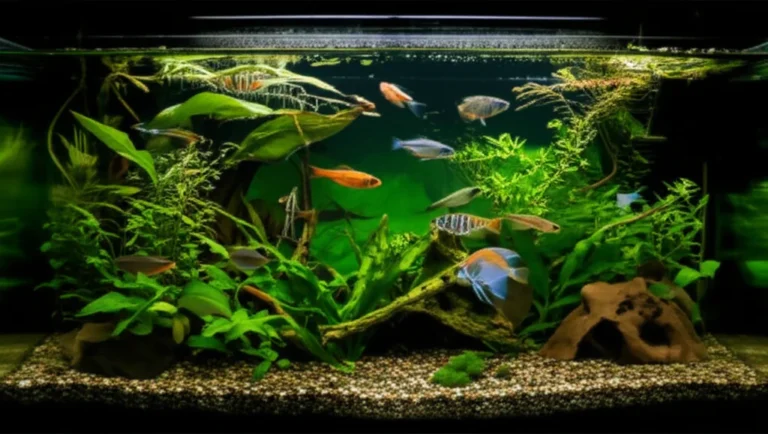
While the EPA debates mercury criteria to protect wild fish in Idaho, you have the power to engineer a perfect, self-sustaining aquatic life community right in your living room. Imagine a world where your tank isn’t just a glass box of fish, but a bustling underwater metropolis where plants filter the water, shrimp act as the sanitation crew, and every species plays a vital role in a delicate, colorful symphony. We’ve seen tanks turn into graveyards from a single bad decision, but we’ve also witnessed the magic of a perfectly balanced ecosystem where neon tetras school in unison and cherry shrimp graze on a lush carpet of Monte Carlo.
In this guide, we’re diving deep into the art and science of creating a resilient aquatic life community. From selecting the right biotope and mastering the invisible nitrogen cycle to troubleshooting the “nipping” behaviors that can ruin a tank, we’ll cover everything you need to know to move beyond simple survival to true thriving. Whether you are a beginner wondering why your new fish keep disappearing or an expert looking to refine your aquascape, the secrets to a stable, vibrant underwater world are about to be revealed.
Key Takeaways
- Stability Over Perfection: A stable water parameter is infinitely more important than chasing “perfect” numbers; your fish need consistency, not chemical rollercoasters.
- The Power of Biodiversity: A healthy aquatic life community relies on the balance between producers (plants), consumers (fish/shrimp), and decomposers (bacteria) to naturally manage waste.
- Compatibility is Critical: Success depends on matching species by temperament, size, and water chemistry to prevent aggression and stress.
- The Nitrogen Cycle is Non-Negotiable: Never skip the cycling process; establishing beneficial bacteria is the invisible foundation that keeps your tank safe from toxic ammonia spikes.
- Plants are Active Filters: Live plants do more than look good; they absorb nitrates, provide oxygen, and create essential hiding spots that reduce fish stress.
Table of Contents
- ⚡️ Quick Tips and Facts
- 🌊 The Evolution of the Aquatic Life Community: From Ponds to Perfect Ecosystems
- 🏗️ Designing Your Aquatic Life Community: A Step-by-Step Blueprint
-
- Selecting the Right Tank Size and Shape for Your Biotope
-
- Choosing the Perfect Substrate for Plant and Invertebrate Health
-
- Installing Filtration Systems That Mimic Natural Currents
-
- Lighting Strategies for Photosynthesis and Visual Appeal
-
- Cycling the Tank: The Invisible Foundation of Life
- 🐟 Mastering the Fish Layer: Selecting Compatible Species for a Thriving Community
-
- Top-Dwelling Community Stars: Tetras, Rasboras, and Danios
-
- Mid-Water Diplomats: Livebearers and Barbs
-
- Bottom Cleaners and Scavengers: Corydoras, Plecos, and Loaches
-
- The Cichlid Conundrum: When to Mix and When to Separate
-
- Avoiding Agression: Understanding Territorial Behaviors
- 🌿 The Green Heart: Aquascaping and Plant Selection for a Balanced Ecosystem
-
- Foreground Carpeting Plants for a Lush Understory
-
- Mid-Ground Focal Points: Stem Plants and Bushy Varieties
-
- Background Forests: Tall Growers and Driftwood Companions
-
- Floating Plants: Natural Filtration and Shade Control
-
- Algae Management: The Good, The Bad, and The Ugly
- 🦐 The Hidden Heroes: Invertebrates and Microfauna in the Aquatic Life Community
-
- Shrimp Species: Neocaridina vs. Caridina for Beginners and Experts
-
- Snail Species: Pest Control vs. Aesthetic Additions
-
- The Role of Microfauna: Daphnia, Brine Shrimp, and Beneficial Bacteria
- 💧 Water Chemistry Mastery: Parameters for a Healthy Aquatic Life Community
-
- pH, Hardness, and Temperature: The Holy Trinity of Stability
-
- The Nitrogen Cycle Explained: Amonia, Nitrite, and Nitrate
-
- Trace Elements and Fertilizers: Feding Your Plants and Fish
-
- Water Changes: The Secret to Long-Term Success
- 🍽️ Feding Frenzy: Nutrition Strategies for Diverse Aquatic Life
-
- High-Quality Flakes and Pelets: Reading the Label
-
- Frozen and Live Foods: Boosting Immunity and Color
-
- Specialized Diets: Algae Wafers, Sinking Foods, and Grazing Needs
-
- Feding Schedules: How Much and How Often?
- 🚨 Troubleshooting Common Issues: Keeping Your Community Alive and Thriving
-
- Disease Identification: Ich, Fin Rot, and Fungal Infections
-
- Stress Factors: Overcrowding, Bulying, and Poor Water Quality
-
- Emergency Protocols: What to Do When Things Go Wrong
- 🌍 Beyond the Tank: Conservation and the Wild Aquatic Life Community
- 🏆 Conclusion
- 🔗 Recommended Links
- ❓ FAQ
- 📚 Reference Links
⚡️ Quick Tips and Facts
Before we dive headfirst into the deep end of the aquatic life community, let’s hit the surface with some rapid-fire wisdom from the Aquarium Music™ team. We’ve seen tanks turn into graveyards and others into thriving metropolises, and the difference often comes down to these golden rules:
- Stability is King: A stable parameter is infinitely better than a “perfect” parameter that swings wildly. Your fish hate rollercoasters! 🎢
- The 10% Rule: Never change more than 10-15% of your water at once unless it’s an emergency. Sudden shifts in chemistry are the silent killers of community harmony.
- Bioload Balance: The number of fish you can keep isn’t just about tank size; it’s about filtration capacity and the nitrogen cycle.
- Quarantine is Non-Negotiable: That cute new fish from the pet store? It’s a potential Trojan horse. Always quarantine new arrivals for 2-4 weeks. 🦠
- Plants are Filters: Live plants aren’t just decoration; they are biological filters that absorb nitrates and provide oxygen.
Did you know? The concept of a “viable aquatic life community” isn’t just for hobbyists; it’s a legal standard used by the EPA to protect wild waterways. Just as the EPA sets mercury criteria to protect Idaho’s fish, you must set ammonia limits to protect your tank’s fish! 🏛️🐟
🌊 The Evolution of the Aquatic Life Community: From Ponds to Perfect Ecosystems
The story of the aquatic life community is as old as water itself, but our understanding of how to curate one has evolved from “throw some fish in a bucket” to “enginer a self-sustaining micro-biome.”
Historically, humans viewed water bodies as simple resources. As the Wisconsin DNR notes, “Surface waters vary naturally with respect to factors like temperature, flow, habitat and water chemistry. This variation allows different types of Aquatic Life communities to be supported.” Wisconsin DNR. In the wild, nature dictates the community structure. In our homes, we are the architects.
From the Wild to the Wall
In the natural world, estuarine zones act as nurseries where fresh and salt water mix, creating a unique community of brackish-tolerant species. Deep-sea hydrothermal vents host bizarre communities of tube worms and bacteria that thrive in toxic heat. YouTube: Ocean Habitats.
When we bring this concept into the aquarium, we aren’t just copying a habitat; we are trying to replicate the interactions. A true aquatic life community involves:
- Producers: Plants and algae creating oxygen and food.
- Consumers: Fish, shrimp, and snails eating plants, algae, or each other.
- Decomposers: Bacteria and microfauna breaking down waste into nutrients.
The Regulatory Mirror
Interestingly, the EPA’s recent push to establish mercury criteria for Idaho’s water bodies highlights a critical lesson for us: chemical balance dictates biological diversity. If the water chemistry is off, the community collapses. EPA Idaho Mercury Criterion.
In our tanks, if ammonia spikes, the sensitive species (like Neon Tetras) vanish first, leaving only the hardy ones (like Mollies). This mirrors the “Limited Aquatic Life” designation in polluted wild streams. Our goal? To create a “Coldwater” or “Warmwater” community that is robust, diverse, and resilient.
🏗️ Designing Your Aquatic Life Community: A Step-by-Step Blueprint
Building a community isn’t about buying the most expensive fish; it’s about laying the foundation. Think of it as building a house. You wouldn’t put a swimming pool in the living room, right? Similarly, you can’t put a high-flow river fish in a stagnant tank.
1. Selecting the Right Tank Size and Shape for Your Biotope
Size matters, but shape matters more for community dynamics.
- Length vs. Height: Most community fish are territorial horizontally, not vertically. A 40-gallon breder (36″ x 18″) is often better for a community than a 40-gallon tall (24″ x 18″).
- The Surface Area Rule: Oxygen exchange happens at the surface. A wide tank supports more fish than a tall, narrow one.
2. Choosing the Perfect Substrate for Plant and Invertebrate Health
Your substrate is the soil of your underwater garden.
- Inert Substrates: Sand or gravel (like Fluval Stratum or CaribSea Super Naturals) are great for stability but offer no nutrients.
- Active Substrates: Products like ADA Amazonia or Seachem Flourite lower pH and provide nutrients for plants, essential for a lush community.
3. Installing Filtration Systems That Mimic Natural Currents
Filtration is the heart of your aquatic life community.
- Canister Filters: The gold standard for planted tanks. Brands like Fluval and Eheim offer adjustable flow rates to mimic gentle streams or strong currents.
- Sponge Filters: Essential for breeding tanks or shrimp communities, providing surface area for beneficial bacteria without sucking up tiny inhabitants.
Pro Tip: Check out our comprehensive guide on 🐟 Ultimate Fish Tank Equipment Guide: 7 Essential Upgrades (2026) to see exactly which filters we recommend for different community sizes.
4. Lighting Strategies for Photosynthesis and Visual Appeal
Lighting drives the photosynthesis that feeds your plants and, indirectly, your fish.
- Spectrum: Look for full-spectrum LEDs (650K) that mimic the sun.
- Duration: 6-8 hours is the sweet spot. Too much light = algae explosion. Too little = dying plants.
5. Cycling the Tank: The Invisible Foundation of Life
You cannot skip this. The Nitrogen Cycle is the process where beneficial bacteria convert toxic ammonia (from fish waste) into nitrite, and then into less toxic nitrate.
- Fishless Cycling: Add pure ammonia to the tank and wait for bacteria to colonize.
- Patience: This takes 4-6 weeks. Rushing this step is the #1 cause of “New Tank Syndrome.”
🐟 Mastering the Fish Layer: Selecting Compatible Species for a Thriving Community
Now for the fun part: picking your cast of characters! But remember, a community isn’t just a random assortment of fish; it’s a carefully choreographed dance.
1. Top-Dwelling Community Stars: Tetras, Rasboras, and Danios
These fish live in the upper third of the tank. They are generally peaceful and love to school.
- Neon Tetras: The classic choice. They need soft, acidic water and a school of at least 6.
- Harlequin Rasboras: Hardier than Neons, perfect for beginners.
- Zebra Danios: Active swimmers that need plenty of horizontal space.
2. Mid-Water Diplomats: Livebearers and Barbs
These fish occupy the middle zone and often add vibrant colors.
- Guppies and Platies: Livebearers that are incredibly hardy. Warning: They breed like rabbits!
- Cherry Barbs: Peaceful but can be nippy if kept in small numbers. Always keep them in groups of 6+.
3. Bottom Cleaners and Scavengers: Corydoras, Plecos, and Loaches
Don’t forget the floor crew! They keep the substrate clean and eat leftover food.
- Corydoras Catfish: The ultimate community bottom dwellers. They are social and need sand to protect their whiskers.
- Otocinclus: Tiny algae eaters that are peaceful and efficient.
- Clown Loaches: Great for larger tanks, but they grow huge and can be boisterous.
4. The Cichlid Conundrum: When to Mix and When to Separate
Cichlids are the divas of the fish world.
- South American Cichlids: Angelfish and Discus can work in community tanks if given space, but they are territorial.
- African Cichlids: Generally too aggressive for mixed communities unless you have a massive tank and a specific rock-dwelling setup.
5. Avoiding Agression: Understanding Territorial Behaviors
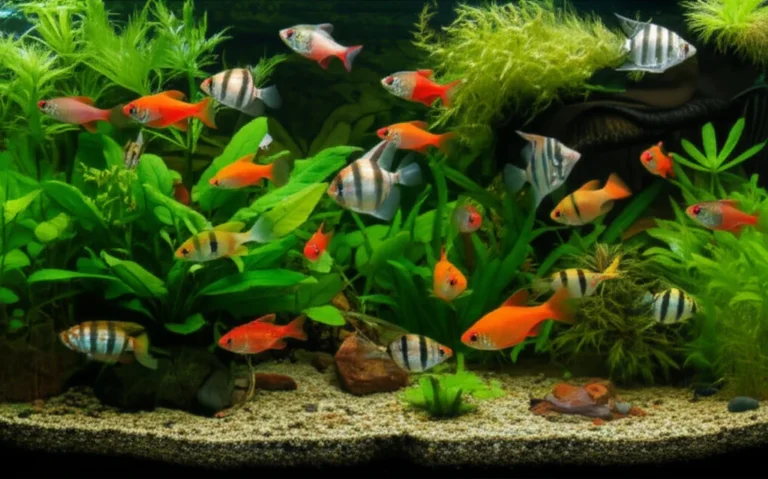
- The “Nipping” Factor: Some fish (like Tiger Barbs) will nip the fins of slow-moving fish (like Angelfish).
- The “Bulying” Factor: Dominant fish can stress out weaker ones, leading to disease.
- Solution: Always research the adult size and temperament of every species.
| Species Group | Temperament | Tank Size Min | School Size | Best Tank Mates |
|---|---|---|---|---|
| Neon Tetra | Peaceful | 10 Gal | 6+ | Corydoras, Rasboras |
| Guppy | Peaceful | 10 Gal | 3+ | Tetras, Mollies |
| Angelfish | Semi-Agressive | 30 Gal | 3+ | Corydoras, Gouramis |
| Oscar | Agressive | 75 Gal | 1-2 | Large Catfish, Cichlids |
| Clown Loach | Active/Semi-Ag | 40 Gal | 3+ | Large Tetras, Plecos |
👉 CHECK PRICE on:
🌿 The Green Heart: Aquascaping and Plant Selection for a Balanced Ecosystem
Plants are the lungs of your aquatic life community. They absorb nitrates, provide hiding spots for fry, and reduce stress in fish.
1. Foreground Carpeting Plants for a Lush Understory
- Dwarf Hairgrass: Creates a grassy lawn look. Needs high light and CO2.
- Monte Carlo: A hardier alternative to Hairgrass that spreads quickly.
2. Mid-Ground Focal Points: Stem Plants and Bushy Varieties
- Rotala Rotundifolia: Changes color from green to red based on light intensity.
- Amazon Sword: A classic, robust plant that grows large and provides excellent cover.
3. Background Forests: Tall Growers and Driftwood Companions
- Vallisneria: The “jungle grass” that grows tall and creates a natural barrier.
- Anubias: Perfect for attaching to driftwood. It grows slowly and tolerates low light.
4. Floating Plants: Natural Filtration and Shade Control
- Frogbit: Large leaves that provide shade for shy fish.
- Salvinia: Fast-growing and great for absorbing excess nutrients.
5. Algae Management: The Good, The Bad, and The Ugly
Algae is inevitable, but manageable.
- Green Spot Algae: Caused by low CO2 or high phosphates.
- Black Beard Algae: Often a sign of unstable water parameters.
- Solution: Introduce algae eaters like Amano Shrimp or Nerite Snails.
👉 Shop Aquascaping Plants on:
- Amazon: Aquatic Plants
- Etsy: Aquatic Plants
- Aquatic Arts: Aquatic Arts
🦐 The Hidden Heroes: Invertebrates and Microfauna in the Aquatic Life Community
While fish get the glory, invertebrates are the unsung heroes of the aquatic life community. They keep the tank clean and add a layer of complexity that makes the ecosystem truly alive.
1. Shrimp Species: Neocaridina vs. Caridina for Beginners and Experts
- Neocaridina (Cherry Shrimp): Hardy, breed easily, and tolerate a wide range of water parameters. Perfect for beginners.
- Caridina (Crystal Red Shrimp): Picky! They require soft, acidic water and stable parameters. Best for experts.
2. Snail Species: Pest Control vs. Aesthetic Additions
- Nerite Snails: The ultimate algae eaters. They won’t breed in freshwater, so you won’t get an infestation.
- Mystery Snails: Great scavengers that are fun to watch. They need a bit more space and oxygen.
- Ramshorn Snails: Can breed rapidly if overfed, but excellent at cleaning up detritus.
3. The Role of Microfauna: Daphnia, Brine Shrimp, and Beneficial Bacteria
Microfauna are microscopic organisms that serve as a natural food source for fry and small fish.
- Daphnia: Often called “water fleas,” they are a great live food source.
- Beneficial Bacteria: Products like Seachem Stability or API Quick Start help establish the bacterial colonies that keep the water safe.
👉 CHECK PRICE on:
- Cherry Shrimp: Amazon | LiveAquaria
- Nerite Snails: Amazon | Chewy
💧 Water Chemistry Mastery: Parameters for a Healthy Aquatic Life Community
You can have the most beautiful tank in the world, but if the water chemistry is off, your aquatic life community will fail. Let’s break down the science.
1. pH, Hardness, and Temperature: The Holy Trinity of Stability
- pH: Measures acidity/alkalinity. Most community fish prefer 6.5-7.5.
- GH (General Hardness): Measures dissolved minerals (calcium, magnesium). Crucial for shrimp molting and fish bone health.
- KH (Carbonate Hardness): Measures buffering capacity. Prevents pH crashes.
- Temperature: Tropical fish generally need 74-80°F. Use a reliable heater like Eheim or Fluval.
2. The Nitrogen Cycle Explained: Amonia, Nitrite, and Nitrate
- Amonia (NH3): Highly toxic. Should be 0 ppm.
- Nitrite (NO2): Toxic. Should be 0 ppm.
- Nitrate (NO3): Less toxic, but should be kept below 20-40 ppm.
- Testing: Use liquid test kits like API Freshwater Master Test Kit for accuracy.
3. Trace Elements and Fertilizers: Feding Your Plants and Fish
- Liquid Fertilizers: Products like Seachem Flourish provide essential micronutrients.
- Root Tabs: For heavy root feeders like Amazon Swords.
4. Water Changes: The Secret to Long-Term Success
- Frequency: 25-50% weekly.
- Method: Use a gravel vacuum to remove debris and a dechlorinator like Seachem Prime to treat tap water.
👉 CHECK PRICE on:
🍽️ Feding Frenzy: Nutrition Strategies for Diverse Aquatic Life
A balanced diet is the key to vibrant colors and strong immunity. But how much is too much?
1. High-Quality Flakes and Pelets: Reading the Label
- Look for: Fish meal, shrimp meal, and spirulina as top ingredients.
- Avoid: Fillers like wheat flour or excessive corn.
- Brands: Fluval Bug Bites, New Life Spectrum, and Hikari.
2. Frozen and Live Foods: Boosting Immunity and Color
- Frozen: Bloodworms, brine shrimp, and daphnia. Great for protein.
- Live: Brine shrimp and blackworms. Stimulate natural hunting behaviors.
3. Specialized Diets: Algae Wafers, Sinking Foods, and Grazing Needs
- Bottom Feeders: Need sinking wafers (e.g., Hikari Algae Wafers).
- Herbivores: Need vegetable-based foods (e.g., Spirulina flakes).
4. Feding Schedules: How Much and How Often?
- Rule of Thumb: Feed only what they can eat in 2-3 minutes.
- Frequency: 1-2 times a day.
- Fasting: Once a week fasting helps prevent constipation and keeps water clean.
👉 Shop Fish Food on:
🚨 Troubleshooting Common Issues: Keeping Your Community Alive and Thriving
Even the best-laid plans go awry. Here’s how to handle the inevitable bumps in the road.
1. Disease Identification: Ich, Fin Rot, and Fungal Infections
- Ich (White Spot): Looks like salt grains on fish. Treat with heat and medication like API Ich Cure.
- Fin Rot: Raged fins. Often caused by poor water quality. Treat with Melafix or Pimafix.
- Fungal Infections: Cotton-like growths. Treat with antifungal medications.
2. Stress Factors: Overcrowding, Bulying, and Poor Water Quality
- Overcrowding: Leads to aggression and poor water quality.
- Bulying: Isolate the victim or the aggressor.
- Water Quality: Test immediately! 90% of diseases are caused by poor water.
3. Emergency Protocols: What to Do When Things Go Wrong
- Amonia Spike: Perform a 50% water change immediately. Add Seachem Prime to detoxify ammonia.
- Power Outage: Keep the tank covered to retain heat. Use a battery-operated air pump if possible.
- Fish Death: Remove the body immediately to prevent ammonia spikes.
🌍 Beyond the Tank: Conservation and the Wild Aquatic Life Community
Our hobby doesn’t exist in a vacuum. The health of our aquatic life community at home is linked to the health of our planet’s waterways.
- Invasive Species: Never release aquarium fish into the wild. They can decimate native populations.
- Sustainable Sourcing: Choose fish bred in captivity rather than wild-caught when possible.
- Water Conservation: Be mindful of your water usage, especially in drought-prone areas.
As the EPA emphasizes in their mercury criteria for Idaho, protecting the viable aquatic life community in the wild requires strict regulation and public awareness. EPA Idaho Mercury Criterion. By practicing responsible aquarism, we contribute to a global culture of conservation.
Final Thought: Have you ever wondered how a single drop of water connects the fish in your tank to the ocean currents discussed in that first video? It’s all part of the same aquatic life community, from the deepest hydrothermal vent to your living room. 🌊🐠
🏆 Conclusion

We’ve journeyed from the microscopic world of beneficial bacteria to the majestic scale of wild river ecosystems, and hopefully, you now see your aquarium not just as a glass box, but as a living, breathing aquatic life community.
Remember the question we posed at the very beginning: How do you create a tank that doesn’t just survive, but thrives like a wild ecosystem? The answer lies in balance. It’s the delicate dance between the fish you choose, the plants you grow, the water chemistry you maintain, and the invertebrates that clean up behind them.
Whether you are managing a Coldwater Community reminiscent of a trout stream or a vibrant Warmwater Community bursting with color, the principles remain the same: stability is paramount, biodiversity is strength, and patience is your greatest tool. Just as the EPA works to establish mercury criteria to protect Idaho’s wild fish, you must rigorously monitor your tank’s parameters to protect your aquatic family.
The Verdict on Building Your Community:
- ✅ Do: Invest in a quality test kit, cycle your tank properly, and research species compatibility.
- ✅ Do: Embrace the “slow and steady” approach. A planted, cycled tank is a resilient tank.
- ❌ Don’t: Overstock your tank or rush the nitrogen cycle.
- ❌ Don’t: Release aquarium pets into the wild.
Your aquatic life community is a symphony. If one instrument is out of tune (like a spike in ammonia), the whole performance suffers. But when every element plays its part, the result is a mesmerizing display of nature’s beauty right in your living room. Dive in, experiment, and enjoy the music of the water! 🎶🌊
🔗 Recommended Links
Ready to take the next step? Here are our top picks for building and maintaining your aquatic life community, along with essential reading.
🛒 Essential Equipment & Supplies
- Test Kits:
API Freshwater Master Test Kit: The gold standard for water chemistry. Amazon | Chewy
Seachem Amonia Alert: Continuous monitoring for ammonia spikes. Amazon | Petco - Filtration:
Fluval FX6 Canister Filter: High-performance filtration for large community tanks. Amazon | Fluval Official
Eheim Classic External Filter: German engineering for reliability. Amazon | Eheim Official - Substrate & Plants:
ADA Amazonia Soil: Premium active substrate for planted tanks. Amazon | Aquatic Arts
Seachem Flourish: Comprehensive liquid fertilizer for plant growth. Amazon | Seachem Official - Fish Food:
New Life Spectrum Aquarium Fish Food: High-quality, nutrient-dense pellets. Amazon | Chewy
Hikari Algae Wafers: Essential for bottom feeders and algae eaters. Amazon | PetSmart
📚 Recommended Reading
- “The Simple Guide to Freshwater Aquariums” by Charles Amon: A perfect starter book for understanding community dynamics. Amazon
- “Aquarium Plants: The Complete Guide” by Ad Konings: Deep dive into the green heart of your ecosystem. Amazon
- “The Reef Aquarium” by Julian Sprung: While focused on saltwater, the principles of community balance are universal. Amazon
❓ FAQ

What is an aquatic life community?
An aquatic life community refers to the asemblage of interacting organisms—including fish, invertebrates, plants, algae, and microrganisms—that inhabit a specific water body. In a natural setting, this community is defined by the water’s physical and chemical characteristics (temperature, flow, chemistry). In an aquarium, it is a curated micro-ecosystem where these organisms coexist in a balanced relationship, mimicking natural interactions.
Read more about “🌊 Top 10 Aquatic Events & Conferences to Attend in 2026”
What defines a healthy aquatic life community?
A healthy aquatic life community is characterized by stability and biodiversity. Key indicators include:
- Water Quality: Amonia and nitrite levels at 0 ppm, with nitrates kept low (<20-40 ppm).
- Behavior: Fish are active, displaying natural behaviors like schooling, grazing, and breeding.
- Appearance: Vibrant coloration, intact fins, and robust plant growth.
- Balance: No single species dominates to the point of excluding others, and waste production is effectively managed by the biological filter and plants.
Read more about “15 Creative & Unique Fish Tank Decoration Ideas to Wow in 2026 🎨”
What are the main types of organisms found in aquatic life communities?
Every thriving community relies on three main groups:
- Producers: Aquatic plants and algae that perform photosynthesis, producing oxygen and food.
- Consumers: Fish, shrimp, snails, and other animals that eat plants, algae, or other organisms.
- Decomposers: Beneficial bacteria, fungi, and microfauna (like Daphnia) that break down organic waste into nutrients for producers.
How do different species interact in an aquatic life community?
Interactions are complex and vital for balance:
- Symbiosis: Some shrimp clean parasites off fish, while fish provide movement that stirs up food for the shrimp.
- Competition: Species may compete for food or territory, which is why selecting compatible tank mates is crucial.
- Predation: In natural settings, predators keep prey populations in check. In aquariums, this is managed by avoiding aggressive predators with small prey.
- Niche Partitioning: Different species occupy different zones (top, middle, bottom) to reduce competition, such as Tetras (top), Rasboras (middle), and Corydoras (bottom).
Read more about “25 Essential Aquatic Pet Care Tips You Can’t Miss in 2026 🐠”
What role do aquatic plants play in aquatic life communities?
Plants are the engine of the community. They:
- Oxygenate the water through photosynthesis.
- Absorb nitrates and phosphates, acting as a natural filter.
- Provide shelter for fry and shy fish, reducing stress.
- Compete with algae for nutrients, helping to prevent algae blooms.
Read more about “Dive Into 9 Must-Join Aquatic Online Communities & Forums (2026) 🌊”
How does water temperature affect aquatic life communities?
Temperature dictates the metabolic rate of all organisms.
- Coldwater Communities: Species like Trout or White Cloud Mountain Minows require cooler temps (60-72°F). Higher temps can stress them and reduce oxygen solubility.
- Warmwater Communities: Tropical fish (74-82°F) have faster metabolisms and require more oxygen.
- Stability: Sudden temperature swings are more dangerous than a slightly “off” temperature, as they shock the immune system and disrupt the nitrogen cycle.
How do environmental changes impact aquatic life communities?
Environmental shifts can cause community collapse.
- Pollution: As seen in the EPA’s mercury criteria for Idaho, toxic substances can wipe out sensitive species, leaving only hardy ones.
- Habitat Loss: Removing plants or altering flow can destroy breeding grounds.
- Invasive Species: Introducing a non-native species can disrupt the food web, often leading to the extinction of native species.
What are the main threats to aquatic life communities today?
- Pollution: Agricultural runoff, industrial waste, and mercury contamination.
- Climate Change: Rising water temperatures and altered flow patterns.
- Habitat Destruction: Daming rivers and draining wetlands.
- Overfishing: Removing key species disrupts the food chain.
- Invasive Species: Accidental or intentional release of non-native species.
Read more about “Dive Deep: Aquatic Conservation & Sustainability (2026) 🐠”
How do humans impact local aquatic life communities?
Humans impact communities through:
- Aquarium Trade: Releasing unwanted pets into local waterways introduces invasive species.
- Urbanization: Increasing runoff and sedimentation.
- Chemical Use: Pesticides and fertilizers entering waterways.
- Conservation Efforts: Conversely, humans also restore communities through habitat restoration, water quality regulation (like the EPA’s mercury rules), and sustainable breeding programs.
What are some examples of aquatic life communities around the world?
- Coral Refs: High biodiversity, warm, shallow waters with complex interactions between fish, corals, and invertebrates.
- Amazon River Basin: A vast freshwater community with unique species like Piranhas, Arapaima, and diverse plant life.
- Great Barrier Reef: A marine community dominated by coral structures and thousands of fish species.
- Trout Streams (Coldwater): Found in mountainous regions, supporting trout, mayflies, and cold-water plants.
Read more about “Dive Into Aquatic Life & Habitat Creation: 15 Expert Secrets 🌊 (2025)”
How does biodiversity affect aquatic life communities?
Biodiversity is the key to resilience. A community with many species is better able to withstand disturbances (like a disease outbreak or temperature spike) because if one species fails, others can fill its ecological niche. Monocultures (few species) are fragile and prone to collapse.
How do aquatic life communities interact in their ecosystems?
They function as a food web. Energy flows from the sun to producers (plants), then to primary consumers (herbivores), then to secondary consumers (carnivores), and finally to decomposers. Nutrients are recycled back into the system, creating a closed loop of life.
Read more about “🌿 8 Essential Aquatic Plant Species for 2026: From Tanks to Lakes”
What are the indicators of a thriving aquatic life community?
- Clear Water: Low turbidity.
- Active Life: Fish schooling, shrimp grazing, plants growing.
- Reproduction: Presence of fry, eggs, or baby shrimp.
- Algae Control: Algae is present but managed, not overwhelming.
- Stable Parameters: Consistent pH, temperature, and low toxins.
How can we restore damaged aquatic life communities?
- Water Quality Improvement: Reducing pollution and restoring natural flow.
- Habitat Restoration: Replanting native vegetation and adding structures (logs, rocks).
- Reintroduction: Carefully reintroducing native species once the environment is stable.
- Invasive Removal: Removing non-native species that are disrupting the balance.
What is the role of biodiversity in an aquatic life community?
Biodiversity ensures ecosystem stability. It provides redundancy; if one species is lost, others can perform similar functions (e.g., multiple species of algae eaters). It also increases the system’s ability to adapt to changing conditions.
Read more about “How to Create a Balanced & Diverse Fish Tank in 8 Steps 🐠 (2025)”
How does the concept of “Aquatic Life Use” in regulations relate to hobbyists?
Regulations like the Wisconsin DNR’s designations or the EPA’s mercury criteria define the minimum water quality standards required to support a specific type of community (e.g., Coldwater vs. Warmwater). For hobbyists, this reinforces the idea that we must match our water parameters to the specific needs of the species we keep, rather than forcing incompatible species into a single environment.
📚 Reference Links
- Wisconsin Department of Natural Resources: Surface Water Use Designations – Details on Coldwater, Warmwater, and Limited Aquatic Life designations.
- U.S. Environmental Protection Agency (EPA): Mercury Water Quality Criterion to Protect Aquatic Life in Idaho – Technical support documents and federal register notices regarding mercury criteria.
- Fluval: Canister Filters – Official product information for high-performance filtration.
- Seachem: Aquarium Products – Official site for water conditioners, fertilizers, and substrates.
- API: Test Kits – Manufacturer of the industry-standard water testing kits.
- Hikari: Fish Food – Official site for premium fish nutrition.
- ADA (Aqua Design Amano): Aquascaping Products – Leader in aquascaping substrates and equipment.
- National Oceanic and Atmospheric Administration (NOAA): Aquatic Ecosystems – Educational resources on natural aquatic communities.