Support our educational content for free when you purchase through links on our site. Learn more
🐠 Healthy Fish Start With Stable Tank Water

To maintain the right water temperature and chemistry in your fish tank, match conditions to your fish, measure them with reliable tools, and make changes gradually. Keep ammonia and nitrite at zero, control nitrate with regular partial water changes, and verify the actual temperature with a separate thermometer.
A heater’s dial can be reassuringly precise-looking and still be wrong. We’ve seen a thermometer uncover an overheated tank even though the heater setting seemed perfectly reasonable—a small check that can spare fish a stressful swing.
There’s no universal temperature or pH that suits every aquarium. Goldfish, tropical community fish, discus, shrimp, and marine species have different needs, so the trick is finding a stable range that works for all your tank’s inhabitants.
Key Takeaways
- Research your fish first: Choose compatible species with overlapping temperature and water-chemistry needs.
- Measure, don’t guess: Use a separate thermometer and test kits to monitor temperature, ammonia, nitrite, nitrate, pH, and—when relevant—KH and GH.
- Keep ammonia and nitrite at zero: A mature, well-maintained biological filter is essential.
- Make water changes thoughtfully: Condition tap water and match replacement-water temperature to avoid sudden changes.
- Prioritize stability over perfect-looking numbers: Don’t chase pH with repeated chemical adjustments unless you have a specific, evidence-based reason.
- Watch the fish and the trends: Record test results, check equipment, and investigate changes in behavior or water readings promptly.
Table of Contents
- ⚡️ Quick Tips and Facts
- 🐠 Why Stable Aquarium Temperature and Water Chemistry Matter
- 🌡️ Choose the Right Water Temperature for Your Fish
- Tropical, Coldwater, and Temperate Fish
- Research Species Needs and Compatible Temperature Ranges
- How Temperature Affects Fish Health and Behavior
- 🧪 Understand the Essential Aquarium Water Parameters
- Amonia and Nitrite: Keep Both at Zero
- Nitrate: Control the End Product of the Nitrogen Cycle
- pH, KH, and GH: Acidity, Buffering, and Hardness
- Chlorine, Chloramine, and Tap-Water Safety
- Oxygen, Carbon Dioxide, and Salinity
- 🧰 Aquarium Temperature and Water-Testing Equipment
- Heaters, Thermostats, and Heater Guards
- Thermometers and Temperature Controllers
- Liquid Test Kits, Test Strips, and Digital Meters
- ✅ 12 Steps to Maintain Stable Aquarium Temperature and Chemistry
- 1. Test Your Source Water
- 2. Cycle the Aquarium Before Adding Fish
- 3. Set and Verify the Temperature
- 4. Condition Tap Water Correctly
- 5. Match New Water During Water Changes
- 6. Test Water on a Consistent Schedule
- 7. Perform Regular Partial Water Changes
- 8. Feed Fish Without Overloading the Filter
- 9. Maintain the Filter and Beneficial Bacteria
- 10. Keep Stocking and Aquarium Size in Balance
- 11. Record Results and Watch for Trends
- 12. Check Equipment During Power Outages and Travel
- 🌿 How Plants, Substrate, and Decorations Affect Water Chemistry
- 🚰 Tap Water, Well Water, and Reverse-Osmosis Water
- ⚠️ Common Temperature and Water-Chemistry Mistakes
- 🆘 How to Fix Aquarium Water Problems Safely
- Correcting Amonia and Nitrite Spikes
- Managing High Nitrate
- Responding to pH Swings and Hardness Problems
- Handling an Overheated or Chilled Aquarium
- When to Use Water Conditioners, Buffers, and Other Treatments
- 🔎 Fish Stress Signs That May Point to Poor Water Quality
- 🗓️ Aquarium Water-Maintenance Schedule
- 🔗 Recommended Links
- ❓ FAQ
- 📚 Reference Links
- 🏁 Conclusion
⚡️ Quick Tips and Facts
The first calm morning with a healthy tank can feel like a tiny underwater meditation session. If the peaceful fish-watching is part of the appeal, see our guide to 15 fish tank benefits for mental health. 🐠
Here’s the short version: match the water to the fish, keep conditions stable, and test instead of guessing. A thermometer and a water test kit will tell you far more than a heater dial or a crystal-clear view of the tank.
| What to monitor | Practical target for many freshwater aquariums | Why it matters |
|---|---|---|
| Temperature | Match the species; many tropical community fish do well around 75–80°F (24–27°C) | Suden changes can stress fish; the right range varies by species |
| Amonia | 0 ppm | Toxic waste that should be processed by a mature biological filter |
| Nitrite | 0 ppm | Toxic to fish; should also read zero in an established aquarium |
| Nitrate | Keep as low as practical; under 20–40 ppm is a common freshwater management goal | Builds up between water changes; sensitive species may need lower levels |
| pH | Match the fish and keep it stable | A suitable stable pH is often safer than chasing a perfect number |
| KH and GH | Match the livestock and water source | Affect buffering capacity and mineral availability |
These are starting points, not universal laws. Goldfish, discus, shrimp, African cichlids, and marine livestock do not all want the same conditions. The Merck Veterinary Manual and USGS water-hardness guidance help explain why species and water chemistry matter.
Quick habits that prevent a lot of fish-tank drama:
- ✅ Use a separate thermometer to confirm the actual water temperature.
- ✅ Test new tanks for ammonia and nitrite while the biofilter matures.
- ✅ Condition tap water for chlorine and chloramine before it reaches fish.
- ✅ Change water regularly, using replacement water close to the tank’s temperature.
- ✅ Make chemistry adjustments gradually and only when you have a clear reason.
- ❌ Don’t assume clear water is clean water.
- ❌ Don’t use pH-up or pH-down as a substitute for identifying the underlying cause.
- ❌ Don’t treat topping off evaporated water as a water change.
For more practical setup advice, browse our Aquarium Setup and Fish Care and Species Profiles guides. Keep reading, because one of the most common “fixes” for a worrying pH reading can make the tank less stable, not more.
🐠 Why Stable Aquarium Temperature and Water Chemistry Matter
Fish are ectotherms: their body temperature is influenced by the environment around them. Water conditions also affect oxygen availability, metabolism, waste processing, and how well their bodies function. That makes temperature and chemistry daily health conditions, not just numbers on a test card.
The USGS explains that water temperature affects chemical and biological processes in aquatic environments. In an aquarium, this has a very practical consequence: warm water holds less dissolved oxygen than cooler water, while warmer temperatures can increase fish and bacterial metabolic activity. When heat rises, fish may need more oxygen just as less is available.
Stability matters, but “stable” does not mean “identical every second”
A small gradual change across a day may be tolerated by some species. Abrupt swings from a cold water change, heater failure, sunny windowsill, or hot room are a different story. The aim is a species-appropriate range with no sudden jolts.
We once investigated a tank where the fish were breathing hard despite a brand-new filter. The culprit wasn’t the filter at all: the heater had drifted several degrees above its dial setting. A separate thermometer revealed the problem in minutes. It’s a good reminder that equipment settings are promises; measurements are evidence.
Temperature and chemistry influence each other
- Temperature and oxygen: warmer water generally holds less oxygen.
- Temperature and ammonia: the fraction of more toxic un-ionized ammonia increases as temperature and pH rise. The US EPA ammonia criteria discuss how toxicity depends on water conditions.
- pH and buffering: KH helps resist pH movement. Low buffering capacity can allow pH to change more easily.
- Organic waste and pH: decomposition and biological processes can affect pH over time.
That is why a high ammonia reading is urgent at any temperature, but especially concerning in warm, higher-pH water. If you’re new to tank cycling, our aquarium setup resources cover the basics alongside this guide.
🌡️ Choose the Right Water Temperature for Your Fish
There is no single “perfect fish tank temperature.” The right setting depends on the species, their life stage, their source, and the other animals sharing the aquarium. Aqueon’s fishkeeping guide gives 75–80°F as a general range for many tropical fish, but individual species can fall outside it.
| Fish or group | Example temperature range | Practical note |
|---|---|---|
| Many tropical community fish | Roughly 75–80°F | Use the overlap between the actual species’ needs |
| Goldfish | Often around 65–72°F | Fancy and common varieties differ in care needs; avoid treating them as tropical fish |
| White Cloud Mountain Minnows | Often kept in cooler conditions, roughly 58–72°F | Verify the range for the specific strain and aquarium setup |
| Discus | Commonly 82–86°F | Their warmer needs can limit compatible tankmates |
| Rams | Often around 78–85°F | Temperature needs can vary by species and source |
| Marine fish and reef systems | Often maintained within a narrow, system-specific range | Stability is crucial; corals and invertebrates may have additional requirements |
These are orientation ranges, not a substitute for species research. The OATA tropical freshwater fish care guide and reputable species profiles can help you compare care requirements before buying.
Tropical, Coldwater, and Temperate Fish
“Coldwater” does not necessarily mean ice-cold. In aquarium keeping, it usually refers to fish that can be maintained without tropical heating under suitable room conditions. Some cold-tolerant species still need a stable range and good oxygenation.
- Tropical fish generally need a heater in homes that cool down below their preferred range.
- Coldwater fish may need cooling in a warm home, especially during summer.
- Temperate fish may tolerate a broader seasonal range, but abrupt shifts still deserve attention.
- Marine and reef aquariums often require careful temperature control because a small swing can affect a complex community of fish, corals, and invertebrates.
A room that feels comfortable to you can still be too cool or too warm for a particular aquarium. The tank is not a tiny version of the living room; it’s a habitat with its own requirements.
Research Species Needs and Compatible Temperature Ranges
Before bringing fish home, check temperature, pH, GH, KH, adult size, behavior, and social needs. The best community temperature is not the average of incompatible preferences. It is a range that suits every inhabitant.
Try this checklist:
- Write down the scientific or common names of the fish you plan to keep.
- Look up care information from more than one reliable source.
- Compare the overlap in their recommended ranges.
- Consider adult size, temperament, and swimming behavior, not temperature alone.
- Confirm your tap-water chemistry and room temperature can support the plan.
- If the care ranges do not overlap, choose different tankmates or separate aquariums.
Our Fish Care and Species Profiles and Fish and Aquatic Life sections are good places to continue that research.
How Temperature Affects Fish Health and Behavior
An unsuitable temperature may contribute to lethargy, rapid breathing, poor appetite, or abnormal swimming. These signs are not diagnostic by themselves—disease, low oxygen, ammonia, nitrite, and other stressors can look similar.
A temperature change may also stress fish and make existing health problems more apparent. That does not mean every temperature fluctuation causes ich; disease involves pathogens and multiple conditions. Treat the cause, not the rumor: measure the water, assess the fish, and seek experienced veterinary advice for serious illness.
🧪 Understand the Essential Aquarium Water Parameters
Water chemistry can sound like a science exam written by a particularly fussy fish. Fortunately, a handful of measurements do most of the work.
| Parameter | What it tells you | General freshwater target |
|---|---|---|
| Amonia | Whether fish waste and decay are outpacing biological processing | 0 ppm |
| Nitrite | Whether the nitrogen cycle is incomplete or overloaded | 0 ppm |
| Nitrate | How much nitrogen waste has accumulated over time | Keep controlled; lower is generally better |
| pH | How acidic or alkaline the water is | Species-dependent; prioritize stability |
| KH | Carbonate buffering capacity | Species- and source-dependent |
| GH | Dissolved minerals, chiefly calcium and magnesium | Species- and source-dependent |
| Chlorine/chloramine | Disinfectants often present in treated tap water | Must be neutralized for aquarium use |
| Dissolved oxygen | Oxygen available to fish and beneficial organisms | Maintain good gas exchange and aeration |
Amonia and Nitrite: Keep Both at Zero
Fish produce ammonia through waste, and uneaten food and decaying material add more. Beneficial bacteria in the biofilter process ammonia into nitrite, then other bacteria process nitrite into nitrate. This biological process is called the nitrogen cycle.
- Amonia: target 0 ppm.
- Nitrite: target 0 ppm.
- Any measurable ammonia or nitrite in an established tank calls for prompt investigation and action.
Test kits may display ammonia as total ammonia, while toxicity depends partly on pH and temperature. Don’t dismiss a reading because a conditioner claims to “detoxify” ammonia; use the product exactly as directed and continue testing. During a new-tank cycle, test frequently and do not add livestock based on a calendar alone.
Nitrate: Control the End Product of the Nitrogen Cycle
Nitrate is generally less acutely toxic than ammonia or nitrite, but it accumulates and can stress fish when kept high for long periods. A practical goal for many freshwater tanks is to keep it below roughly 20–40 ppm, with lower levels useful for sensitive fish or certain aquascapes.
The right target depends on livestock, plants, source water, and husbandry. Test tap water too: if the source water already contains nitrate, water changes may not reduce the tank reading as much as expected.
Useful nitrate controls include:
- Regular partial water changes.
- Appropriate stocking and feeding.
- Removing dead leaves and uneaten food.
- Maintaining filtration without destroying its beneficial bacteria.
- Growing healthy aquatic plants where suitable.
pH, KH, and GH: Acidity, Buffering, and Hardness
These terms are related, but they do not mean the same thing:
- pH measures how acidic or alkaline water is.
- KH estimates carbonate and bicarbonate buffering capacity, which helps resist pH shifts.
- GH measures general hardness, largely associated with dissolved calcium and magnesium.
A stable pH suitable for your fish is usually more useful than forcing every aquarium toward neutral. Many captive-bred fish adapt to a reasonable range. Wild-caught fish, breeding projects, and species with specialized needs may require closer attention to hardness and pH.
Aqueon’s guide advises fishkeepers not to chase pH unless there is a genuine livestock-related reason. We agree. Repeated chemical adjustments can create a pH roller coaster: the test looks better for an afternoon, then the buffer capacity pulls the water back.
Chlorine, Chloramine, and Tap-Water Safety
Municipal water may contain chlorine or chloramine to disinfect drinking water. Both can harm fish and aquarium filter bacteria. Use a water conditioner that explicitly treats the disinfectant used by your water supplier, following the label’s dosing instructions.
- Ask your water provider whether it uses chlorine, chloramine, or both.
- Condition replacement water before adding it to the tank, or dose the aquarium according to the product label and water volume.
- Do not assume letting water stand will remove chloramine; it is more persistent than free chlorine.
- If using well water, test it rather than assuming it is free of contaminants.
The U.S. EPA drinking-water information can help you find public water information. For aquarium-specific setup guidance, see our Aquarium Setup section.
Oxygen, Carbon Dioxide, and Salinity
Surface movement supports gas exchange. Filters, air stones, and circulation pumps can help, especially in warm or heavily stocked aquariums. An air stone does not magically fix every oxygen problem, but good surface agitation is a useful safety net.
In planted aquariums, carbon dioxide levels and plant photosynthesis can influence pH through the day. A pH reading taken in the morning may differ from one taken later, so compare tests at similar times.
Salinity is critical in marine and brackish systems. A refractometer or suitable hydrometer should be calibrated and used correctly. Do not use freshwater pH or hardness assumptions as a substitute for proper marine testing.
🧰 Aquarium Temperature and Water-Testing Equipment
Reliable measurements beat hopeful guesses. You don’t need a laboratory bench; you do need tools you can read, maintain, and use consistently.
| Tool | Best use | Strength | Limitation |
|---|---|---|---|
| Glass or digital thermometer | Confirming water temperature | Simple, inexpensive, easy to check | Placement and calibration can affect readings |
| Adjustable aquarium heater | Heating tropical systems | Lets you set the target | Dial markings may not equal actual water temperature |
| Heater controller | Independent temperature control | Adds a second layer of protection | Probe placement and setup matter |
| Liquid test kit | Routine ammonia, nitrite, nitrate, and pH testing | Often offers more detail than basic strips | Requires careful timing and reading |
| Test strips | Quick screening | Convenient for basic checks | Precision and parameter coverage vary |
| GH/KH kit | Measuring hardness and buffering | Helps diagnose pH instability | Not a substitute for testing livestock needs |
| Refractometer | Marine and brackish salinity | Useful when calibrated correctly | Needs calibration and maintenance |
Heaters, Thermostats, and Heater Guards
Choose a heater based on tank volume, room temperature, and the temperature increase required. Aqueon provides wattage guidance in its aquarium heater and fishkeeping information, but heater sizing is a starting estimate—not a guarantee. Insulation, tank shape, drafts, lids, and ambient temperature all affect performance.
- Put the heater where water circulates well, often near filter flow.
- Follow manufacturer instructions for minimum water level and submersion.
- Wait the required time after placing a heater in water before plugging it in.
- Use a heater guard where fish, snails, or other animals might contact the element.
- In larger aquariums, multiple smaller heaters may provide more even heating and redundancy—but only with suitable control and safe installation.
Thermometers and Temperature Controllers
The heater’s setting is not the tank’s temperature. Use a separate thermometer away from the heater and direct sunlight. Digital models are easy to read; traditional glass thermometers offer a simple independent check.
A temperature controller can add a layer of protection by switching a heater off if the water exceeds the controller’s set point. It is not a replacement for regular checks: probes can shift, sensors can fail, and equipment can be unpluged at exactly the wrong moment.
For equipment comparisons and setup ideas, visit Aquarium Equipment.
Liquid Test Kits, Test Strips, and Digital Meters
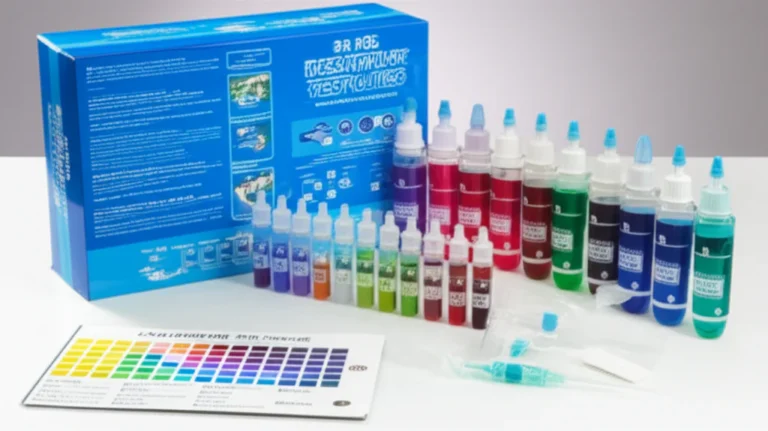
API Freshwater Master Test Kit is a widely used option for freshwater ammonia, nitrite, nitrate, and pH screening. Follow the instructions precisely: fill to the right line, add the correct number of drops, shake when directed, and read within the stated time window.
Test strips can be handy for quick checks, while liquid kits often provide more detailed measurements. Neither is useful if expired, stored poorly, or interpreted under unusual lighting. For pH meters, use appropriate calibration solutions and follow the manufacturer’s maintenance instructions.
- Don’t mix brands or methods casually when comparing a trend.
- Record results with the date and time.
- Retest a surprising result before making a major adjustment, unless fish are in immediate danger.
- Check source water as well as tank water when readings seem puzzling.
✅ 12 Steps to Maintain Stable Aquarium Temperature and Chemistry
Good water quality is mostly a routine, not a rescue mission. Here’s a method we use to keep routine maintenance simple and emergencies less mysterious.
1. Test Your Source Water
Before filling a new aquarium—or changing your water-change plan—test the water coming out of the tap or filtration system.
- Let the tap run as recommended by your local water supplier.
- Collect a clean sample.
- Test pH, KH, GH, nitrate, and any other relevant concerns.
- Ask your municipal supplier about disinfectants and consult a water-quality report.
- For well water, consider appropriate testing for metals, nitrate, and other local concerns.
If the tap-water pH is different from the tank, don’t panic. pH alone does not explain the whole chemistry; KH and GH provide useful context.
2. Cycle the Aquarium Before Adding Fish
A new tank needs time for beneficial bacteria to establish. Cycling means building the biofilter that processes ammonia and nitrite—not simply running a filter for a few days.
- Use a suitable ammonia source for a fishless cycle.
- Test ammonia and nitrite as the cycle develops.
- Add livestock only when the aquarium’s biological filter can process waste and readings remain appropriate.
- Add fish gradually and keep testing after each increase in stocking.
A tank that has been running for 48 hours is not necessarily cycled. Time alone cannot prove a biological filter is ready. For more background, start with our Aquarium Setup resources and the USGS nitrogen-cycle overview.
3. Set and Verify the Temperature
- Research the needs of every intended species.
- Set the heater to the appropriate target.
- Position a separate thermometer away from the heater.
- Check the actual water temperature after the tank has equilibrated.
- Recheck after a room-temperature change, water change, or equipment adjustment.
Don’t turn the heater dial repeatedly to “help” it catch up. Small adjustments followed by observation are safer than a string of guesses.
4. Condition Tap Water Correctly
Use a conditioner that covers the disinfectants in your supply, and follow its label.
- Estimate the volume of new water accurately.
- Add conditioner as directed for that volume or as the manufacturer instructs for direct-to-tank use.
- Match the new water’s temperature as closely as practical.
- Add it gradually enough to avoid startling fish or stirring up substrate.
- Never use unconditioned tap water on the assumption that the filter will remove disinfectants.
5. Match New Water During Water Changes
A water change replaces some aquarium water with conditioned water. It does not need to be an all-or-nothing event.
- Prepare the replacement water in a clean container used only for aquarium tasks.
- Match temperature and, where appropriate, salinity.
- Use a partial change that fits the tank’s stocking and measured nitrate trend.
- Avoid sudden changes in chemistry, particularly in systems with sensitive livestock.
- Retest if the tank has a known water-quality issue.
Many aquariums benefit from a routine 10–25% partial change weekly or every one to two weeks, but the right schedule depends on stocking, feeding, plants, filtration, and test results. The Aqueon guide gives similar general guidance while emphasizing that heavily stocked systems may need more frequent care. A measured schedule beats a rigid percentage when the tank’s needs differ.
Topping off evaporation is not a water change: evaporation leaves many dissolved substances behind. Remove and replace water to export accumulated waste.
6. Test Water on a Consistent Schedule
Testing frequency should reflect the tank’s age and stability.
- New aquarium: test ammonia and nitrite frequently during cycling.
- Established aquarium: test on a regular schedule and whenever fish behave unusually.
- After a new fish, filter disruption, medication, or major cleaning: test more often.
- After a water-quality problem: check the affected parameters until readings stabilize.
For meaningful comparisons, test at roughly the same time and record the results. A log might look boring, but boring is excellent when your fish are healthy.
7. Perform Regular Partial Water Changes
Water changes dilute nitrate and other accumulated substances and replenish some minerals. They also remove dissolved waste that your filter cannot simply turn into “nothing.”
- Unplug electrical equipment that must not run dry.
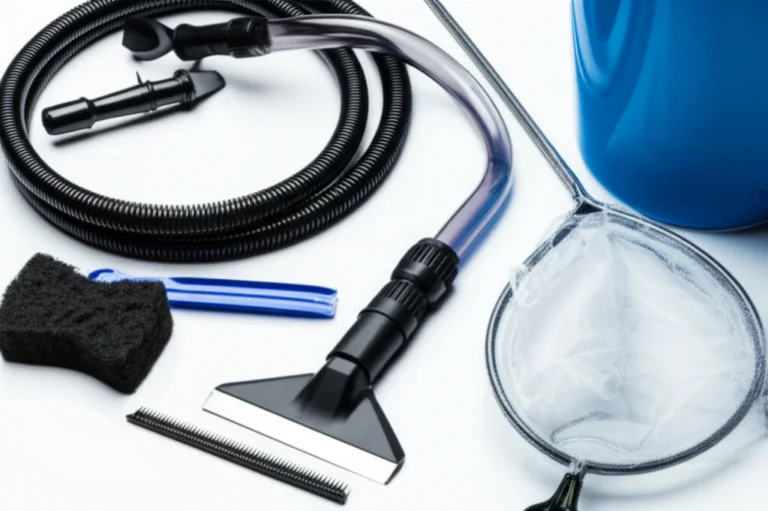
- Siphon water and debris while avoiding excessive disturbance of the substrate.
- Prepare conditioned replacement water at a suitable temperature.
- Refill slowly.
- Restart equipment and confirm the filter and heater are operating.
- Check thermometer and look for leaks or unusual behavior.
If nitrate remains high despite routine changes, check the source water, stocking level, feeding, and test method before making dramatic changes.
8. Feed Fish Without Overloading the Filter
Overfeeding adds organic waste, which can raise ammonia and nitrate and burden the filter. Feed appropriate portions for the species and remove uneaten food.
Aqueon suggests feeding only what fish consume in about 2–3 minutes, then removing leftovers. Treat that as a rough observation guide, not a universal feeding rule: bottom feeders, grazers, shy fish, and species with different diets need different routines.
- Feed a suitable diet for the species.
- Watch whether all fish get access to food.
- Remove excess food.
- Don’t add extra food because you’re away tomorrow; use a reliable care plan instead.
9. Maintain the Filter and Beneficial Bacteria
The filter’s biological media houses bacteria that help process ammonia and nitrite. Replacing all media at once or washing it under untreated tap water can disrupt that biological community.
- Clean mechanical media when flow drops or debris builds up.
- Rinse reusable media in removed aquarium water or appropriately conditioned water.
- Avoid cleaning all filter media and substrate aggressively on the same day.
- Replace media only according to its condition and design, not automatically just because a calendar says so.
- Confirm the filter is moving water and not clogged.
For filters, heaters, and maintenance supplies, see Aquarium Equipment.
10. Keep Stocking and Aquarium Size in Balance
More fish mean more waste, more oxygen demand, and more pressure on the biofilter. Tank size alone does not guarantee that a fish community is suitable: adult size, activity, territory, and species compatibility matter too.
- Research adult size, not just the tiny fish at the shop.
- Avoid buying fish before the aquarium is cycled.
- Add livestock gradually.
- Check that every species shares a compatible temperature and chemistry range.
- Plan for how quickly the biofilter can adapt to a larger load.
Our Fish and Aquatic Life section can help you explore species before committing to a stocking plan.
11. Record Results and Watch for Trends
Write down temperature, pH, ammonia, nitrite, nitrate, and water-change dates. Add notes about feeding, new fish, plant growth, and equipment changes.
A single pH reading may be unremarkable. A gradual downward trend alongside falling KH can tell a different story. Trends reveal causes that snapshots miss.
12. Check Equipment During Power Outages and Travel
A brief outage may be manageable, but long interruptions can stop filtration, heating, and circulation.
- Keep a battery-powered air pump for emergencies if appropriate.
- Avoid opening the aquarium unnecessarily if the room is cold.
- Do not feed heavily during an outage.
- Keep the tank covered where safe to retain warmth and reduce jumping.
- Restore equipment carefully and check temperature, flow, ammonia, and nitrite afterward.
- Arrange a capable fish sitter for longer trips, with clear feeding and emergency instructions.
🌿 How Plants, Substrate, and Decorations Affect Water Chemistry
A planted tank can use nutrients and provide cover, but plants do not replace filtration or water changes. In the light, plants use carbon dioxide; after lights-out, they respire. In a densely planted tank with carbon-dioxide injection, pH may vary across the day.
Substrate and hardscape can also alter chemistry:
- Crushed coral and limestone may gradually increase hardness and buffering.
- Driftwood and botanicals can release tannins and may lower pH in some water, especially when KH is low.
- Some active aquasoils are designed to influence water chemistry; follow their product guidance.
- Unknown rocks or decorations may affect hardness or release unsuitable substances.
Test before and after adding new materials. Aquascaping is beautiful, but a decorative rock should not quietly rewrite the water chemistry. Explore more in Aquascaping and Aquatic Plants.
🚰 Tap Water, Well Water, and Reverse-Osmosis Water
There is no universally best water source. The best choice is one that is safe, consistent, and appropriate for the fish.
| Water source | Benefits | Watch-outs |
|---|---|---|
| Municipal tap water | Convenient; often consistent | May contain chlorine/chloramine, nitrate, or chemistry unsuitable for some species |
| Well water | Can be suitable and mineral-rich | Needs testing for local contaminants and chemistry |
| Reverse-osmosis (RO) water | Low dissolved minerals; useful for blending or specialized setups | Needs remineralization for many freshwater uses |
| Deionized (DI) water | Very low dissolved ions | Must be prepared correctly for livestock; not automatically ready for fish |
| Bottled drinking water | Convenient in limited situations | Mineral content and additives vary; read labels and test |
When RO/DI water makes sense
RO/DI can be useful when tap water has unsuitable hardness or unwanted contaminants, especially for certain soft-water fish or reef systems. But pure RO/DI water has little buffering or mineral content. Do not pour it in as if “zero minerals” automatically means ideal aquarium water. Remineralize or blend it according to the needs of the livestock.
Aqueon’s guide discusses RO/DI water and adding minerals when required. For marine tanks, follow a dedicated saltwater preparation process rather than applying freshwater rules.
⚠️ Common Temperature and Water-Chemistry Mistakes
These are the shortcuts that most often create extra work:
- ❌ Trusting the heater dial without checking the water.
- ❌ Buying incompatible fish because each looks healthy at the shop.
- ❌ Adding fish to an uncycled aquarium.
- ❌ Changing most of the water without matching temperature and treating it.
- ❌ Replacing all biological filter media at once.
- ❌ Chasing a precise pH with repeated chemicals.
- ❌ Assuming clear water means ammonia and nitrite are zero.
- ❌ Using top-offs instead of water changes.
- ❌ Overfeeding, then blaming the filter when waste rises.
- ❌ Assuming every conditioner makes an ammonia reading harmless.
Aqueon cautions against repeated pH adjustments because they can cause a pH roller coaster. That advice can seem to conflict with species-specific care requirements, but the two perspectives fit together: don’t change chemistry without a reason; do provide suitable chemistry when the fish genuinely need it.
The same principle applies to temperature. A broad community range is useful for planning, but a species with specialized needs should not be forced into an unsuitable compromise. Our Fish Care and Species Profiles can help you check those differences.
🆘 How to Fix Aquarium Water Problems Safely
First, identify the problem. Test the water, verify thermometer, and check filter flow. Then make a measured correction. Avoid changing several variables at once unless the fish are in immediate danger.
Correcting Amonia and Nitrite Spikes
- Test ammonia and nitrite again to confirm the readings.
- Check that the filter is running and the biological media has not been replaced or sterilized.
- Stop overfeeding and remove uneaten food or decaying material.
- Perform a partial water change with conditioned, temperature-matched water.
- Increase aeration and circulation if appropriate.
- Retest and repeat careful partial changes as needed.
- Do not add more fish until readings remain at zero and the biofilter is stable.
If fish are gasping, losing balance, or rapidly deteriorating, treat it as urgent and contact an aquatic veterinarian or experienced specialist. A water conditioner may help with specific disinfectants or situations, but it does not replace correcting the underlying waste load and maintaining filtration.
Managing High Nitrate
- Confirm your test result and test the source water.
- Use partial water changes with safe replacement water.
- Reduce overfeeding and remove decaying debris.
- Check stocking levels and filter maintenance.
- Consider healthy plant growth as one part of nutrient management, not a substitute for upkeep.
If the tap water itself contains nitrate, discuss suitable source-water treatment or RO blending with a knowledgeable aquarium professional.
Responding to pH Swings and Hardness Problems
If pH moves unexpectedly, test KH and GH, check source water, and review recent changes such as new substrate, driftwood, or water conditioner.
- Avoid rapid pH-up or pH-down dosing.
- Confirm that test reagents are current and used correctly.
- Use gradual water changes to restore a consistent source-water routine.
- For fish with specialized needs, adjust water outside the aquarium first and verify the result.
- Ask an aquatic veterinarian or experienced specialist for help when fish are unwell or the chemistry is complex.
The goal is not to win a pH beauty contest. It is to provide a stable environment that meets the fish’s actual needs.
Handling an Overheated or Chilled Aquarium
If temperature is outside the safe range:
- Confirm the reading with a second thermometer if possible.
- Check heater operation, filters, room temperature, and sunlight exposure.
- Make changes gradually rather than adding ice or hot water directly.
- For overheating, reduce room heat, shade the tank, improve ventilation, and increase surface movement.
- For a chilled tank, use a properly sized heater and monitor the temperature as it rises.
- Watch fish closely and seek professional advice if they show severe distress.
A fan across the water’s surface can cool through evaporation, but it also increases evaporation and requires closer top-off monitoring. Aquarium chillers offer more precise cooling for systems that need it. See Aquarium Equipment for equipment guidance.
When to Use Water Conditioners, Buffers, and Other Treatments
Use a product because it solves a defined problem—not because the bottle promises “perfect water.”
- Water conditioners: for chlorine, chloramine, or other label-specific concerns.
- Buffers: where a known KH or pH need exists and the product suits the livestock.
- Remineralizers: when preparing RO/DI water for species that need minerals.
- Amonia treatments: follow label directions and keep testing; they do not replace biofiltration.
- Medication: use only for an identified health concern and consider effects on the biofilter and other livestock.
Check compatibility, dose carefully, and avoid stacking multiple treatments without understanding their interactions.
🔎 Fish Stress Signs That May Point to Poor Water Quality
A stressed fish might show:
- Rapid gill movement or gasping at the surface.
- Clamped fins, hiding, or unusual lethargy.
- Loss of appetite or sudden changes in swimming.
- Rubbing against objects, spots, sores, or discoloration.
- Several fish acting strangely at the same time.
These signs can reflect disease, parasites, low oxygen, ammonia, nitrite, temperature problems, or other causes. Start with temperature, ammonia, nitrite, nitrate, and filter flow, then look for other symptoms. Don’t diagnose ich from a single spot or treat the entire tank blindly.
If symptoms are severe, persistent, or spreading, contact an aquatic veterinarian. The Merck Veterinary Manual provides veterinary context for aquarium-fish health.
🗓️ Aquarium Water-Maintenance Schedule
Use this as a flexible template, then adjust it to your test results and livestock.
| Frequency | Task |
|---|---|
| Daily | Check fish behavior, filter flow, heater function, and visible temperature reading |
| Weekly | Test key parameters as needed; remove debris; perform an appropriate partial water change |
| Monthly or as needed | Inspect filter media, tubing, heater, thermometer, and electrical connections |
| After adding fish or major maintenance | Test ammonia and nitrite more frequently |
| During a new tank cycle | Monitor ammonia and nitrite regularly; add livestock only when the biofilter is ready |
The right maintenance routine is the one that keeps your readings stable and your fish behaving normally. And if you’re wondering how to make the water “perfect,” the most reliable answer is often less exciting—and more useful—than another bottle: know your fish, measure the water, and change it consistently.