Support our educational content for free when you purchase through links on our site. Learn more
🐠 What Size Fish Tank Supports a Diverse Aquarium?

For How big of a fish tank do I need to support a diverse range of aquatic species and plant life? A 55–75-gallon aquarium is a flexible starting point for a varied community with live plants, while a carefully planned 20-gallon long can work for a smaller, compatible selection of species. The right size depends on adult fish size, group needs, behavior, tank dimensions, and how much room you need for plants and swimming.
We once planned a “simple” community around a few tiny fish, only to discover that their proper school, bottom-dwelling neighbors, and leafy cover all needed more space than the store display suggested. That’s the aquarium-sized plot twist: gallons matter, but footprint and stocking choices matter just as much.
Key Takeaways
- Consider 55–75 gallons for more flexibility with compatible fish groups, plants, and distinct habitat zones.
- A 20-gallon long can suit a modest community when species, group sizes, and adult needs are chosen carefully.
- Prioritize footprint, not just volume: active swimmers need horizontal room, while bottom dwellers need floor space.
- Skip the one-inch-per-gallon rule. It overlooks adult size, behavior, social needs, and waste production.
- Cycle the tank, test the water, and stock gradually to protect fish and give beneficial bacteria time to keep up.
- Plan the whole habitat first: include plants, hardscape, open swimming lanes, filtration, maintenance, and room for growth.
Table of Contents
- ⚡️ Quick Tips and Facts
- 🌿 Background: Why Aquarium Size Shapes Your Underwater Ecosystem
- 📏 How to Calculate the Right Fish Tank Size
- Tank volume, dimensions, and usable swimming space
- Why a gallon-per-inch rule can mislead
- How to estimate stocking capacity responsibly
- 🐠 Why Aquarium Size Matters for Fish, Plants, and Water Quality
- Stability, waste, and the nitrogen cycle
- Swimming room, territories, and social behavior
- Light, substrate, and space for aquatic plants
- 📦 Common Aquarium Sizes: What Each Tank Can Support
- Nano tanks and small aquariums
- 20–40-gallon community aquariums
- 55–75-gallon planted and community tanks
- 90 gallons and larger: room for a diverse ecosystem
- 🧭 10 Steps to Choose the Best Aquarium Size for Your Species
- 1. List the fish, invertebrates, and plants you want
- 2. Check adult size and minimum tank requirements
- 3. Match tank shape to swimming behavior
- 4. Account for schooling, shoaling, and social needs
- 5. Plan territories, hiding places, and compatibility
- 6. Include substrate, hardscape, and plant growth
- 7. Size filtration for the bioload
- 8. Check floor strength and tank placement
- 9. Budget for equipment and ongoing maintenance
- 10. Leave room for growth and future changes
- 🐟 Tank Size by Aquatic Species and Community Type
- Freshwater community fish
- Goldfish, cichlids, and other high-bioload fish
- Shrimp, snails, and other invertebrates
- Beta fish and single-species setups
- Saltwater fish and reef aquariums
- 🌱 Choosing a Tank for Aquatic Plants and Aquascaping
- Low-tech planted tanks
- High-tech planted tanks with CO₂
- Carpeting plants, tall plants, and open swimming zones
- Balancing fish, plant mass, and aquascape layout
- 🛠️ Setting Up Your Aquarium: Space, Equipment, and Safety
- Stand, floor load, and safe placement
- Filter, heater, lighting, and lid selection
- Substrate, hardscape, and water displacement
- Cycling the tank before adding livestock
- 💚 Creating a Healthy, Happy Home for Fish and Plants
- Water testing and routine maintenance
- Aclimation, quarantine, and gradual stocking
- Signs your aquarium is overstocked or undersized
- 🚫 Aquarium Size Mistakes to Avoid
- 📋 Example Stocking Plans for Diverse Aquariums
- A beginner-friendly planted community tank
- A peaceful shrimp-and-plant aquarium
- A larger, species-rich community aquarium
- ✅ Quick Tips for Picking Your Tank Size
- 🔗 Recommended Links
- ❓ FAQ
- 📚 Reference Links
- 🏁 Conclusion
Table of Contents
- ⚡️ Quick Tips and Facts
- 🌿 Background: Why Aquarium Size Shapes Your Underwater Ecosystem
- 📏 How to Calculate the Right Fish Tank Size
- Tank volume, dimensions, and usable swimming space
- Why a gallon-per-inch rule can mislead
- How to estimate stocking capacity responsibly
- 🐠 Why Aquarium Size Matters for Fish, Plants, and Water Quality
- Stability, waste, and the nitrogen cycle
- Swimming room, territories, and social behavior
- Light, substrate, and space for aquatic plants
- 📦 Common Aquarium Sizes: What Each Tank Can Support
- Nano tanks and small aquariums
- 20–40-gallon community aquariums
- 55–75-gallon planted and community tanks
- 90 gallons and larger: room for a diverse ecosystem
- 🧭 10 Steps to Choose the Best Aquarium Size for Your Species
- 1. List the fish, invertebrates, and plants you want
- 2. Check adult size and minimum tank requirements
- 3. Match tank shape to swimming behavior
- 4. Account for schooling, shoaling, and social needs
- 5. Plan territories, hiding places, and compatibility
- 6. Include substrate, hardscape, and plant growth
- 7. Size filtration for the bioload
- 8. Check floor strength and tank placement
- 9. Budget for equipment and ongoing maintenance
- 10. Leave room for growth and future changes
- 🐟 Tank Size by Aquatic Species and Community Type
- Freshwater community fish
- Goldfish, cichlids, and other high-bioload fish
- Shrimp, snails, and other invertebrates
- Beta fish and single-species setups
- Saltwater fish and reef aquariums
- 🌱 Choosing a Tank for Aquatic Plants and Aquascaping
- Low-tech planted tanks
- High-tech planted tanks with CO₂
- Carpeting plants, tall plants, and open swimming zones
- Balancing fish, plant mass, and aquascape layout
- 🛠️ Setting Up Your Aquarium: Space, Equipment, and Safety
- Stand, floor load, and safe placement
- Filter, heater, lighting, and lid selection
- Substrate, hardscape, and water displacement
- Cycling the tank before adding livestock
- 💚 Creating a Healthy, Happy Home for Fish and Plants
- Water testing and routine maintenance
- Aclimation, quarantine, and gradual stocking
- Signs your aquarium is overstocked or undersized
- 🚫 Aquarium Size Mistakes to Avoid
- 📋 Example Stocking Plans for Diverse Aquariums
- A beginner-friendly planted community tank
- A peaceful shrimp-and-plant aquarium
- A larger, species-rich community aquarium
- ✅ Quick Tips for Picking Your Tank Size
- 🏁 Conclusion
- 🔗 Recommended Links
- ❓ FAQ
- 📚 Reference Links
⚡️ Quick Tips and Facts
If you want a tank that supports a varied community of fish, invertebrates, and live plants, start by planning around the animals’ adult size, group needs, behavior, and water-quality requirements—not the number of fish that look cute at the shop. For inspiration, see our guide to 25 peaceful fish tank mates for a thriving aquarium 🎶.
| Your goal | A practical starting point | Why |
|---|---|---|
| A small, carefully planned planted setup | 10–20 gallons | Works for selected nano fish or shrimp, but offers less room for error and species variety |
| A modest freshwater community | 20-gallon long or larger | A useful footprint for small schools, plants, and an open swimming lane |
| A varied community with more flexibility | 55–75 gallons | More room for compatible groups, planting zones, and stable water conditions |
| Larger fish, larger schools, or ambitious aquascaping | 75 gallons and up | More volume and footprint, provided the species’ needs and floor support are suitable |
These are planning ranges, not stocking guarantees. A 55-gallon tank is not automatically suitable for every “small” fish, and a larger tank cannot make incompatible species compatible.
- ✅ Prioritize footprint. Long and wide tanks often offer more useful swimming and planting space than tall, narrow tanks of similar volume.
- ✅ Plan for adult fish and full social groups. Many schooling fish do better in groups of six or more, but species-specific guidance should decide the final number.
- ✅ Include plants and hardscape in your layout. A tank filled edge-to-edge with decor may have a big volume but little open swimming room.
- ❌ Don’t rely on the “one inch of fish per gallon” rule. Body shape, adult size, behavior, and waste production vary too much.
- ✅ Cycle the aquarium and test its water before stocking. The U.S. Geological Survey explains the nitrogen cycle, while the RSPCA’s aquarium guidance emphasizes preparing and maintaining suitable water conditions.
Want a visual tour of common aquarium footprints? The Aquarium Sizes – What’s The Perfect Size For YOU video by Aquarium Store Depot walks through dimensions and common tank options.
🌿 Background: Why Aquarium Size Shapes Your Underwater Ecosystem

An aquarium is a small ecosystem with a glass border. Fish consume food and release waste, plants use light and nutrients, beneficial microbes process ammonia, and you keep the whole production running with filtration and maintenance. Tank size affects every performer in that aquatic orchestra.
At Aquarium Music™, we’ve found that new aquarists often choose a tank by asking, “How many fish can I fit?” A more useful question is: What habitat can I maintain comfortably for the species I actually want? That shift prevents the familiar chain reaction: fish outgrow the tank, water quality becomes harder to control, plants struggle in cramped layouts, and the aquarist starts shopping for a second aquarium before the first one has finished cycling.
The competing guide from Petstore.com recommends 55 gallons for a diverse community and 75 gallons or more for added flexibility. That’s a sensible starting point for many mixed setups, not a universal minimum. A carefully selected community of small fish and plants may thrive in a 20- or 29-gallon tank; large, active, territorial, or high-waste fish may need substantially more.
The same article offers a useful test: “If your livestock list only works on paper with no room for growth, hiding spots, or mistakes, the tank is probably too small.” We agree. A good setup leaves room for natural behavior and gives you a manageable margin when feeding, maintenance, or plant growth doesn’t go exactly to plan.
For more practical planning advice, browse our guides to Aquarium Setup, Fish Care and Species Profiles, and Aquascaping and Aquatic Plants.
📏 How to Calculate the Right Fish Tank Size
Tank volume, dimensions, and usable swimming space
A tank’s stated volume is only one part of the story. Two aquariums can hold about the same amount of water but provide very different environments.
For a rectangular tank, estimate the volume using its inside dimensions:
Gallons ≈ length × width × water height inches ÷ 231
For liters:
Liters ≈ length × width × water height in centimeters ÷ 1,000
A tank sold as a 20-gallon long is commonly around 30 × 12 × 12 inches. A 20-gallon high has a taller profile, so it provides less horizontal distance for a fish that cruises back and forth. The Petstore.com size guide similarly points out that footprint matters: a 20-gallon long offers more horizontal swimming space than a taller 20-gallon model.
| Common tank style | Approximate dimensions | Useful for |
|---|---|---|
| 20-gallon long | 30 × 12 × 12 in | Small community fish, shrimp, planted layouts with horizontal space |
| 29-gallon | 30 × 12 × 18 in | Taller plants, modest communities, some fish that use vertical space |
| 40-gallon breeder | 36 × 18 × 16 in | Broad aquascapes, bottom dwellers, more flexible planting zones |
| 55-gallon | 48 × 13 × 20 in | Long swimming lanes and a larger community, though the front-to-back width is relatively narrow |
| 75-gallon | 48 × 18 × 21 in | More room for aquascaping, territories, and a broader community |
Dimensions vary by manufacturer, so check the actual product specifications before buying. Standard tanks from brands such as Aqueon, Fluval, and Marineland can differ in shape, trim, and included equipment.
Volume also changes once you add substrate, rocks, driftwood, and equipment. A deep substrate bed or a substantial hardscape can displace a surprising amount of water. The practical lesson: calculate the footprint for animals and plants, then treat the tank’s stated gallons as an approximate measure of water volume—not a promise of usable habitat.
Why a gallon-per-inch rule can mislead
The “one inch of fish per gallon” shortcut sounds wonderfully tidy. Aquariums, unfortunately, did not agree to be tidy.
It ignores:
- Body mass: A deep-bodied fish creates more waste than a slender fish of equal length.
- Adult size: A juvenile fish at the store may grow dramatically.
- Behavior: An active swimmer needs more horizontal room than a sedentary species.
- Social needs: A schooling fish kept alone or in a tiny group may be stressed even if the tank’s water volume seems ample.
- Compatibility: Territorial or predatory fish can’t be stocked safely just because the arithmetic works.
- Filtration and maintenance: A strong filter cannot replace suitable space or routine water changes.
A 12-inch oscar is not equivalent to twelve one-inch tetras. Nor is a pleco’s waste production equivalent to that of a tiny rasbora. The RSPCA’s fish-care advice and species-specific care resources are better guides than a single inch-per-gallon calculation.
How to estimate stocking capacity responsibly
Use this sequence instead of relying on a simple stocking formula:
- Choose the species first. Write down likely adult size, temperament, preferred water conditions, and group size.
- Check the minimum tank dimensions for each species. A species may need a particular footprint even if its volume seems adequate.
- Plan the complete social group. Don’t calculate for one schooling fish when responsible care requires a group.
- Map the habitat. Reserve open swimming lanes, territories, caves, and planted cover.
- Consider total bioload. Larger, more active, and messier fish generally add more waste.
- Check your filter and maintenance capacity. These help manage waste but do not excuse overcrowding.
- Leave a safety margin. If the plan depends on perfect maintenance and has no room for fish growth, revise it.
A useful paper exercise is to draw the tank footprint to scale, mark hardscape and plant zones, then sketch the open water left for swimming. That drawing often tells us more than the gallon number alone.
🐠 Why Aquarium Size Matters for Fish, Plants, and Water Quality
Stability, waste, and the nitrogen cycle
Fish waste and decomposing food can release amonia, which is toxic to aquatic animals. Beneficial bacteria in a mature biological filter convert ammonia to nitrite and then nitrate. The U.S. Geological Survey’s overview of nitrogen in water explains the broader nitrogen cycle; aquarium keepers manage the same basic waste-processing chain in a compact system.
More water volume can dilute sudden changes and make temperature and water chemistry less prone to rapid swings. That doesn’t make a large aquarium self-cleaning. It simply gives you more buffer while you maintain filtration, test water, and perform water changes.
A small, heavily stocked tank can change quickly. In a larger tank, the same amount of waste may be less concentrated—but the fish still produce it, and the filter still has to process it. Tank size buys resilience, not permission to neglect care.
Swimming room, territories, and social behavior
Fish use space in different ways. Some cruise along the front glass; others stay near the substrate, defend a cave, weave through plants, or hover in open water. A mixed aquarium should provide more than one kind of usable space.
- Active swimmers benefit from uninterrupted horizontal lanes.
- Bottom dwellers need floor area, not just height.
- Territorial species need visual barriers and enough distance to establish separate areas.
- Schooling fish need room to move together rather than crowd into a corner.
- Shy fish and shrimp benefit from dense cover and retreat spaces.
Good aquascaping divides the tank into functional zones without turning it into a maze. For compatible fish ideas, see our guide to peaceful aquarium tank mates.
Light, substrate, and space for aquatic plants
Plants need light, nutrients, suitable substrate or attachment surfaces, and room to grow. A tank’s height and width influence where light reaches and how much floor area is available for planting. Tall tanks can showcase stem plants, but light intensity at the substrate may be lower than in a shallow tank using the same fixture.
The Petstore.com guide gives approximate lighting examples of 20–30 PAR at the substrate for lower-light plants such as anubias and Java fern, and 50+ PAR for demanding carpeting plants. PAR needs vary with plant species, water depth, light distribution, and CO₂ availability; use these figures as a starting reference rather than a universal prescription.
- Anubias and Java fern can be attached to wood or rock, so they don’t need deep planted substrate.
- Cryptocoryne and many stem plants need suitable rooting space and room to spread.
- Carpeting plants may require stronger light, stable nutrients, and often added CO₂.
- Floating plants can shade the water below and reduce the light reaching shorter plants.
Explore our Aquascaping and Aquatic Plants and Aquarium Equipment categories for help matching layout and lighting to your plan.
📦 Common Aquarium Sizes: What Each Tank Can Support
The ranges below are starting points for research, not guarantees that every listed animal belongs in every tank. Always confirm the adult size, social needs, water parameters, and minimum dimensions of each species.
Nano tanks and small aquariums
A 5- to 10-gallon tank can be a lovely shrimp or plant display, but its small water volume can be less forgiving of overfeeding, evaporation, and missed maintenance. It also sharply limits the number and type of fish that can be housed responsibly.
A 10-gallon aquarium is not a universal beginner tank. It can work well for a suitable small setup, but it isn’t a good home for many active community fish, goldfish, or species that need large groups and long swimming lanes. For a first fish community, moving up to a 20-gallon long often offers more planning flexibility.
20–40-gallon community aquariums
A 20-gallon long can support a modest community of compatible small fish, with room for plants and a defined swimming lane. A 29-gallon tank adds height for taller plants and fish that use more of the water column. A 40-gallon breeder has a notably broad footprint, making it especially useful for planted layouts and bottom-oriented species.
The Petstore.com guide describes a 20-gallon long as a reasonable beginner option for a modest tropical community and a 29-gallon as suitable for an established community or planted tank. We’d add a caveat: species choice matters more than the label “community.” Some fish sold as community fish grow large, need groups, or become territorial as adults.
55–75-gallon planted and community tanks
For people seeking more species variety and a wider safety margin, 55–75 gallons is a practical target. A 55-gallon tank can support a larger community of compatible small and medium species, while a 75-gallon tank’s extra front-to-back width usually gives you greater freedom to create planted zones, hideouts, and open swimming areas.
| Tank size | Approximate footprint | Planning strengths | Watch-outs |
|---|---|---|---|
| 55 gallons | 48 × 13 in | Long swimming lane; substantial water volume | Relatively narrow front-to-back footprint |
| 75 gallons | 48 × 18 in | More floor area, aquascaping room, and territory options | Greater total weight and equipment demands |
The competing Petstore.com guide calls 55 gallons ideal for a diverse community and 75 gallons or larger a more flexible choice. That is a useful rule of thumb when “diverse” means multiple schools, several habitat zones, and room to adjust the layout. A smaller carefully planned aquarium can still support a healthy community; it simply offers fewer options.
90 gallons and larger: room for a diverse ecosystem
At 90 gallons and above, the extra volume and footprint can support more ambitious planted layouts, larger schools, or appropriately selected larger fish. But bigger tanks also mean heavier loads, more water to change, larger filters, and higher consequences if a stand or floor isn’t suitable.
Some species still need purpose-built care. A large predator or a fish that grows to several feet does not become appropriate for a home aquarium merely because the tank is “large.” Check adult size and species-specific husbandry before purchase, and don’t use a big volume figure to paper over a mismatch.
🧭 10 Steps to Choose the Best Aquarium Size for Your Species
1. List the fish, invertebrates, and plants you want
Write down your preferred species before purchasing the aquarium. Include fish, shrimp, snails, and plants. That way, you can build the tank around compatible care requirements rather than trying to retrofit a dream fish into a tank you already own.
2. Check adult size and minimum tank requirements
Research adult size—not the size of the juvenile at the store—and check minimum tank dimensions. The Seriously Fish species database is one useful starting point for freshwater fish research, but cross-check care information with reputable species references and experienced aquarists.
A common mistake is buying a small juvenile pleco without realizing the fish may become very large. Ask the shop for the scientific name, then verify the adult size and care needs independently.
3. Match tank shape to swimming behavior
Choose a footprint suited to the species:
- Long tanks: often useful for active, horizontal swimmers.
- Wide tanks: offer more floor area for bottom dwellers and aquascaping.
- Taller tanks: can suit tall plants or fish that use vertical space, but height doesn’t replace horizontal room.
4. Account for schooling, shoaling, and social needs
Some fish need companions of their own species. Plan for the proper group size from the beginning rather than adding one fish at a time until the tank “looks full.” Many common small schooling fish are often kept in groups of six or more, though exact needs vary by species.
5. Plan territories, hiding places, and compatibility
Map out caves, plants, and sight breaks so shy fish can retreat and territorial fish can avoid constant face-to-face contact. Confirm that species share suitable water conditions and won’t eat or harass their tank mates. Our fish care and species profiles can help you build a compatible shortlist.
6. Include substrate, hardscape, and plant growth
Rocks, driftwood, and substrate take up space and affect the layout. Fast-growing plants may eventually fill an open lane; leave room for pruning and mature growth. If you’re designing a planted display, explore our aquascaping and aquatic plants guides.
7. Size filtration for the bioload
Choose biological filtration based on the aquarium and its livestock, following the filter manufacturer’s guidance while allowing for real-world conditions. The Petstore.com article gives 4–6 times tank volume per hour as a rough circulation target for community aquariums and 8–10 times for some heavily stocked setups. These are not universal rules: filter ratings can be measured under different conditions, and excessive current may stress slow-water fish.
A Fluval 307 canister filter is one product example for larger freshwater setups. Match the filter to the actual tank, animals, maintenance routine, and desired water movement—not just its advertised flow number.
8. Check floor strength and tank placement
Water is heavy: one U.S. gallon of water weighs about 8.34 pounds, before adding glass, substrate, rocks, equipment, and the stand. A full 55-gallon setup can exceed 600 pounds, depending on the build. Place the aquarium on a level, purpose-built stand and ask a qualified building professional if you’re unsure about floor capacity, especially for larger tanks or upper floors.
9. Budget for equipment and ongoing maintenance
Tank size affects the filter, heater, lighting, lid, water conditioner, test kits, and the time needed for water changes. A bigger aquarium may be more stable but takes more water and effort to maintain. Browse our aquarium equipment guides before choosing a setup.
10. Leave room for growth and future changes
The Petstore.com guide suggests adding a 20–30% margin beyond a large species’ minimum tank requirement. Treat that as a helpful planning cushion, not a formal standard. Build in room for adult growth, plant spread, and normal changes in the community. If the stocking plan only works when every fish stays tiny and every maintenance task happens perfectly, choose a larger tank or simplify the livestock list.
🐟 Tank Size by Aquatic Species and Community Type
Freshwater community fish
Small, peaceful species such as selected tetras, rasboras, and livebearers can be suitable for community aquariums when their group size, adult dimensions, and water preferences align. “Small” doesn’t automatically mean “one fish per gallon”—the tank still needs enough room for the proper school and open swimming space.
A 20-gallon long can be a reasonable starting point for a modest, carefully selected group. A 55- or 75-gallon setup gives you more flexibility to include several species and create distinct zones. See our Fish Care and Species Profiles and peaceful fish-mate guide before combining species.
Goldfish, cichlids, and other high-bioload fish
Goldfish, many cichlids, and large or messy fish can produce substantial waste or need more space than their juvenile size suggests. Goldfish are not a good fit for tiny bowls or small tanks simply because they’re often sold that way. Cichlid needs vary widely: a small, peaceful dwarf cichlid and a large, aggressive species have very different requirements.
The same caution applies to common plecos and other large-growing fish. The Petstore.com guide notes that common plecos may reach up to 24 inches, and uses the oscar as an example of a fish whose adult size makes small-tank arithmetic misleading. Verify the exact species before you buy.
Shrimp, snails, and other invertebrates
Freshwater shrimp and small snails can thrive in planted aquariums with stable water quality, biofilm, and plenty of cover. They’re not “maintenance-free,” and some fish will eat shrimplets or adult shrimp. If you want a breeding shrimp colony, provide dense moss or fine-leaved plants and choose peaceful tank mates—or build a dedicated shrimp aquarium.
Beta fish and single-species setups
A beta’s small size doesn’t mean a tiny container is a suitable long-term home. Provide a properly filtered, heated aquarium with room for the fish to swim and rest, and avoid tank mates that nip fins or compete aggressively. A planted aquarium can offer cover and enrichment, but leave easy access to the surface because betas breathe air.
For a single-species setup, choose the tank around the animal’s adult needs and behavior. “Only one fish” is not a reason to ignore tank dimensions, filtration, or water quality.
Saltwater fish and reef aquariums
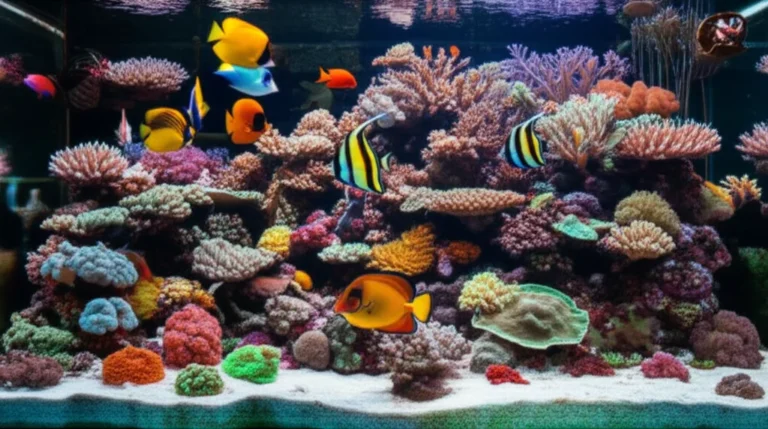
Saltwater aquariums add another layer of planning: salinity, rockwork, water flow, marine compatibility, and often coral lighting. Some marine fish need much larger swimming areas than their store size suggests, while reef inhabitants may require different flow and water conditions from fish-only systems.
A 40-gallon breeder can be a useful footprint for some beginner reef plans, but stocking depends on species and husbandry. The Petstore.com guide suggests 75 gallons or more for a mixed reef with greater flexibility. Check specialist guidance from organizations such as Bulk Reef Supply and follow species-specific care requirements.
🌱 Choosing a Tank for Aquatic Plants and Aquascaping
Low-tech planted tanks
Low-tech planted aquariums use moderate lighting, hardy plants, and no injected CO₂. They can beautiful and forgiving when you select plants suited to your setup.
Good candidates often include:
- Anubias
- Java fern
- Java moss
- Cryptocoryne species
- Some Vallisneria varieties
- Floating plants suited to your water conditions
Anubias and Java fern are commonly attached to wood or rock; burying their rhizomes can harm them. For plant selection and layout ideas, visit our Aquascaping and Aquatic Plants category.
High-tech planted tanks with CO₂
High-light planted aquariums can grow carpeting plants and demanding species, but they need more careful coordination among light, nutrients, CO₂, and maintenance. Strong light without adequate nutrients or carbon can encourage algae rather than producing the lush carpet you imagined.
A larger tank can offer more layout possibilities, but it also requires suitable lighting coverage and often more equipment. The Petstore.com guide describes CO₂ as nearly essential for planted setups above medium light; in practice, requirements depend on the plants, intensity, and growth goals.
Carpeting plants, tall plants, and open swimming zones
Design the tank in layers:
- Foreground: short plants or open sand for visual breathing room.
- Midground: rocks, wood, and compact plants that create structure.
- Background: tall stems or plants that frame the scene.
- Open lane: unobstructed space for active swimmers.
- Shelter zone: dense cover for shy fish and shrimp.
This layout lets you enjoy a planted aquascape without turning the whole aquarium into a thicket. Consider how fast plants grow and how often you’re willing to trim them.
Balancing fish, plant mass, and aquascape layout
Plants absorb nutrients and provide cover, but they do not replace filtration or water changes. Dense planting can also reduce swimming space and limit surface access if floating plants cover everything. Keep clear routes for fish and ensure filter intake and output aren’t blocked by leaves or hardscape.
An aquascape should serve its inhabitants as well as your camera. If fish spend the day wedged behind a rock because the “showpiece” layout leaves no retreat space, the design needs revising.
🛠️ Setting Up Your Aquarium: Space, Equipment, and Safety
Stand, floor load, and safe placement
Choose a level, stable, aquarium-rated stand that supports the tank’s full footprint. A filled aquarium is heavy, and the load includes water, glass, substrate, hardscape, equipment, and the stand itself.
Before filling:
- Check that the floor is level.
- Keep the tank away from direct sunlight and heat sources.
- Leave access for maintenance and filter servicing.
- Place it near an electrical outlet, while keeping cords protected from splashes.
- Confirm that the stand supports the aquarium according to its manufacturer’s instructions.
For larger tanks, don’t guess about floor capacity. Seek qualified advice.
Filter, heater, lighting, and lid selection
Pick equipment for the actual aquarium volume, livestock, room temperature, and plants. Tropical freshwater tanks may need a heater; temperate or cool-water species may not. If using multiple heaters in a large setup, plan placement and monitoring carefully.
Useful equipment categories include:
- Filter: sized for the tank’s bioload and appropriate flow.
- Heater and thermometer: selected for the species and room conditions.
- Lighting: matched to tank depth and plant demands.
- Lid: helps reduce evaporation and prevents jumping.
- Test kit: measures ammonia, nitrite, nitrate, and relevant water chemistry.
Brands such as Fluval, Aqueon, and Marineland offer aquarium products, but compare specifications and compatibility rather than buying a bundle just because the box says “complete.”
Substrate, hardscape, and water displacement
Choose substrate based on the plants and animals you plan to keep. Sand may suit some bottom-dwelling fish, while planted substrates can support rooted plants. Rocks and driftwood should be aquarium-safe and stable; secure heavy pieces so they cannot topple if a fish digs.
Before buying materials, sketch the layout and estimate how much floor area will remain open. The hardscape can create shelter and visual depth, but too much can remove useful swimming and planting space.
Cycling the tank before adding livestock
A new aquarium needs an established biological filter before it can reliably process fish waste. The process is called cycling. Do not add a full community immediately after filling the tank.
- Set up the tank, filter, heater if needed, and substrate.
- Add treated water and run the equipment.
- Establish beneficial bacteria using a fishless cycling method or another responsible approach.
- Test amonia, nitrite, and nitrate with a reliable aquarium test kit.
- Add livestock gradually only after the system is processing waste appropriately.
The Petstore.com guide estimates cycling can take 4–8 weeks, though conditions and methods vary. Bottled bacteria products such as FritzZyme TurboStart 700 or Tetra SafeStart Plus may help establish bacteria, but testing—not the bottle’s promise—should determine when the tank is ready. For more setup guidance, explore our Aquarium Setup category.
💚 Creating a Healthy, Happy Home for Fish and Plants
Water testing and routine maintenance
Test water regularly, especially after setup, adding livestock, or noticing unusual behavior. A liquid test kit such as the API Freshwater Master Test Kit can help measure common freshwater parameters. Use the results to guide water changes and investigate problems; don’t treat a single test reading as a complete diagnosis.
Your routine may include:
- Removing uneaten food and visible debris.
- Cleaning filter media gently in removed aquarium water, not untreated tap water.
- Pruning plants and removing decaying leaves.
- Checking heater, filter flow, and temperature.
- Performing water changes based on stocking, test results, and plant needs.
A 25% weekly water change is a common starting routine, but actual needs depend on livestock and water measurements. The Petstore.com guide gives example schedules ranging from weekly changes in smaller or more densely stocked setups to less frequent intervals in some larger tanks. Test your water and adjust; don’t follow a calendar blindly.
Aclimation, quarantine, and gradual stocking
Add fish slowly, allowing the biological filter to respond to the increased waste. Quarantining new fish in a separate, properly equipped tank can help you observe them and reduce the chance of introducing disease to an established community.
When acclimating:
- Match the new fish to the aquarium’s temperature gradually.
- Follow a species-appropriate acclimation method.
- Avoid adding transport water to the aquarium when possible.
- Observe new arrivals closely for stress, injury, or disease.
- Test water more frequently after each addition.
Signs your aquarium is overstocked or undersized
Watch for patterns rather than waiting for a dramatic crisis:
- Amonia or nitrite appears in a mature, stocked tank.
- Nitrate rises quickly between water changes.
- Fish gasp at the surface or crowd near filter outlets.
- Aggression or territorial chasing becomes persistent.
- Fish have no room to swim naturally or retreat from one another.
- Plants and decor leave little open water.
- Maintenance must become unusually frequent to keep water conditions safe.
Any one sign can have multiple causes, so test the water and check equipment before blaming tank size alone. If crowding is part of the problem, reduce the stock or upgrade the habitat; adding a larger filter is not a substitute for room.
🚫 Aquarium Size Mistakes to Avoid
❌ Buying a tank for juvenile fish. Research adult size and lifespan first.
❌ Treating the gallon-per-inch rule as a stocking plan. It ignores behavior, body mass, group needs, and waste.
❌ Choosing height instead of footprint for active fish. More vertical water doesn’t necessarily create more swimming distance.
❌ Mixing species before checking compatibility. Similar size does not guarantee similar temperament or water requirements.
❌ Adding too many fish at once. A new filter needs time to establish biological capacity.
❌ Assuming plants replace filtration. Plants help use nutrients but do not eliminate the need for a mature biofilter and maintenance.
❌ Ignoring floor load and stand support. Water, glass, and decor add up quickly.
✅ Plan the full habitat before buying livestock. Include adult fish, social groups, planted zones, hiding places, equipment, and maintenance time.
📋 Example Stocking Plans for Diverse Aquariums
These are illustrative planning frameworks, not fixed stocking recipes. Fish availability, adult size, water chemistry, and local husbandry recommendations vary. Research each exact species before purchasing, and add animals gradually.
A beginner-friendly planted community tank
Tank concept: 20-gallon long or larger
Layout: planted background, open front swimming lane, small shelter area
Stocking approach: choose one small schooling species, a suitable group of bottom-dwelling fish if the footprint allows, and compatible plants. Avoid adding multiple species simply to make the tank look “diverse.”
A 20-gallon long can be a lovely starting point for a modest community, but school size and bottom-dweller needs may determine whether you should choose a larger tank. Keep the plan conservative and test water after each addition.
A peaceful shrimp-and-plant aquarium
Tank concept: 10–20 gallons or larger
Layout: moss, fine-leaved plants, wood, and gentle water flow
Stocking approach: focus on shrimp and plants, adding only carefully selected tank mates that won’t prey on the shrimp.
A shrimp-focused aquarium rewards stability and mature surfaces where biofilm can grow. Dense cover improves the odds that young shrimp survive, while a clear area makes feeding and observation easier.
A larger, species-rich community aquarium
Tank concept: 55–75 gallons or larger
Layout: open swimming lane, planted retreat zones, and separated visual territories
Stocking approach: choose compatible species that occupy different parts of the aquarium, while respecting group sizes and adult growth.
This is where a larger footprint can make the “aquatic orchestra” feel more natural: a school in open water, bottom dwellers exploring the substrate, plants creating shelter, and enough room for each group to behave normally. The key is still compatibility—not simply adding more species.
✅ Quick Tips for Picking Your Tank Size
- Start with the fish you want, not the tank on sale.
- Use adult size and behavior to choose volume and footprint.
- For a diverse community with plants, consider 55–75 gallons if space and maintenance capacity allow.
- A 20-gallon long can work for a modest, carefully selected community.
- Choose width and length for swimming and territories; height alone is not a substitute.
- Research full group sizes for schooling species.
- Plan plant growth, hardscape, equipment, and water changes before stocking.
- Cycle the aquarium and verify water quality with tests.
- Leave a margin for growth and routine imperfections.
- If your stocking plan only works on paper, simplify it or choose a larger aquarium.