Support our educational content for free when you purchase through links on our site. Learn more
Fish Compatibility Charts: Find Safe Tank Mates 🐠

Fish compatibility charts are a great first step for choosing tank mates, but they’re not a guarantee that two species will thrive together. Before adding fish, compare their adult size, temperament, social needs, and water requirements—then make sure your aquarium has enough room for everyone to live comfortably.
We’ve seen a pairing look perfect on paper and still unravel at feeding time: one fish claimed the best spot, another stopped coming out, and the “peaceful community” needed a rethink. That’s why this guide pairs freshwater and saltwater fish compatibility charts with the practical checks charts can’t make for you.
Key Takeaways
- Use compatibility charts as a shortlist, not a promise. Rating systems vary, and individual fish behave differently.
- Check adult size, temperament, water parameters, and social needs before choosing tank mates.
- Consider the aquarium’s footprint, layout, filtration, and feeding routine—not just its volume.
- Watch for persistent chasing, injuries, hiding, or missed meals. These can signal stress or incompatibility.
- Quarantine new arrivals and have a separation plan in case the match doesn’t work.
Table of Contents
- ⚡ Quick Tips and Facts
- 🐠 What Fish Compatibility Charts Can—and Can’t—Tell You
- How to Read a Fish Compatibility Chart
- Compatibility Ratings Explained
- 🌿 Freshwater Fish Compatibility Chart
- Community Tank Fish: Peaceful Species That Mix Well
- Beta Fish Tank Mates and Compatibility
- Cichlid Compatibility: African, South American, and Dwarf Cichlids
- Goldfish Compatibility and Cold-Water Tank Mates
- Bottom-Dwelling Fish and Algae Eaters
- 🌊 Saltwater Fish Compatibility Chart
- Ref-Safe Fish and Coral Compatibility
- Clownfish, Tangs, Angelfish, and Other Popular Marine Species
- Marine Fish That Should Not Share a Tank
- 🔍 The 12 Factors That Determine Fish Compatibility
- Temperament, Aggression, and Social Behavior
- Adult Size, Predation, and Mouth Size
- Water Temperature, pH, Hardness, and Salinity
- Swimming Level, Territory, and Tank Layout
- Schooling Needs, Sex Ratios, and Breding Behavior
- Diet, Competition, and Bioload
- 📏 How to Choose Compatible Fish for Your Aquarium
- Build a Stocking Plan Around Tank Size and Filtration
- Check Adult Size and Care Requirements Before Buying
- Add Fish in a Safe Order
- 🧪 Quarantine, Aclimation, and Safe Introductions
- 🚩 Signs Your Fish Are Incompatible
- What to Do About Bulying, Chasing, and Fin Nipping
- When to Separate or Rehome a Fish
- ❌ Common Fish Compatibility Mistakes
- 🧩 Example Stocking Plans for Popular Tank Sizes
- Beginer-Friendly Freshwater Community Tank
- Peaceful Nano Aquarium
- Hardy Saltwater Fish-Only Tank
- 📷 Fish Compatibility in Real Aquariums
- ✅ Quick Links and Compatibility-Checking Tools
- Conclusion
- Recommended Links
- FAQ
- Reference Links
⚡ Quick Tips and Facts
If you’re planning a community aquarium, our guide to 35 fish tank lighting options can help you choose illumination that supports your plants without turning the tank into a nightclub.
A fish compatibility chart is a starting point, not a stocking guarantee. Two species can tolerate similar water conditions and still clash over food, territory, or simply the right to exist in the same corner.
| Quick check | What to do |
|---|---|
| Adult size | Plan for the fish’s full-grown size, not the tiny version in the shop. |
| Water conditions | Match temperature, pH, hardness, and—in marine tanks—salinity. |
| Temperament | Look beyond labels like “peaceful”; consider fin-nipping, territoriality, and predatory behavior. |
| Social needs | Schooling fish generally need a proper group; a lonely shoaler can become stressed or unusually skittish. |
| Tank space | Use actual swimming length and usable territory, not just gallons or litres. |
| Plan B | Keep a divider or backup tank option available for unexpected aggression. |
- ✅ Check the adult size and care profile for every species before purchase.
- ✅ Choose fish with overlapping water requirements and compatible diets.
- ✅ Add stock gradually to a mature, cycled aquarium.
- ❌ Don’t assume “community fish” means compatible with every community fish.
- ❌ Don’t use a single inch-per-gallon rule; it ignores body shape, waste, behavior, and tank footprint.
- ❌ Don’t mix goldfish and tropical fish just because both look cheerful in the shop.
For setup, cycling, and equipment basics, browse our Aquarium Setup and Fish Care and Species Profiles categories. The question that trips up even experienced keepers is this: if two fish have similar care needs, why might they still be a poor match? We’ll get to the less obvious reasons below.
🐠 What Fish Compatibility Charts Can—and Can’t—Tell You
Compatibility charts help you shortlist likely tank mates by comparing temperament, water needs, adult size, and habitat. Aquarium Industries describes its freshwater and marine charts as tools to “take the mystery out of determining compatible species.” That’s useful as a first pass—but the mystery does not vanish just because two boxes are green.
Charts simplify a living situation. They cannot predict every individual fish’s temperament, every tank’s layout, or what happens when a peaceful species starts guarding eggs. Treat a chart like a map: helpful for choosing a route, but not a substitute for checking the road.
The Aquarium Industries freshwater and marine compatibility charts are examples of downloadable species guides. Retailer charts can be convenient, but use them alongside reliable species-specific care information and advice from a qualified aquatic veterinarian or experienced aquarist.
How to Read a Fish Compatibility Chart
First, find both species. Then check what the chart’s symbols or colors mean; there is no universal compatibility rating system shared across every chart.
Before treating a match as safe, check:
- The precise species, not just a broad label such as “tetra” or “cichlid.”
- Adult size and mouth size—a fish small enough to swallow is not a tank mate.
- Temperature and water chemistry, including hardness for freshwater fish and salinity for marine species.
- Behavior and social needs, including schooling, territoriality, and breeding aggression.
- Tank dimensions and layout—a long tank with visual barriers can work better than a tall, open one.
- The chart’s scope—a freshwater chart cannot answer reef-safety questions, and a marine fish-only chart may not assess coral compatibility.
We recommend checking care profiles in our Fish and Aquatic Life category, then comparing them with an aquarium-specific source such as Seriously Fish for freshwater species or LiveAquaria’s marine fish profiles for saltwater species.
Compatibility Ratings Explained
Use this practical interpretation when a chart’s ratings are vague or unfamiliar:
| Rating | Practical meaning | What you should do |
|---|---|---|
| Usually compatible | Similar care needs and a generally workable temperament pairing. | Still check space, group size, and individual behavior. |
| Conditional | Can work in specific circumstances, such as a large tank, careful aquascaping, or experienced supervision. | Read species profiles and plan a separation option. |
| High risk | A substantial chance of predation, chronic stress, aggression, or incompatible care needs. | Avoid for most home aquariums. |
| Not compatible | Fundamental conflict, such as predator and prey, or distinctly different water requirements. | Don’t combine them. |
A “compatible” rating does not promise peaceful behavior. A “conditional” rating does not mean impossible; it means success depends on details the chart may not show. If one source says “possible” and another says “avoid,” trust the more conservative recommendation when welfare, size, and tank space are uncertain.
🌿 Freshwater Fish Compatibility Chart
The table below is a screening guide, not a complete stocking prescription. Adult size, strain, sex, breeding condition, and tank dimensions can change the outcome.
| Fish or group | Often suitable tank mates | Use caution with | Usually avoid |
|---|---|---|---|
| Small tetras | Other peaceful fish of similar size; Corydoras; some small rasboras | Large or fast fish that outcompete them | Predators or fish large enough to eat them |
| Rasboras | Peaceful, similarly sized community fish | Very boisterous swimmers; fin nippers | Large predatory fish |
| Corydoras catfish | Peaceful community fish; other compatible bottom dwellers with enough space | Large, aggressive fish; sharp or unsuitable substrate | Predators and persistent bullies |
| Guppies and platies | Other peaceful livebearers; some small community fish | Fin nippers and fish with very different water needs | Predatory fish; many betas |
| Bettas | Carefully chosen, calm tank mates in suitably sized, planted tanks | Individual beta temperament; long-finned or colorful tank mates | Fin nippers, aggressive fish, or any pairing in a cramped tank |
| Goldfish | Other goldfish with comparable body type and swimming ability | Temperatures and waste load; mixed fancy and fast varieties | Tropical fish; fish that nip fins |
| African cichlids | Selected cichlids with matching habitat and water requirements | Aggression, territory, and stocking strategy | Small peaceful community fish |
| South American cichlids | Carefully selected species with similar size and temperament | Breding behavior; smaller tank mates | Fish small enough to be eaten |
For deeper care guidance, explore our Fish Care and Species Profiles and Aquascaping and Aquatic Plants guides. Plants, wood, rocks, and sight breaks can improve habitat—but they cannot make fundamentally incompatible fish compatible.
Community Tank Fish: Peaceful Species That Mix Well
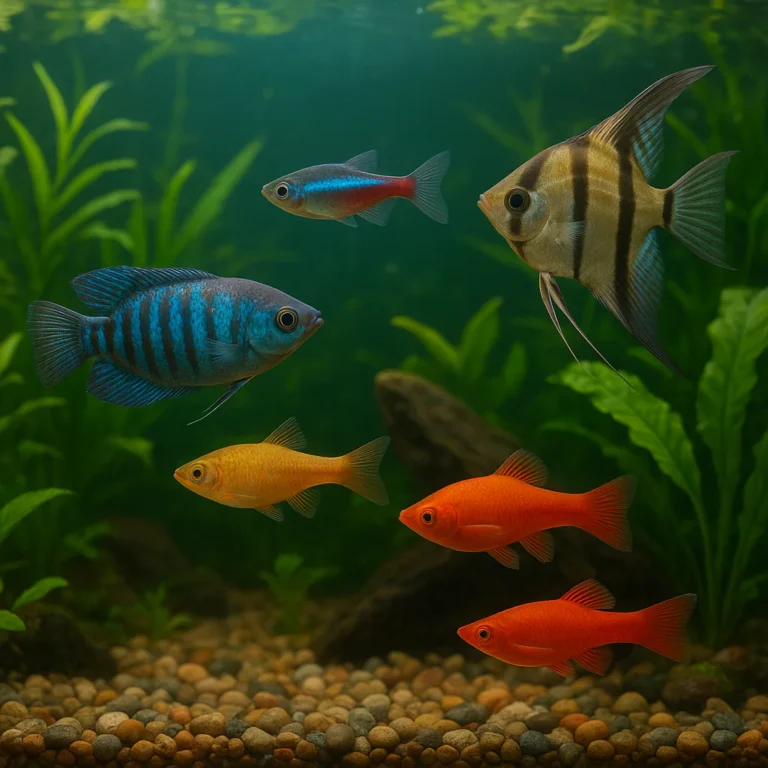
Common community choices include small rasboras, many tetras, Corydoras catfish, and some livebearers. The phrase “many species” matters: not every tetra is peaceful, and not every livebearer thrives in the same water.
A sensible match usually has:
- Similar temperature and water chemistry requirements
- Adult sizes that are not dramatically different
- Compatible feeding speed and diet
- Enough room for each species’ natural social behavior
- No persistent fin-nipping or territorial pressure
Corydoras are social catfish, so choose a group appropriate to the species and aquarium rather than buying a single “clean-up fish.” They also need their own food; leftover flakes are not a complete diet. See Seriously Fish’s species profiles and the RSPCA’s fish care guidance for broader welfare principles.
Beta Fish Tank Mates and Compatibility
A beta may tolerate tank mates, ignore them, or decide they are an unacceptable invasion of its personal kingdom. Temperament varies between individuals, so no chart can promise the outcome.
Potential companions sometimes considered for a suitably sized, established aquarium include small, peaceful bottom-dwellers or calm schooling species. The aquarium must have cover, stable water, and enough room for fish to avoid one another. Compatibility is less likely when:
- The beta has a history of attacking tank mates.
- Other fish have long, flowing fins or bright colors that may provoke attention.
- The tank is small, bare, or crowded.
- Tank mates nip fins or move aggressively around the beta.
Do not confuse a beta’s ability to breathe air with permission to keep it in poor water or a tiny container. The RSPCA beta care guidance and FishBase species information are useful references. When in doubt, a well-kept species-only aquarium is better than a forced roommate arrangement.
Cichlid Compatibility: African, South American, and Dwarf Cichlids
“Cichlid” describes a huge and varied family, not one compatible group. Many African Rift Lake cichlids are territorial and have water preferences that differ from those of many South American species. Dwarf cichlids still need appropriate territory and water quality; “dwarf” does not mean “automatically community-safe.”
| Group | Compatibility approach | Main watch-out |
|---|---|---|
| African Rift Lake cichlids | Plan around a deliberate species combination, habitat, and established care strategy. | Aggression and territory; water chemistry varies by lake and species. |
| South American cichlids | Match size, temperament, and water needs; account for breeding behavior. | Predation, territoriality, and sudden aggression while spawning. |
| Dwarf cichlids | Provide suitable cover and carefully chosen tank mates with compatible needs. | Territorial pairs and stress in crowded tanks. |
Avoid adding small, peaceful fish as “dither fish” unless the exact combination is well researched and the aquarium has enough space. A cichlid tank can beautifully structured, but rocks should be stable and provide retreat routes—not precarious piles waiting for a fish to redecorate.
Goldfish Compatibility and Cold-Water Tank Mates
Goldfish are not tropical community fish. They produce substantial waste, grow larger than many new keepers expect, and need appropriate filtration and swimming room. The safest general match is often other goldfish with comparable body shape and swimming ability.
Fast single-tailed varieties can outcompete slower fancy goldfish for food. Some fish may nip flowing fins, while tiny tank mates may be eaten. Avoid mixing goldfish with tropical species simply because the fish share a pet-store tank temporarily.
For welfare and housing guidance, consult the RSPCA’s goldfish care advice and OATA’s goldfish care sheet. The tank size, filtration, and maintenance plan should be built around the goldfish—not around a hoped-for companion.
Bottom-Dwelling Fish and Algae Eaters
“Bottom-dweller” and “algae eater” are job descriptions, not compatibility guarantees. Plecos, loaches, and catfish differ dramatically in adult size, diet, activity, and social needs. Some plecos grow very large; some loaches need groups or substantial swimming space.
Before buying an algae eater, ask:
- What does this species eat as an adult?
- How large does it get?
- Does it need a group, caves, or a particular substrate?
- Can it share the bottom area without competing with other fish?
- Is algae actually present in sufficient quantity, or will you need to provide food?
Algae-eating fish are not substitutes for tank maintenance. For aquarium equipment and filtration, browse Aquarium Equipment; for planted-tank design that creates useful cover, see Aquascaping and Aquatic Plants.
🌊 Saltwater Fish Compatibility Chart
Marine compatibility involves more than whether fish fight. You also need to assess reef safety, adult size, territorial behavior, diet, salinity, and whether the aquarium can support the species’ needs.
| Marine fish or group | Common compatibility approach | Important caveat |
|---|---|---|
| Clownfish | Often kept as a pair or in an appropriate community setup. | They can become territorial, especially around a host site or breeding area. |
| Tangs | Match species carefully and provide substantial swimming space. | Aggression, adult size, and species-specific space needs matter. |
| Dwarf angelfish | Consider only after checking coral and invertebrate risk. | “Ref-safe with caution” means individuals may still nip corals. |
| Gobies | Select by species and match with compatible tank mates and substrate. | Some have specialized diets, burowing needs, or shrimp partnerships. |
| Wrasses | Choose according to species, behavior, and aquarium setup. | Some need a covered tank or sand bed; adult size varies widely. |
| Predatory fish | Plan a species-focused system with suitable prey-size and housing considerations. | Small tank mates may become food, not friends. |
Use species-specific care information such as LiveAquaria’s marine fish profiles, then compare with guidance from an experienced marine aquarium professional. “Ref safe” and “peaceful” are separate questions.
Reef-Safe Fish and Coral Compatibility
A fish can be peaceful toward other fish and still nip coral, eat ornamental invertebrates, or disturb a reef aquascape. Reef suitability varies by species and sometimes by individual.
| Question | Why it matters |
|---|---|
| Does it eat coral polyps or invertebrates? | A fish may damage corals even if it never fights another fish. |
| Does it need a specialized diet? | Poor nutrition can lead to decline or unexpected feeding behavior. |
| Does it jump or burow? | Lid coverage and stable rockwork may be essential. |
| Is “reef safe” qualified? | “With caution” signals a risk, not a guarantee. |
Check the profile’s exact wording and identify the coral and invertebrates in your aquarium before buying. For reef-aquarium equipment and setup, consult our Aquarium Equipment and Aquascaping and Aquatic Plants categories—many layout principles, such as secure structures and clear sight lines, apply across freshwater and marine systems.
Clownfish, Tangs, Angelfish, and Other Popular Marine Species
Clownfish: Often a practical marine choice, but they may defend a favored area. Pairing and group plans should be species-specific.
Tangs: Their streamlined bodies are built for swimming. A small juvenile can look deceptively manageable, so plan around adult size and swimming length from the beginning.
Angelfish: Some marine angelfish may nip corals or other invertebrates. Check the individual species profile and the needs of your reef livestock.
Wrasses and gobies: These are not interchangeable categories. Some wrasses jump or need sand to sleep in; some gobies require targeted feeding or form specific partnerships.
A useful video resource is Aquarium Store Depot’s “10 Fish Combos That WON’T Fight in Your Tank!”. Treat the combinations as ideas to research, not a substitute for checking species, tank size, and your own livestock.
Marine Fish That Should Not Share a Tank
Avoid or approach with serious caution when the pairing involves:
- Predator and prey-sized fish
- Two highly territorial fish competing for the same space
- Fish with very different adult sizes or feeding requirements
- Species needing incompatible salinity, temperature, or habitat
- A coral-nipping species in a reef aquarium with vulnerable corals
- Fish that require more swimming space than the tank provides
Adding more rockwork does not fix every conflict. A fish that needs open swimming space may be stressed by a maze, while a territorial species may claim the whole aquarium regardless of how many caves you add.
🔍 The 12 Factors That Determine Fish Compatibility
A chart often compresses a complicated decision into a colored symbol. We expand the checklist here so you can see what that symbol may be hiding.
| Factor | What to compare |
|---|---|
| Temperament | Aggression, shyness, fin-nipping, and territoriality |
| Adult size | Full-grown body length and body depth |
| Predation risk | Whether one fish can swallow or injure another |
| Temperature | Safe, overlapping temperature range |
| Water chemistry | pH and hardness for freshwater; salinity and alkalinity context for marine |
| Habitat | Substrate, cover, current, and open-water needs |
| Tank footprint | Swimming length and territory, not volume alone |
| Social needs | School size, pair bonds, and group behavior |
| Sex and breeding | Pairing, spawning aggression, and sex ratios |
| Swimming level | Surface, midwater, or bottom use |
| Diet and feeding speed | Nutritional needs and competition at mealtimes |
| Bioload | Waste production relative to filtration and maintenance |
Temperament, Aggression, and Social Behavior
“Peaceful” is a broad description, not a signed peace treaty. Some fish become territorial while breeding; others are calm until crowded or outcompeted. A shy fish may be harmed by a boisterous but non-agressive tank mate simply because it cannot feed or rest.
Observe what the fish does, not only what its care label says:
- Does it chase or bite?
- Does it guard a cave, plant, or feeding area?
- Does it hide constantly when faster fish are present?
- Can it reach food without being bullied away?
Adult Size, Predation, and Mouth Size
The practical rule is blunt: if one fish can fit another in its mouth, the smaller fish may be prey. Compare adult sizes, body shape, and hunting behavior. A juvenile predator is still a future predator; small shop size is not a compatibility feature.
Species profiles from FishBase can help verify adult size, but aquarium conditions and individual growth differ. Use reputable care information, not a guess based on the fish’s current length.
Water Temperature, pH, Hardness, and Salinity
Fish need water conditions that overlap comfortably. A species that merely survives at the edge of another species’ range may not thrive long-term.
Compare:
- Temperature range
- pH range
- General and carbonate hardness, where relevant
- Salinity for marine systems
- Stability of the aquarium’s water, not just a one-time test result
The USGS overview of pH explains why pH is a basic water-quality measure. For fishkeeping, avoid chasing a particular number with abrupt chemical changes; stable, suitable conditions are generally safer than frequent swings.
Swimming Level, Territory, and Tank Layout
Species often use different parts of the aquarium, but “top, middle, bottom” is not a magic traffic-management system. Fish move, feed, and claim territory throughout the tank.
A thoughtfully arranged aquarium can help by providing:
- Visual barriers and retreat routes
- Open swimming space for active fish
- Appropriate shelter for shy or territorial species
- Stable rocks and wood, with no collapse hazards
- Plants or décor that do not obstruct essential swimming room
Aquascaping can improve how space is used, but it cannot shrink an adult fish or erase aggression. For layout ideas, see our Aquascaping and Aquatic Plants guides.
Schooling Needs, Sex Ratios, and Breding Behavior
Many shoaling fish are stressed when kept in groups that are too small. Their natural behavior can become more confident and evenly distributed in an appropriate group, provided the aquarium has enough room and filtration.
Also consider sex and breeding:
- A pair may become territorial when spawning.
- A group with an unsuitable sex ratio may lead to persistent harassment.
- Fry can become food for tank mates.
- “They get along now” may change when a fish matures.
Check the species’ social requirements before purchase rather than trying to solve a group-size problem after the tank is full.
Diet, Competition, and Bioload
Compatibility includes access to food and the aquarium’s capacity to process waste. A slow, shy fish may lose meals to faster tank mates even if no one nips a fin.
Watch for:
- Fish eating different diets or requiring targeted feeding
- Dominant individuals monopolizing food
- Uneaten food collecting in substrate or filtration
- Waste production exceeding the system’s maintenance capacity
A mature biological filter helps process fish waste, but no filter cancels overcrowding. The EPA’s overview of the nitrogen cycle offers general context on nitrogen in aquatic systems; for aquarium-specific setup and maintenance, visit Aquarium Setup.
📏 How to Choose Compatible Fish for Your Aquarium
We use a “needs first, wish list second” approach. It prevents the classic fishkeeping plot twist: buying a handsome fish, then discovering that it needs a different climate, a much larger home, or a private kingdom.
Build a Stocking Plan Around Tank Size and Filtration
- Write down the tank’s dimensions and water volume. Footprint and swimming length can matter as much as volume.
- List the species you’re considering. Include adult size, group size, temperature, and behavior.
- Remove poor matches. Eliminate incompatible water needs, predation risks, and territorial conflicts.
- Plan for adult fish. Do not stock based on juvenile size.
- Account for filtration and maintenance. More fish mean more waste and more demand on the system.
- Leave room for change. Breding, growth, and individual behavior can alter the stocking picture.
The Aquarium Industries compatibility charts can help with an initial shortlist. Their charts are not a substitute for checking the exact care profile or your aquarium’s capacity.
Check Adult Size and Care Requirements Before Buying
For each candidate species, record:
| Check | Your notes should include |
|---|---|
| Adult size | Expected adult length and body shape |
| Temperature | Comfortable long-term range |
| Water chemistry | pH and hardness, or marine salinity needs |
| Social behavior | Group, pair, or solitary requirements |
| Temperament | Territoriality, fin-nipping, and feeding behavior |
| Diet | Food type and whether targeted feeding is needed |
| Tank needs | Swimming space, substrate, cover, and lid requirements |
Use multiple reputable sources, especially when profiles disagree. Regional water, captive-bred strains, and source-specific care practices can explain some variation—but conflicting advice does not justify ignoring the fish’s welfare needs.
Add Fish in a Safe Order
There is no universal “always add the peaceful fish first” rule. The best order depends on species and the planned community. In general:
- Add fish only after the aquarium is fully cycled and stable.
- Introduce stock gradually so filtration and care routines can keep up.
- Consider adding territorial fish later, but don’t assume timing alone will neutralize aggression.
- Monitor feeding, breathing, hiding, and chasing after each introduction.
- Keep a separation plan ready before trouble begins.
For fishless cycling and equipment basics, explore Aquarium Setup and Aquarium Equipment.
🧪 Quarantine, Aclimation, and Safe Introductions

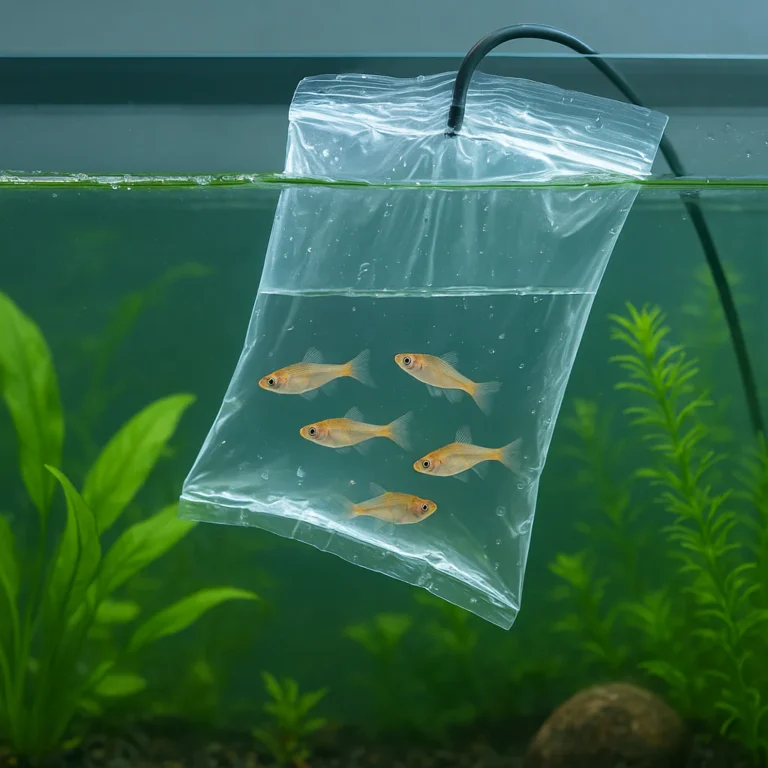
Quarantine reduces the chance of introducing disease or parasites to an established aquarium. The right period and protocol depend on the fish, source, and veterinary guidance; avoid treating every new arrival with medication “just in case.”
A careful introduction:
- Prepare a suitable quarantine system with stable, species-appropriate water and cover.
- Observe new fish for abnormal breathing, spots, wounds, poor appetite, or unusual behavior.
- Follow safe transport-to-tank acclimation practices suited to the species and water differences.
- Avoid adding store water to the aquarium where practical; transfer fish with clean equipment.
- Introduce fish with lights subdued and provide hiding places.
- Watch interactions closely, especially at feeding time and during the first days.
- Separate fish promptly if there is sustained harassment or injury.
For general fish-health and quarantine guidance, consult an aquatic veterinarian or established husbandry resources such as the Merck Veterinary Manual’s fish health information. If you keep a marine aquarium, check salinity and acclimation needs carefully; freshwater and saltwater procedures are not interchangeable.
🚩 Signs Your Fish Are Incompatible
A brief chase may be normal. Repeated attacks, injuries, and a fish that never dares leave its hiding place are not “just sorting out the pecking order.”
| Warning sign | What it may indicate |
|---|---|
| Persistent chasing or cornering | Territorial conflict or bullying |
| Torn fins, missing scales, wounds | Physical aggression or fin-nipping |
| One fish cannot feed | Competition, fear, or poor stocking match |
| Constant hiding or pale coloration | Stress, illness, or intimidation |
| Rapid breathing or clamped fins | Poor water quality, disease, or severe stress |
| A fish disappears | Predation, jumping, or an unobserved loss |
Check water quality as well as behavior. Stress symptoms can have several causes, and an incompatible tank mate is not the only possibility. If a fish is injured or distressed, separate it safely and seek advice from an aquatic veterinarian or experienced fish-health professional.
What to Do About Bulying, Chasing, and Fin Nipping
- Check water parameters first. Poor water can worsen stress and aggression.
- Identify the aggressor and target. Watch long enough to distinguish occasional display from persistent harassment.
- Interrupt serious attacks. Use a divider or appropriately prepared holding tank; don’t put injured fish into an uncycled container.
- Review the stocking plan. Check adult size, group size, and whether the species is known to nip or defend territory.
- Adjust the layout where appropriate. Reposition décor to break sight lines, while keeping structures stable and the tank functional.
- Rehome or permanently separate fish if harm continues.
A bigger filter does not solve bullying, and a prettier rock pile does not make a predator vegetarian. If a pairing repeatedly fails, separation is responsible husbandry—not a keeper’s defeat.
When to Separate or Rehome a Fish
Separate fish immediately when there are open wounds, relentless attacks, trapped or starved individuals, or rapidly worsening distress. If aggression returns after a layout adjustment or carefully managed reintroduction, plan permanent separation or responsible rehoming.
Do not release aquarium fish or plants into local waterways. Contact a reputable aquatic shop, an experienced local aquarist, or a rescue organization to discuss safe rehoming. The U.S. Fish and Wildlife Service’s invasive species resources explain why releasing non-native organisms can create serious ecological risks.
❌ Common Fish Compatibility Mistakes
- Buying by color or shop-tank appearance: A temporary retail setup doesn’t show long-term needs.
- Assuming all fish in a “community” category mix: The label is not a guarantee.
- Ignoring adult size: Small juveniles can grow into large predators or territorial adults.
- Using one chart as the final authority: Charts vary in scope and rating systems.
- Mixing fish with different water requirements: “Close enough” may mean chronic stress.
- Overstocking based on a simple formula: Body shape, activity, waste, and swimming space all matter.
- Treating algae eaters as cleaners: They need suitable food and care, too.
- Ignoring group size: A solitary shoaling fish may be stressed even if nobody attacks it.
- Assuming plants solve aggression: Cover helps, but it cannot fix fundamental conflicts.
- Skipping quarantine: A peaceful new tank mate can still bring disease into the aquarium.
For practical species and care reading, explore Fish Care and Species Profiles. When a chart and a species profile disagree, check the exact species, adult size, and conditions; if uncertainty remains, take the conservative route.
🧩 Example Stocking Plans for Popular Tank Sizes
These are planning examples, not guaranteed recipes. Tank dimensions, filtration, water parameters, local availability, and the exact species all matter. Fully cycle the aquarium and confirm every fish’s care profile before stocking.
Beginner-Friendly Freshwater Community Tank
For a suitably sized, established community aquarium, a conservative plan might include:
- One compatible group of small, peaceful midwater fish
- One appropriate group of bottom-dwelling fish, if the tank’s footprint and substrate suit them
- Plants or décor for cover and clear retreat paths
- No fish that will outgrow the system or prey on the smallest residents
Choose species with overlapping temperature and water chemistry requirements. A “mix a little of everything” approach often creates a crowded aquarium with too few individuals of each social species.
Peaceful Nano Aquarium
Small aquariums offer less room to escape aggression and less water volume to buffer mistakes. Consider a species-focused setup with one appropriately sized group or a carefully selected single species rather than a miniature version of a large community tank.
Before stocking, verify:
- The fish’s adult size and social group needs
- Whether the tank has enough swimming length
- Filter capacity and maintenance demands
- Whether the species is suitable for a small aquarium at all
A nano tank is not a license to buy nano-sized juveniles of large species. For setup ideas, browse our Aquarium Setup section.
Hardy Saltwater Fish-Only Tank
A fish-only marine setup still needs compatible species, stable salinity, suitable filtration, and enough swimming space. Build the plan around a small number of species with compatible adult sizes and behavior rather than selecting fish by color alone.
Before choosing a combination:
- Check each species’ full-grown size and swimming needs.
- Avoid predator-and-prey pairings.
- Consider territorial behavior and introduction strategy.
- Confirm every fish’s diet and long-term care requirements.
- Make sure the tank’s equipment can support the bioload.
A “hardy” label does not mean suitable for every saltwater tank. Use species-specific marine profiles and experienced marine-aquarium advice before buying.
📷 Fish Compatibility in Real Aquariums
The best test of a compatibility plan is calm, sustained behavior—not a neat chart. Watch your aquarium at different times, especially at feeding and when the lights come on.
Keep a simple observation log:
| What to record | Why it helps |
|---|---|
| Feeding behavior | Shows whether every fish gets food |
| Chasing or displays | Helps distinguish occasional behavior from repeated bullying |
| Hiding and swimming patterns | Reveals whether fish use the whole tank or avoid areas |
| Water test results | Helps separate water-quality problems from social conflict |
| Changes after an addition | Makes cause-and-effect easier to spot |
Aquascapers can create useful sight breaks and refuges with plants and hardscape, but we always leave open swimming lanes and stable access for maintenance. For planting inspiration, see Aquascaping and Aquatic Plants. The useful question is not only “Can these fish live together?” It’s also “Can each one behave naturally and get what it needs here?”
✅ Quick Links and Compatibility-Checking Tools

Use more than one resource, and check that it covers the exact species and setup you have in mind.
- Aquarium Industries freshwater and marine fish compatibility charts — a useful initial screening resource.
- Seriously Fish — freshwater species profiles and husbandry information.
- FishBase — species information, including taxonomy and reported size.
- LiveAquaria marine fish profiles — marine species and care information.
- RSPCA fish care guidance — general welfare advice.
- Merck Veterinary Manual: aquarium fish — fish-health reference material.
- Aquarium Industries’ charts are about fish. Minn Kota’s compatibility support page is about Minn Kota product compatibility, not fish species. Similar wording; entirely different aquatic conversation.
Use charts to make a shortlist, then verify each species’ adult needs, behavior, and water requirements. And remember the question from the start: can fish with similar water needs still make poor tank mates? Absolutely—because territory, size, social needs, and individual temperament matter just as much as the water.