Support our educational content for free when you purchase through links on our site. Learn more
15 Fish Tank Mistakes to Avoid & Fix 🐠

The best way to avoid common fish tank mistakes—and troubleshoot problems—is to test the water, protect your filter’s beneficial bacteria, and make changes gradually. When fish seem unwell or the water turns cloudy, check water parameters and equipment before reaching for medication or making several big changes at once.
We’ve seen a tank look crystal-clear while its water tests tell a very different story. That’s why answering “What are some common fish tank mistakes to avoid, and how can I troubleshoot issues with my tank?” starts with a reliable test kit, calm observation, and a maintenance routine suited to your fish.
Key Takeaways
- Cycle the aquarium before adding fish, and test for ammonia and nitrite.
- Stock gradually and choose compatible fish based on adult size and species needs.
- Feed modestly and change water consistently; topping up evaporation alone doesn’t remove waste.
- Protect beneficial filter bacteria by cleaning media gently and avoiding full replacements at once.
- Troubleshoot in order: observe fish, test water, inspect equipment, correct the likely cause, then retest.
- Avoid drastic, simultaneous fixes. Stable water and one measured change at a time are safer for fish.
Table of Contents
- ⚡️ Quick Tips and Facts
- 🐠 Fish Tank Basics: How a Healthy Aquarium Works
- 🚫 15 Common Fish Tank Mistakes to Avoid
- 1. Skipping the Nitrogen Cycle
- 2. Adding Too Many Fish Too Quickly
- 3. Choosing Incompatible Fish
- 4. Overstocking the Aquarium
- 5. Using the Wrong Tank Size
- 6. Overfeeding Fish
- 7. Neglecting Water Changes
- 8. Cleaning Filter Media Too Thoroughly
- 9. Replacing All Filter Media at Once
- 10. Ignoring Water Parameters
- 11. Setting the Wrong Temperature
- 12. Leaving Aquarium Lights on Too Long
- 13. Using Untreated Tap Water
- 14. Skipping Quarantine for New Fish and Plants
- 15. Overcleaning Decorations and Substrate
- 🧪 Essential Aquarium Water Tests and Safe Parameter Ranges
- Amonia, Nitrite, and Nitrate
- pH, GH, and KH
- Temperature and Dissolved Oxygen
- 🔧 How to Troubleshoot Common Fish Tank Problems
- Cloudy Aquarium Water
- Green Water and Excessive Algae
- Fish Gasping at the Surface
- Fish Not Eating or Acting Lethargic
- Unexpected Fish Deaths
- Filter Noise, Weak Flow, or Failure
- Leaks, Temperature Swings, and Power Outages
- 🩺 Fish Health: Spoting Stress, Disease, and Poor Water Quality
- Common Signs of Stress in Aquarium Fish
- When to Isolate a Sick Fish
- Why Medication Shouldn’t Be the First Move
- 🧰 Aquarium Maintenance Checklist and Schedule
- Daily Fish Tank Checks
- Weekly Aquarium Maintenance
- Monthly Filter and Equipment Checks
- 🌿 Planted Aquarium Mistakes and Algae Prevention
- 🏠 Safe Aquarium Setup, Placement, and Equipment
- 🆕 Adding Fish Safely: Aclimation and Quarantine
- 🧯 Emergency Fish Tank Troubleshooting: What to Do First
- ✅ How to Prevent Aquarium Problems Before They Start
- Conclusion
- Recommended Links
- FAQ
- Reference Links
⚡️ Quick Tips and Facts
Our first relevant read: 🐠 12 Fish Tank Types: Which One Is Right for You? can help you choose a tank that suits the fish you hope to keep—not just the corner where it might fit.
An aquarium is a living system, not a glass box you can reset whenever it looks untidy. In our experience at Aquarium Music™, the best troubleshooting often starts with slowing down, testing the water, and changing one thing at a time.
| Quick fact | What to do |
|---|---|
| Amonia and nitrite | Aim for 0 ppm in an established freshwater aquarium. |
| Water changes | Make them routinely; a common starting schedule is about 20–30% weekly, adjusted to stocking, plants, and test results. |
| Feeding | Offer a small portion and remove leftovers. The right amount varies by species and food. |
| Filter cleaning | Rinse reusable media gently in removed tank water when needed; preserve biological media. |
| New fish | Quarantine when possible, and add livestock gradually. |
| Cloudy water | Test first. Clear water can still be unsafe, and cloudiness alone doesn’t identify the cause. |
| Fish gasping | Check oxygenation, temperature, and ammonia/nitrite promptly. |
Aqueon’s guide offers 10% weekly or 25% every two weeks as a routine water-change starting point, while our Aquarium Music™ setup guide recommends 20–30% weekly. Those are not magic competing laws: stocking, feeding, plants, source water, and nitrate trends determine what your aquarium needs. The reliable rule is to measure, adjust conservatively, and stay consistent. Aqueon’s fish-tank problem guide and OATA’s aquarium water-quality guidance are useful references.
✅ Test before treating.
✅ Match tankmates by adult size, behavior, and water needs.
✅ Keep a simple maintenance log.
❌ Don’t replace all filter media, scrub everything, and add several products at once.
❌ Don’t assume clear water means healthy water.
🐠 Fish Tank Basics: How a Healthy Aquarium Works
A healthy aquarium depends on a few connected systems: biological filtration, oxygen exchange, stable temperature, sensible stocking, and consistent maintenance. Disturb one dramatically and the others can woble.
The nitrogen cycle: invisible work, very visible consequences
Fish waste, leftover food, and decaying plant matter produce amonia, which is toxic to fish. Beneficial microbes in filter media and on other surfaces convert ammonia into nitrite, also toxic, and then into nitrate, which is less toxic at typical aquarium concentrations and can be managed with water changes and plant growth.
A new aquarium needs time to establish that microbial community. Running the filter for a few days does not prove the tank is cycled. Aqueon puts it plainly: “Testing is the only way to know if your aquarium water is safe.” We agree. Use test results—not a calendar, a clear-looking tank, or wishful thinking—to guide stocking. The Merck Veterinary Manual explains aquarium fish water quality.
| Aquarium measure | Why it matters | Practical target or approach |
|---|---|---|
| Amonia | Harms gills and other tissues; may rise during cycling or after a sudden bioload increase. | 0 ppm in an established tank |
| Nitrite | Interferes with oxygen transport in fish. | 0 ppm |
| Nitrate | Builds up as the cycle processes waste; excessive levels can stress fish. | Keep appropriately low for your livestock; track trends |
| pH | Describes acidity or alkalinity; abrupt change can stress fish. | Favor a stable, species-appropriate value |
| GH | Measures general hardness, associated with dissolved minerals. | Match the needs of the species |
| KH | Indicates carbonate buffering that helps resist pH swings. | Monitor stability, especially in soft or low-alkalinity water |
| Temperature | Affects fish metabolism and oxygen availability. | Use the species’ recommended range; avoid sudden swings |
Freshwater fish do not all need the same pH or temperature. A hardy community fish and a specialist species may have very different requirements. Chasing a “perfect” universal number can be worse than keeping a stable value suited to your fish. For example, repeatedly adding pH-up and pH-down products can cause swings while masking the underlying issue.
Filtration is more than a machine
Most aquarium filters provide some mix of:
- Mechanical filtration: captures particles.
- Biological filtration: provides surfaces for beneficial microbes.
- Chemical filtration: uses media such as activated carbon for specific dissolved compounds.
The filter’s biological community is precious. A brand-new cartridge is not automatically better than a mature, gently maintained one. Filter choice also depends on the tank’s size, fish load, flow needs, and whether it is planted. Browse our aquarium equipment guides for help matching equipment to a setup.
Stability beats constant tinkering
A fish may tolerate water that is not an exact textbook match better than water whose chemistry changes sharply from day to day. When troubleshooting, test, identify a likely cause, make one measured correction, and observe. One aquarist habit we’ve learned to distrust is the “kitchen sink fix”: a large water change, new medication, pH adjustment, filter cleaning, and algae treatment all in the same afternoon. If the fish improve—or worsen—you won’t know which change mattered.
🚫 15 Common Fish Tank Mistakes to Avoid
Here are the habits most likely to turn a peaceful tank into a stressful one. Some problems show up immediately; others wait days or weeks to deliver their tiny, wet invoice.
1. Skipping the Nitrogen Cycle
Adding a full group of fish to a brand-new tank can overwhelm a biological filter that has not yet developed. Amonia and nitrite may rise, even when the water looks sparkling.
A safer fishless cycling approach:
- Set up the aquarium with substrate, filter, heater if needed, and dechlorinated water.
- Run the equipment continuously and maintain the temperature needed for the cycle and planned livestock.
- Provide an appropriate ammonia source using a fishless cycling method; follow the product’s directions.
- Test ammonia, nitrite, and nitrate regularly with a reliable aquarium test kit.
- Consider the cycle established only when the system can process an ammonia source and tests show amonia and nitrite returning to zero within a reasonable testing interval.
- Stock gradually, then keep testing as the system adjusts.
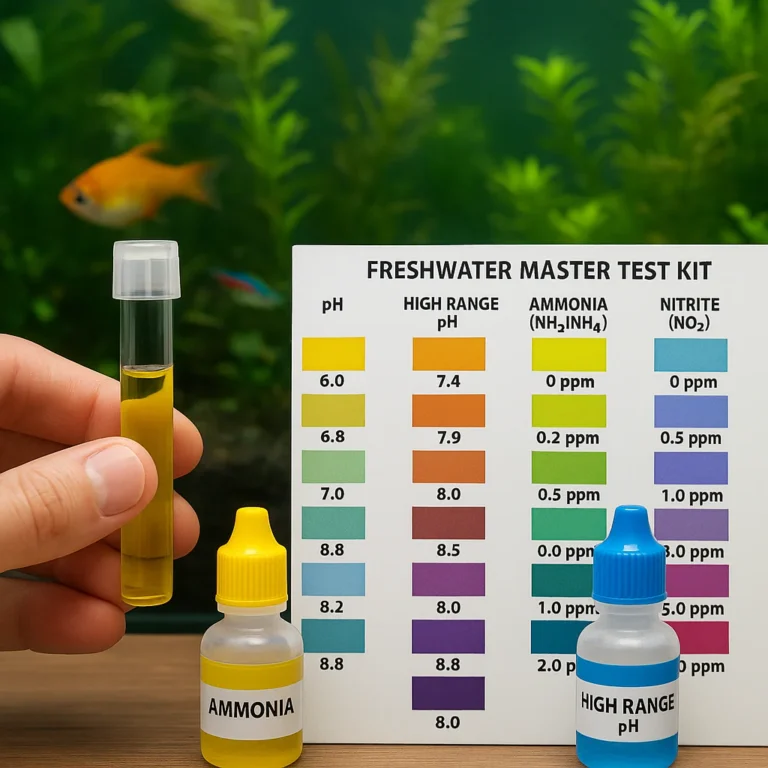
A cycle often takes weeks, not a guaranteed number of days. The Aquarium Music™ cycling guide discusses fishless cycling and testing. For test supplies, the API Freshwater Master Test Kit is a commonly used liquid-kit option; follow its instructions carefully and check expiration dates.
2. Adding Too Many Fish Too Quickly
Each new fish adds waste, consumes oxygen, and increases demand on filtration. A tank may appear fine after a shopping trip, then develop ammonia or nitrite problems as the bacteria catch up.
Add fish in stages. After each addition, watch behavior and test water before adding more. Waiting is not a failure of enthusiasm; it’s how we keep enthusiasm from becoming an emergency water change.
3. Choosing Incompatible Fish
“Peaceful” on a shop label is not a lifelong guarantee. Fish mature, establish territories, and can behave differently in cramped or poorly structured aquariums.
Before buying, check:
- Adult size, not the tiny size at the store.
- Schooling or shoaling needs.
- Temperament and feeding style.
- Temperature, pH, and hardness requirements.
- Whether tankmates can compete for food or become prey.
Explore our fish care and species profiles before making a stocking plan. A good plan considers the actual adult fish, not the attractive label on the bag.
4. Overstocking the Aquarium
Overstocking increases waste and competition, and it can make aggression harder to escape. There is no dependable universal “one inch of fish per gallon” rule: body shape, adult size, activity, filtration, swimming space, and social needs all matter.
A large filter cannot make an unsuitable stocking plan suitable. Leave room for fish to behave naturally and for the aquarium to absorb ordinary fluctuations.
5. Using the Wrong Tank Size
Tiny aquariums can change temperature and water chemistry quickly, leaving less margin for error. A larger tank is not maintenance-free, but its greater water volume often gives you more time to notice and correct a developing problem.
Choose based on species and adult behavior. For example, a fish that grows large or swims constantly needs far more than a container that merely holds enough water to keep it alive. Aqueon recommends that beginners consider a 20–55-gallon range where space and circumstances allow; this is a general starting point, not a prescription for every species or home.
6. Overfeeding Fish
Uneaten food decays and contributes to waste. Even food that fish eat can add to the system’s bioload, so “they still look hungry” is not a reliable feeding measure—many fish are excellent little negotiators.
- Feed an amount appropriate to the species and food type.
- Observe whether food is being eaten rather than sinking into the substrate.
- Remove obvious leftovers.
- Adjust portions if waste or nutrient levels keep rising.
Aqueon suggests that food in a new aquarium should be eaten within two minutes; use that as a practical observation, not a universal biological law. Some species and foods need different feeding methods. For varied diets, choose suitable prepared foods and species-appropriate frozen or live foods from reputable sources.
7. Neglecting Water Changes
Evaporation removes water, not nitrate and other dissolved substances. Topping up alone can let waste products and minerals accumulate.
Choose a repeatable schedule, then adjust it based on tests, stocking, plants, and water-source chemistry. Use a conditioner suitable for the tap water and match new water’s temperature as closely as practical. In a planted aquarium, plants may take up nutrients, but they do not eliminate the need to monitor water quality.
8. Cleaning Filter Media Too Thoroughly
Scrubbing filter media under untreated tap water or replacing it all at once can reduce the biological capacity that keeps ammonia and nitrite in check.
When flow drops or media is clogged:
- Unplug electrical equipment as directed by its manufacturer.
- Rinse reusable media gently in removed aquarium water.
- Clear the impeller and intake according to the manual.
- Keep biological media wet and avoid unnecessary cleaning.
- Restart and confirm that flow is restored.
Do not treat “clean” as “sterile.” A filter is not a porcelain teacup.
9. Replacing All Filter Media at Once
Cartridges and sponges can hold beneficial microbes. Replacing every piece together may cause a mini-cycle or a full water-quality setback.
Follow the filter maker’s directions, but whenever possible preserve established biological media and stagger replacements. If disposable media is used, ask whether it can be rinsed or whether a reusable sponge or other biological medium can remain in the filter. Check ammonia and nitrite after substantial media changes.
10. Ignoring Water Parameters
Fish can be exposed to unsafe water before it looks dirty. Keep a written record of test results, water changes, new fish, medication, and unusual behavior. Patterns are easier to spot on paper than in anxious memory at midnight.
A liquid kit such as the API Freshwater Master Test Kit is one option for freshwater testing. Test strips can be convenient for screening, but use a method appropriate to the question and interpret results according to the manufacturer’s instructions.
11. Setting the Wrong Temperature
A heater that is too powerful, poorly placed, or unreliable can create temperature swings. A thermostat’s display is not a substitute for checking the water.
- Use a heater rated for the aquarium and room conditions.
- Verify temperature with an independent thermometer.
- Place equipment according to the manufacturer’s instructions.
- Avoid placing the tank near fireplaces, heating vents, or cold drafts.
Brands such as EHEIM and Fluval offer aquarium heaters; select a model based on the aquarium and livestock rather than brand name alone.
12. Leaving Aquarium Lights on Too Long
Constant light can disrupt fish rest periods and encourage algae, especially when light intensity is high or nutrients are abundant. A timer gives the aquarium a predictable day-night cycle.
Start with a consistent photoperiod suitable for the tank and plants, then adjust based on plant response and algae. The right duration depends on light strength, plant species, tank placement, and nutrient balance—not one universal number.
13. Using Untreated Tap Water
Municipal water may contain chlorine or chloramine. These disinfectants can harm fish and may damage beneficial microbes. Leting water stand is not a dependable way to remove chloramine.
Use a water conditioner labeled for your source-water needs, and dose according to the instructions. Seachem Prime and API Tap Water Conditioner are real products; confirm that the product suits your water and use it as directed.
14. Skipping Quarantine for New Fish and Plants
New arrivals can carry parasites, infections, or hitchiking pests. A separate quarantine setup gives you time to observe them and can protect established livestock. A quarantine tank needs appropriate filtration, temperature control, and maintenance; it is not simply a bare bowl.
Plants can also carry snails, algae, or other hitchikers. Inspect and prepare them according to the species and your risk tolerance. Read more in our fish and aquatic life and aquascaping and aquatic plants guides.
15. Overcleaning Decorations and Substrate
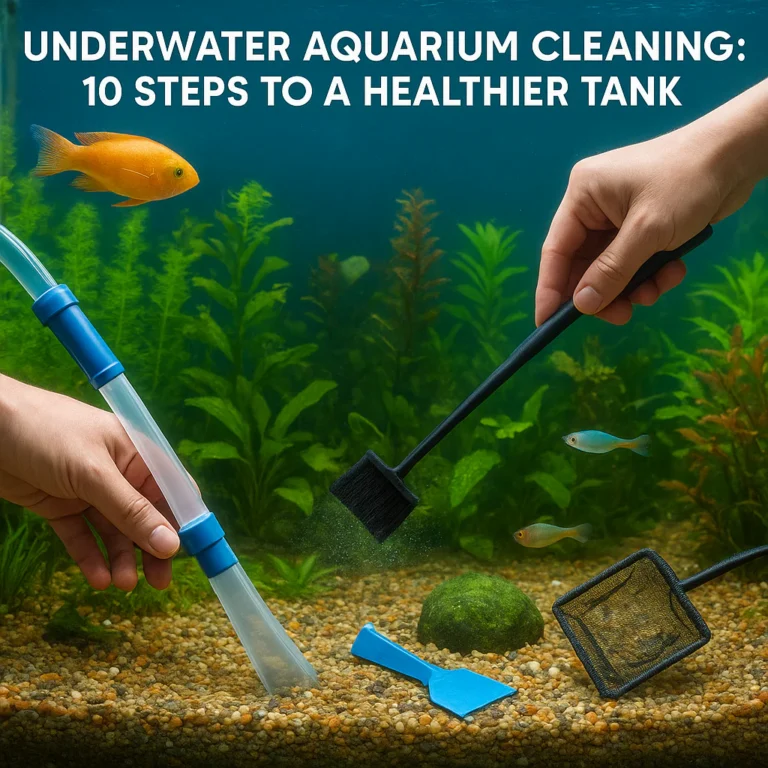
Scrubbing every surface and deep-vacuuming the entire substrate at once can disturb beneficial biofilm and microbes. Clean visible debris and siphon the substrate in manageable sections, rather than performing a whole-tank reset.
Aqueon advises avoiding unnecessary heavy cleaning during a new tank’s early weeks. The practical takeaway is not “never clean”; it is clean selectively, preserve established biology, and investigate why dirt accumulates.
🧪 Essential Aquarium Water Tests and Safe Parameter Ranges
There is no single ideal parameter chart for every aquarium. A freshwater community tank, a blackwater setup, and a marine reef aquarium have different requirements. Use species-specific guidance and compare test results with your own source water.
Amonia, Nitrite, and Nitrate
These are the first tests we reach for when fish act unwell, when a tank is new, or after a major change to filtration or stocking.
| Test | What a concerning result may suggest | First response |
|---|---|---|
| Amonia | Incomplete cycling, dead livestock, overfeeding, filter disruption, or excessive stocking | Confirm the result, check the filter and livestock, reduce feeding, and consider a partial water change with conditioned, temperature-matched water |
| Nitrite | A cycle still developing or disrupted biological filtration | Retest, protect the filter, and address the cause; do not add livestock |
| Nitrate | Waste accumulating faster than plants and maintenance remove it | Review feeding, stocking, plant growth, and water-change routine |
For established freshwater tanks, aim for amonia and nitrite at zero. Nitrate targets depend on the livestock and system; consistently elevated readings call for a maintenance and bioload review. Do not use a single nitrate number as a substitute for considering the species, source water, and trend.
pH, GH, and KH
- pH indicates acidity or alkalinity.
- GH reflects general hardness, including dissolved calcium and magnesium.
- KH reflects carbonate and bicarbonate buffering capacity.
Test your tap or source water as well as the aquarium. If the aquarium pH shifts over time, check KH and investigate the reason before dosing chemicals. Stable, species-appropriate water is usually a better target than constant adjustment toward a generic number.
Temperature and Dissolved Oxygen
Warm water holds less dissolved oxygen than cooler water, and biological activity increases oxygen demand. Gasping, rapid gill movement, or fish clustering near a filter outlet should prompt an immediate check of temperature and surface movement.
Increase surface agitation or add aeration if needed, while checking equipment and water quality. An air stone can improve gas exchange, but it cannot repair an ammonia spike or failed filter by itself. For broader guidance, see OATA’s water-quality information.
🔧 How to Troubleshoot Common Fish Tank Problems
Start with the fish, the water, and the equipment—not a bottle promising instant clarity. We use this order:
- Observe: Which fish are affected? Is breathing, swimming, appetite, or color different?
- Test: Check ammonia, nitrite, nitrate, temperature, and pH. Add other tests when the situation calls for them.
- Inspect: Confirm filter flow, heater operation, surface movement, and signs of dead livestock or decaying material.
- Correct the likely cause: Make a measured change and avoid stacking treatments.
- Recheck: Test again and watch whether symptoms improve.
A community aquarist can miss a brief ammonia spike between tests, or fish may be stressed by aggression or oxygen swings despite an apparently normal reading. That is why a log—and a look at the tank’s recent history—maters.
Cloudy Aquarium Water
Cloudiness may come from suspended substrate, a bacterial bloom in a new tank, dissolved organics, or another disturbance. Its color and timing offer clues, but a visual guess is not a diagnosis.
| Appearance | Possible cause | Sensible first steps |
|---|---|---|
| White or gray haze | Bacterial bloom, especially in a new or disrupted tank | Test ammonia/nitrite, maintain filtration, reduce excess feeding, and avoid repeatedly sterilizing the aquarium |
| Brown or dusty cloud | Disturbed substrate or debris | Check whether the substrate was disturbed; use mechanical filtration and siphon gently |
| Green water | Suspended algae, often associated with light and nutrient conditions | Review lighting, direct sun, feeding, and nutrient buildup |
| Cloudiness after cleaning | Substrate disturbance or filter debris | Check equipment flow and water quality; allow fine particles to settle if livestock are safe |
A new-tank bacterial bloom may clear as the system stabilizes, but do not simply “wait it out” if fish are distressed or ammonia and nitrite are present. Avoid piling on multiple clarifiers: they can obscure the cause, and some products can affect filtration or oxygen. Read the label and follow its cautions.
Green Water and Excessive Algae
Algae is often a symptom of light, nutrients, or maintenance conditions being out of balance, not a sign that you need an algae-eating fish immediately.
- Check whether the aquarium gets direct sunlight.
- Use a consistent timer and review lighting intensity and duration.
- Reduce excess feeding and remove decaying material.
- Test water and maintain a steady water-change routine.
- Confirm flow reaches planted areas and does not leave stagnant pockets.
- Clean algae from glass and hardscape without disrupting the whole tank.
Cleanup crews can help with suitable algae and biofilm, but they have their own dietary and habitat needs. Do not buy animal as a disposable cleaning tool. Amano shrimp, Otocinclus, and bristlenose plecos are not interchangeable, and a common pleco can grow far too large for many home aquariums. If green water persists despite correcting the conditions, a UV sterilizer may be considered for suspended algae, but it does not fix the underlying nutrient or lighting pattern.
The perspective in the featured aquarium video is a useful planted-tank reminder: “Flow is the unsung hero of planted tanks.” Good circulation can move waste toward the filter and help distribute nutrients, but flow must suit the livestock and plants.
Fish Gasping at the Surface
Treat this as urgent, particularly if several fish are affected.
- Test ammonia and nitrite immediately.
- Check temperature and confirm the heater has not overheated the tank.
- Confirm the filter is running and the water surface is moving.
- Add aeration or increase safe surface agitation if oxygen seems low.
- Look for a power outage, clogged intake, or chemical exposure.
- If tests show a water-quality emergency, make a properly conditioned, temperature-matched partial water change and retest.
Do not assume every surface-gasping fish has low oxygen. Amonia, nitrite, heat, gill disease, or other toxins can produce similar behavior. The cause determines the treatment.
Fish Not Eating or Acting Lethargic
First compare the fish’s behavior with its normal routine. A newly introduced fish may hide briefly, but prolonged refusal to eat, clamped fins, rapid breathing, flashing, or isolation calls for closer investigation.
- Test water and temperature.
- Check for bullying or competition at feeding time.
- Confirm the food suits the species and is fresh.
- Look for visible lesions, spots, swelling, or damaged fins.
- Avoid repeatedly changing foods or dosing medication without a diagnosis.
Some species naturally feed at different times or prefer a specific food texture. Our fish care and species profiles can help you distinguish normal species behavior from a warning sign.
Unexpected Fish Deaths
A sudden death is upsetting—and it is not always possible to identify the cause from appearance alone. Before adding replacement fish, check the environment and recent history.
- Remove the deceased fish promptly.
- Test ammonia and nitrite; check temperature and pH.
- Inspect filter flow and look for uneaten food, decaying plants, or another dead animal.
- Recall recent additions, water changes, medications, power interruptions, or equipment failure.
- Observe other fish closely and avoid restocking until conditions are stable.
A test taken after the event may miss a brief spike, so consider what changed in the previous days. Social aggression, oxygen fluctuations, or an acclimation problem may also be involved.
Filter Noise, Weak Flow, or Failure
A noisy or weak filter may have a clogged intake, dirty impeller, trapped air, low water level, or worn component.
- Check the manufacturer’s manual and unplug equipment before handling it.
- Confirm the intake is clear and the water level is appropriate.
- Check the impeller and housing for debris.
- Rinse reusable media gently in removed aquarium water if clogged.
- Reassemble and confirm flow.
- Test ammonia and nitrite if filtration has stopped for a prolonged period.
Never let biological media dry out if you can avoid it. Do not replace all media just because the flow slowed; find the obstruction first.
Leaks, Temperature Swings, and Power Outages
For a leak, protect electrical safety first: keep water away from outlets and unplug equipment only when it is safe to do so. Move livestock to a suitable, temperature-controlled container if the tank cannot safely hold water, and address the leak before refilling.
During a power outage:
- Keep the aquarium covered where safe to reduce heat loss, without sealing it airtight.
- Maintain oxygen by manually agitating the surface or using a battery-powered air pump if available.
- Avoid feeding heavily; uneaten food adds waste when filtration is down.
- Restore equipment safely and check temperature and water quality afterward.
Heaters and filters should be checked regularly, not only after something sounds suspicious. Find equipment and setup advice in our aquarium equipment and aquarium setup sections.
🩺 Fish Health: Spoting Stress, Disease, and Poor Water Quality
Poor water quality is a frequent cause of stress, but it is not the only cause. Disease, aggression, unsuitable temperature, poor nutrition, and transport stress can look similar. Check the environment before reaching for medication.
Common Signs of Stress in Aquarium Fish
Watch for changes from each fish’s normal behavior:
- Rapid breathing or hovering near the surface.
- Hiding more than usual or refusing food.
- Clamped fins, unusual color loss, or erratic swimming.
- Flashing or rubbing against objects.
- Chasing, fin damage, or exclusion from food.
- New spots, lesions, swelling, or abnormal feces.
One isolated behavior may have a harmless explanation. A pattern affecting multiple fish—or worsening over time—deserves prompt water testing and investigation.
When to Isolate a Sick Fish
A separate hospital tank can reduce the risk of spreading a contagious disease and allow targeted treatment. It should have stable temperature, appropriate filtration or aeration, and clean equipment reserved for quarantine.
Before moving a fish, consider whether handling will cause more stress and whether the hospital tank is ready. If only one fish is affected, isolation may help; if several are sick, the shared environment could be the primary issue.
Why Medication Shouldn’t Be the First Move
Medication may be necessary for a diagnosed illness, but random treatment can stress fish, affect invertebrates or plants, and interfere with biological filtration. Read the full label, confirm compatibility, and avoid mixing products unless a qualified aquatic veterinarian or the manufacturer’s guidance supports it.
The first move is usually water tests, equipment checks, observation, and a clear diagnosis. See the Merck Veterinary Manual’s fish health information for veterinary context.
🧰 Aquarium Maintenance Checklist and Schedule
A consistent routine is easier on the aquarium than a dramatic deep-clean every few months. One of the best pieces of advice in our featured video is: “Get in there and clean your tank before it gets dirty.” That means proactive, gentle maintenance—not scrubbing the biology out of the filter.
Daily Fish Tank Checks
Take a minute to observe:
- Are all fish accounted for and behaving normally?
- Is the filter flowing and the heater operating?
- Are fish eating normally, with little or no food left behind?
- Is the water level appropriate?
- Is there a new leak, unusual noise, or unexpected cloudiness?
Weekly Aquarium Maintenance
A weekly routine can include:
- Check temperature and observe livestock.
- Test water more often in new, heavily stocked, or unstable tanks; otherwise follow a schedule suited to your system.
- Change a measured portion of water as indicated by your maintenance plan and test trends.
- Condition replacement water and bring it close to the aquarium’s temperature.
- Siphon accessible debris without deep-cleaning the entire substrate at once.
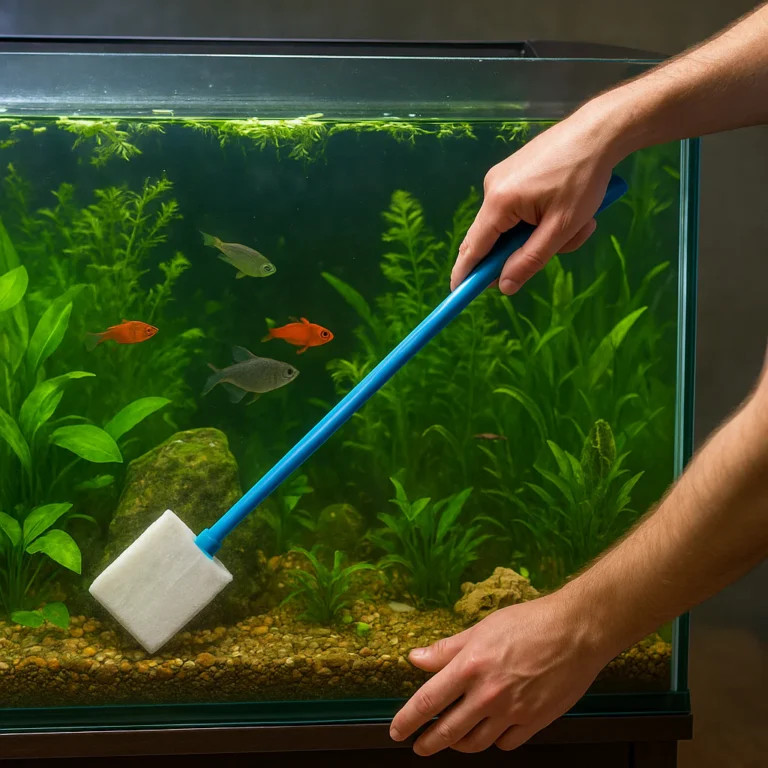
- Wipe algae from the glass and trim plants as needed.
- Confirm the filter intake and water flow are unobstructed.
A faucet-adapted siphon or water-change hose can reduce the strain of carrying buckets. The Python Products water-change system is one example; whether it suits your home depends on faucet compatibility and your water-changing setup.
Monthly Filter and Equipment Checks
Monthly does not mean “take everything apart on the same day.” Check equipment condition and clean only as needed:
- Inspect hoses, seals, intakes, and impellers.
- Confirm heaters and thermometers are functioning.
- Rinse clogged reusable media gently in tank water.
- Keep a record of replacements and maintenance.
- Check that plants or decorations have not blocked circulation.
Stagger maintenance where practical so you are not simultaneously disrupting the filter, substrate, and water chemistry.
🌿 Planted Aquarium Mistakes and Algae Prevention
A planted tank is not automatically self-cleaning. Plants can take up nutrients and improve habitat, but poor lighting balance, unstable carbon dioxide, excess food, or insufficient circulation can still invite algae and plant decline.
Common planted-tank mistakes include:
- Choosing lighting without matching it to plant needs.
- Leaving the light on for a long, inconsistent period.
- Burying plant crowns that should remain exposed.
- Burying epiphytes such as Anubias rather than attaching them to rock or wood.
- Leting debris collect in low-flow areas.
- Using algae-eating animals without researching their adult needs.
- Making several fertilizer, light, and CO₂ changes at once.
If algae appears, first review light exposure, feeding, flow, and maintenance. Our aquascaping and aquatic plants guides cover plant selection and aquascaping basics.
🏠 Safe Aquarium Setup, Placement, and Equipment
Choose a stable, level stand designed to support the filled aquarium. Keep the tank away from direct sun, fireplaces, heating vents, and areas with frequent temperature swings. Direct sunlight can encourage algae; heat sources can make temperature harder to control.
Before filling:
- Confirm the floor and stand can support the aquarium.
- Keep electrical connections protected from drips and splashes.
- Use a dedicated power arrangement appropriate to the equipment.
- Position the filter outlet to encourage circulation and surface movement.
- Verify heater placement and operation according to its manual.
- Leave enough access to perform water changes and maintenance.
The featured video also emphasizes avoiding direct sun and fireplaces, and using flow to move waste and distribute nutrients. That advice is especially useful in planted aquariums, though flow must not overwhelm fish that prefer calmer water. Explore our aquarium setup and aquarium equipment resources before buying gear.
🆕 Adding Fish Safely: Aclimation and Quarantine
New fish need a calm transition, and the right method depends on how they were transported and the seller’s instructions. Avoid leaving a shipping bag floating for a long time without considering changes in temperature and water chemistry.
A careful addition routine:
- Prepare a cycled, stable aquarium or quarantine tank before purchase.
- Dim the lights and minimize noise and disturbance.
- Follow the seller’s and species-specific acclimation guidance.
- Avoid pouring transport water into the display tank when possible.
- Observe the fish closely after introduction.
- Quarantine new arrivals when practical, using separate equipment.
- Test water more frequently after adding livestock.
The featured video recommends waiting three to four months before introducing sensitive species such as Discus, Blue Rams, or Cardinal Tetras to a new tank. That is a conservative maturation perspective, not a universal timetable. The key is that sensitive fish need a mature, stable system—not simply a tank that has been running for a certain number of weeks.
🧯 Emergency Fish Tank Troubleshooting: What to Do First
If fish are gasping, multiple fish are distressed, or you suspect contamination, prioritize immediate safety and avoid guesswork.
First-response checklist
- Stop feeding temporarily if food is accumulating or water quality is suspect.
- Check equipment: filter flow, heater, air pump, and electrical safety.
- Test ammonia and nitrite, then temperature and pH.
- Increase safe surface agitation if oxygenation may be low.
- Remove dead livestock and obvious decaying material.
- Use conditioned, temperature-matched replacement water for a partial water change when test results or symptoms indicate an urgent water-quality concern.
- Retest and observe. Record what you changed and when.
- If symptoms persist or disease signs are present, consult an aquatic veterinarian or a qualified fish-health professional.
Do not respond to an unknown problem by changing 90% of the water, deep-cleaning the filter, adjusting pH, and dosing medication all at once. A major water change may be justified in a genuine emergency, but routine large swings can add stress. The goal is rapid stabilization, not a dramatic reset.
✅ How to Prevent Aquarium Problems Before They Start
Prevention is mostly good habits repeated without drama.
- Research before buying: adult size, temperament, diet, and water parameters.
- Cycle first and test: do not use clear water or elapsed time as proof.
- Stock gradually: give filtration time to respond.
- Feed thoughtfully: adjust portions to what fish actually eat.
- Protect filter biology: clean gently and preserve established media.
- Keep a consistent routine: water changes, observation, and equipment checks.
- Quarantine new arrivals when you can provide a suitable setup.
- Change one variable at a time when troubleshooting.
- Keep a simple log: test results, water changes, new livestock, and unusual behavior.
- Ask what changed recently: many tank problems are delayed reactions to an earlier change.
Aqueon emphasizes that oversizing filtration, stocking cautiously, and avoiding impulsive purchases can prevent common failures. The consumer takeaway is practical: buy for the fish and maintenance routine you can sustain, not for the biggest equipment list. Browse Aquarium Music™ setup articles and fish-care guides as you plan.