Support our educational content for free when you purchase through links on our site. Learn more
Dive Into Aquatic Life Cycles: 5 Fascinating Journeys Beneath the Waves 🌊 (2025)

Have you ever wondered what secrets lie beneath the shimmering surface of lakes, rivers, and oceans? The life cycles of aquatic creatures are a mesmerizing saga of transformation, survival, and adaptation that often rival the most thrilling adventure stories. From the epic migrations of salmon to the shape-shifting metamorphosis of jellyfish, aquatic life cycles reveal nature’s ingenuity in the watery world.
At Aquarium Music™, we’ve witnessed firsthand how understanding these cycles can transform your aquarium experience — turning a simple fish tank into a vibrant cradle of life. Curious how temperature can determine the sex of some fish? Or how coral reefs synchronize their spawning like an underwater fireworks show? Stick around, because we’ll dive deep into these mysteries, explore the challenges aquatic species face, and share expert tips for nurturing life cycles right in your home aquarium.
Key Takeaways
- Aquatic life cycles are complex and diverse, ranging from simple egg-to-adult stages to dramatic metamorphoses involving multiple distinct forms.
- Environmental factors like temperature, light, and salinity play crucial roles in triggering reproduction and shaping development.
- Species employ a variety of reproductive strategies, including asexual budding, broadcast spawning, and livebearing, each with unique advantages and challenges.
- Human impacts such as climate change, pollution, and habitat loss threaten these delicate cycles, making conservation and responsible aquarium keeping more important than ever.
- Aquarists can successfully breed many species by mimicking natural conditions, using specialized foods like Hikari Vibra Bites and providing appropriate spawning habitats.
Ready to nurture your own aquatic life cycles? Check out our recommended products for conditioning and fry rearing:
- Conditioning Foods: Hikari Vibra Bites | Fluval Bug Bites
- Spawning Plants: Java Moss Live Aquarium Plant
- Fry Rearing Essentials: Brine Shrimp Hatchery Kit | Sponge Filters
Dive in and let the symphony of aquatic life cycles inspire your next aquarium adventure!
Table of Contents
- ⚡️ Quick Tips and Facts
- 🌊 The Rhythmic Dance of Life: Understanding Aquatic Life Cycles
- 🧬 The Blueprint of Life: Aquatic Reproductive Strategies
- 🌡️ Environmental Maestros: How Water Shapes Life Cycles
- 🐠 Nature’s Diverse Playbook: Exploring Specific Aquatic Life Cycles
- ⚠️ Challenges on the Horizon: Pressures on Aquatic Life Cycles
- 🏡 Aquarist’s Corner: Nurturing Life Cycles in Your Home Aquarium
- ✨ Conclusion: The Endless Cycle of Wonder
- 🔗 Recommended Links
- ❓ FAQ: Your Burning Questions Answered
- 📚 Reference Links
Here at Aquarium Music™, we’ve seen it all. From the frantic, almost comical dance of a male guppy trying to impress a female, to the silent, patient wait for a clutch of cichlid eggs to hatch. The journey of life in an aquatic environment is a symphony of survival, adaptation, and breathtaking transformation. Whether you’re a seasoned aquarist or just starting your first fish tank, understanding these cycles is the key to unlocking a deeper appreciation for the world behind the glass. So, grab your metaphorical snorkel, and let’s dive in!
⚡️ Quick Tips and Facts
In a hurry? Here’s the lowdown on the incredible world of aquatic life cycles.
- Gender Bender Alert! ⚧️ The temperature of the water can determine the sex of some species, like sea turtles and certain fish. Warmer nests often produce more females.
- The “Immortal” Jellyfish: The Turritopsis dohrnii jellyfish can revert to its juvenile polyp stage after reaching maturity, essentially hitting the reset button on its life cycle. Talk about a do-over!
- Epic Commute: 🏞️➡️🌊 Pacific salmon, as detailed by NOAA Fisheries, are born in freshwater, migrate to the ocean to mature, and then travel thousands of miles back to their exact birth river to spawn.
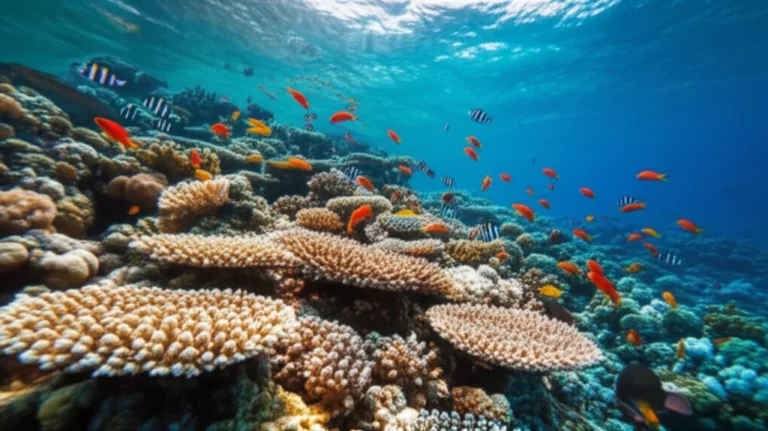
- Massive Spawning Events: Corals on the Great Barrier Reef engage in a synchronized “broadcast spawn” once a year, releasing a massive cloud of eggs and sperm that looks like an underwater snowstorm.
- Livebearers vs. Egg-Layers: Not all fish lay eggs! Livebearers like guppies, mollies, and platys give birth to free-swimming fry. ✅ Pro: Instant tiny fish! ❌ Con: They can overpopulate a tank fast!
- Mouthbrooding Parents: Some cichlids, like the African Cichlid, are “mouthbrooders.” The female holds the fertilized eggs in her mouth until they hatch to protect them from predators.
- Asexual All-Stars: Some aquatic critters, like sponges and hydra, can reproduce asexually by budding—literally growing a mini-clone of themselves that breaks off. It’s efficient, but lacks the genetic diversity of sexual reproduction.
🌊 The Rhythmic Dance of Life: Understanding Aquatic Life Cycles
The ocean’s surface might look calm, but beneath it, a constant, rhythmic dance of birth, growth, reproduction, and death is underway. This is the essence of an aquatic life cycle. It’s not just a simple A-to-B journey; it’s a complex ballet influenced by tides, seasons, predators, and the very chemistry of the water itself.
🤔 What Exactly Is an Aquatic Life Cycle?
At its core, a life cycle describes all the stages an organism goes through from its creation (as an egg, spore, or live birth) to the moment it reproduces its own offspring. As the experts at MarineBio.org put it, this “encompasses all of the generation-to-generation stages of a species.” For some, like a guppy, this is a straightforward path from fry to adult. For others, like a jellyfish or a crab, it involves a dramatic transformation called metamorphosis, where the larval stage looks nothing like the adult.
Think of it like this: some creatures have a life story that reads like a short biography, while others have one that’s more like an epic fantasy novel with shape-shifting and perilous journeys!
Why Should We Care About These Watery Journeys? 🐠
Understanding these cycles is more than just academic. It’s critical for:
- Conservation: Protecting a species means protecting every stage of its life. If a salmon’s freshwater spawning grounds are destroyed, the entire population is at risk, no matter how healthy the ocean is.
- Fisheries Management: As NOAA’s research on salmon shows, knowing when and where different age groups of fish will be is essential for setting sustainable fishing quotas. This “abundance-based fisheries management” prevents us from fishing a species into oblivion.
- The Aquarium Hobby: This is where it gets personal for us! If you want to breed your favorite fish, you need to understand their reproductive triggers. Do they need a change in temperature? A specific type of cave? Live plants to scatter their eggs on? Knowing their life cycle is the first step to success. Check out our Fish Care and Species Profiles for deep dives on specific species.
🧬 The Blueprint of Life: Aquatic Reproductive Strategies
Nature is nothing if not creative, and the ways aquatic animals perpetuate their species are wildly diverse. There’s no single “right way” to do it; there’s only what works.
Asexual vs. Sexual Reproduction: Two Paths to Perpetuation 🔄
Aquatic life uses both playbooks, and sometimes even a mix of the two!
| Strategy | How It Works | Pros ✅ | Cons ❌ |
|---|---|---|---|
| Asexual | One parent produces a genetically identical offspring. Think budding (hydra), fission (sea anemones), or fragmentation (sponges). | Energy efficient (no need to find a mate), fast population growth in stable environments. | No genetic diversity. A single disease or environmental change could wipe out the entire population. |
| Sexual | Two parents combine genetic material to create a unique offspring. This is the most common method for fish, mammals, and crustaceans. | High genetic diversity, which is crucial for adapting to changing environments and resisting disease. | Energy intensive. Requires finding a mate, courtship rituals, and the act of fertilization itself. |
Internal vs. External Fertilization: Where the Magic Happens ✨
Once you’ve decided on sexual reproduction, there’s another choice: where does the fertilization happen?
- External Fertilization (Broadcast Spawning): This is the ultimate pool party! Males and females release their sperm and eggs directly into the water column and hope for the best. It’s a numbers game. Corals, sea urchins, and many fish like tetras are classic examples. They release millions of gametes to overcome the odds of predation and dispersal by currents.
- Internal Fertilization: This is a more direct approach. The male transfers sperm directly into the female’s reproductive tract. This is common in aquatic mammals (whales, dolphins), sharks, rays, and livebearing fish like guppies and mollies. It dramatically increases the chance of fertilization and often leads to greater parental investment in fewer offspring.
Metamorphosis: The Ultimate Aquatic Transformation! 🐛🦋
This is one of the most fascinating aspects of aquatic life cycles. Metamorphosis is a profound change in body structure from one developmental stage to another.
A classic example is the jellyfish. It starts as a tiny, free-swimming larva called a planula. This planula settles on a surface and grows into a stationary polyp, which looks more like a tiny sea anemone. This polyp then reproduces asexually, budding off tiny, free-swimming baby jellyfish called ephyrae, which then grow into the adult medusa we all recognize. It’s a two-part life cycle that allows the jellyfish to exploit different food sources and habitats at different stages.
In your own aquarium, you might see this with freshwater shrimp. The nearly microscopic larvae (zoea) look very different from the adult shrimp they will become.
🌡️ Environmental Maestros: How Water Shapes Life Cycles
Aquatic organisms don’t live in a vacuum. Their life cycles are intricately tied to the physical and chemical properties of their watery world. As an aquarist, you can become the “maestro” of your tank’s environment to encourage natural behaviors.
Temperature’s Touch: From Spawning Triggers to Sex Determination 🔥🧊
Temperature is arguably the most powerful environmental cue.
- Spawning Trigger: For many fish, a slight increase or decrease in water temperature signals the changing of seasons and the ideal time to reproduce. We often mimic this in our fish room at Aquarium Music™ by performing a cool water change to trigger spawning in corydoras catfish.
- Incubation Speed: The warmer the water, the faster eggs will develop and hatch.
- Temperature-Dependent Sex Determination (TSD): This is where it gets really wild. In many reptiles, including sea turtles, and even some fish, the temperature of the nest or water during a critical period of development determines the sex of the offspring. According to the National Ocean Service, for sea turtles, warmer sand generally produces females, while cooler sand produces males. This has profound implications in a warming world.
Light, Salinity, and pH: The Unsung Heroes of Aquatic Development 💡🧂
While temperature gets the spotlight, these other parameters are crucial supporting actors.
- Photoperiod (Light): The length of daylight can signal breeding season. Many killifish, for example, come from seasonal pools and their entire life cycle is tied to the wet and dry seasons, which are marked by changes in light and water availability.
- Salinity: For species that migrate between freshwater and saltwater, like salmon or brackish water species (e.g., puffers, scats), the ability to adapt to changes in salinity is a key life cycle challenge. This transition, called smoltification in salmon, involves a complete overhaul of their physiology.
- pH and Hardness: Some fish, like the stunning Cardinal Tetra, come from extremely soft, acidic blackwater rivers in South America. They will not spawn unless these water conditions are replicated precisely. Proper Tank Maintenance is key to managing these parameters.
Habitat Harmony: The Critical Role of Ecosystems 🏞️
An organism’s life cycle is often a story of moving through different habitats. A mangrove forest might serve as a nursery for juvenile reef fish, offering protection and food before they are large enough to venture onto the main reef. Freshwater rivers are the essential spawning grounds for anadromous fish.
In the aquarium, this translates to providing the right kind of environment. A cichlid needs caves to claim as territory and a safe place to raise its young. A tetra needs dense thickets of plants like Java Moss or Hornwort to scatter its adhesive eggs. A beautiful Aquascaping and Aquatic Plants setup isn’t just for looks; it’s functional habitat that makes your fish feel secure enough to reproduce.
🐠 Nature’s Diverse Playbook: Exploring Specific Aquatic Life Cycles
Let’s look at the life stories of a few aquatic celebrities to see these principles in action.
1. The Epic Journey of Salmon: A Tale of Anadromy 🏞️➡️🌊
The life of a Pacific Salmon is a true odyssey.
- Eggs in the Gravel: It begins as an egg, laid in a gravel nest called a “redd” in a cold, clear freshwater stream.
- Fry & Parr: After hatching, the tiny “fry” emerge and develop into “parr,” camouflaged to hide from predators in the river.
- Smoltification: After months or even years, they undergo smoltification, a physiological transformation that prepares them for saltwater.
- Ocean Life: As “smolts,” they migrate to the ocean, where they spend 1-6 years feeding and growing into powerful adults.
- The Return: Guided by an incredible sense of smell and the Earth’s magnetic field, they migrate thousands of miles back to the exact river of their birth to spawn.
- The Final Act: After spawning, most Pacific salmon die, their bodies providing essential nutrients to the river ecosystem that will nourish the next generation. It’s a beautiful, tragic, and vital cycle.
2. Jellyfish: Pulsating Through Polymorphism 🐙
As we touched on earlier, the jellyfish life cycle is a masterclass in adaptation.
- Stage 1: Medusa (The “Jellyfish”): The familiar free-swimming adult reproduces sexually, releasing eggs and sperm.
- Stage 2: Planula (The “Traveler”): The fertilized egg becomes a tiny, ciliated larva that swims around looking for a home.
- Stage 3: Polyp (The “Plant”): The planula settles and grows into a stationary polyp, which feeds and grows.
- Stage 4: Strobilation (The “Stack”): The polyp begins to segment itself, looking like a stack of tiny plates.
- Stage 5: Ephyra (The “Baby”): Each plate breaks off as a tiny, juvenile jellyfish, which then grows into an adult medusa.
This complex cycle, known as alternation of generations, allows them to thrive in vastly different conditions.
3. Coral Reef Builders: From Larva to Colony 🏗️
A coral reef is a bustling metropolis built by tiny animals. Their life cycle is a testament to the power of teamwork. It starts with a massive, synchronized broadcast spawning event, often tied to a full moon. The resulting planula larvae drift on the currents. If a larva is lucky, it will find a suitable hard surface to settle on. It then metamorphoses into a single polyp and begins to secrete a calcium carbonate skeleton. This founder polyp then clones itself asexually thousands upon thousands of time, with each new polyp adding to the skeleton, slowly building the massive, complex structure of the reef over centuries.
4. The Secret Lives of Freshwater Fish: From Egg to Adult 🥚🐟
This is where we aquarists get a front-row seat!
- Livebearers (Guppies, Mollies): The ultimate in simplicity. The male internally fertilizes the female, and she gives birth to fully-formed, free-swimming fry a few weeks later. The biggest danger to the fry is often their own parents! We always keep a dense raft of floating plants like Hornwort or a breeder box handy for expecting mothers.
- Egg-Scatterers (Tetras, Barbs, Danios): These fish scatter hundreds of adhesive or non-adhesive eggs, often among fine-leaved plants. There is zero parental care. To breed them, you typically need a separate breeding tank with a spawning mop or a mesh bottom to protect the eggs from being eaten.
- Substrate Spawners (Cichlids): These are the dedicated parents of the fish world. A pair will clean a flat surface (a rock, a leaf, the side of the tank) and lay their eggs there. They then guard them fiercely, fanning them with their fins to provide oxygen and chasing away any intruders.
- Mouthbrooders (African Cichlids, some Bettas): This is parental care, level expert. After fertilization, the female (or sometimes the male) scoops the eggs into her mouth and holds them there for weeks until they hatch and are large enough to fend for themselves. She won’t eat during this entire period!
5. Amphibian Adventures: Frogs, Newts, and Their Dual Lives 🐸💧
The classic frog life cycle is the poster child for metamorphosis.
- Eggs: Laid in a gelatinous mass in the water.
- Tadpole: The aquatic larval stage hatches. It has gills, a tail, and no legs, looking more like a fish.
- Metamorphosis: The tadpole begins a radical transformation. Hind legs sprout, then front legs. The tail shortens as its nutrients are absorbed. Lungs develop, and the gills disappear.
- Froglet: A young frog with a stubby tail, now able to live on land.
- Adult Frog: The tail is gone, and the frog is fully terrestrial (or semi-aquatic), breathing air but returning to the water to reproduce, starting the cycle anew.
⚠️ Challenges on the Horizon: Pressures on Aquatic Life Cycles
The beautiful, intricate dance of aquatic life is facing unprecedented threats. Understanding these challenges is the first step toward becoming part of the solution.
Climate Change: Heating Up the Reproductive Dance 🌡️🌍
Warming waters are a huge disruptor. They can:
- Alter Spawning Times: Triggering reproduction at the wrong time, out of sync with food availability for the larvae.
- Skew Sex Ratios: For species with TSD, like sea turtles, warming trends could lead to populations that are almost entirely female, creating a demographic crisis.
- Cause Coral Bleaching: When water gets too hot, corals expel the symbiotic algae living in their tissues, causing them to turn white. A bleached coral is stressed and less likely to reproduce, threatening the entire reef ecosystem.
Pollution’s Peril: Toxins, Plastics, and Disrupted Development 🗑️🧪
Our waterways are being inundated with pollutants that wreak havoc on delicate life cycles.
- Endocrine Disruptors: Chemicals from pesticides, industrial waste, and pharmaceuticals can mimic hormones, causing developmental deformities, feminization of males, and reproductive failure in fish and amphibians.
- Nutrient Runoff: Fertilizers from agriculture cause algal blooms that deplete oxygen in the water, creating “dead zones” where eggs and larvae cannot survive.
- Plastics: Microplastics can be ingested by larvae and adult organisms, causing internal damage and introducing toxins up the food chain.
Habitat Loss & Fragmentation: Losing Nature’s Nurseries 🚧
You can’t complete a life cycle if a critical stage’s habitat is gone.
- Destruction of Wetlands and Mangroves: These coastal areas are vital nurseries for countless species of fish and invertebrates. Their removal leaves juveniles exposed and vulnerable.
- Damming of Rivers: Dams block the migratory paths of fish like salmon and sturgeon, preventing them from reaching their ancestral spawning grounds. Even with fish ladders, their journey is made exponentially more difficult.
Overfishing & Invasive Species: Upsetting the Delicate Balance 🎣👾
- Overfishing: Removing too many mature adults from a population can cause it to collapse. It also leads to “fishing down the food web,” where larger, older fish are removed, forcing fisheries to target smaller, younger fish, further disrupting the natural age structure and reproductive capacity of a stock.
- Invasive Species: Non-native species introduced into an ecosystem can outcompete native species for food and habitat, or directly prey upon eggs and juveniles that have no natural defenses against them.
🏡 Aquarist’s Corner: Nurturing Life Cycles in Your Home Aquarium
Witnessing a life cycle unfold in your own aquarium is one of the most rewarding experiences in the hobby. Here’s how you can play Mother Nature.
Creating the Perfect Spawning Ground: Tank Setup & Conditioning 🛠️
First, you need to set the mood. This means research! Find out what your specific fish needs to get in the mood for love.
- Conditioning: For a few weeks before a breeding attempt, feed your chosen pair high-quality, protein-rich foods. This signals to their bodies that resources are plentiful and it’s a good time to invest energy in reproduction.
- Our Go-To Foods: We love live or frozen foods like bloodworms and brine shrimp. For a high-quality prepared diet, we’ve had great success conditioning fish with Hikari Vibra Bites and Fluval Bug Bites.
- Provide Spawning Sites:
- Cichlids: Need a flat stone, a piece of slate, or a terracotta pot turned on its side.
- Tetras & Barbs: Need dense, fine-leaved plants like Java Moss or a DIY spawning mop made of acrylic yarn.
- Killifish: Peat moss on the bottom of the tank is a must for substrate-spawning species.
- Triggering the Spawn: Often, a large water change with slightly cooler water can simulate rainfall and trigger an immediate spawning response, especially in corydoras and tetras. A proper Aquarium Setup is your best friend here.
Raising Fry and Juveniles: The Art of Tiny Tending 🌱
Congratulations, you have eggs or fry! Now the real work begins.
- Separate Tank: It’s almost always best to move the eggs or fry to a separate, dedicated “grow-out” tank. This protects them from being eaten by other fish (including their parents).
- Gentle Filtration: Tiny fry can easily be sucked into a powerful filter. The gold standard for a fry tank is a gentle, air-driven sponge filter. It provides excellent biological filtration without creating dangerous currents.
- Feeding the Babies: This is the trickiest part. Most fry are too small to eat crushed flakes.
- First Foods (Days 1-7): For the tiniest fry (like those of tetras or rasboras), you’ll need infusoria (microscopic aquatic organisms) or a liquid fry food.
- Second Foods (Week 1+): Once they are slightly larger, the best food you can offer is live baby brine shrimp. They are incredibly nutritious and their wiggling movements trigger a feeding response. We highly recommend getting a hatchery kit.
- Powdered Foods: High-quality powdered fry foods like Sera Micron are a great alternative or supplement to live foods.
👉 Shop Fry Rearing Essentials:
- Brine Shrimp Hatchery Kit: Amazon | Chewy | Brine Shrimp Direct
- Sponge Filter: Amazon | Chewy | Aquarium Co-Op
Ethical Considerations: Responsible Breeding & Sourcing ✅
With great power comes great responsibility. Breeding fish is fun, but it’s important to be ethical.
- Have a Plan: Before you even start, know what you will do with the dozens (or hundreds) of fry. Do you have space for them? Does your local fish store accept trade-ins? Do you have friends in the hobby who want them?
- ❌ NEVER Release Them: Never, ever release unwanted aquarium fish or plants into local waterways. This is how invasive species are introduced, and it can cause catastrophic damage to local ecosystems. It is irresponsible and often illegal.
- Cull Humanely: In any large batch of fry, some may have deformities. It is more humane to euthanize these individuals than to let them suffer or pass on bad genetics. Clove oil is a widely accepted humane method for fish euthanasia.
- Source Responsibly: Support local breeders or reputable stores that take good care of their animals. Avoid buying fish that look stressed, sick, or are kept in poor conditions. Your purchasing power can drive the industry toward better practices.
✨ Conclusion: The Endless Cycle of Wonder

Wow, what a journey! From the microscopic planktonic larvae drifting on ocean currents to the epic migrations of salmon returning home against all odds, aquatic life cycles are nothing short of miraculous. They reveal nature’s incredible adaptability, resilience, and complexity beneath the waves and behind the glass of your aquarium.
We’ve unraveled the secrets of reproductive strategies, environmental cues, and the challenges aquatic species face—from climate change to pollution and habitat loss. Whether you’re an aquarist aiming to breed your favorite fish or a conservation enthusiast wanting to protect fragile ecosystems, understanding these cycles is your gateway to making informed, impactful decisions.
Remember that each stage of an aquatic life cycle is a critical link in the chain of survival. Missing one link can mean the difference between thriving populations and collapse. So next time you watch a tiny fry dart among plants or witness a coral’s synchronized spawning, you’ll appreciate the symphony of life playing out in your tank or the wild.
And if you ever wondered how to trigger spawning or raise fry successfully, now you have the insider knowledge to turn your aquarium into a cradle of life. It’s not just about keeping fish alive—it’s about nurturing the full story of life, growth, and renewal.
Dive in, experiment responsibly, and keep the music of aquatic life playing strong! 🎶🐠🌊
🔗 Recommended Links
Ready to take your aquatic life cycle adventures to the next level? Here are some of our favorite tools, foods, and resources to help you succeed.
👉 CHECK PRICE on:
-
Hikari Vibra Bites (High-Protein Conditioning Food):
Amazon | Chewy | Hikari Official Website -
Fluval Bug Bites (Premium Protein Food):
Amazon | Chewy | Fluval Official Website -
Java Moss (Live Aquarium Plant for Spawning):
Amazon | Bulk Reef Supply -
Brine Shrimp Hatchery Kit (Essential for Fry Feeding):
Amazon | Chewy | Brine Shrimp Direct -
Sponge Filter (Gentle Filtration for Fry Tanks):
Amazon | Chewy | Aquarium Co-Op
Books to Deepen Your Understanding:
- The Biology of Coral Reefs by Charles Sheppard — Amazon
- Freshwater Fishes of North America by Melvin L. Warren Jr. and Brooks M. Burr — Amazon
- The Ecology of Fishes on Coral Reefs by Peter F. Sale — Amazon
❓ FAQ: Your Burning Questions Answered

What are the different stages of aquatic life cycles in fish and other marine species?
Aquatic life cycles vary widely but generally include these stages:
- Egg: Fertilized eggs may be laid in nests, scattered, or brooded internally.
- Larval Stage: Many species have a larval form that looks very different from the adult, such as fish fry, jellyfish planula, or coral planula larvae.
- Juvenile: After metamorphosis or growth, juveniles resemble adults but are not yet sexually mature.
- Adult: Fully mature individuals capable of reproduction.
- Reproductive Stage: Adults spawn or give birth, completing the cycle.
For example, salmon eggs hatch into fry, which grow into smolts before migrating to the ocean as adults. Jellyfish alternate between polyp and medusa stages, showcasing complex metamorphosis.
How do environmental factors affect the life cycles of aquatic plants and animals?
Environmental factors such as temperature, light, salinity, and pH act as critical cues and constraints:
- Temperature: Influences spawning timing, egg incubation speed, and even sex determination (TSD) in species like sea turtles.
- Light: Photoperiod can trigger breeding seasons and larval development.
- Salinity: Species migrating between freshwater and saltwater must physiologically adapt during transitions (e.g., salmon smoltification).
- pH and Water Hardness: Affect egg viability and larval survival, especially for sensitive species like Cardinal Tetras.
Aquarists can mimic these conditions to encourage breeding and healthy development.
What is the average lifespan of various aquatic species, and how do their life cycles impact ecosystems?
Lifespans vary dramatically:
- Small fish like guppies: 1-3 years, rapid reproduction helps maintain populations.
- Salmon: 3-7 years, with a single reproductive event before death, contributing nutrients to freshwater ecosystems.
- Corals: Can live for decades to centuries, building complex reef structures over time.
- Marine mammals: Whales can live 50-90 years, with long parental care.
Each species’ life cycle stage plays a role in ecosystem function—juveniles often serve as prey, adults as predators or ecosystem engineers (like corals building reefs).
How do aquatic life cycles vary between freshwater and saltwater environments?
Freshwater and saltwater species differ in:
- Reproductive strategies: Freshwater fish often have more parental care (e.g., cichlids mouthbrooding), while many marine species rely on broadcast spawning.
- Larval dispersal: Marine larvae often drift with currents (planktonic), aiding wide dispersal; freshwater larvae tend to stay localized.
- Environmental stability: Marine environments are more stable chemically, while freshwater habitats can be more variable, influencing life cycle adaptations.
Some species, like salmon and eels, migrate between both environments, adapting their physiology accordingly.
What role do predators and prey play in shaping the life cycles of aquatic organisms?
Predation pressure shapes life cycles by influencing:
- Reproductive output: Species producing many offspring (e.g., sea turtles, corals) compensate for high juvenile mortality.
- Timing and location of spawning: Many species spawn en masse or at specific times to overwhelm predators (predator satiation).
- Parental care: Some species evolve elaborate care behaviors to protect vulnerable eggs and fry.
Prey availability also affects growth rates and survival, creating a dynamic balance in aquatic food webs.
How do human activities such as pollution and overfishing impact aquatic life cycles and ecosystems?
Human impacts include:
- Pollution: Chemicals disrupt hormone systems, causing reproductive failures and deformities. Nutrient runoff creates dead zones, killing eggs and larvae.
- Overfishing: Removes breeding adults, reducing population resilience and altering age structures.
- Habitat destruction: Coastal development, damming, and deforestation eliminate critical spawning and nursery habitats.
- Climate change: Alters temperature and ocean chemistry, disrupting timing and success of reproduction.
These pressures threaten biodiversity and ecosystem services.
What can be learned from studying the life cycles of aquatic species, and how can this knowledge inform conservation efforts?
Studying life cycles helps us:
- Identify critical habitats: Protect spawning grounds, nurseries, and migration corridors.
- Understand population dynamics: Predict responses to environmental changes and human impacts.
- Develop sustainable fisheries management: Timing and location of fishing can be adjusted to protect vulnerable life stages.
- Design captive breeding and reintroduction programs: Mimic natural conditions to boost endangered species.
Informed conservation leads to healthier oceans and sustainable human use.
📚 Reference Links
- MarineBio: Marine Life Cycles
- Annual Reviews: Movement Ecology Paradigm for Marine Animals
- NOAA Fisheries: Salmon Life Cycle and Seasonal Fishery Planning
- National Ocean Service: Temperature-Dependent Sex Determination
- Hikari Official Website
- Fluval Official Website
- Aquarium Co-Op
- Bulk Reef Supply
Thanks for swimming through this deep dive with us at Aquarium Music™! Keep your tanks thriving and your curiosity flowing. 🎶🐟