Support our educational content for free when you purchase through links on our site. Learn more
🌿 Pond Aquariums: Build a Tiny Water Garden

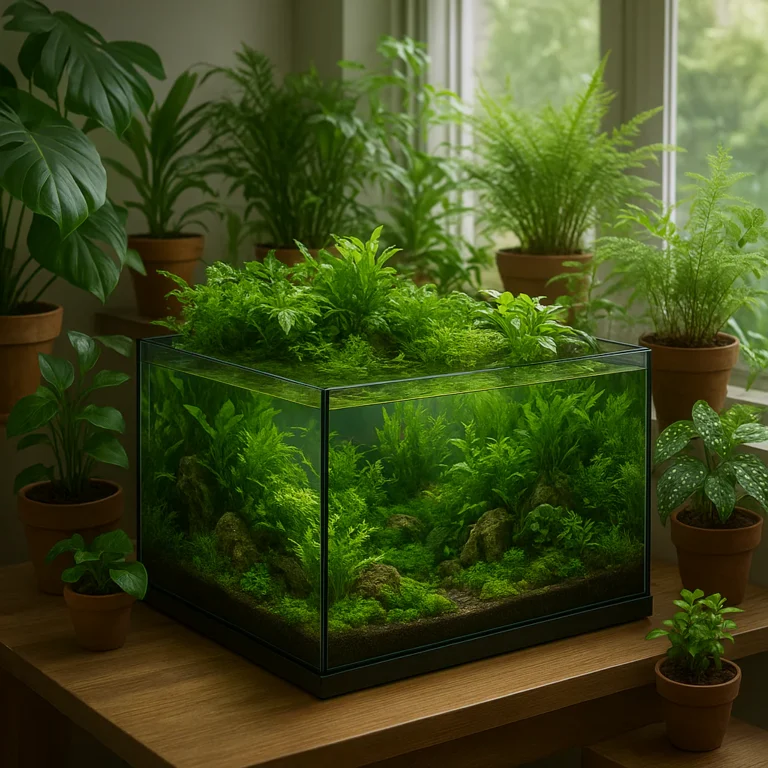
The best pond aquariums start with the habitat, not the fish: choose a safe container, plan for stable water conditions, and add livestock only when the setup can meet its needs. A pond aquarium can be an outdoor container pond or an indoor, pond-inspired aquarium with a shallow shoreline and plants rising above the water.
We’ve watched a handful of marginal plants transform a plain tub into a miniature wetland. But that natural look can hide a practical surprise: a small volume of water can heat up, cool down, or accumulate waste quickly, so planning and testing matter just as much as the aquascape.
Here’s how to choose a setup, select suitable plants and animals, build it step by step, and keep it healthy through the seasons.
Key Takeaways
- Choose the setup before choosing fish. Indoor tanks and outdoor ponds have different temperature, lighting, and safety requirements.
- Match livestock to the real conditions. Koi need large, purpose-built ponds; small containers are better suited to plants or carefully selected small species.
- Cycle the filter and test the water before adding animals. Clear water alone does not prove it is safe.
- Quarantine outdoor plants before bringing them indoors; they can carry snails, larvae, algae, and other hitchikers.
- Plan for weather, maintenance, and weight. Shade, safe electrical equipment, structural support, and seasonal care all belong in the setup plan.
- Never release unwanted fish or plants into local waterways. Rehome them responsibly and check local rules before buying outdoor species.
Table of Contents
- ⚡️ Quick Tips and Facts
- 🌿 What Is a Pond Aquarium?
- Pond Aquarium vs. Garden Pond vs. Indoor Aquarium
- A Brief History of Miniature Pond Ecosystems
- 🧭 Choosing the Right Pond Aquarium Setup
- Indoor, Outdoor, and Patio Pond Aquariums
- Container, Barrel, Stock-Tank, and Glass-Tank Options
- How Much Space and Water Volume Do You Need?
- 🛒 Pond Aquarium Equipment and Supplies
- Pond Liners, Containers, and Stands
- Pond Filters, Pumps, and Water Circulation
- Heaters, Chillers, and Temperature Control
- Lighting, Air Pumps, and Water Features
- Water Test Kits, Dechlorinators, and Maintenance Tools
- 🐟 Best Fish and Other Animals for a Pond Aquarium
- Hardy Fish for Small Pond Aquariums
- Goldfish, Koi, and Other Pond Fish: What Fits?
- Mosquitofish, Ricefish, and Temperate Species
- Snails, Shrimp, Frogs, and Other Tankmates
- Fish Compatibility, Stocking, and Humane Space Requirements
- 🪷 Pond Plants for Aquariums and Container Ponds
- Floating, Submerged, Marginal, and Bog Plants
- Best Pond Plants for Small Water Gardens
- Moving Pond Plants to an Aquarium Safely
- Plant Quarantine, Pest Control, and Algae Prevention
- 🧪 Water Quality, Cycling, and Pond Aquarium Chemistry
- The Nitrogen Cycle and Biological Filtration
- Ideal Temperature, pH, Hardness, and Oxygen Levels
- Tap Water, Rainwater, and Safe Water Changes
- Testing Amonia, Nitrite, Nitrate, and Other Parameters
- 🏗️ How to Build a Pond Aquarium Step by Step
- Planning the Location and Preparing the Container
- Installing the Liner, Filter, Pump, and Aeration
- Adding Substrate, Rocks, and Aquatic Plants
- Filling, Cycling, and Aclimating Fish
- 🍂 Seasonal Care for Outdoor Pond Aquariums
- Spring Startup and Summer Heat Management
- Autumn Cleanup and Winter Protection
- When to Bring Fish and Plants Indors
- 🧽 Routine Maintenance and Feeding
- Daily, Weekly, and Monthly Pond Aquarium Tasks
- Fish Feeding, Food Choices, and Overfeeding
- Cleaning Filters and Removing Debris
- 🚨 Common Pond Aquarium Problems and Solutions
- Green Water, String Algae, and Excess Nutrients
- Cloudy Water, Odors, and Low Oxygen
- Fish Illness, Parasites, and Suden Water Changes
- Predators, Mosquitoes, and Escape Prevention
- 💸 Pond Aquarium Costs, Safety, and Responsible Sourcing
- Planning a Practical Setup Budget
- Electrical, Structural, and Child Safety
- Choosing Healthy Fish and Avoiding Invasive Species
- ✨ Pond Aquarium Design Ideas and Aquascaping Tips
- Naturalistic Mini Pond and Water Garden Layouts
- Small-Space Balcony and Patio Pond Ideas
- Creating Shade, Hiding Places, and Clear Sightlines
- 🔍 Pond Aquarium Buying Guide: What to Look For
- Choosing Reliable Pumps, Filters, and Containers
- Useful Features vs. Unecessary Add-Ons
- ✅ Conclusion
- 🔗 Recommended Links
- ❓ FAQ
- 📚 Reference Links
Quick Tips and Facts
- “Pond aquarium” can mean two different things: an outdoor container or raised garden pond, or an indoor aquarium designed to evoke a pond or marsh. The right livestock, equipment, and care depend on which one you mean.
- Choose animals for the actual conditions—not the look. A sunny patio tub can swing dramatically in temperature, while a heated indoor tank may be too warm for cool-water pond species.
- Cycle the biofilter before adding fish. Beneficial bacteria need time to establish; bottled bacteria can help, but it does not replace testing. See our aquarium setup guides and this guide to common fish-tank setup mistakes.
- Use a secure, non-toxic container and confirm the supporting surface can safely bear the full weight of the water, substrate, and hardscape.
- Plants help, but they are not a substitute for filtration or maintenance. Start with hardy species suited to your light and water temperature.
- Never release aquarium fish, plants, or pond water into local waterways. Follow local rules and dispose of unwanted aquatic life responsibly. US Fish & Wildlife Service guidance explains why releasing pets can harm ecosystems.
| Quick fact | Practical takeaway |
|---|---|
| Fresh water weighs about 1 kg per liter before adding substrate and décor | A 100-liter setup is already roughly 100 kg of water. Check floors, balconies, stands, and decks. |
| Sunlight can encourage rapid algae growth and overheating | Provide shade and monitor temperature, especially in small outdoor containers. |
| Fish produce waste that becomes ammonia | A mature biological filter helps convert it through the nitrogen cycle; test rather than guess. |
| Outdoor plants can carry hitchikers | Quarantine and inspect them before introducing them to an indoor aquarium. |
| Small volumes change quickly | Larger water volumes generally give you more time to spot and correct a problem. |
What Is a Pond Aquarium?
A pond aquarium is not one standardized product or design. We use the term for a pond-inspired aquatic setup: sometimes an outdoor water garden in a container, sometimes a glass aquarium with shallow water, emergent plants, and a natural shoreline-style layout.
The shared idea is a habitat that blends water, plants, hardscape, and the space above the waterline. That can mean a half-barel with floating plants and temperate fish, or an indoor paludarium where roots and leaves rise above a sandy shallows. For more on aquatic layouts and plant choices, browse our aquascaping and aquatic plants section.
Pond Aquarium vs. Garden Pond vs. Indoor Aquarium
| Feature | Container or garden pond | Pond-inspired indoor aquarium | Conventional aquarium |
|---|---|---|---|
| Typical location | Garden, patio, balcony, or courtyard | Indors | Indors |
| Water conditions | Often seasonal and weather-exposed | More controlled, depending on heating and room conditions | Usually controlled |
| Plant style | Floating, submerged, and marginal plants | Aquatic plants plus emergent or marginal plants | Mostly submerged plants |
| Equipment | Pump, filter, aeration, shade, and sometimes heater | Aquarium filter, lighting, and sometimes a heater | Filter, lighting, and temperature control as needed |
| Main challenge | Weather, evaporation, predators, and temperature swings | Balancing humidity, light, waterline, and plant needs | Water quality, stocking, and routine maintenance |
A pond aquarium is not automatically a self-sustaining ecosystem. Plants can absorb nutrients and provide shelter, but fish still need suitable space, oxygen, filtration, and regular observation.
A Brief History of Miniature Pond Ecosystems
People have kept ornamental water gardens, tubs, and fish ponds for centuries. Modern pond aquariums borrow from that tradition while drawing on planted-tank aquascaping and paludarium design. The result is less “tiny koi pond” and more a carefully composed slice of a marsh edge.
For a modern build, the featured video offers one creator’s perspective: the aim is to make “a tiny world,” with a shallow shoreline, plants growing above the water, and fish occupying the aquatic zone. It is an appealing design approach, but we would separate aesthetic inspiration from husbandry advice: copy the layout if you like, then choose livestock only after checking the tank’s volume, temperature, and filtration.
Choosing the Right Pond Aquarium Setup
Before buying a pump or a dramatic piece of driftwood, decide where the setup will live and what you want it to house. A planted display without fish has very different requirements from a container pond intended for outdoor fish.
Indoor, Outdoor, and Patio Pond Aquariums
Indoor setups are easier to protect from predators and weather, but room temperature, lighting, and humidity still matter. Outdoor setups benefit from natural light and seasonal plant growth, but face heat, cold, evaporation, falling leaves, and wildlife.
| Setup | Advantages | Drawbacks | Best suited to |
|---|---|---|---|
| Indoor shallow aquarium | Stable environment; easy to observe; works well for emergent plants | Requires suitable lighting; may need heating, cooling, or humidity management | Plant-focused displays and carefully selected aquarium livestock |
| Patio container pond | Natural sunlight; simple water-garden feel; flexible placement | Temperature swings, evaporation, mosquitoes, and predator exposure | Hardy plants and appropriately chosen outdoor species |
| Raised garden pond | More water volume and a strong visual presence | Structural support, installation, access, and seasonal care need planning | Gardeners wanting a permanent water feature |
| Balcony pond | Compact footprint | Weight limits, wind, sun exposure, and drainage risks | Plant-first designs after checking building restrictions |
Measure the site before choosing a container. A balcony can look sturdy and still have a strict load limit; ask the building manager or a qualified professional if you are unsure.
Container, Barrel, Stock-Tank, and Glass-Tank Options
A container should be watertight, structurally sound, and safe for aquatic use. Look for materials made for water storage or pond use. Avoid containers that previously held pesticides, fuel, cleaners, or unknown chemicals.
- Preformed pond tubs: Convenient shapes, but limited flexibility.
- Flexible pond liners: Adaptable for custom builds; installation quality matters.
- Food-safe stock tanks: Practical and durable when the material is suitable for aquatic life.
- Wooden raised ponds: Attractive, but liner quality and construction are crucial.
- Glass aquariums: Excellent viewing, but not designed for outdoor exposure unless specifically rated for the conditions.
Garden Aquarium describes its raised ponds as “a low maintenance pond and water feature for your garden” and highlights FSC-acredited wood and a box-welded liner. That is the manufacturer’s positioning, not independent proof that every installation is maintenance-free; all ponds still need monitoring, cleaning, and seasonal care. See Garden Aquarium’s product information for its materials and construction details.
How Much Space and Water Volume Do You Need?
There is no universal stocking formula that makes every fish species suitable for every pond. Adult size, behavior, temperature, oxygen demand, and filtration capacity all matter. Koi, for example, are not suitable for a small tabletop pond: they grow large and need substantial space and robust filtration. Check species needs using reliable care references such as OATA’s fishkeeping resources.
Use this planning checklist:
- Estimate the container’s working water volume, not just its brim capacity.
- Subtract the volume occupied by rocks, substrate, and land features.
- Decide whether the system is plant-only, invertebrate-focused, or stocked with fish.
- Research the adult size and environmental needs of each species.
- Leave room for plant growth, maintenance access, and safe fish movement.
- Confirm the supporting structure can handle the filled setup.
Pond Aquarium Equipment and Supplies
The equipment list depends on the habitat, but water movement, biological filtration, oxygen, and reliable testing are the basics for most fish-bearing setups. Browse our aquarium equipment guides for more on filters and testing tools.
Pond Liners, Containers, and Stands
Select the container first; then match the equipment to its water volume and layout. A stand or platform must be level and rated for the full load. For outdoor ponds, protect the liner from sharp objects and inspect seams, edges, and fittings for leaks.
Do not assume a decorative planter is fish-safe. Some containers may leach substances, lack a waterproof lining, or have drainage treatments unsuitable for aquatic life.
Pond Filters, Pumps, and Water Circulation
A filter performs two jobs: it traps debris mechanically and provides surface area for beneficial bacteria. A pump moves water through the system, helping circulation and, in many designs, supporting aeration.
| Equipment | What it does | What to check |
|---|---|---|
| Mechanical filter media | Catches suspended debris | Easy access for cleaning without dismantling the whole setup |
| Biological media | Houses nitrifying bacteria | Adequate flow and oxygen; rinse gently in removed aquarium water |
| Pump | Circulates water | Flow rate appropriate to the system, safe electrical setup, and manageable current |
| Air pump and diffuser | Adds surface agitation and gas exchange | Placement, noise, weather protection, and backup plan for outages |
| Prefilter or intake sponge | Keeps debris and small animals out of the pump | Easy maintenance and suitable pore size |
A filter’s advertised capacity is not a stocking guarantee. Heavy feeding, large fish, warm water, and fine debris can all increase the actual load.
Heaters, Chillers, and Temperature Control
Choose temperature equipment based on the species and the measured seasonal range at the site. Indoor tanks may need a heater for tropical species; outdoor water may need shade, deeper water, or a species-appropriate winter plan. A heater cannot compensate for a container that overheats in direct sun.
Use a reliable thermometer and check temperatures at different times of day. Small containers can warm quickly in afternoon sun, then cool rapidly overnight.
Lighting, Air Pumps, and Water Features
Aquatic plants need suitable light, but “more light” is not automatically better. Too much intensity or duration can encourage algae, especially when nutrients are plentiful. Begin with a moderate photoperiod and adjust based on plant growth and algae.
- Use an aquarium light rated for the setup’s environment.
- Avoid placing indoor tanks in direct window sun.
- Consider a lid or mesh cover to reduce evaporation and prevent jumps.
- Use fountains and waterfalls only if their splash, flow, and noise suit the animals.
Water Test Kits, Dechlorinators, and Maintenance Tools
Keep a test kit, water conditioner, siphon, algae scraper, thermometer, and dedicated buckets on hand. The API Freshwater Master Test Kit tests key parameters, while Seachem Prime is a water conditioner used according to label directions. Product claims are not a substitute for testing.
Never use a bucket that has held household cleaners for aquarium work. Label aquarium tools clearly and keep them separate.
Best Fish and Other Animals for a Pond Aquarium
There is no single “best pond fish.” The right choice depends on water volume, temperature, climate, legal restrictions, adult size, and whether the setup is indoors or outdoors. Our fish care and species profiles and fish and aquatic life guides can help you compare care needs.
Hardy Fish for Small Pond Aquariums
Some small, temperate fish may suit larger, stable outdoor containers, but “hardy” does not mean invulnerable. Species sold as pond fish may have very different adult sizes and temperature requirements.
Before buying, verify:
- Adult size and swimming needs.
- Minimum group size and social behavior.
- Temperature range through your hottest and coldest seasons.
- Local legality and whether the species is native or invasive.
- Compatibility with plants, snails, shrimp, and other fish.
For small indoor pond-inspired aquariums, consider plant-focused or invertebrate-focused designs rather than forcing pond fish into a space too small for them.
Goldfish, Koi, and Other Pond Fish: What Fits?
Goldfish and koi are often suggested for ponds, but a small decorative container is not a suitable permanent home for koi, and many goldfish varieties need far more room and filtration than beginners expect. Check care information from experienced aquatic organizations, including OATA’s goldfish guidance.
| Animal | Pond aquarium fit | Key caution |
|---|---|---|
| Koi | Large, purpose-built ponds only | Large adult size and high waste production |
| Common or comet goldfish | Spacious, well-filtered ponds | Can grow large; not a tiny-bowl fish |
| Fancy goldfish | Usually better in appropriately sized indoor aquariums | Poor fit for setups with strong currents or extreme temperatures |
| Small temperate fish | Sometimes suitable after species-specific research | Outdoor climate and local rules determine suitability |
| Beta | Indoor tropical aquarium conditions, not an unheated outdoor pond | Needs stable warm water and appropriate filtration |
The featured video’s creator planned to add a beta to a shallow pond-inspired aquarium. That can be an attractive concept, but a beta needs a stable tropical environment, not a temperature-fluctuating outdoor tub. Treat that plan as a design example, not a universal stocking recommendation.
Mosquitofish, Ricefish, and Temperate Species
Species such as ricefish are sometimes considered for outdoor containers, but their suitability depends on local climate, source, and regulations. Mosquitofish may be restricted or ecologically harmful in some regions. Never stock a species simply because it is marketed for mosquito control.
Check with your local wildlife or fisheries agency before purchasing outdoor fish, and never release them into local waterways.
Snails, Shrimp, Frogs, and Other Tankmates
Small invertebrates can add interest, but they need appropriate food, water, and shelter. Pond-colected organisms may carry parasites or become predators. Tropical Fish Hobbyist’s pond-to-aquarium article notes that dragonfly larvae can prey on small fish and that fish may eat small invertebrates.
- Snails: Confirm species and reproduction risk; avoid releasing them outdoors.
- Shrimp: Check temperature, water chemistry, and fish compatibility.
- Frogs and tadpoles: Local laws and species-specific habitat requirements apply; do not collect protected wildlife.
- Wild invertebrates: Quarantine separately and identify them before mixing with fish.
Fish Compatibility, Stocking, and Humane Space Requirements
Stock slowly. A new setup should be fully cycled, and animals should be introduced in small, considered steps. Do not use “one inch of fish per gallon” as a stocking rule; it ignores body shape, adult size, behavior, filtration, and oxygen demand.
Observe new fish closely for changes in appetite, breathing, swimming, and appearance. For disease prevention and species care, see our fish care resources.
Pond Plants for Aquariums and Container Ponds
Plants give a pond aquarium its layered look and can provide shade, shelter, and nutrient uptake. The trick is choosing plants for their actual growth form and temperature needs, not just their label or nursery photo.
Floating, Submerged, Marginal, and Bog Plants
| Plant group | Where it grows | Design role | Considerations |
|---|---|---|---|
| Floating plants | On the water surface | Shade and cover | Can spread quickly; check local restrictions |
| Submerged plants | Underwater | Oxygen production during light; habitat and cover | Need suitable light and water chemistry |
| Marginal plants | Shallow water or saturated substrate | Creates the shoreline transition | Roots may need a basket or contained land section |
| Bog plants | Moist soil with shallow water nearby | Emergent foliage and natural texture | Often need roots above the fully submerged zone |
Best Pond Plants for Small Water Gardens
Choose species based on climate, mature size, and whether you want them indoors or outdoors. In the featured build, the creator used dwarf papyrus, dwarf bamboo, water pennywort, creeping jenny, and variegated water celery in the emergent section, with Anubias attached to hardscape and moss for texture. Those are examples from one aquascape, not a guarantee that every plant will thrive in every setup.
For indoor displays, avoid assuming a garden plant will tolerate aquarium lighting or warm household temperatures. For outdoor tubs, check whether a plant is invasive or restricted in your region. Our aquascaping and aquatic plants section covers planting and layout fundamentals.
Moving Pond Plants to an Aquarium Safely
Outdoor plants can bring algae, insect larvae, snails, worms, or other hitchikers indoors. The Tropical Fish Hobbyist guide to moving pond plants recommends a separate quarantine setup and careful inspection before transfer.
A cautious process:
- Prepare a quarantine tub or tank with suitable light, water, and temperature.
- Rinse the plant in cool, clean water and inspect stems, roots, and leaf joints.
- Remove soft, mushy, discolored, or damaged growth.
- Look for eggs, snails, larvae, algae, and other organisms.
- Keep the plant isolated while it adjusts and observe for pests or die-off.
- Move only healthy growth into the display aquarium.
For stem plants, retain healthy nodes when trimming. TFH describes keeping at least one to two nodes below the substrate and two or more above as a practical approach for regrowth, depending on the plant.
Plant Quarantine, Pest Control, and Algae Prevention
Quarantine is the safer default. Chemical dips can harm plants, animals, and the person handling them, so do not improvise a treatment from an online recipe. TFH discusses potassium permanganate and diluted bleach dips while emphasizing that they can injure plants and should be used cautiously. We recommend starting with inspection, rinsing, and isolation; use a dip only after confirming the plant species, product concentration, and safe handling procedure.
Do not pour untreated dip water into ponds, storm drains, or natural waterways. Dispose of it according to the chemical label and local guidance.
Water Quality, Cycling, and Pond Aquarium Chemistry
Clear water is not necessarily safe water. Amonia and nitrite can be present in water that looks sparkling, which is why testing matters more than appearance.
The Nitrogen Cycle and Biological Filtration
Fish waste and decomposing material produce ammonia. Beneficial bacteria convert ammonia to nitrite, then other bacteria convert nitrite to nitrate. The aquarium’s biological filter provides a home for these bacteria. USGS explains the nitrogen cycle in broader environmental terms, while fishkeeping resources such as OATA’s aquarium advice discuss practical water care.
Cycling steps:
- Set up the container, filter, substrate, and plants.
- Add dechlorinated water.
- Provide an ammonia source using a fishless cycling method.
- Test ammonia, nitrite, and nitrate regularly.
- Wait for the system to process ammonia and nitrite consistently.
- Add livestock gradually and continue testing.
Bottled products such as FritzZyme 7 may support bacterial establishment, but they do not instantly prove a tank is cycled. Test before stocking.
Ideal Temperature, pH, Hardness, and Oxygen Levels
There is no one ideal pH or temperature for every pond aquarium. Match conditions to the species and keep them stable. Rapid shifts are often more dangerous than a number that is slightly outside a generic chart.
| Parameter | What to do |
|---|---|
| Temperature | Measure morning and afternoon, especially outdoors |
| pH | Test regularly; avoid sudden attempts to “correct” it |
| Amonia and nitrite | Aim for undetectable readings in an established fish system |
| Nitrate | Track trends and manage with plants, feeding, and water changes |
| Dissolved oxygen | Maintain surface movement and adequate aeration, especially in warm weather |
Warm water holds less dissolved oxygen than cooler water, so hot spells deserve extra attention. USGS explains dissolved oxygen and aquatic life.
Tap Water, Rainwater, and Safe Water Changes
Use a conditioner that treats the specific contaminants in your tap water, following its label. Rainwater quality varies by location and collection surface; it may also lack minerals that aquatic animals need. Do not assume rainwater is automatically safer or better.
For water changes:
- Match replacement water temperature as closely as practical.
- Treat tap water before it reaches animals.
- Avoid replacing all the water unless there is an emergency requiring a carefully managed response.
- Use a clean, dedicated siphon and bucket.
- Recheck temperature and water chemistry after large changes.
Testing Amonia, Nitrite, Nitrate, and Other Parameters
Test more frequently during cycling, after adding animals, after a filter disruption, or when fish behave unusually. Once the setup is stable, establish a routine that catches trends before they become emergencies.
A useful record includes:
- Date and time.
- Temperature.
- Amonia, nitrite, nitrate, and pH readings.
- Water-change volume.
- Filter cleaning or equipment changes.
- Feeding changes and unusual animal behavior.
A small logbook can save you from the classic aquarium mystery: “It was fine yesterday. What changed?”
How to Build a Pond Aquarium Step by Step
A successful build starts with the habitat plan, not the shopping cart. The featured video gives one visual approach: create a shallow shoreline using rock, driftwood, sand, and emergent plants, then add filtration and cycle the aquarium. Here is how we would adapt that idea with a careful, livestock-first sequence.
Planning the Location and Preparing the Container
- Decide whether the setup is indoors or outdoors.
- Measure the footprint and calculate the likely filled weight.
- Check sunlight, room temperature, access to power, and maintenance space.
- Choose the livestock only after confirming the environment can support it.
- Clean the container with water only or an aquarium-safe method; never use household cleaners.
- Test for leaks before adding substrate or hardscape.
Installing the Liner, Filter, Pump, and Aeration
- Install the liner or container according to the manufacturer’s instructions.
- Place the filter and pump where you can reach them for maintenance.
- Protect intake openings with an appropriate prefilter.
- Set up aeration or surface agitation if the species and layout need it.
- Route power safely using outdoor-rated equipment where applicable, with appropriate ground-fault protection and drip loops.
- Test the system before adding plants or animals.
For a planted indoor build, the video creator used a Landen Pura 50 stainless steel canister filter. That is one example, not a universal recommendation; select a filter based on your actual volume and maintenance needs. Find manufacturer information at Landen.
Adding Substrate, Rocks, and Aquatic Plants
- Rinse inert sand and rocks if appropriate for the material.
- Arrange stable hardscape before adding water.
- Separate sand from nutrient-rich soil with a secure barrier.
- Use aquarium-safe adhesives only as directed, and allow them to cure fully.
- Add plants at the depth and orientation suited to each species.
- Keep land and water sections accessible for cleaning.
The featured build used Mopani driftwood, lava rock, sand, aqua soil, Anubias, and moss. The creator also used super glue and cotton as a hardscape “mortar.” If you use adhesives, verify they are aquarium-safe once fully cured and keep uncured material away from animals.
Filling, Cycling, and Aclimating Fish
- Fill slowly to avoid disturbing the substrate.
- Treat the water and start the filter.
- Add plants and confirm their roots remain in the appropriate zone.
- Cycle the system and test water parameters.
- Correct leaks, unstable temperatures, and flow issues before livestock arrives.
- Aclimate new animals gradually according to species needs.
- Observe closely and test water after stocking.
The video creator added FritzZyme 7 to support cycling. That can be part of a plan, but the test results—not the bottle—tell you whether the aquarium is ready.
Seasonal Care for Outdoor Pond Aquariums
Outdoor water changes with the weather. A setup that is stable in May may become dangerously warm in July or freeze in winter. Plan for the full local climate before adding animals.
Spring Startup and Summer Heat Management
In spring, remove accumulated debris, inspect equipment, and restart pumps gradually. Test water before increasing feeding or stocking.
During hot weather:
- Add shade with plants or a carefully positioned cover.
- Increase surface movement or aeration when needed.
- Monitor temperature at the warmest time of day.
- Avoid abrupt cooling with ice or cold water.
- Remove decaying plant matter promptly.
Autumn Cleanup and Winter Protection
Remove excess fallen leaves before they decompose. Check that pumps and hoses are suitable for expected temperatures, and decide in advance whether plants or fish need to move indoors.
A small container may cool or freeze far faster than a large pond. Do not rely on a decorative heater to make an unsuitable setup safe through winter.
When to Bring Fish and Plants Indors
Bring animals indoors only to a prepared, cycled system with suitable temperature and filtration. Plants also need a transition plan: inspect and quarantine them, then adjust lighting and temperature gradually. The TFH pond-to-aquarium transfer guide explains why outdoor plants may need quarantine and time to adapt.
Routine Maintenance and Feeding
Pond aquariums are often called low-maintenance. That can be true compared with a complex water feature, but low-maintenance does not mean no-maintenance. Garden Aquarium uses the phrase “a low maintenance pond and water feature for your garden”; we would read that as a design goal, not a promise that equipment and animals can be ignored.
Daily, Weekly, and Monthly Pond Aquarium Tasks
| Frequency | Check or task |
|---|---|
| Daily | Observe animals, check pump flow, remove obvious debris, watch temperature during extreme weather |
| Weekly | Test key water parameters, inspect plants, clean accessible prefilters as needed |
| Monthly | Review filter performance, trim plants, inspect seams and electrical connections |
| Seasonally | Adjust shade, remove leaf litter, prepare for temperature changes, review winter plans |
Keep a short log. A gradual change in appetite or filter flow is much easier to catch when you know what “normal” looked like last week.
Fish Feeding, Food Choices, and Overfeeding
Feed a species-appropriate diet and use only as much as the animals consume promptly. Uneaten food decays, adding nutrients and increasing the biological load.
- Follow the food label and species guidance.
- Avoid feeding heavily during cold weather when fish metabolism slows.
- Remove uneaten food where practical.
- Do not feed wild animals or add bread to a pond.
- Consider how plant growth and natural food availability vary outdoors.
Cleaning Filters and Removing Debris
Rinse biological media gently in water removed from the aquarium rather than chlorinated tap water. Do not replace all filter media at once; doing so can remove beneficial bacteria. Remove decaying leaves and sludge carefully, and avoid stirring a deep, dirty substrate without a plan.
Common Pond Aquarium Problems and Solutions
The fastest fix is often to identify what changed. Check equipment, temperature, feeding, water quality, and recent additions before reaching for a treatment.
Green Water, String Algae, and Excess Nutrients
Algae thrive when light and nutrients are abundant. Reduce direct sun or excess lighting, remove decaying material, review feeding, and maintain filtration. Avoid algaecides as a first response; they can harm plants and animals, and a sudden algae die-off may reduce oxygen.
Cloudy Water, Odors, and Low Oxygen
Cloudiness can follow a new setup, substrate disturbance, bacterial bloom, or excess waste. A foul odor can signal decaying material or poor circulation. Test the water, inspect the filter, remove decomposing debris, and increase surface agitation if oxygen may be low.
If fish gasp at the surface, treat it as urgent: check temperature and pump operation, improve aeration, and test ammonia and nitrite.
Fish Illness, Parasites, and Suden Water Changes
Watch for clamped fins, unusual spots, rapid breathing, loss of appetite, or abnormal swimming. Test water first; poor water quality can mimic or worsen illness. Quarantine new fish and plants where practical, and seek species-specific advice before medicating a mixed setup.
Avoid sudden changes in pH or temperature. If a water change is needed, match conditions carefully and monitor the animals afterward.
Predators, Mosquitoes, and Escape Prevention
Outdoor setups may attract birds, cats, racons, and other visitors. Use a secure cover or net that allows airflow and does not trap animals. Maintain water movement and avoid leaving a stagnant container, but check local mosquito-control guidance and never add restricted fish.
For indoor tanks, use a fitted lid or mesh cover where jumping is possible. Keep cords and equipment protected from splashes and curious pets.
Pond Aquarium Costs, Safety, and Responsible Sourcing
The total commitment includes more than the container: consider filtration, testing, safe electrical work, plants, livestock, and seasonal care. We do not recommend choosing animals before confirming the setup can meet their needs.
Planning a Practical Setup Budget
Plan for these categories:
- Container, liner, or aquarium.
- Stand or reinforced support.
- Pump, filter, and media.
- Lighting and aeration.
- Water test kit and conditioner.
- Substrate, hardscape, and plants.
- Quarantine equipment.
- Replacement parts and seasonal protection.
Buy the equipment that solves a real need. A quiet, serviceable filter is usually more useful than decorative gear that is difficult to clean.
Electrical, Structural, and Child Safety
Water and electricity demand caution. Use equipment rated for the location, protect connections from splashes, create drip loops, and use appropriate ground-fault protection. Have uncertain outdoor electrical installations checked by a qualified professional.
A filled pond can be extremely heavy. Keep containers on a stable, level surface and consider child and pet safety, including access, covers, and fall risks.
Choosing Healthy Fish and Avoiding Invasive Species
Buy from reputable sellers who can identify the species and explain its adult size and care. Avoid animals that appear lethargic, damaged, or housed in visibly poor conditions. Check local restrictions before purchasing outdoor species or aquatic plants.
Never release unwanted fish, plants, snails, or aquarium water into the wild. The US Fish & Wildlife Service recommends responsible alternatives such as rehoming or contacting local authorities.
Pond Aquarium Design Ideas and Aquascaping Tips
A pond-inspired layout feels natural when it has a clear shoreline, varied plant heights, open swimming space, and stable hardscape. The best-looking setup is also the one you can maintain without dismantling it every weekend.
Naturalistic Mini Pond and Water Garden Layouts
Build in layers:
- Place a stable focal rock or driftwood piece.
- Create a shallow shelf for marginal plants.
- Keep an open-water area for viewing and circulation.
- Use submerged plants to soften hardscape edges.
- Let emergent leaves rise above the waterline without blocking all light.
The featured video’s creator described the finished plant additions as instantly bringing the layout together. We understand the feeling: one well-placed emergent plant can make a glass box look less like a tank and more like a tiny wetland.
Small-Space Balcony and Patio Pond Ideas
Use a compact, wide container rather than a narrow, tall one when the goal is a natural pond edge. Wide surfaces support more plant variety and make observation easier. Before installing anything on a balcony, check the load limit, drainage rules, and exposure to wind and direct sun.
Creating Shade, Hiding Places, and Clear Sightlines
Plants and hardscape can provide shelter, but leave enough open space to observe the animals. Aim for:
- Shade over part of the water, not necessarily all of it.
- Stable hiding places with no sharp edges.
- Clear access to the filter intake and maintenance areas.
- A viewing window where fish can be checked easily.
- Plant growth that does not completely block circulation.
Pond Aquarium Buying Guide: What to Look For
Choose equipment based on its job, not its marketing label. Check the manufacturer’s stated use, maintenance access, replacement parts, and compatibility with your container.
Choosing Reliable Pumps, Filters, and Containers
Before buying, confirm:
- The product is intended for aquatic use and the correct environment.
- Flow can be adjusted or safely managed for the animals.
- The filter is easy to open and clean.
- The container and liner are made from suitable materials.
- Electrical equipment is rated for indoor or outdoor installation as needed.
- Replacement media and parts are available.
For raised garden ponds, compare construction and liner details directly with the maker. Garden Aquarium highlights FSC-acredited wood and a box-welded liner on its official site; verify the exact specifications of the model you are considering.
Useful Features vs. Unecessary Add-Ons
| Feature | Usually useful? | Why |
|---|---|---|
| Easy-clean prefilter | ✅ | Protects the pump and simplifies routine maintenance |
| Water test kit | ✅ | Helps detect invisible water-quality problems |
| Shade or cover | ✅ | Useful outdoors for temperature control and predator protection |
| Decorative fountain | Sometimes | Adds movement, but may create excessive splash or current |
| Automatic feeder | Sometimes | Can help with routine feeding, but still needs monitoring |
| Algae-killing chemicals | ❌ as a routine fix | Treat symptoms and may create additional risks |
The best purchase is often the least glamorous one: a dependable test kit, safe electrical setup, and filter you can clean without swearing at it.