Support our educational content for free when you purchase through links on our site. Learn more
Aquatic Animal Behavior: 12 Fascinating Patterns 🐠


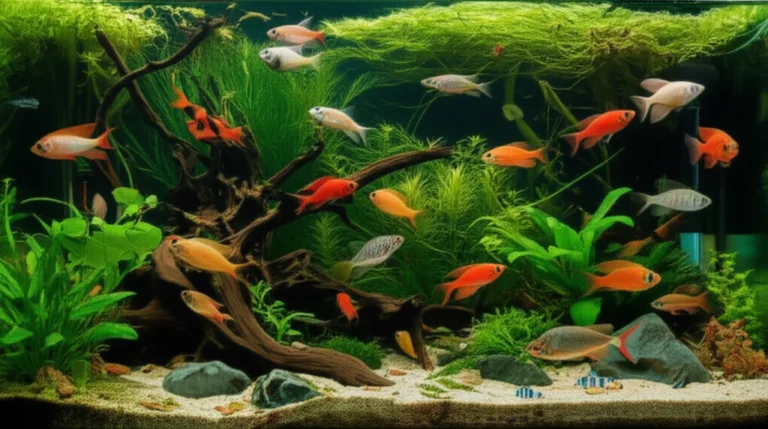
Aquatic animal behavior makes the most sense when we look at the whole picture: the species, its environment, and what has changed. Feeding, hiding, schooling, migration, and communication are more than fascinating habits—they can also reveal how animal is coping with its habitat.
We’ve seen the same lesson play out in aquariums: a fish that suddenly stops eating may not be fussy; it may be reacting to a new tankmate, a change in water conditions, or too little shelter. Start by observing calmly, then check the animal’s environment and its normal species-specific behavior. Our guide to 15 fish-tank water parameters every aquarist should know is a helpful place to begin.
From synchronized fish schools to whales that travel thousands of kilometres, aquatic animals use behavior to find food, avoid danger, reproduce, and respond to a changing world. Here are 12 common behavior patterns—and practical ways to understand what they can tell us. 🌊
Key Takeaways
- Behavior is shaped by species, experience, and environment. The same action can mean different things in different animals.
- Observe patterns before drawing conclusions. Note what happened, when it happened, and what conditions surrounded it.
- Suden, persistent changes deserve attention. Check water quality, oxygen, habitat, social interactions, and health.
- Schooling, migration, communication, feeding, and rest are among the many strategies aquatic animals use to meet life’s challenges.
- Aquarium welfare depends on species-appropriate care. Provide suitable water, space, shelter, compatible tankmates, and room for natural behavior.
Table of Contents
- ⚡️ Quick Tips and Facts About Aquatic Animal Behavior
- 🌊 What Aquatic Animal Behavior Reveals
- How Scientists Define and Study Animal Behavior
- Instinct, Learning, and the Nature–Nurture Mix
- 🕰️ A Brief History of Aquatic Behavior Research
- 🐠 12 Common Types of Aquatic Animal Behavior
- 1. Feeding, Foraging, and Hunting
- 2. Schooling, Shoaling, and Group Living
- 3. Territoriality and Defensive Behavior
- 4. Courtship, Mating, and Parental Care
- 5. Migration and Seasonal Movement
- 6. Communication Through Sound, Color, and Movement
- 7. Camouflage, Mimicry, and Other Survival Strategies
- 8. Rest, Sleep, and Daily Activity Cycles
- 9. Play, Exploration, and Problem-Solving
- 10. Social Bonds and Cooperation
- 11. Stress Responses and Escape Behavior
- 12. Cleaning, Symbiosis, and Mutualism
- 🧭 Behavior Across Aquatic Habitats and Animal Groups
- Freshwater Fish and Invertebrates
- Marine Fish, Reef Animals, and Open-Ocean Species
- Air-Breathing Aquatic Animals
- Marine Mammals, Sea Turtles, and Other Vertebrates
- 🌡️ Environmental Factors That Shape Aquatic Behavior
- Water Temperature, Oxygen, and Water Quality
- Light, Depth, Currents, and Habitat Structure
- Food Availability, Predators, and Human Disturbance
- Climate Change, Pollution, and Other Human Impacts
- 🔎 How to Observe and Interpret Aquatic Animal Behavior
- Build a Behavior Log and Spot Patterns
- Normal Variation Versus a Warning Sign
- Common Observation Mistakes to Avoid
- 🏡 Aquarium Fish Behavior and Welfare
- What Healthy Aquarium Behavior Looks Like
- Why Fish Hide, Chase, Refuse Food, or Swim Strangely
- Tank Size, Social Compatibility, and Enrichment
- When Behavioral Changes Call for an Aquatic Veterinarian
- 💙 Why Aquatic Animal Behavior Matters
- Conservation, Fisheries, and Ecosystem Health
- Animal Welfare, Research, and Human Connections
- 🧠 Myths and Misunderstandings About Aquatic Behavior
- Conclusion
- Recommended Links
- FAQ
- Reference Links
⚡️ Quick Tips and Facts About Aquatic Animal Behavior
Aquatic animal behavior is more than swimming, feeding, and fleeing. It includes how animals sense their surroundings, find food, communicate, reproduce, rest, learn, and respond to change. For aquarists, behavior is also a daily health report: a fish that suddenly hides, breathes rapidly, or stops eating may be telling us something about its environment.
For a practical first check, compare what you observe with the 15 fish-tank water parameters every aquarist should know. A behavior change can be an early clue that water quality, habitat, or social conditions need attention.
| Quick fact | Why it matters |
|---|---|
| Animals can be grouped by how they move through water: plankton drift, nekton swim actively, and benthos live on or near the bottom. | A drifting jellyfish and a cruising tuna face very different behavioral demands. |
| Schooling and shoaling are not identical. | Shoaling fish gather socially; schooling fish coordinate their movement in a more synchronized way. |
| Underwater sound can carry long distances. | Many aquatic animals use sound when visibility is poor. |
| Fish behavior is shaped by species, life stage, habitat, and individual experience. | There is no single “normal fish behavior” that fits every tank. |
| Suden behavioral changes deserve investigation. | Check water conditions and observe the animal before assuming it is simply “acting weird.” |
The Smithsonian Ocean Portal offers accessible overviews of marine animals and their habitats. For more species-specific guidance, browse our Fish Care and Species Profiles and Fish and Aquatic Life guides. 🐟
🌊 What Aquatic Animal Behavior Reveals
Behavior is animal’s response to its surroundings, shaped by its body, senses, nervous system, past experience, and immediate needs. A fish turning toward a food pellet, a crab backing into a crevice, and a whale changing its song are all examples of behavior—though the underlying mechanisms differ enormously.
The term aquatic animal includes animals that live in water for all or much of their lives: fish, marine mammals, crustaceans, mollusks, aquatic insects, reptiles, amphibians, and many other invertebrates. Their forms and behavior reflect different solutions to life in water. Similar strategies can evolve in unrelated groups because they face similar challenges, a pattern known as convergent evolution. The broad overview in Encyclopaedia Britannica’s aquatic-animal entry and the UC Museum of Paleontology’s explanation of convergent evolution provide useful context.
How Scientists Define and Study Animal Behavior
Researchers study behavior by observing what animals do, when they do it, and what conditions may influence it. Depending on the question, they may use underwater cameras, acoustic recordings, tracking tags, laboratory experiments, or careful field notes. A hydrophone, for instance, can record sounds that are difficult or impossible to detect from a boat.
A basic behavioral observation should describe the action rather than guess at its meaning:
- Describe: “The fish hovered near the surface and made repeated trips to the air.”
- Record context: time, tank conditions, feeding schedule, lighting, tankmates, and recent changes.
- Look for a pattern: Is this typical for the species, a regular activity cycle, or a new change?
- Check plausible causes: oxygen, temperature, water quality, stress, illness, or social conflict.
- Avoid mind-reading: “It is bored” may be possible, but it is not a diagnosis.
Scientists distinguish proximate causes—the immediate mechanisms or triggers of behavior—from ultimate causes, such as how a behavior might affect survival or reproductive success. A fish may flee because it detected a nearby shadow; the evolutionary value of that response is avoiding predators. The OpenStax Biology discussion of animal behavior explains these complementary ways of asking why animal behaves as it does.
Instinct, Learning, and the Nature–Nurture Mix
Some behaviors are strongly influenced by inherited tendencies. Others change through learning, experience, or social exposure. Most are a mix.
A young fish may show an instinctive escape response but learn to associate a keeper’s approach with feeding. Octopuses can explore and manipulate objects, while many fish learn routes, feeding cues, and social rankings. However, a behavior that looks intelligent to us should not automatically be translated into human motives. We can recognize flexibility and learning without claiming animal thinks exactly as a person does.
For aquarium care, the practical point is simple: behavior can change with experience. A new tankmate, a different feeding routine, or a rearranged aquascape can alter how animal uses its habitat. Our Aquascaping and Aquatic Plants guides explore how hardscape and plant cover create useful visual barriers and exploration zones.
🕰️ A Brief History of Aquatic Behavior Research

For centuries, people have observed fish migrations, seasonal breeding, and animal communication for practical reasons: fishing, navigation, food gathering, and natural history. Modern behavioral research brought systematic observation and experimental methods to those questions, helping researchers separate a repeated pattern from a compelling anecdote.
Technology has broadened the view. Hydrophones reveal underwater sound; satellite and acoustic tags trace migrations; camera systems capture nocturnal or deep-water activity; and laboratory studies test how animals respond to particular cues. Each method has limits. A tag can show where animal travelled, but not necessarily why. A controlled experiment can isolate one factor but may not recreate the full complexity of a reef or river.
The University of Hawaiʻi’s Exploring Our Fluid Earth resource on marine mammal behavior is a useful teaching resource on communication, sound, echolocation, and migration. Its central lesson holds across many aquatic groups: behavior makes more sense when we consider the animal, its sensory world, and its environment together.
🐠 12 Common Types of Aquatic Animal Behavior
These categories overlap. A feeding fish may also be defending territory; a migrating whale may communicate while travelling. The labels help us organize what we see, not squeeze nature into tidy boxes.
1. Feeding, Foraging, and Hunting
Aquatic animals use a remarkable range of feeding strategies:
- Grazing: parotfish scrape algae from reef surfaces.
- Filter feeding: some whales, bivalves, and sponges capture tiny particles from water.
- Ambush predation: predators wait for prey to come within striking distance.
- Active pursuit: tuna and dolphins chase mobile prey.
- Scavenging: crabs and many bottom-dwelling fish consume available organic matter.
- Suction feeding: fish rapidly expand the mouth and draw prey or water inward.
- Tool use and manipulation: some animals handle objects or alter their surroundings while seeking food.
A feeding response also tells us something in an aquarium. A normally eager fish that refuses food may be reacting to stress, illness, unsuitable food, poor water quality, or social competition. Check the wider picture rather than repeatedly adding food—uneaten food can worsen water conditions. Explore species-focused feeding advice in Fish Care and Species Profiles.
2. Schooling, Shoaling, and Group Living
Shoaling means fish gather socially; schooling is a more coordinated form of group swimming. Group living can dilute the risk to any one individual, help animals detect predators, and improve access to food or mates. It can also bring competition, so “more fish together” is not automatically better in every setting.
| Term | Simple definition | Example of what you might observe |
|---|---|---|
| Shoaling | Fish associate in a group, without necessarily swimming in lockstep. | Fish remain near one another while feeding or resting. |
| Schooling | Fish move in coordinated, aligned patterns. | A group turns together when disturbed. |
| Aggregation | Animals collect in one place, without necessarily forming a social group. | Fish gather near a food source or suitable habitat. |
In aquariums, group size and social needs depend on the species. A schooling species kept in an unsuitable group may show chronic skittishness or abnormal interactions. But a larger group also needs appropriate tank capacity, filtration, and habitat design. Our Aquarium Setup and Aquarium Equipment resources can help you plan for those needs.
3. Territoriality and Defensive Behavior
Territorial behavior can include chasing, posturing, displaying fins, guarding a nest, or defending a food source. The behavior may be normal for the species yet still become a welfare problem if a tankmate has nowhere to retreat.
Watch for a pattern, not one dramatic chase:
- Is one fish repeatedly targeting the same individual?
- Is the victim losing access to food or hiding constantly?
- Are there torn fins, damaged scales, or blocked routes?
- Does adding visual cover or changing the layout reduce conflict?
A fish defending a nest during breeding is different from continuous harassment. Both require careful observation, but the first may be a temporary reproductive behavior while the second can lead to injury and chronic stress.
4. Courtship, Mating, and Parental Care
Courtship may involve color changes, displays, calls, synchronized movement, nest construction, or chemical signals. Reproductive strategies range from releasing eggs and sperm into the water to guarding eggs, carrying young, or providing extended parental care.
Some fish fan eggs to improve water flow; others guard a nest or mouthbrod their young. These behaviors are species-specific, so a fish moving eggs or carrying fry is not necessarily “stealing” them—it may be displaying normal care.
In a community aquarium, breeding activity can alter social dynamics. Add secure shelter and avoid disrupting nest sites unnecessarily, while also considering whether the aquarium can safely support offspring. Species profiles at Fish Care and Species Profiles are a better guide than a one-size-fits-all breeding rule.
5. Migration and Seasonal Movement
Migration is purposeful movement between areas, often linked to feeding, reproduction, temperature, or life stage. Salmon, for example, move between marine and freshwater habitats; many whales travel between feeding and breeding grounds. The NOAA Fisheries overview of fish migration explains how some fishes move between saltwater and freshwater during their life cycles.
Migration may be diadromous, involving movement between fresh and salt water. Different species follow different routes and life histories. It is not simply “all fish migrate when it gets cold”: local habitat, species physiology, food supply, and reproductive timing matter.
The University of Hawaiʻi resource reports that humpback whales can migrate up to 25,000 km annually and describes long-distance movements by northern elephant seals. These figures refer to particular animals and routes, not a universal distance for marine mammals. See the Hawaiʻi resource on marine mammal behavior for its educational discussion of migration.
6. Communication Through Sound, Color, and Movement
Aquatic animals signal through sound, visual displays, touch, vibration, and chemical cues. Which channel works best depends on the animal and its environment. In water, sound can travel effectively over distance, while visual signals depend on light and water clarity. Touch is useful at close range.
Marine mammals provide striking examples. Whales and dolphins use sounds for communication; toothed whales also use echolocation. The University of Hawaiʻi notes that sound travels about 4.5 times faster in water than in air—a useful comparison that does not mean every underwater sound travels equally far, since frequency, depth, temperature, and habitat affect transmission.
For a primer on how marine mammals use sensory signals, see NOAA Fisheries’ marine mammal sound resources. In aquariums, body posture, fin position, coloration, and repeated movement are often more visible clues than sound.
7. Camouflage, Mimicry, and Other Survival Strategies
Camouflage helps animal blend into its background. Mimicry can make it resemble another organism, while warning coloration may advertise a defense. Some animals change color or pattern in response to their surroundings, mood, or interactions.
The “first YouTube video” linked at #featured-video presents marine life as a stage for elaborate deception and survival strategies, highlighting octopus problem-solving, mimicry, and defensive adaptations. It is an entertaining lens, but dramatic narration is not the same as a scientific paper. Claims about animal motives or unusual tactics should be checked against primary research and credible natural-history sources before being treated as established fact.
A more cautious takeaway: aquatic animals can use sophisticated camouflage and signaling, but we should distinguish observed behavior from the storyteller’s interpretation of it. 🐙
8. Rest, Sleep, and Daily Activity Cycles
Aquatic animals have periods of rest, but rest does not always look like sleep in humans. Some fish hover or settle in a sheltered area; many sharks continue swimming patterns while resting; cetaceans must surface to breathe and use distinctive rest strategies.
Activity can follow daily or seasonal rhythms. A nocturnal fish may hide during the day and forage at night. Turning on bright lights suddenly can startle resting animals, so a gradual lighting schedule can make aquarium routines gentler. For habitat and equipment planning, browse Aquascaping and Aquatic Plants and Aquarium Equipment.
9. Play, Exploration, and Problem-Solving
Some aquatic animals explore objects, manipulate their surroundings, or repeat actions that appear playful. Dolphins, octopuses, and certain fish have been studied for flexible problem-solving and social learning. However, researchers must be careful: behavior that looks like play can sometimes be practice, exploration, feeding, or another function.
In an aquarium, animal investigating a new cave or plant is not automatically bored—or distressed. Look at the wider pattern: Does it eat normally, use the habitat, rest, and interact appropriately? A varied environment can offer choice and shelter without turning the tank into an obstacle course.
10. Social Bonds and Cooperation
Social life ranges from loose temporary groups to long-lasting associations. Dolphins may form changing social networks; cleaner fish interact with “client” animals; some fish coordinate movements or share access to resources. Cooperation can benefit one or more participants, but social relationships can also involve competition and deception.
The word coperation describes behavior and its effects; it does not automatically mean the animals share human-like intentions. To understand a social interaction, researchers ask what each animal does, how others respond, and what benefits or costs follow.
11. Stress Responses and Escape Behavior
A sudden dash, hiding, or defensive posture may be a normal short-lived response to a threat. Persistent stress is different. In an aquarium, potential triggers include poor water quality, inadequate oxygen, aggressive tankmates, sudden noise or movement, lack of cover, and repeated disruption.
A useful observation sequence:
- Pause and watch: note which animal is affected and when the behavior occurs.
- Check the environment: temperature, oxygenation, filtration, and water-test results.
- Look for social pressure: chasing, feeding competition, or blocked shelter.
- Review recent changes: new livestock, maintenance, lighting, decorations, or feeding.
- Correct the likely cause carefully: avoid making several major changes at once.
- Seek qualified help if the animal shows rapid breathing, loss of balance, injury, or continued refusal to eat.
Our Fish Tank Water Parameters guide can help you interpret common water checks. For broader husbandry, see Aquarium Setup.
12. Cleaning, Symbiosis, and Mutualism
Some reef fish and shrimp remove parasites or debris from larger animals. These interactions can benefit both partners, though symbiosis describes close associations broadly and does not always mean both organisms benefit equally.
Cleaner-client interactions rely on behavior and signals. A client may position itself to invite cleaning; a cleaner may inspect the body and remove material. These relationships help illustrate why behavior matters beyond an individual animal: repeated interactions can influence the health and structure of an ecosystem.
For more on reef life and habitat relationships, visit NOAA’s coral reef ecosystem resources.
🧭 Behavior Across Aquatic Habitats and Animal Groups
An animal’s place in the water column influences how it moves, feeds, and avoids danger. Ecologists often use these helpful categories:
| Group | Typical lifestyle | Common behavioral patterns |
|---|---|---|
| Neuston | At or near the water’s surface | Surface feeding, floating, or exploiting surface tension |
| Plankton | Drifting in the water column | Limited independent movement; some make brief escape responses |
| Nekton | Active swimmers | Swimming strongly enough to move against currents |
| Benthos | On or near the bottom | Burowing, crawling, grazing, filter feeding, scavenging, or ambush hunting |
These are broad ecological labels, not fixed personality types. A planktonic larva may become an active adult; a bottom-associated fish may still swim through the water column. The National Ocean Service’s plankton overview explains the basic distinction between drifting organisms and active swimmers.
Freshwater Fish and Invertebrates
Freshwater habitats include rivers, lakes, wetlands, and streams—each with different currents, oxygen levels, cover, and seasonal changes. A fish living in a fast-flowing stream may behave differently from a close relative in still water.
Freshwater animals also face a physiological challenge: water tends to move into their bodies, so they regulate internal water and salts. This physiological background influences habitat use and behavior. For aquarium keepers, species-specific requirements matter: a river fish may need strong flow and high oxygen, while another species may prefer calmer, sheltered water. Explore Fish and Aquatic Life for species-focused care.
Marine Fish, Reef Animals, and Open-Ocean Species
Ref habitats offer many hiding places and food sources, but they also bring intense competition and frequent predator-prey interactions. Open-ocean animals face a different challenge: fewer physical shelters and greater distances between food patches.
Marine behavior may respond to tides, currents, light, temperature, and seasonal food availability. Refs also support complex relationships among fish, invertebrates, and corals. NOAA’s coral reef ecosystem overview explains why habitat structure and biodiversity matter to reef life.
Air-Breathing Aquatic Animals
Not every animal that lives in water breathes underwater. Whales, dolphins, seals, sea turtles, and some fish must access atmospheric oxygen. Some fish—including lungfish and labyrinth fish—can use air-breathing adaptations, but their needs differ by species.
For an air-breathing aquarium fish, repeated trips to the surface may be normal. For a species that usually stays submerged, frequent surface gasping may instead signal low dissolved oxygen or another problem. Know the animal before judging the behavior. Check appropriate care guidance through Fish Care and Species Profiles.
Marine Mammals, Sea Turtles, and Other Vertebrates
Marine mammals use lungs and must surface to breathe; sea turtles also breathe air, though they spend much of their lives in water. Their behavior reflects that constraint, as well as feeding, migration, social communication, and reproduction.
Marine mammal communication includes acoustic, visual, tactile, and chemical signals, but the most useful channel varies with the animal and context. The University of Hawaiʻi’s educational guide compares communication modes across groups such as cetaceans and pinnipeds. For current conservation and species information, consult NOAA Fisheries.
🌡️ Environmental Factors That Shape Aquatic Behavior
Behavior is not a fixed script. It changes with conditions. In a tank or natural habitat, several factors can act together, which is why an unexplained behavior change deserves more than a single quick guess.
Water Temperature, Oxygen, and Water Quality
Temperature affects animal physiology and activity, while dissolved oxygen affects breathing and habitat use. Poor water quality can also contribute to stress and abnormal behavior. The correct range depends on the species; a number appropriate for one fish may be unsuitable for another.
| Factor | Possible behavioral clue | Useful first response |
|---|---|---|
| Temperature | Unusual sluggishness or elevated activity | Measure accurately and compare with the species’ needs. |
| Dissolved oxygen | Surface gasping or rapid gill movement | Check aeration, circulation, temperature, and water quality. |
| Amonia or nitrite | Distress, reduced feeding, abnormal respiration | Test promptly and take appropriate corrective action. |
| pH or salinity shift | Stress or changes in normal activity | Verify readings and avoid abrupt, unnecessary changes. |
Use a reliable test kit and interpret results in context. Our detailed Fish Tank Water Parameters guide covers core aquarium measurements; the U.S. Environmental Protection Agency’s water-quality resources offer broader context on water monitoring.
Light, Depth, Currents, and Habitat Structure
Light affects activity rhythms and visual signaling. Depth influences light, pressure, and temperature. Currents shape swimming effort, feeding opportunities, and the availability of shelter. Habitat structure can provide hiding places, feeding surfaces, and visual barriers.
For aquariums, layout is part of behavioral care. Plants, caves, driftwood, and rocks can create choices and reduce direct lines of sight. But structures should be stable, safe, and suitable for the species. Browse Aquascaping and Aquatic Plants for design ideas and Aquarium Equipment for circulation and lighting considerations.
Food Availability, Predators, and Human Disturbance
Animals adjust their activity to where food is found and when predators are most active. Human activity can also alter behavior through noise, boat traffic, habitat change, feeding, or close approaches. Repeated disturbance may cause animals to avoid otherwise useful habitat or change feeding and resting patterns.
In an aquarium, frequent tapping on glass, chasing fish with a net, or abruptly switching lights can create avoidable disturbance. Keep maintenance predictable, provide shelter, and make necessary changes calmly.
Climate Change, Pollution, and Other Human Impacts
Warming, acidification, habitat loss, pollution, invasive species, and overfishing can alter the conditions animals use to feed, reproduce, communicate, and migrate. Responses differ among species and locations; a behavior shift may be a sign of environmental change, but it takes careful data to identify the cause.
The Intergovernmental Panel on Climate Change assesses climate risks to ecosystems, while NOAA Ocean Acidification Program explains a major stressor affecting marine systems. For a broad view of pressures on aquatic life, visit NOAA Ocean Service.
🔎 How to Observe and Interpret Aquatic Animal Behavior
Good observation starts with curiosity and a little restraint. One unusual moment may be meaningless; a repeated change across several days can be worth investigating.
Build a Behavior Log and Spot Patterns
Use a notebook or spreadsheet. Record observations at consistent times, and include the conditions surrounding them.
Step-by-step observation method:
- Choose a focus: feeding, swimming, hiding, social contact, breathing, or rest.
- Describe actions neutrally: write what happened, not what you think the animal intended.
- Record the setting: water readings, lighting, recent maintenance, and tankmates.
- Note frequency and duration: once, repeatedly, or continuously?
- Compare with the animal’s usual pattern: account for time of day and species.
- Make one careful change at a time when testing a possible cause.
- Recheck and document: did the behavior improve, worsen, or stay the same?
This method is useful in a home aquarium and mirrors a basic principle of scientific observation: consistent records are more useful than memory alone.
Normal Variation Versus a Warning Sign
Fish may hide, rest, investigate, or change activity with time of day. Those behaviors are not automatically signs of disease. More concerning changes include persistent loss of appetite, rapid breathing, loss of balance, repeated collision with objects, visible injury, or a sudden change affecting several animals.
| Observation | May be normal when… | Investigate when… |
|---|---|---|
| Hiding | The species is naturally shy or resting. | It begins suddenly and continues with other signs of distress. |
| Chasing | It is brief and species-typical. | One fish is relentlessly targeted or injured. |
| Surface visits | The species breathes air or feeds near the surface. | Fish that do not normally surface are gasping. |
| Reduced feeding | It is temporary and otherwise normal. | It persists or occurs with weakness, abnormal breathing, or visible symptoms. |
| Darting | It follows a brief disturbance. | It becomes repetitive, frantic, or paired with signs of irritation or stress. |
Common Observation Mistakes to Avoid
- Assuming every behavior has one cause. Several environmental and social factors may overlap.
- Applying one species’ “normal” to another. A surface-breathing fish and a bottom-dwelling catfish have different baselines.
- Changing too many things at once. That makes it difficult to identify what helped.
- Treating a video or anecdote as proof. Dramatic storytelling can blur observation and interpretation.
- Ignoring water tests. Behavior is valuable evidence, but it does not replace measurement.
- Waiting too long when symptoms are severe. Seek an aquatic veterinarian or qualified fish-health professional for persistent or serious signs.
For more on day-to-day care and species differences, see Fish Care and Species Profiles.
🏡 Aquarium Fish Behavior and Welfare
A healthy aquarium supports more than survival. Fish need suitable water conditions, appropriate nutrition, compatible tankmates, and opportunities to use natural behaviors. Good aquascaping is not just decoration; it can provide shelter, boundaries, and routes through the habitat.
What Healthy Aquarium Behavior Looks Like
Healthy behavior depends on species, but commonly includes:
- Regular feeding and normal interest in food.
- Swimming, resting, or hiding in ways typical for the species.
- Appropriate social interaction without continual harassment.
- Normal respiration and stable balance.
- Use of available habitat, including cover where relevant.
- Consistent activity patterns rather than unexplained, persistent changes.
A fish does not need to be constantly visible to be healthy. Some species naturally spend much of their time in cover; others are active in open water. The right question is not “Is it swimming enough?” but “Does this match what is normal for this species and this individual?”
Why Fish Hide, Chase, Refuse Food, or Swim Strangely
The same behavior can have different explanations:
| Behavior | Possible explanations |
|---|---|
| Hiding | Normal resting, shy temperament, recent change, bullying, illness, or lack of suitable cover |
| Chasing | Courtship, territoriality, feeding competition, or persistent aggression |
| Refusing food | Stress, illness, unsuitable food, social competition, environmental problems, or temporary adjustment |
| Rapid swimming or darting | Startle response, social conflict, irritation, poor conditions, or normal species activity |
| Surface gasping | Normal air breathing in some species; possible oxygen or water-quality concern in others |
| Clamped fins or poor balance | Possible stress or illness; interpret alongside other signs and water data |
Do not diagnose a disease from one behavior alone. Check water conditions first, observe tankmates, and consult a qualified aquatic veterinarian when symptoms are persistent or severe.
Tank Size, Social Compatibility, and Enrichment
Tank size is not just a matter of fitting fish into glass. It affects swimming space, territory, water stability, and the keeper’s ability to maintain good conditions. Compatibility also depends on adult size, temperament, group requirements, feeding behavior, and habitat preferences.
Before adding animal:
- Research the adult size and social needs, not only the juvenile appearance at the store.
- Confirm water and habitat compatibility with the animals already in the tank.
- Plan for filtration and maintenance capacity.
- Provide shelter and visual barriers where appropriate.
- Observe introductions carefully and have a safe response plan if aggression develops.
Our Aquarium Setup guides cover planning, while Aquarium Equipment helps you consider filtration, lighting, and water movement.
When Behavioral Changes Call for an Aquatic Veterinarian
Contact an aquatic veterinarian or qualified fish-health professional if you see persistent abnormal breathing, loss of balance, severe lethargy, repeated refusal of food, open wounds, unexplained swelling, or a rapid decline. If several animals become unwell at once, prioritize checking water quality and oxygen while seeking expert help.
The American Association of Fish Veterinarians provides information for finding fish-health professionals. When contacting a veterinarian, share water-test results, photographs or video, the timeline of symptoms, recent additions, and any treatments already used.
💙 Why Aquatic Animal Behavior Matters
Behavior reveals how animals interact with their surroundings. It helps researchers understand ecological relationships, supports conservation decisions, and gives aquarists practical clues about welfare. A change in feeding, movement, or habitat use can be informative—but interpreting it responsibly means pairing observation with evidence.
Conservation, Fisheries, and Ecosystem Health
Behavioral information can help scientists identify migration routes, breeding sites, feeding grounds, and responses to disturbance. Fisheries managers use knowledge of movement and life cycles to inform conservation measures. In some cases, a change in animal distribution can flag changes in food, habitat, or environmental conditions.
Aquatic animals also connect ecosystems. Migratory fish can transport nutrients between habitats, while predators, grazers, and filter feeders influence food webs. For research and conservation updates, see NOAA Fisheries and the International Union for Conservation of Nature.
Animal Welfare, Research, and Human Connections
Behavioral observation helps keepers judge whether animals can carry out important activities such as feeding, resting, exploring, and interacting appropriately. It also helps researchers design studies that reduce disturbance and account for animal’s sensory environment.
For aquarium keepers, the reward is immediate: when you learn animal’s usual rhythm, small changes become easier to spot. That does not make us mind-readers. It makes us better observers—and better caretakers.
🧠 Myths and Misunderstandings About Aquatic Behavior
Myth: Every fish that hides is sick.
Not true. Hiding may be normal for a shy, nocturnal, or shelter-dependent species. A sudden change accompanied by other symptoms deserves investigation.
Myth: Schooling fish always move in perfect formation.
Shoaling can be loose and social; synchronized schooling is only one kind of group movement.
Myth: A fish that comes to the surface is always gasping.
Some fish breathe air or feed near the surface. Know the species, then assess breathing, water conditions, and the rest of the group.
Myth: We can tell exactly what animal is thinking from one action.
We can describe behavior and test explanations, but claims about intention require caution. A vivid interpretation is not automatically a verified fact.
Myth: More enrichment means adding more objects.
Useful enrichment is species-appropriate and safe. Shelter, room to swim, suitable flow, and a predictable routine can matter more than a crowded tank.
Myth: Behavioral problems are always caused by “personality.”
Behavior can reflect water conditions, health, habitat, social pressure, and experience. Check the environment before blaming temperament.
Myth: One source can answer every behavioral question.
Aquatic animal behavior spans many species and research fields. Trust well-supported, species-specific information; distinguish reliable observation from claims that cannot be verified.